
“Close the door.” “Is the door closed?” “If the door were closed, we could hear the speaker.” All three sentences are about a door, but each verb does a different job. The first gives a command, the second states or asks about a fact, and the third imagines something that is not true. These differences are called verb moods, and they show a writer’s attitude toward an action.
This article covers Topic 2.8: Verb Moods in Unit 2, Parts of Speech: Verbs. The topic asks you to identify the indicative, imperative, interrogative, conditional, and subjunctive moods and to use the subjunctive correctly.
By the end, you should be able to:
- Define verb mood and name the main moods.
- Identify the mood of a verb in a sentence.
- Form and use the subjunctive mood correctly.
- Avoid unnecessary shifts in mood.
What Mood Means
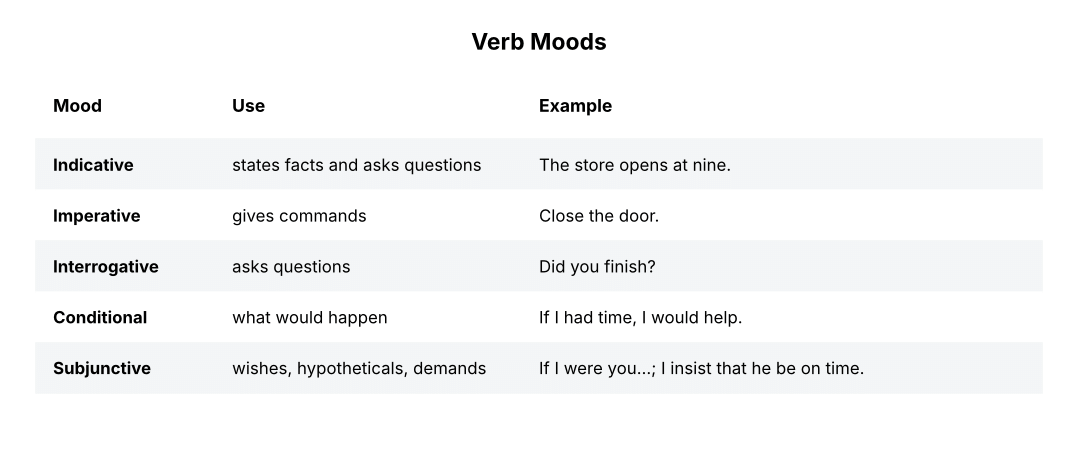
A verb’s mood shows whether the speaker is stating a fact, giving a command, asking a question, imagining a possibility, or expressing a wish. Many grammar books list the five moods below, though some fold the interrogative and conditional into the others.
| Mood | Purpose | Example |
|---|---|---|
| Indicative | States facts or opinions | The museum opens at nine. |
| Imperative | Gives commands or requests | Turn in your essays. |
| Interrogative | Asks questions | Did you finish the lab? |
| Conditional | Shows what would or could happen under a condition | I would travel if I had time. |
| Subjunctive | Expresses wishes, demands, or situations contrary to fact | I wish it were Friday. |
Indicative, Imperative, and Interrogative
The indicative mood is by far the most common. Almost every sentence in a news article or textbook is indicative.
The imperative mood uses the base form of the verb and has an understood subject, you. In “Please sit down,” the subject is not written, but it is understood to be you. Recipes, directions, and instructions rely on the imperative.
The interrogative mood asks questions, often by moving a helping verb in front of the subject: “You are ready” becomes “Are you ready?”
The Conditional Mood
The conditional mood uses helping verbs such as would, could, should, and might to describe outcomes that depend on a condition.
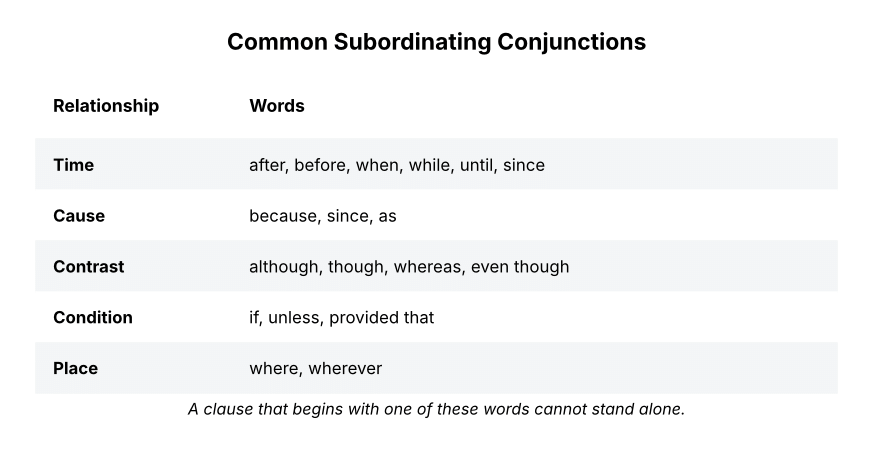
- If it snows tomorrow, school might close.
- If I had studied, I would have passed.
Do not put would in the if clause. Write “If I had known,” not “If I would have known.”
The Subjunctive Mood
The subjunctive causes the most trouble because its forms look unusual. It appears in two main situations.
1. Wishes and contrary-to-fact statements. Use were for every subject, even I, he, she, and it.
- If I were the principal, I would extend lunch.
- She acts as if she were the team captain.
- I wish my brother were here.
The speaker is not the principal, she is not the captain, and the brother is not here. The subjunctive signals that the statement is imagined.
2. Demands, requests, and recommendations. After verbs such as insist, demand, recommend, suggest, and request, and after phrases like “it is essential that,” use the base form of the verb.
- The coach insists that every player arrive early. (not arrives)
- It is essential that he be on time. (not is)
Why does this matter? “If I was rich” is common in conversation, but formal writing and standardized tests expect “If I were rich.” The subjunctive tells the reader clearly that a situation is hypothetical, which prevents confusion about what is real.
Not Every If Is Subjunctive
When an if clause describes something that may really be true, use the indicative.
- If he was at practice yesterday, he knows the new play. (He may have been there.)
- If he were taller, he could dunk. (He is not taller.)
Avoiding Mood Shifts
Do not switch moods within a sentence or a set of instructions without reason.
- Incorrect: First preheat the oven, and then you should mix the flour.
- Correct: First preheat the oven, and then mix the flour.
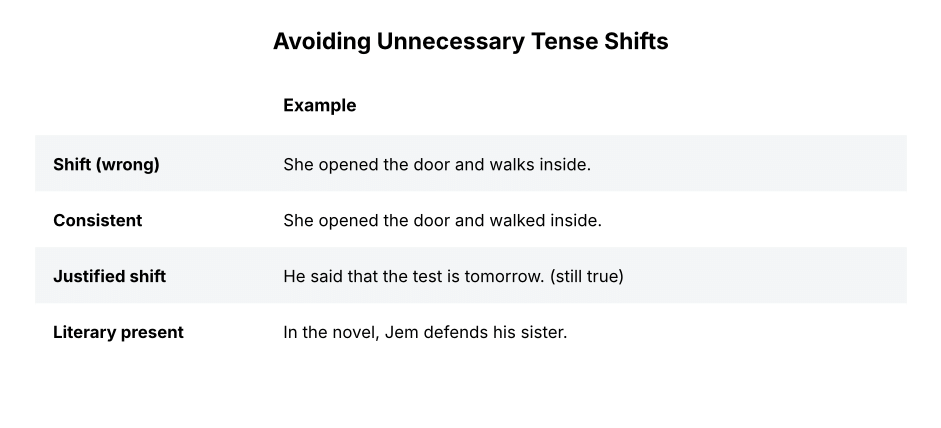
Why does this matter? Consistent moods make instructions easier to follow. A reader who sees two commands in a row knows exactly what to do. A shift into a suggestion makes the second step sound optional.
Test-Taking Strategies
Mnemonic Devices and Memory Shortcuts
“Indicative informs, imperative instructs, interrogative inquires.” For the subjunctive, remember “wishes take were, demands take the base.”
Cross-Topic Connections
- Helping verbs like would are covered in Topic 2.3: Auxiliary Verbs.
- Tense consistency builds on Topic 2.4: Simple Verb Tenses.
- Conditional if clauses are a kind of Topic 4.8: Adverbial Clauses.
- Agreement rules the subjunctive breaks are in Topic 6.1: Subject-Verb Agreement.
Common Question Formats
- Identify the mood of an underlined verb.
- Choose was or were in a hypothetical sentence.
- Fix an unnecessary shift in mood.
- Complete a sentence after insist that or recommend that.
Frequent Student Mistakes
- Writing “If I was you” instead of “If I were you.”
- Adding -s after demand that: “demands that he leaves.”
- Putting would in both halves of a conditional sentence.
Test-Day Shortcuts
See wish, as if, or an if clause about something untrue? Choose were. See that after a demand verb? Choose the base form.
Time Management Tips
Mood items on English unit tests and standardized tests such as the SAT and ACT take about 30 seconds. Read the whole sentence to judge whether a condition is real or imagined.