
Meiosis is the type of cell division that produces sex cells (gametes) — sperm and egg cells in animals, spores in plants and fungi. It’s essential to understanding inheritance, genetic diversity, and why sexual reproduction is evolutionarily advantageous. On the AP® Biology exam, meiosis appears in questions about chromosome number changes, genetic variation mechanisms, and comparison with mitosis. Understanding every phase, and why each step matters, gives you a reliable framework for handling any meiosis question.
What We Review
What is the Purpose of Meiosis?
The core problem meiosis solves: if two diploid cells (each with 2n chromosomes) fused during reproduction without any chromosomal reduction, the offspring would have 4n chromosomes. Each subsequent generation would double again. Meiosis prevents this by reducing chromosome number by half before fertilization, so when two haploid gametes fuse, the resulting zygote has the correct diploid number.
Before meiosis begins, the chromosomes replicate (just as in mitosis). The parent cell temporarily becomes tetraploid (4n) before dividing twice, producing four haploid (n) daughter cells. The two key products of meiosis are:
- Chromosomal reduction: 2n → n. Diploid parent cell produces haploid gametes. When two haploid gametes fuse at fertilization, 2n is restored. Species’ chromosome number is conserved across generations.
- Genetic variation: Through crossing over (recombination) in Prophase I and independent assortment at Metaphase I, each gamete receives a unique combination of alleles. No two gametes produced are genetically identical.
Conserving Chromosomal Number
Meiosis produces four haploid daughter cells from a single diploid parent cell. The process requires two consecutive divisions (meiosis I and II) but only one round of DNA replication (before meiosis I). Critically, meiosis uses recombination to produce daughter cells that are not identical to their parent cell or to each other. This is the fundamental distinction from mitosis.
The Phases of Meiosis
Meiosis consists of two successive nuclear divisions — meiosis I and meiosis II — each with four phases. Before proceeding, key vocabulary:
| Term | Definition |
|---|---|
| Bivalent | A pair of homologous chromosomes held together at a chiasma |
| Chiasma | Point of crossing over where chromosomes exchange genetic material |
| Centromere | Point of constriction joining sister chromatids |
| Homologous chromosomes | Chromosome pairs — one from each parent — that carry the same genes at the same loci |
| Sister chromatids | The two identical copies joined at the centromere after DNA replication |
| Tetrad | Four chromatids (two pairs of sister chromatids) joined during synapsis |
| Synapsis | Physical pairing of homologous chromosomes during Prophase I |
| Crossing over (recombination) | Exchange of DNA segments between non-sister chromatids during synapsis |
Meiosis I
Meiosis I is the reductive division — it separates homologous chromosome pairs, halving the chromosome number. This is what makes meiosis unique compared to mitosis.
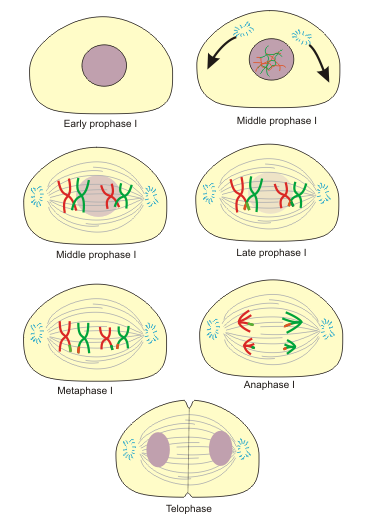
Figure 1: The four stages of meiosis I with prophase stage further separated into sub-phases
1. Prophase I
Prophase I is the most complex and important phase of meiosis. Three major events occur here: chromosome condensation, synapsis of homologous chromosomes, and crossing over. Prophase I is subdivided into five stages:
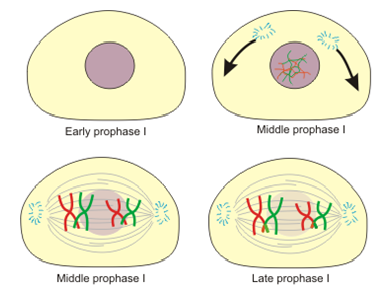
Figure 2: The sub-stages of Prophase I of meiosis I
- Leptonema: Chromatin condenses into visible chromosomes. Homology search begins — chromosomes begin scanning for their homologous partners.
- Zygonema: Homologous chromosomes align into rough pairing (bivalents form). The synaptonemal complex begins forming between them.
- Pachynema: Synapsis is complete. Each bivalent contains four chromatids (a tetrad). Crossing over occurs here: non-sister chromatids exchange segments, creating new allele combinations. This is the primary source of genetic recombination.
- Diplonema: Sister chromatid pairs begin separating. Non-sister chromatids remain in contact at chiasmata — the physical evidence of where crossing over occurred.
- Diakinesis: Chromosomes condense fully. Nuclear envelope breaks down. Chiasmata terminalize (move toward chromosome ends). Spindle fibers attach to centromeres.
2. Metaphase I
Homologous chromosome pairs (bivalents/tetrads) align at the metaphase plate — the midline of the cell. Each chromosome of a pair faces an opposite pole. Critically, the orientation of each homologous pair is random (independent assortment). With 23 chromosome pairs in humans, there are 223 possible chromosome combinations in the gametes from independent assortment alone.
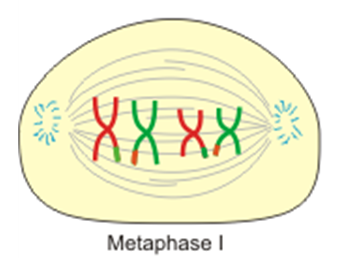
Figure 3: Alignment of tetrads at the metaphase plate during Metaphase I
3. Anaphase I
Homologous chromosomes (not sister chromatids) are pulled to opposite poles. Each chromosome migrating to a pole still consists of two sister chromatids joined at the centromere. This is the key distinction from mitosis Anaphase, where sister chromatids separate. At the end of Anaphase I, each pole has the haploid number of chromosomes (but each chromosome is still a dyad of two chromatids).
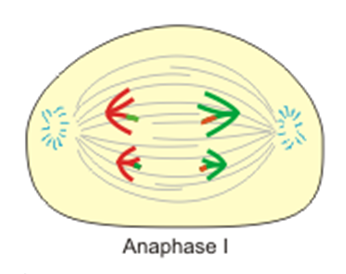
Figure 4: Homologous chromosome separation during Anaphase I (sister chromatids remain joined)
4. Telophase I
In many organisms, nuclear membranes reform around each set of chromosomes at the poles. In others, the cell proceeds directly to meiosis II without a nuclear envelope forming. A brief interphase (interphase II) may occur — crucially, this interphase contains no S phase: DNA is not replicated again. The chromosomes were already replicated before meiosis I began.
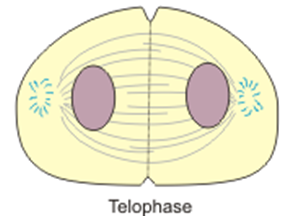
Figure 5: Nuclear envelope reforms around each haploid set of chromosomes at Telophase I
Meiosis II
Meiosis II resembles mitosis — it’s the equational division that separates sister chromatids. The key difference: each cell entering meiosis II is already haploid (n chromosomes), each with two sister chromatids (2C DNA content). At the end of meiosis II, four cells each have n chromosomes with 1C DNA content.

Figure 6: The four stages of meiosis II, producing four haploid cells
1. Prophase II
Sister chromatids form dyads, connected by a centromere. If nuclear membranes formed in Telophase I, they break down again. Spindle fibers form. No new crossing over occurs in Prophase II.
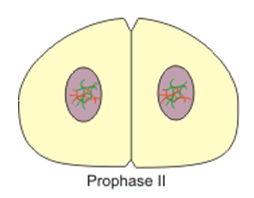
Figure 7: Sister chromatids form dyads during Prophase II
2. Metaphase II
Sister chromatid dyads align individually at the metaphase plate. Unlike Metaphase I (where homologs align as pairs), each chromosome here aligns independently. Spindle fibers from opposite poles attach to each sister chromatid.
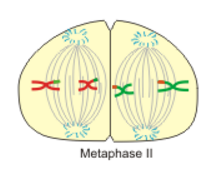
Figure 8: Metaphase II plate formation — each dyad aligns individually
3. Anaphase II
Sister chromatids separate — centromeres split — and move to opposite poles. This is the same mechanism as Anaphase in mitosis. At the end of Anaphase II, each pole has n single-stranded chromosomes (monads).
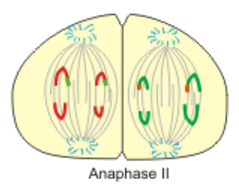
Figure 9: Sister chromatids pull toward opposite poles in Anaphase II
4. Telophase II
Nuclear membranes reform around each set of chromosomes. Cytokinesis divides each cell. The result: four haploid daughter cells (monads), each genetically unique due to crossing over and independent assortment.
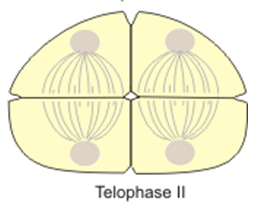
Figure 10: Four haploid daughter cells form at Telophase II
Key Points: Mechanisms and Purpose of Meiosis
The two key events that generate genetic variation are crossing over (Prophase I) and independent assortment (Metaphase I). Crossing over creates new combinations of alleles on individual chromosomes; independent assortment determines which version of each chromosome (maternal or paternal) goes to which gamete.

Figure 11: Genetic material exchange during crossing over and the resulting genetically varied gametes
Why is Meiosis Important in Studying Biology?
Meiosis is important for three reasons that directly connect to AP® Biology Big Ideas:
- Enables sexual reproduction of diploid organisms (Big Idea 3): Without meiosis, sexually reproducing organisms couldn’t maintain a stable chromosome number across generations. Every generation would have double the chromosomes of the previous one — an unsustainable trajectory.
- Generates genetic diversity (Big Idea 1 — Evolution): Crossing over and independent assortment create gametes with novel allele combinations not present in either parent. This genetic diversity is the raw material for natural selection: varied offspring respond differently to environmental pressures, improving species survival in changing conditions.
- Facilitates repair of genetic defects (Big Idea 3): When crossing over pairs a defective allele from one parent with a functional allele from the other parent, the recombinant chromosome can carry only the functional allele. This isn’t guaranteed, but it provides a mechanism for defective alleles to be eliminated from gametes over generations.
How is Meiosis Different from Mitosis?
Meiosis and mitosis are the two types of eukaryotic cell division. The AP exam consistently tests whether you can distinguish them:
| Feature | Meiosis | Mitosis |
|---|---|---|
| Chromosome number change | 2n → n (halved) | 2n → 2n (unchanged) |
| Number of daughter cells | 4 | 2 |
| Genetic identity of daughters | Genetically unique | Genetically identical to parent |
| Synapsis (homolog pairing) | Yes (Prophase I) | No |
| Crossing over | Yes (Prophase I) | No (rare errors only) |
| Number of nuclear divisions | 2 (meiosis I + II) | 1 |
| Number of DNA replications | 1 (before meiosis I) | 1 (before mitosis) |
| Cell type produced | Gametes (germ cells) | Somatic cells |
| Purpose | Sexual reproduction, genetic diversity | Growth, repair, asexual reproduction |
| Organisms | Only sexually reproducing eukaryotes | All eukaryotes (and some prokaryotes analogously) |
Test-Taking Strategies
Mnemonic for meiosis phases — “PPMAT PPMAT” (for both divisions):
- Prophase I, Prometaphase (implicit), Metaphase I, Anaphase I, Telophase I
- Prophase II, Metaphase II, Anaphase II, Telophase II
For a shorter version, remember: “Meiosis I separates homologs; Meiosis II separates sister chromatids.” This single sentence tells you what’s being pulled apart in each division — the most commonly tested distinction.
Cross-topic connections on the AP® Biology exam:
- Genetics and inheritance: Mendel’s Laws (Segregation and Independent Assortment) are the macroscopic descriptions of what happens mechanically during Anaphase I and Metaphase I. If you understand meiosis, you understand why alleles segregate and why genes on different chromosomes assort independently.
- Errors in meiosis — non-disjunction: When homologs fail to separate in Anaphase I (or sister chromatids fail to separate in Anaphase II), gametes with extra or missing chromosomes result. Fertilization of these gametes produces aneuploid offspring — conditions like Down syndrome (trisomy 21), Turner syndrome (45, X), and Klinefelter syndrome (47, XXY). Non-disjunction is one of the most AP-tested consequences of meiosis errors.
- Evolution: Sexual reproduction (enabled by meiosis) produces greater genetic variation than asexual reproduction (mitosis). Populations with high genetic diversity are more adaptable to environmental change, which connects to natural selection and evolutionary biology.
- Gene mapping: Crossing over frequency between two genes correlates with the physical distance between them on a chromosome. Genes that cross over frequently are far apart; genes that rarely cross over are close together (linked). AP exam genetics problems often ask you to infer gene distance from recombination frequency data.
Common question formats on the AP exam:
- “Explain how crossing over contributes to genetic variation.” → Crossing over creates new combinations of alleles on chromosomes by exchanging segments between non-sister chromatids of homologous chromosomes during Prophase I. This produces chromosomes that are different from both parental chromosomes.
- “A cell undergoing meiosis has 46 chromosomes at the start. How many chromosomes will be in each daughter cell after meiosis I? After meiosis II?” → After meiosis I: 23 chromosomes (each still consisting of two sister chromatids). After meiosis II: 23 chromosomes (single chromatids).
- “How does independent assortment differ from crossing over as a source of genetic variation?” → Independent assortment randomly distributes intact (though possibly recombined) chromosomes to daughter cells; crossing over creates new allele combinations within individual chromosomes. Both operate, but crossing over can generate combinatorial diversity within chromosomes, not just between them.
Frequent student mistakes:
- Confusing what separates in Anaphase I vs. Anaphase II. Anaphase I: homologous chromosomes separate (sister chromatids stay together). Anaphase II: sister chromatids separate (just like mitosis Anaphase). Mix these up and every downstream chromosome-count question will be wrong.
- Saying crossing over occurs in meiosis II. It doesn’t — crossing over is strictly Prophase I. In Prophase II, sister chromatids don’t pair with anything; they’re already separated from their homologs.
- Forgetting there’s no DNA replication between meiosis I and II. Interphase II contains only G phase, no S phase. This is frequently tested as a multiple-choice question asking about DNA content at various points during meiosis.
- Treating sister chromatids and homologous chromosomes as the same thing. Sister chromatids are identical copies (replicated from the same chromosome). Homologous chromosomes carry the same genes but may have different alleles — one from each parent. They are genetically similar but not identical.
Test-day shortcuts:
- DNA content tracking through meiosis: Before meiosis: 2C (unreplicated) → After replication: 4C → After meiosis I: 2C per cell (still two chromatids each) → After meiosis II: 1C per cell. Draw this timeline; it answers most DNA content questions directly.
- For non-disjunction questions: Determine which division failed (I or II), then trace the chromosome count into each gamete. If non-disjunction occurs in meiosis I, both sister chromatids go to the same cell; in meiosis II, both copies of one chromatid go to the same cell.
- For genetic diversity questions: Always name both sources — crossing over AND independent assortment. Naming only one source typically loses points on FRQs.
Time management: Meiosis diagram questions on the AP exam often ask you to identify the stage from a drawing. Practice identifying the key distinguishing features: tetrads at the metaphase plate = Metaphase I; homologs moving apart with sister chromatids joined = Anaphase I; single chromosomes at metaphase plate = Metaphase II; sister chromatids separating = Anaphase II. These four identifications cover most diagram questions.