
Albert partners with Massachusetts educators to support rigorous, standards-aligned instruction and college- and career-readiness for students in grades 3–12.

Albert's partnerships across Massachusetts are grounded in a deep understanding of the needs of its educators.

Equip your educators with the tools they need to succeed. Our engaging, hands-on training sessions are designed to help your team seamlessly integrate Albert into their daily instruction.

Real success stories from real classrooms. See firsthand how your peers are leveraging Albert to save time, engage students, and boost academic confidence.
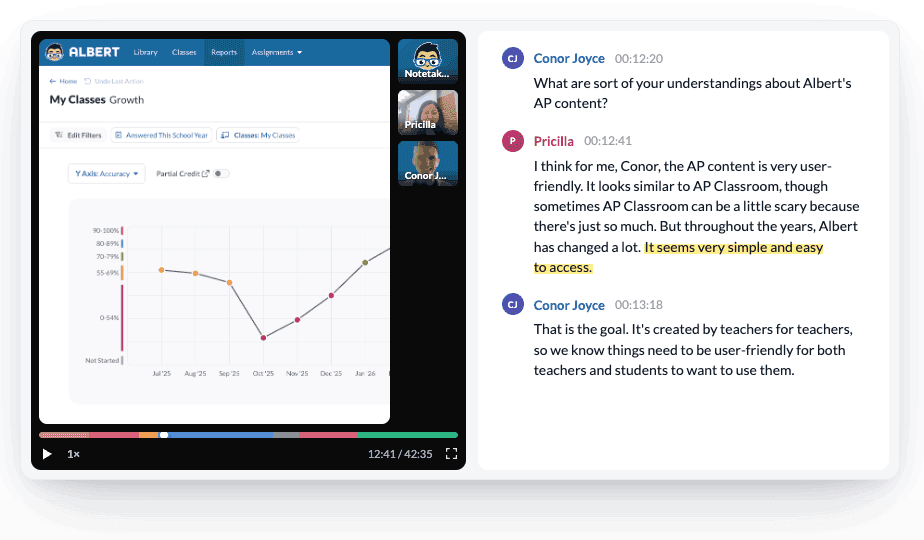
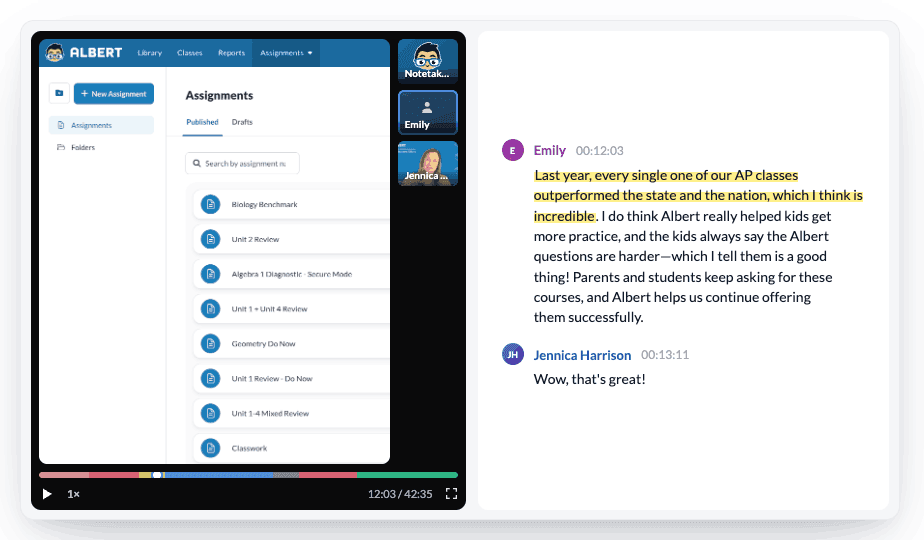
Over the years, our Content team has developed a deep expertise in Massachusetts's academic standards, graduation requirements, and assessments. We've summarized the considerations that have guided our product development below.
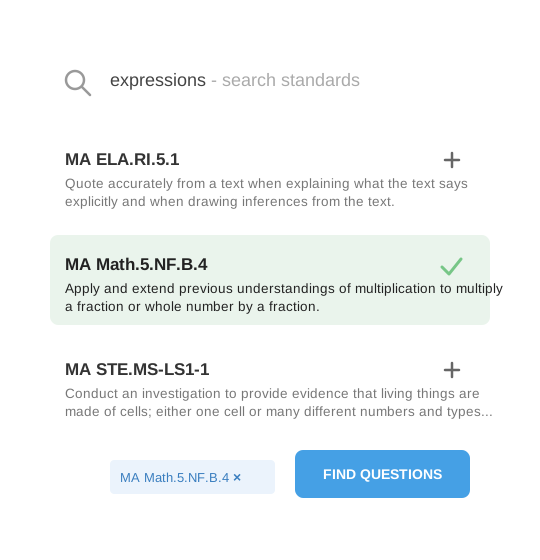
Massachusetts uses its own Curriculum Frameworks for ELA, Math, and Science. The ELA and Math frameworks incorporate Common Core with Massachusetts-specific additions in literature and mathematics rigor.
Science follows the 2016 Massachusetts Science and Technology/Engineering Framework (NGSS-aligned). Students are assessed through MCAS in Grades 3–10, with EOC exams in Biology, Math, and English for high school.
ELA & Math: Grades 3–8 and Grade 10 (MCAS).
Science: Grades 5 and 8 (MCAS Science).
MCAS Grade 10: Required for graduation (ELA, Math, Science).
SAT® & ACT®: Widely used.
AP® & IB®: Extensive offerings statewide.
Massachusetts requires districts to set local credit minimums (most require 22+ credits). Students must pass MCAS Grade 10 assessments in ELA, Math, and one Science area (Biology, Chemistry, Physics, or Technology/Engineering) to graduate.


Rigorous practice across grades and subjects, fewer students fall behind.
Elective credits, Civics, Financial Literacy, Health, and more.
MCAS preparation, required in ELA, Math, and Science for graduation.
MCAS Grade 10 preparation (ELA, Math, Science)
SAT® & ACT® prep
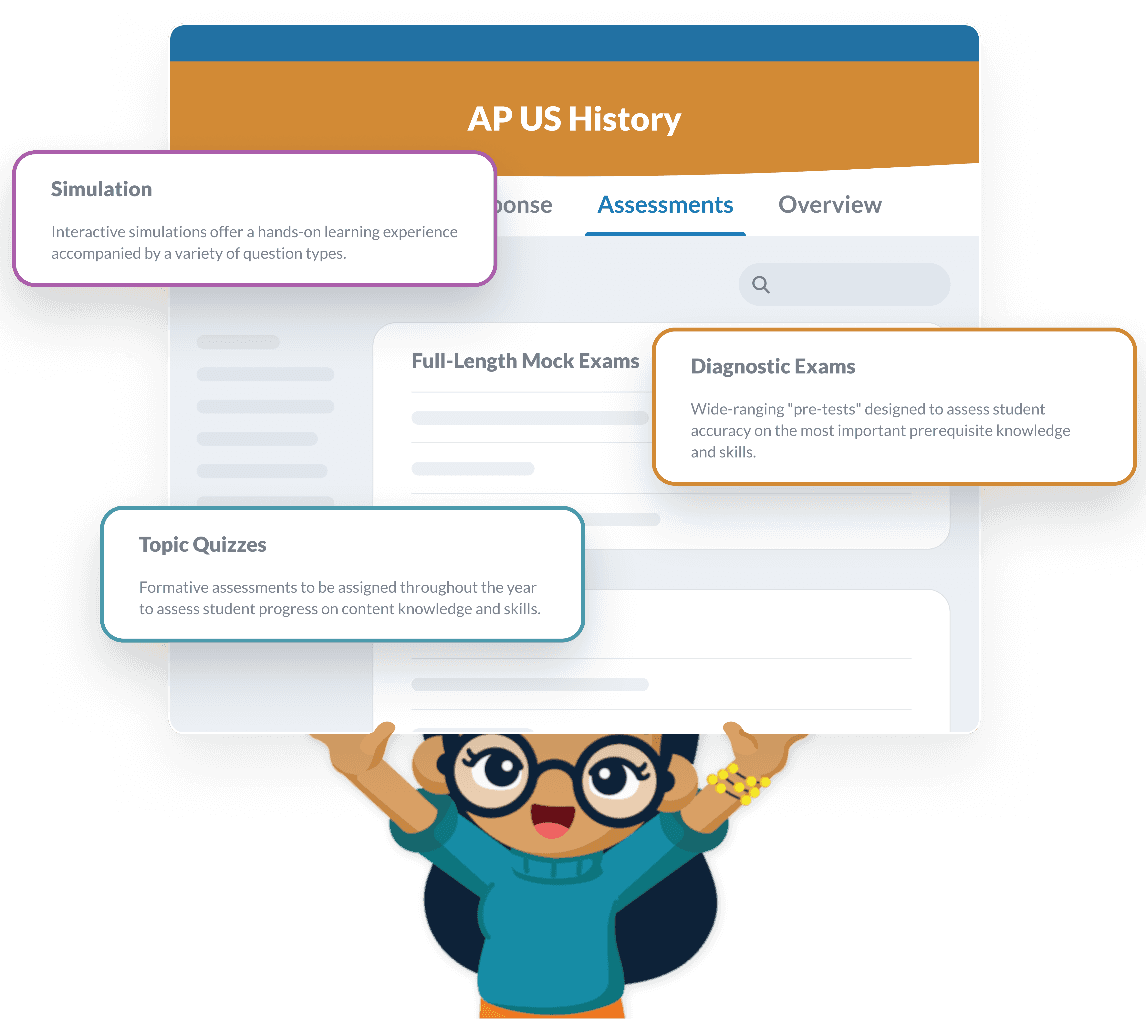
AP® & IB®
Massachusetts Curriculum Frameworks alignment
Use the reference below to see how various products in Albert support Massachusetts's standards, testing, and credit requirements.
Standards | Credit and testing requirements |
|---|---|
Massachusetts Curriculum Frameworks (MCF): ELA | ELA: MCAS testing |
Massachusetts Curriculum Frameworks (MCF): Math | Math: MCAS testing |
Massachusetts Science and Technology/Engineering Frameworks (STE): Science | Science: MCAS testing (Grades 5, 8) |
Massachusetts History and Social Science Frameworks (HSS): Social Studies | Social Studies (not state-tested in Grades 3–8) |
Massachusetts Curriculum Frameworks (MCF): World Languages | World Languages (not state-tested) |
Standards | Credit and testing requirements |
|---|---|
Massachusetts Curriculum Frameworks (MCF): ELA | ELA: Required credits + MCAS Grade 10 ELA |
Massachusetts Curriculum Frameworks (MCF): Math | Math: Required credits + MCAS Grade 10 Math |
Massachusetts Science and Technology/Engineering Frameworks (STE): Science | Science: Required credits + MCAS Science (Biology, Chem, Physics, or Tech/Eng) |
Massachusetts History and Social Science Frameworks (HSS): Social Studies | Social Studies: Required credits (including Civics) |
Massachusetts Curriculum Framework (MCF): World Languages | World Languages |
Massachusetts Comprehensive Health and Physical Education Frameworks (CHPE): Health & PE | Health: Locally required |
Practice Tests for my AP® Students. Instant feedback on how they are scoring. I love that my students can see exactly where they stand and what they need to work on before the real exam.
I love that I find the AP® Questions to be a little harder and more extensive than the AP® questions themselves. By having my students practice at a higher level, they walk into the real exam feeling ready.
My students always say that Albert is tougher than the test in May. They're frustrated at first, but by the time the exam comes around, they're relieved to find it more manageable than their Albert practice.
Albert.io is so helpful for giving students regular practice with AP® style questions and to help me identify which topics need review before the exam. The standards-aligned questions make lesson planning much more efficient.
I love how the AP® curriculum is aligned with the CED and I can just click on questions based on standards. Student benefit: they get targeted practice on exactly the skills the exam will test.
The program is very user-friendly and the data it provides plays a major role in supporting the learning process. My AP® Psychology students love the feature that allows them to check their results after each question.

Students who independently prepared with Albert’s AP® Question Banks consistently outperformed national AP® averages in 2024, 2025, and 2026, driven by sustained, high-volume practice.
View study
Albert helped MA schools achieve parity with the state math average.
View study