
Maximize your score with these resources:
- Albert.io AP® European History question banks
- Free AP® European History cheat sheets
- Free AP® European History score calculator
By the mid-1700s, Europe’s most powerful rulers faced a problem their grandparents never had: educated subjects were reading Enlightenment philosophes who openly questioned divine-right monarchy, hereditary privilege, judicial torture, and state religion. Some monarchs responded by branding themselves “philosopher-kings” who would rule reason-first. Others doubled down on traditional absolutism. A handful of states moved toward constitutional or parliamentary models.
This article covers Topic 4.6: Enlightened and Other Approaches to Power in Unit 4 (Scientific, Philosophical, and Political Developments). The CED learning objective is to explain how Enlightenment ideas influenced political and economic developments.
What Enlightened Absolutism Actually Meant
Enlightened absolutism describes 18th-century monarchical rule in which the sovereign retained absolute legal authority but justified that authority using Enlightenment language — reason, utility, welfare of subjects, religious toleration, and rational administration — rather than divine right alone. Frederick II of Prussia called himself “the first servant of the state.”

Three features distinguish enlightened absolutism from the older absolutism of Louis XIV:
- Utilitarian justification of royal power. The monarch’s job was to maximize welfare, productivity, and rationality. This gave philosophes leverage to criticize policy on its own terms.
- Selective adoption of Enlightenment reforms. Legal codification, religious toleration, expanded education, abolition of judicial torture, modest reductions in serfdom. NOT separation of powers, popular sovereignty, or constitutional limits.
- Centralization of administration. Reforms carried out by an enlarged, bureaucratized state apparatus — a tool for strengthening royal authority, not sharing power.
The Big Three
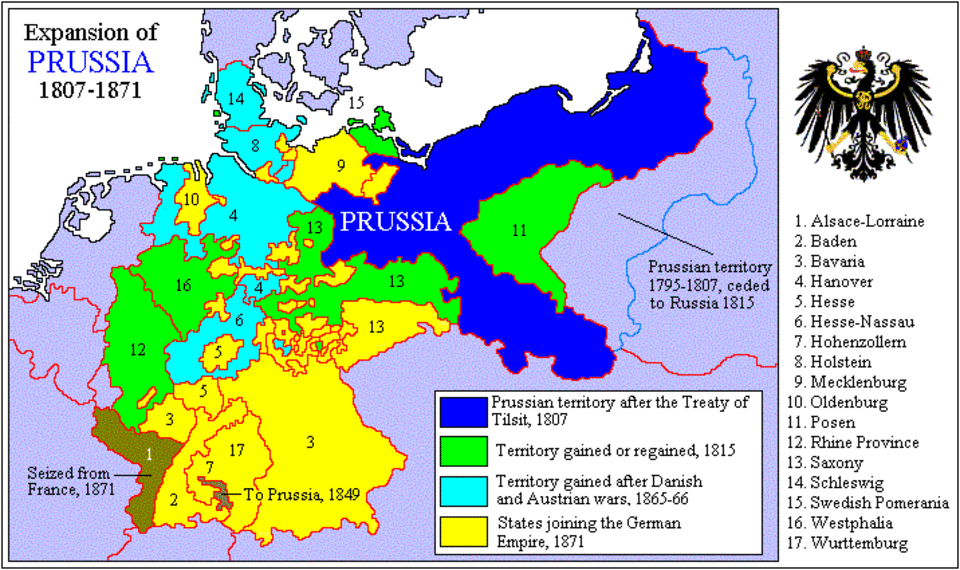
| Ruler | Key Reforms | What They Refused to Change | Why It Matters |
|---|---|---|---|
| Frederick II (the Great) of Prussia (r. 1740–1786) | Abolished judicial torture; granted broad religious toleration; promoted primary education; began codifying Prussian law (Allgemeines Landrecht, promulgated in 1794 after his death). | Kept serfdom intact on noble estates; preserved Junker monopoly on officer corps. | Model case of “reform that strengthens the state without weakening the nobility.” |
| Catherine II (the Great) of Russia (r. 1762–1796) | Convened the Legislative Commission (1767); issued the Nakaz drawing on Montesquieu and Beccaria; expanded secular education; modernized provincial administration. | Tightened serfdom dramatically; extended it into Ukraine; crushed Pugachev’s Rebellion (1773–1775). | The case study in rhetoric outrunning reality. Russian serfdom reached its most oppressive form under her rule. |
| Joseph II of Austria (r. 1765–1790, sole ruler 1780–1790) | Patent of Toleration (1781); abolished serfdom (1781); dissolved contemplative monasteries; taxed nobles. | Refused to share legislative power with provincial diets; pushed German-language centralization. | Most radical enlightened absolutist — and clearest demonstration of limits. Triggered revolts; much of his program rolled back by Leopold II. |
Reforms in Practice
| Reform Category | Typical Actions | Political Result |
|---|---|---|
| Religious toleration | Patents for Protestants, Jews, Eastern Orthodox; secularization of monastic property. | Weakened independent church institutions; attracted skilled minorities. |
| Legal reform | Abolition or restriction of judicial torture; codified law. Drew on Beccaria’s On Crimes and Punishments (1764). | Constrained arbitrary noble jurisdiction; cheap to enact. |
| Education | State-sponsored primary schools; teacher training; vernacular-language instruction. | Created literate clerks, soldiers, taxpayers — strengthened the state. |
| Serfdom | Reduction of labor dues in Austria; abolition by Joseph II; expansion under Catherine II. | Consistently broke against noble resistance except where forced through (Joseph II). |
| Political representation | Generally untouched. Enlightened monarchs rejected constitutional limits and separation of powers. | This is the core boundary of enlightened absolutism. |
Other Approaches
Parliamentary and constitutional models:
- Great Britain. Constitutional monarchy after the Glorious Revolution (1688) and Bill of Rights (1689). Real legislative power lay with Parliament. The crown could not raise taxes or maintain a standing army without consent.
- The Dutch Republic. Confederation of provinces governed by urban regents; genuine religious toleration; commerce-driven political economy.
- The Polish-Lithuanian Commonwealth. Elective monarchy with the liberum veto allowing any single noble to dissolve a Sejm session. Chronic paralysis led to the three Partitions (1772, 1793, 1795).
Unreformed absolutism:
- Bourbon France under Louis XV and Louis XVI. Retained the architecture of Louis XIV’s absolutism but paralyzed by the fiscal crisis. Successive reformers (Turgot, Necker, Calonne) were forced out by aristocratic resistance from the parlements — setting up the French Revolution.
Limits, Backlash, and the Road to 1789
Three structural problems limited every enlightened absolutist program:
- Dependence on the noble class. Reforms threatening noble economic interests — direct taxation, abolition of serfdom — produced fierce resistance.
- Absence of representative institutions to legitimate reform. Reform imposed from above could be reversed when the sovereign died. Joseph II’s reforms were partially undone by Leopold II within two years.
- The radicalizing effect of Enlightenment thought. Once subjects internalized arguments about reason, natural rights, and the social contract, they applied them past what monarchs intended.
Test-Taking Strategies
Mnemonic devices and memory shortcuts
- “FCJ” for the big three — Frederick (Prussia), Catherine (Russia), Joseph (Austria).
- “TLE-S-X” for reform categories that succeeded — Toleration, Legal codes, Education, State administration. X = political representation, always refused.
- “Read Beccaria → end torture.” Any stimulus mentioning 18th-century criminal-justice reform almost always involves Beccaria’s On Crimes and Punishments.
Cross-topic connections
- Topic 4.3 (The Enlightenment) → Topic 4.6. Enlightened absolutism is the political application of ideas studied in 4.3.
- Topic 4.6 → Topic 5.1 and the French Revolution. The failure of Bourbon reform inside an absolutist frame is the direct setup to 1789.
- Topic 4.6 ↔ Topic 4.2 (Scientific Revolution). The Scientific Revolution provides the epistemological foundation — reason, observation, natural law — that enlightened monarchs then applied to administration.
Common question formats
- SAQ with a primary source. An edict excerpt (Joseph II’s Patent of Toleration, Frederick II’s “Essay on Forms of Government”) or a noble petition. Identify the Enlightenment influence and one limit on the reform.
- MCQ with a visual stimulus. A portrait of a monarch in philosopher’s dress, a satirical print about reform. Look for visual cues about which monarch is depicted.
- LEQ. “Evaluate the extent to which Enlightenment ideas influenced the policies of European monarchs in the 18th century.” A strong thesis distinguishes rhetorical influence (widespread) from structural change (selective, often reversed).
Frequent student mistakes
- Treating enlightened absolutism as a step toward democracy. It was not. Enlightened monarchs centralized power; reform strengthened the absolutist state with new intellectual tools.
- Overcrediting Catherine the Great’s reforms. Russian serfdom intensified under her rule. Expect at least one question that punishes students who took her rhetoric at face value.
- Conflating Britain with continental enlightened absolutists. Britain was structurally different: power lay with Parliament, and the monarch operated within legal limits.
- Forgetting Joseph II’s reversal. Joseph went furthest, but Leopold II rolled back much of the program. Reform without representative consent was fragile.
Test-day shortcuts
- German-speaking monarch issuing toleration or anti-monastic reform → Joseph II
- “First servant of the state” or religious toleration in Prussia → Frederick II
- Nakaz, Legislative Commission, or Charter to the Nobility → Catherine II
- Why did a reform fail? Safest answer: noble or provincial resistance, then lack of representative institutions to anchor it
Time management tips
- For an SAQ on 4.6, budget two minutes to identify the monarch and reform before writing. Identifying the wrong ruler sinks every subsequent point.
- For LEQ/DBQ on Enlightenment influence, plan your thesis around the rhetorical vs. structural distinction before writing. It provides a built-in argumentative axis.
- If you’re running short on time and can’t remember a specific monarch’s reform, default to a structural argument — “reform was constrained by noble resistance and the absence of representative institutions” — which is defensible across nearly every case in the unit.
Check for Understanding
Think you’ve got it? Complete the quiz below to make sure. Download your results at the end.