
Maximize your score with these resources:
- Albert.io AP® Human Geography question banks
- Free AP® Human Geography cheat sheets
- Free AP® Human Geography score calculator
Half of the world’s population — and roughly 37 percent of its measured GDP. That gap between women’s share of humanity and women’s share of formal economic activity is one of the central facts of contemporary development geography. The AP® Human Geography exam expects you to know the patterns of women’s economic participation, how those patterns vary by region and stage of development, and how development outcomes change when women gain economic agency.
This article covers Topic 7.4: Women and Economic Development in Unit 7 (Industrial and Economic Development Patterns and Processes). The CED learning objective is:
Explain the role of women in economic development, including labor-force participation, the informal economy, microfinance, and the geographic patterns of gender inequity.
By the end you should be able to:
- Describe women’s labor-force participation rates and how they vary by region.
- Explain the role of unpaid and informal work in women’s economic contribution.
- Identify the major development interventions targeting women (microfinance, education, reproductive health).
- Connect women’s economic position to broader development outcomes — fertility, child mortality, GDP growth.
Labor-Force Participation: Global Patterns
The share of working-age women who participate in formal paid labor varies dramatically by region. The exam expects you to recognize the patterns.
| Region | Women’s LFP rate | Notable Features |
|---|---|---|
| Sub-Saharan Africa | ~62% | High participation but heavily in agriculture and informal sectors. |
| East Asia and Pacific | ~58% | Driven by China, Vietnam, and other industrial economies. South Korea and Japan lower. |
| Europe and Central Asia | ~50% | High in Scandinavia (~60%, or 75%+ for ages 15–64); lower in southern and eastern Europe. |
| Latin America and Caribbean | ~50% | Rising over the past 30 years; significant urban-rural gap. |
| South Asia | ~25% | India is a major outlier — women’s LFP fell from the mid-2000s to about 2018 before rebounding. |
| Middle East and North Africa | ~20% | Lowest globally; social, religious, and labor-market factors interact. |
The geographic pattern is not a simple “income raises participation” story. South Asia and MENA have far lower participation than equally poor African countries. India’s LFP for women has actually declined as the country has grown wealthier — a paradox that researchers attribute to the disappearance of agricultural work, social barriers to factory or service jobs, and rising household incomes that allow women to withdraw from the labor force.
The Informal Economy and Unpaid Work
Standard labor statistics drastically understate women’s economic contribution. Two reasons:
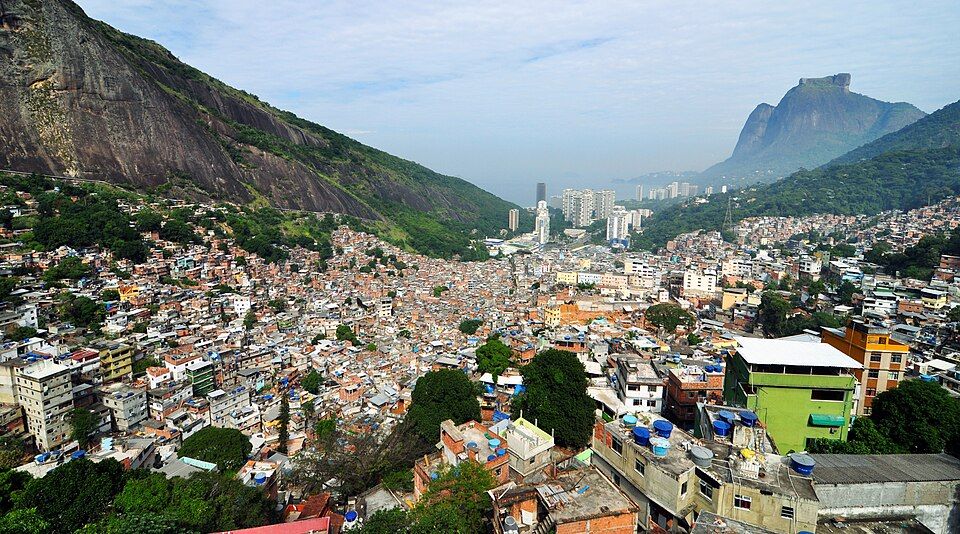
- Informal-sector concentration. Women in lower-income countries are heavily employed in the informal sector — street vending, domestic work, home-based piecework, agriculture on family land. These activities often go unrecorded.
- Unpaid household and care work. Cooking, cleaning, water-fetching (a major time burden in much of Africa and South Asia), child care, and elder care fall disproportionately on women. The UN estimates the global value of unpaid care work at trillions of dollars annually, none of which appears in GDP.
Strong essays note that “women’s economic contribution” is far larger than formal LFP rates suggest — formal statistics measure only the share that has been monetized.
Education and the Demographic Dividend
Female education is one of the most heavily studied development interventions, and the AP often pairs stimuli on it.
- Education raises women’s LFP. Educated women are far more likely to work for pay; the gap is largest in middle-income countries.
- Education reduces fertility. Each additional year of women’s schooling is associated with significant declines in total fertility rate. The mechanism: educated women marry later, control their reproductive choices, and have children later.
- Education reduces infant and child mortality. Educated mothers are more likely to seek prenatal care, complete vaccinations, and recognize illness.
- The “demographic dividend.” When fertility falls faster than mortality, the working-age share of the population rises, freeing resources for investment. Countries that experience this dividend (South Korea in the 1970s, China in the 1990s–2010s) often see rapid growth.
The deeper insight: women’s education is not just a women’s-rights issue — it is one of the most reliable predictors of broad development progress.
Microfinance and Microcredit
Microfinance is the provision of very small loans (often $50–$500) to poor borrowers who lack collateral and access to formal banking. Most microfinance borrowers are women, on the theory that women are more reliable repayers and reinvest more of their income in household well-being.
The most famous example: Muhammad Yunus’s Grameen Bank in Bangladesh, founded in 1983. Yunus won the Nobel Peace Prize in 2006. The Grameen model used “group lending” — small groups of women who collectively guarantee each other’s loans — to overcome the collateral problem.
Patterns of microfinance to know:
- Borrowers are overwhelmingly women. Often 80–95% in the largest microfinance institutions.
- Loans typically fund small businesses — sewing, market vending, small livestock, home-based services.
- Repayment rates are high. Often 95%+, comparable to or better than formal banks.
- Geographic concentration. Bangladesh, India, Bolivia, Peru, Mexico, and parts of East Africa have the most developed microfinance sectors.
Critiques of microfinance:
- Mixed evidence on poverty reduction. Recent randomized evaluations have found smaller impacts on household income than early enthusiasts claimed. Microfinance helps with consumption smoothing and business diversification but may not lift households out of poverty on its own.
- Risk of over-indebtedness. Multiple lenders, sometimes high effective interest rates, and aggressive collection practices have created crises (India’s Andhra Pradesh crisis in 2010).
- Pressure on women. Group lending can be supportive but also coercive — peer pressure to repay can produce real stress.
The exam rewards balanced treatment — microfinance is a meaningful tool, not a complete solution.
Garment Industries and Women’s Industrial Employment
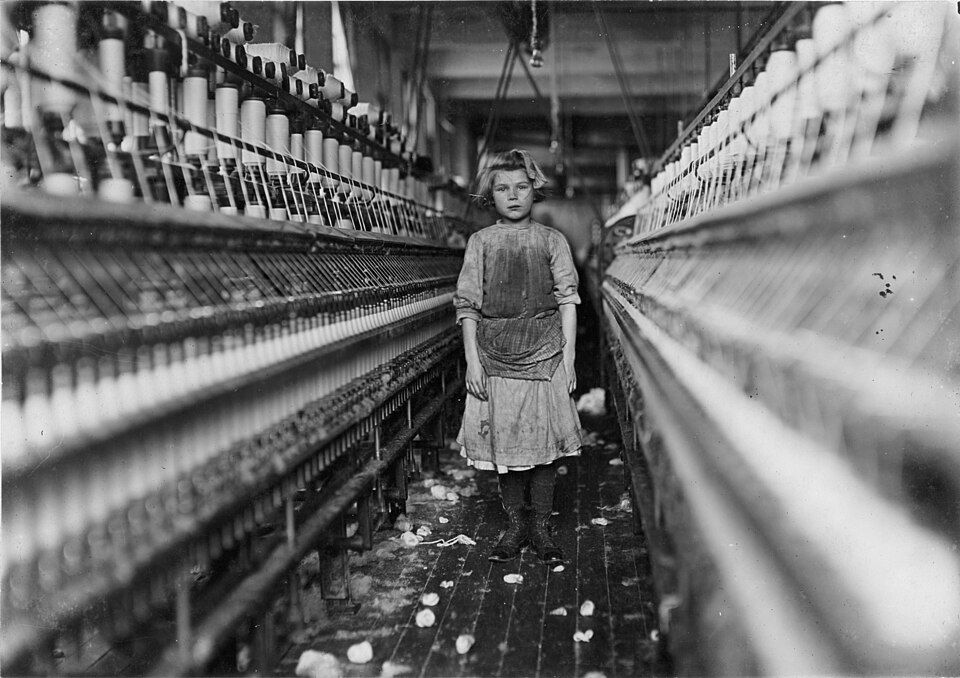
In many industrializing countries, women have entered the formal labor market primarily through factory work — especially garment manufacturing. Key cases:

- Bangladesh. The ready-made garment (RMG) sector employs about 4 million workers, the majority women. The industry transformed women’s role in the Bangladeshi economy but also produced the 2013 Rana Plaza collapse — over 1,100 workers killed — which exposed unsafe conditions and weak global supply-chain accountability.
- Vietnam, Cambodia, Indonesia. Similar garment-led industrialization patterns. Women dominate the factory workforce.
- Mexico’s maquiladoras. US-owned factories on the Mexican side of the border, especially in electronics and assembly. Predominantly female workforce since the 1970s.
- Export Processing Zones (EPZs). Special economic zones across South Asia, Southeast Asia, and Central America with tax incentives and looser labor regulations, often employing majority-female workforces.
Strong essays note both the empowering and exploitative dimensions: factory work gives women earned income (often for the first time in their family’s history) and exposes them to organized labor and urban life, while wages, hours, and working conditions are often poor.
Reproductive Health and Maternal Mortality
Access to reproductive health care is both a women’s-rights issue and a development indicator the exam may reference. Several patterns:
- Maternal mortality varies enormously. Norway’s maternal mortality rate is roughly 2 per 100,000 live births; Sub-Saharan Africa’s regional average is several hundred. The gap reflects access to skilled birth attendants, emergency obstetric care, and basic infrastructure.
- Contraceptive availability and modern method use strongly predict fertility outcomes. Mexico’s family planning programs of the 1970s–80s and Iran’s of the 1990s are widely studied examples of rapid fertility reductions tied to reproductive-health access.
- Female genital mutilation/cutting (FGM/C) remains practiced in parts of Africa, the Middle East, and South Asia, with serious health consequences. International activism has reduced prevalence in some regions but not eliminated it.
- Child marriage. Marriage before age 18 — concentrated in South Asia, Sub-Saharan Africa, and parts of MENA — limits girls’ education and economic options.
Policy Frameworks
Several frameworks shape contemporary policy on women and development:
- UN Sustainable Development Goal 5 (Gender Equality). One of 17 SDGs; specific targets on violence, child marriage, unpaid care work, leadership, reproductive health.
- The Beijing Declaration (1995). Fourth World Conference on Women in Beijing produced a comprehensive platform for action — still widely referenced.
- UN Women. The specialized UN agency for gender equality, established in 2010.
- National policies. Conditional cash transfers (Brazil’s Bolsa Família, Mexico’s Progresa/Oportunidades) that pay women directly for keeping children in school have been particularly studied.
- Reservation policies. India’s reservation of one-third of village council seats for women has been linked to better targeting of public goods.
Test-Taking Strategies
Mnemonic devices and memory shortcuts
- “Sub-Saharan high, South Asia and MENA low” — the surprising LFP pattern.
- “Grameen Bank = Bangladesh = Yunus = microfinance.”
- “Educate girls → lower fertility, lower mortality, higher growth.”
- “Rana Plaza 2013” — anchor for the dark side of garment industrialization.
- “Bolsa Família = conditional cash transfers.”
Cross-topic connections
- Topic 7.4 ↔ Unit 2 (population). Women’s status and fertility are deeply linked.
- Topic 7.4 ↔ Topic 7.3. The Gender Inequality Index (GII) is the development indicator that captures this topic.
- Topic 7.4 ↔ Unit 5 (agriculture). Women do most agricultural labor in much of the world.
- Topic 7.4 → Unit 6 (cities). Rural-to-urban migration is often driven by women’s pursuit of factory or service jobs.
Common question formats
- FRQ with a chart. Women’s LFP rates across regions. Identify the pattern and explain two causes.
- MCQ with a primary source. A microfinance success story or a garment-factory worker memoir. Identify the development intervention or context.
- FRQ on consequences. “Explain three ways that increasing female education affects a country’s development.” Use fertility, mortality, LFP, and growth.
Frequent student mistakes
- Assuming LFP rises with income. India shows it can fall as countries industrialize, depending on social factors.
- Treating microfinance as a complete solution. Recent evidence is more cautious; mention both effects and limits.
- Ignoring unpaid labor. Strong essays mention household and care work as a major part of women’s economic contribution.
- Calling factory work universally exploitative or universally empowering. The AP rewards essays that hold both.
Test-day shortcuts
- If a stimulus references group lending or small loans for women, default to microfinance / Grameen Bank.
- If it references garment factories in Bangladesh, default to Rana Plaza and RMG sector.
- If it references cash transfers to mothers, default to Bolsa Família / Progresa.
- If it references education’s effect on fertility, default to women’s schooling → demographic transition.
- If it references LFP rates by region, anchor on MENA and South Asia lowest, Sub-Saharan Africa surprisingly high.
Time management tips
- For FRQs, plan three short paragraphs — education, employment, reproductive health — to ensure broad coverage.
- If you blank on a specific case, fall back to the structural claim: “Women’s economic participation — formal, informal, and unpaid — is a major driver of development outcomes, and policies that expand women’s education, credit, and reproductive choice have measurable effects on fertility, mortality, and growth.”
- On chart questions, identify the regional outliers (India, MENA) before explaining the general pattern — outliers earn analytical points.
Check for Understanding
Think you’ve got it? Complete the quiz below to make sure. Download your results at the end.