
Maximize your score with these resources:
- Albert.io AP® English Language question banks
- Free AP® English Language cheat sheets
- Free AP® English Language score calculator
The AP® English Language multiple-choice section is worth 45% of your total score — the same weight as all three essays combined. Students who treat it as a throwaway section are leaving nearly half their grade on the table. This guide breaks down exactly what you’ll see, how the questions work, and the specific strategies that separate students who score 4s and 5s from those who don’t.
What We Review
What is the Format of AP® English Language?

The AP® English Language exam has two sections:
| Section | Questions/Tasks | Time | Score Weight |
|---|---|---|---|
| Multiple-Choice | 45 questions | 1 hour | 45% |
| Free-Response (FRQ) | 3 essays (synthesis, rhetorical analysis, argument) | 2 hours 15 min | 55% |
The multiple-choice section tests your ability to read and analyze nonfiction texts. You’ll encounter 4–5 passages, each paired with 9–12 questions. The passages represent a range of rhetorical situations: historical speeches, contemporary essays, journalistic pieces, scientific writing, and public discourse.
Two types of questions appear:
- Reading questions — ask you to identify rhetorical devices, analyze argument structure, interpret diction, and understand how a writer uses evidence
- Writing questions — present draft paragraphs and ask you to revise them for clarity, organization, or rhetorical effectiveness
Why is the AP® English Language Multiple-choice Section Important?
With 45 questions in 60 minutes, you have roughly 80 seconds per question. But the distribution matters more than the average — some questions take 15 seconds (recognizing a device by name), while others require re-reading a passage section and take 2–3 minutes.
The multiple-choice score is raw — every correct answer adds 1 point, and there’s no penalty for guessing. That means you should never leave a question blank.
Score impact is direct: a student who gets 75% of multiple-choice questions correct already has a meaningful cushion going into the essays. A student who gets 50% correct needs to produce near-perfect essays just to reach a 3.
What Content is Covered in the Multiple-choice Section of AP® English Language?
Every passage in the multiple-choice section presents a complete rhetorical situation:
- Exigence — what occasion or problem prompted this writing?
- Audience — who is the writer addressing, and how does the writing reflect that?
- Purpose — what does the writer want the reader to think, feel, or do?
- Speaker/Writer — what is the writer’s position, authority, and persona?
- Context — what historical, cultural, or situational factors shape the text?
Questions focus on these core skill areas:
| Skill Area | What You’re Analyzing | Example Task |
|---|---|---|
| Rhetorical Situation | Who, what, why, and for whom | “Which choice best identifies the writer’s primary purpose?” |
| Claims and Evidence | Argument structure; how evidence supports claims | “The statistic in paragraph 3 primarily serves to…” |
| Reasoning and Organization | How the argument is constructed and sequenced | “Which sentence, if added after sentence 12, would best support…” |
| Style and Tone | Diction, syntax, tone, rhetorical devices | “The shift in tone in lines 18–22 is best described as…” |
| Revising and Editing | Improving draft writing for clarity and impact | “Which revision of the underlined sentence best maintains the paragraph’s focus?” |
How to Prepare for AP® English Language’s Multiple-choice Questions
The most effective preparation targets the actual skill gap: most students can read nonfiction adequately, but struggle to analyze it at AP speed. Preparation should focus on:
- Build a rhetorical device vocabulary. Know the difference between ethos, logos, and pathos — and be able to spot them in a passage in seconds. Same for anaphora, juxtaposition, antithesis, chiasmus, irony, and understatement.
- Practice active reading with a rhetorical lens. As you read any nonfiction — news articles, editorials, essays — ask yourself: Who wrote this? Who’s the audience? What’s the purpose? What evidence do they use and why? This is the mental habit the exam tests.
- Do timed practice. The time pressure is real. Practice under conditions where you have 80 seconds per question. Speed comes from pattern recognition, not from rushing — and pattern recognition comes from repeated exposure to AP-style passages.
- Review released AP exams. The College Board publishes released multiple-choice questions and scoring guidelines. Studying them reveals which question types appear most often and how correct answers are worded.
- Read widely. AP passages come from diverse historical periods and genres. Regular reading of published nonfiction — from 18th-century pamphlets to contemporary journalism — develops the familiarity that makes unfamiliar passages less intimidating.
How Do You Answer AP® English Language Multiple-choice Questions?
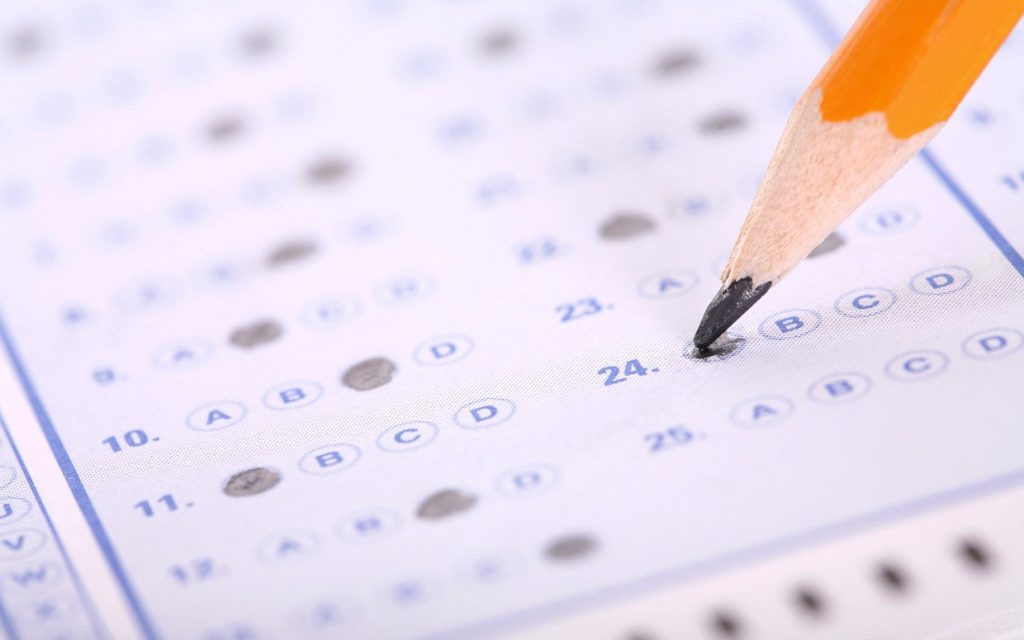
Use this process for every passage:
- Skim the blurb first. Each passage includes a short context note (source, date, author). Read it. Knowing that a passage is a 1776 pamphlet versus a 2015 op-ed completely changes how you interpret the diction and purpose.
- Read the passage actively, not passively. As you read, annotate mentally (or on paper): note shifts in tone, underline strong evidence, mark where the argument changes. You’re building a mental map for when questions ask “in lines 18–22…”
- Read each question before looking at the answers. Form your own answer or at least a direction before reading the choices. Students who go to the choices cold get pulled toward attractive distractors.
- Eliminate confidently first. Usually 2–3 choices can be crossed out immediately. Narrow to 2, then decide. If you’re stuck, mark it and move on — return with fresh eyes.
- Trust the text, not your prior knowledge. Every answer is grounded in the passage. If your answer requires information not in the text, it’s wrong. AP® English Language tests your ability to analyze this text, not your general knowledge of the topic.
Common distractor patterns to watch for:
- Too broad or too narrow — a choice that describes the entire passage’s purpose when the question asks about one paragraph, or vice versa
- True but irrelevant — a statement that’s accurate but doesn’t answer what was asked
- Right device, wrong function — correctly identifies a rhetorical device but mischaracterizes why the writer used it
- Extreme language — choices using “always,” “never,” “only,” or “entirely” are usually wrong; AP passages are nuanced
What are AP® English Language Multiple-choice Questions Like?
Here is an example of how a typical AP® English Language rhetorical analysis question works. Given a passage about climate disruption, questions might ask:
- “The writer develops the passage primarily through which of the following?” — Tests your ability to identify the overall rhetorical strategy (e.g., assertion supported by evidence vs. problem-solution structure)
- “The phrase ‘silent emergency’ in paragraph 2 primarily functions to…” — Tests your analysis of word choice and its rhetorical effect
- “Compared with the diction in the first paragraph, the diction in the final paragraph is best described as…” — Tests your ability to track tonal shifts across a passage
Key principles for answering these questions accurately:
- Re-read the specific lines referenced in the question — don’t answer from memory
- For purpose questions, think about the writer’s goal in that specific moment, not the passage’s overall goal
- For diction questions, consider connotation and register (formal vs. informal, clinical vs. emotional) alongside literal meaning
- For structure questions, consider what the passage would lose if that element were removed — that tells you its function
How can I practice AP® English Language Multiple-choice Questions?
The most effective practice resources are:
- College Board’s released exams — full multiple-choice sections with answer keys, available on AP Central. These are the gold standard since they show exactly what College Board tests.
- Albert.io AP® English Language practice questions — organized by skill area so you can target rhetorical analysis, claims and evidence, or style questions specifically
- Your class texts — any nonfiction reading you do in class can double as AP practice; analyze it rhetorically as you read
After any practice session, review your wrong answers with a focus on why the correct answer is right, not just what it is. Understanding the reasoning pattern is what transfers to new passages on exam day.
Test-Taking Strategies
Mnemonic: SQRR (Situation, Question, Read, Reason) — apply this to every passage block:
- Situation: read the blurb and identify the rhetorical context before reading the passage
- Question: skim the questions to know what to watch for as you read
- Read: read the passage actively, marking key moments
- Reason: answer each question by eliminating wrong choices before choosing
Cross-topic connections:
- Multiple-choice and rhetorical analysis FRQ share the same skills. The same vocabulary you need to label devices in multiple-choice (anaphora, juxtaposition, ethos) is the vocabulary you use to write your rhetorical analysis essay. Strong MCQ preparation directly improves your FRQ performance.
- Revision questions on multiple-choice mirror the synthesis FRQ. Both ask you to improve argumentative writing — one through selecting the best revision, one through constructing it yourself. Practice both together.
- Reading questions connect to your argument essay. The strategies you use to identify strong versus weak evidence in someone else’s argument (MCQ) are the same strategies you apply when supporting your own claim in the argument FRQ.
Common question formats:
- “The primary purpose of paragraph X is to…” — Look for the function of that paragraph in the larger argument
- “The shift in tone between paragraph 2 and paragraph 4 is best described as…” — Requires tracking tonal change, not just identifying one tone
- “Which choice best maintains the focus of the paragraph?” (revision questions) — Check coherence with the paragraph’s main claim
- “The use of [rhetorical device] in lines X–Y primarily serves to…” — Identify the device AND its function; function is what the question is actually testing
Frequent student mistakes:
- Confusing tone and purpose. Tone describes the writer’s attitude (urgent, skeptical, celebratory). Purpose describes the writer’s goal (to persuade, to inform, to critique). A question about purpose wants the goal; a question about tone wants the attitude.
- Answering from prior knowledge. AP® English Language passages often deal with controversial or factual topics. Your opinion about the topic is irrelevant — the answer is always in the text.
- Skipping the blurb. The contextual note before each passage is not decorative. It tells you the rhetorical situation. A passage from 1850 is not addressed to the same audience as a 2020 essay on the same topic.
- Spending too long on hard questions. The exam has 45 questions in 60 minutes. No single question is worth 3 minutes. Mark it, guess, move on, return if time allows.
Test-day shortcuts:
- For “primarily serves to” questions about a single device or sentence: ask yourself “What would the passage lose without this?” — that identifies its function
- For revision questions: read the surrounding sentences first; the correct revision must fit grammatically AND rhetorically with what comes before and after
- For “the writer’s attitude toward X is best described as” questions: find the adjectives and verbs the writer uses about X — those carry the attitude
- If two choices seem equally valid, pick the one that’s more specific to the passage rather than the one that could be true of any writing
Time management:
- Target 12–13 minutes per passage block (about 80 seconds per question on average)
- Spend the first 60–90 seconds reading the passage; don’t rush the read to get to the questions faster — reading well saves time on the questions
- Flag questions where you eliminated to 2 choices but couldn’t decide; come back to those rather than spending extra time on first pass
- With 5 minutes left, check for blanks and fill them in — every unanswered question is a guaranteed 0, while a random guess has a 20% chance of being correct