

Maximize your score with these resources:
- Albert.io AP® World History question banks
- Free AP® World History cheat sheets
- Free AP® World History score calculator
The Enlightenment (roughly 1650–1800) was an intellectual movement that applied reason, observation, and skepticism to questions about government, religion, and society. It grew directly out of the Scientific Revolution and produced the philosophical foundations of the American and French Revolutions. On the AP® World History exam, the Enlightenment appears in Period 5 (1750–1900) as a driver of political revolutions and a challenge to traditional authority.
From Scientific Revolution to Enlightenment
The Scientific Revolution (1543–1687) established the template the Enlightenment would follow. Copernicus, Galileo, Kepler, and Newton demonstrated that close observation, mathematical reasoning, and the willingness to question received wisdom could overturn centuries-old beliefs about the universe. If Aristotle and the Church had been wrong about astronomy and physics, perhaps inherited ideas about government and society were equally flawed.
Key Scientific Revolution figures and their significance for AP® World History:
- Nicolaus Copernicus (1543): Proposed a heliocentric model, directly challenging Church cosmology and the principle that religious authority determined truth
- Galileo Galilei: Used the telescope to confirm heliocentrism; his conflict with the Inquisition became a symbol of reason vs. religious authority
- Isaac Newton: Principia Mathematica (1687) demonstrated that the universe operated according to discoverable, rational laws — inspiring Enlightenment thinkers to apply the same approach to human society
- The Scientific Method: Observation, hypothesis, experimentation, and revision replaced appeals to tradition and scripture as the standard for establishing truth
Core Enlightenment Ideas
Enlightenment thinkers — the French philosophes — applied the logic of the Scientific Revolution to political and social questions. Their central claims:
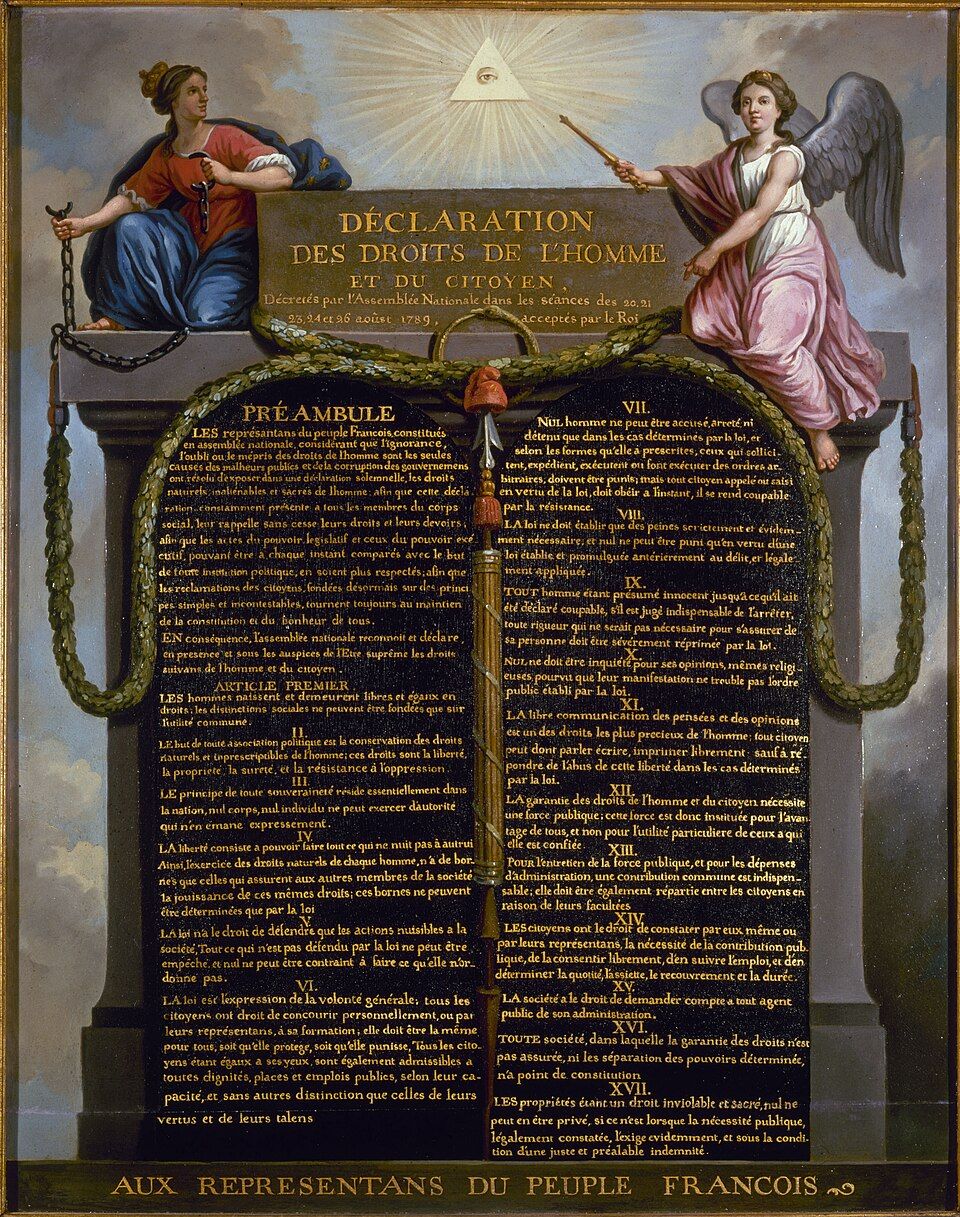
- Natural rights: Humans possess inherent rights (life, liberty, property) that no government can legitimately deny — John Locke’s foundational argument
- Social contract: Legitimate government rests on the consent of the governed, not divine right — Rousseau’s contribution
- Separation of powers: Government authority should be divided to prevent tyranny — Montesquieu’s Spirit of the Laws directly influenced the U.S. Constitution
- Religious toleration: Voltaire attacked religious persecution and defended freedom of conscience; his satire Candide skewered the Church and optimism
- Progress: Human society could be improved through reason and education — a direct challenge to the idea that social hierarchy was divinely ordained
Key Thinkers and Their Arguments
| Thinker | Nation | Key Work / Idea | AP Exam Relevance |
|---|---|---|---|
| John Locke | England | Natural rights (life, liberty, property); government by consent | Direct source for the Declaration of Independence |
| Montesquieu | France | Separation of powers; three branches of government | Blueprint for U.S. and French constitutions |
| Voltaire | France | Religious toleration; critique of the Church; Candide | Symbol of Enlightenment skepticism; frequent MCQ source |
| Jean-Jacques Rousseau | France/Geneva | Social contract; popular sovereignty; “general will” | Influenced French Revolution radicalism (Jacobins) |
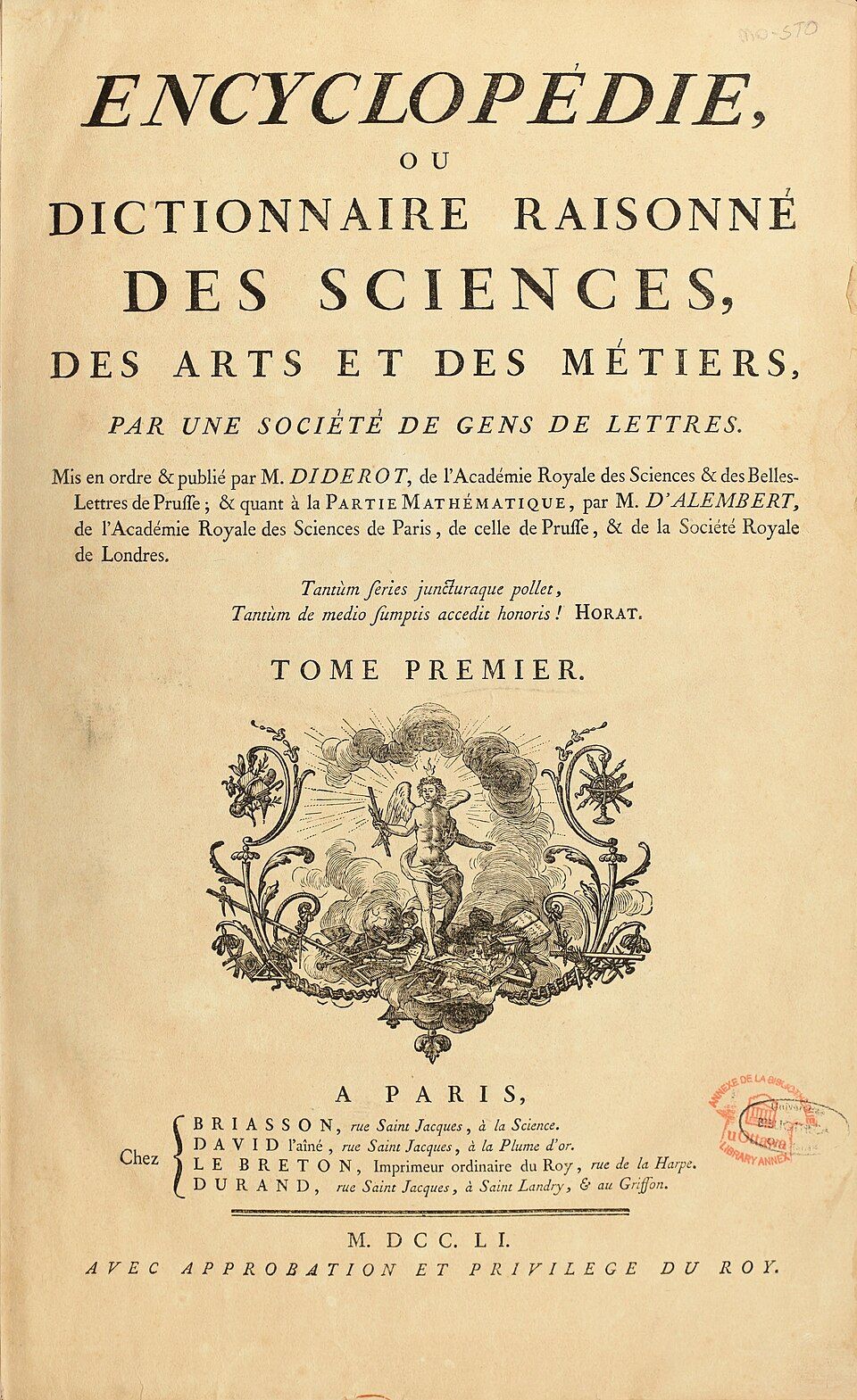
| Denis Diderot | France | Encyclopédie: compiling all knowledge; democratizing information | Example of Enlightenment’s spread through print culture |
| Mary Wollstonecraft | England | A Vindication of the Rights of Woman (1792): extending Enlightenment rights to women | Counter-argument to male-only Enlightenment; women’s rights origins |
Enlightenment and Political Revolutions
The Enlightenment’s most direct historical consequence was political revolution.
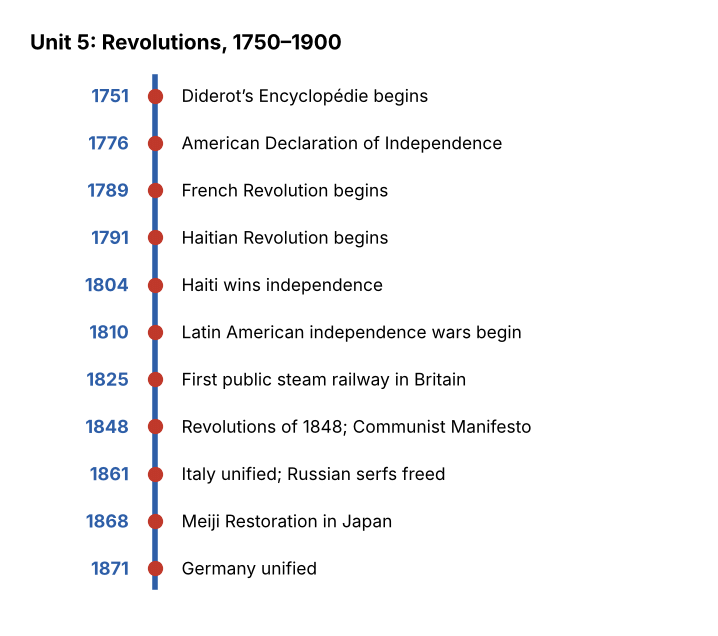
The American Revolution (1776): Thomas Jefferson drew heavily on Locke when writing the Declaration of Independence. “Life, liberty, and the pursuit of happiness” paraphrases Locke’s “life, liberty, and property.” The U.S. Constitution’s three branches reflect Montesquieu. The American Revolution was, in essence, Enlightenment ideas put into institutional practice.
The French Revolution (1789): “Liberty, Equality, Fraternity” — the Revolution’s motto — encapsulated Enlightenment goals. Rousseau’s concept of popular sovereignty justified the overthrow of the monarchy. However, the Revolution also revealed the Enlightenment’s limits: Rousseau’s “general will” was used to justify the Terror, showing how Enlightenment ideas could be weaponized.
Haitian Revolution (1791–1804): Toussaint Louverture cited Enlightenment principles of natural rights to justify the only successful slave revolution in history. The Haitian Revolution demonstrated that enslaved people would hold European colonizers to their own stated principles — a recurring AP® World History theme.
Latin American independence movements (1810s–1820s): Simón Bolívar and other creole leaders used Enlightenment ideas to justify independence from Spain, though they often excluded indigenous and enslaved populations from the rights they claimed for themselves.
Limits and Contradictions of the Enlightenment
The AP exam frequently asks about the contradictions between Enlightenment ideals and Enlightenment practice:
- Slavery: Many Enlightenment thinkers, including Jefferson, owned enslaved people. The Declaration’s “all men are created equal” explicitly excluded enslaved Africans and women
- Gender: Most philosophes restricted natural rights to men. Wollstonecraft’s Vindication directly challenged this hypocrisy
- Colonialism: Enlightenment ideas of progress and reason were used to justify European colonialism — framing conquest as “civilizing” inferior peoples
- Religion: While many philosophes criticized the Church, few advocated atheism; deism (belief in a non-interventionist creator) was common
The Enlightenment and the AP Exam
The Enlightenment is a high-yield topic that connects across multiple AP® World History periods. It appears in stimulus-based MCQs (often using excerpts from Locke, Voltaire, or the Declaration of Independence) and as evidence in LEQs and DBQs on political change, the causes of revolution, and the spread of ideas through networks.
Test-Taking Strategies
Mnemonic — Key Enlightenment thinkers: L-M-V-R — Locke (natural rights), Montesquieu (separation of powers), Voltaire (religious toleration), Rousseau (social contract). These four appear most often on the AP exam.
Mnemonic — Enlightenment → Revolutions sequence: “Americans Fight, Haitians Follow” — American Revolution (1776) → French Revolution (1789) → Haitian Revolution (1791) → Latin American independence (1810s). Each built on the previous; each applied Enlightenment ideas in a different context.
Cross-topic connections the AP exam tests frequently:
- Enlightenment → Print culture: The Encyclopédie and pamphlets spread ideas across Europe — connects to the role of the printing press (Period 4) in accelerating the circulation of new ideas. The AP exam asks how networks (trade, intellectual, religious) spread transformative ideas
- Enlightenment → Nationalism: The idea that the “people” are sovereign led directly to nationalism — the belief that ethnic and cultural groups deserve self-governance. This fueled 19th-century revolutions and independence movements (Period 5)
- Enlightenment → Feminism: Wollstonecraft applied Enlightenment logic consistently — if reason is universal, women possess it equally. Her work appears as a DBQ document and in source-analysis MCQs
- Enlightenment → Colonialism’s contradictions: European colonizers claimed to bring “civilization” and “reason” to colonies — a direct application of Enlightenment ideas of progress — while simultaneously denying the colonized people the rights Enlightenment philosophy prescribed
Common mistakes to avoid:
- Confusing the Scientific Revolution with the Enlightenment: The Scientific Revolution (1543–1687) was about understanding the natural world; the Enlightenment (1650–1800) applied scientific reasoning to human society and politics. The Scientific Revolution caused the Enlightenment; they are not the same event
- Thinking the Enlightenment was French: France was central, but the Enlightenment was a transatlantic movement. Key figures were English (Locke), Scottish (Hume, Smith), and the ideas had their greatest political impact in America and Haiti
- Overstating the Enlightenment’s democratic ideals: Most philosophes were elite, educated men who wanted reform, not revolution. Voltaire preferred an “enlightened despot” to democracy. Only after 1789 did radical democrats claim the Enlightenment as their own
- Missing the Haitian Revolution: The AP® World History exam specifically emphasizes the Haitian Revolution as an application of Enlightenment principles. Don’t write about Enlightenment revolutions without mentioning Haiti
For LEQ and DBQ responses: The Enlightenment is prime evidence for arguments about how ideas spread through intellectual networks, how colonized people used European ideologies to challenge colonial rule, and how Enlightenment ideals were applied selectively based on race and gender. If a prompt asks about causes of political revolutions in the 18th–19th centuries, the Enlightenment is always relevant as context — even when it’s not explicitly named.