

Maximize your score with these resources:
- Albert.io AP® Biology question banks
- Free AP® Biology cheat sheets
- Free AP® Biology score calculator
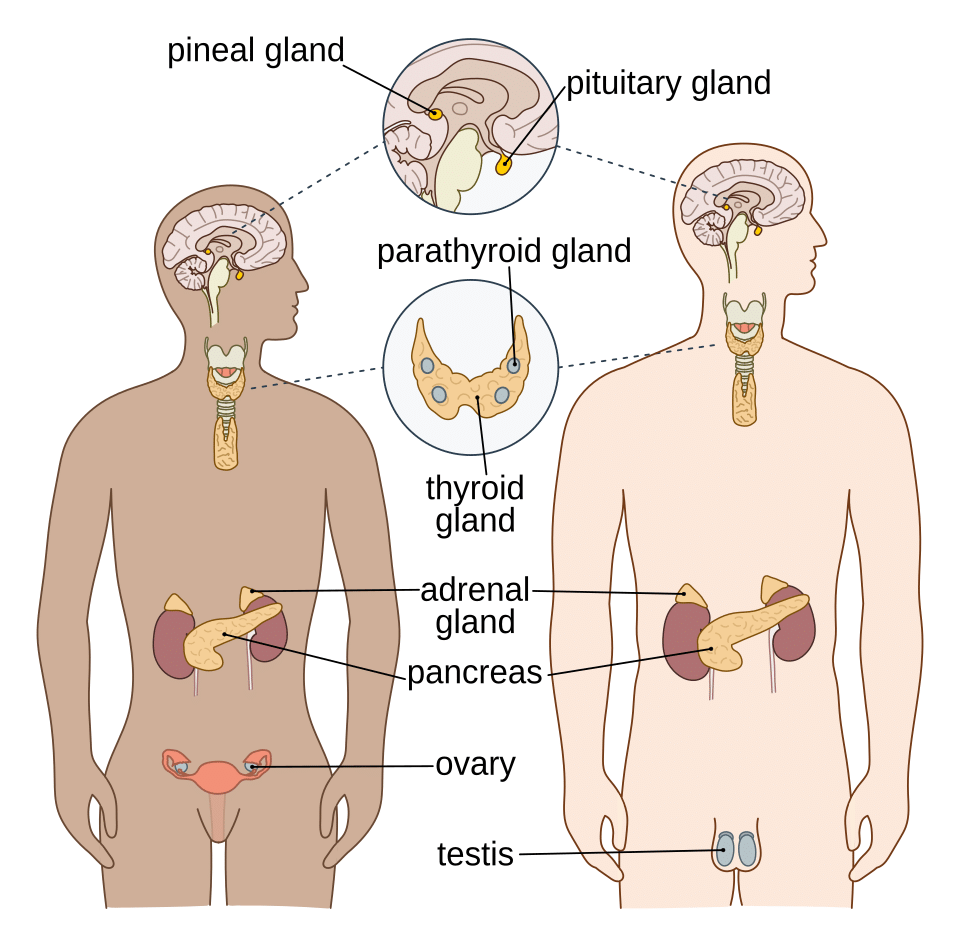
The endocrine system is one of the body’s two major regulatory systems, working alongside the nervous system to maintain homeostasis. While the nervous system operates through rapid electrical signals, the endocrine system uses chemical messengers called hormones to coordinate bodily functions across longer timeframes. For AP® Biology, the value of the endocrine system is not a memorized list of every gland and hormone—it is what hormones reveal about cell communication, signal transduction, and feedback regulation. This guide focuses on those exam-tested principles, using hormones as the example system that ties them together.
Where Endocrine Signaling Fits Among Cell Signals
Before focusing on hormones, it helps to see where endocrine signaling sits in the larger picture of cell communication, which is the framework the AP exam actually tests. Cells coordinate their activities by releasing and receiving chemical signals, and these signals are classified mainly by how far they travel.
- Direct contact: Adjacent cells exchange signals through junctions or membrane-bound molecules that touch a neighboring cell.
- Local (paracrine) signaling: A cell secretes a molecule that diffuses a short distance to nearby target cells. Autocrine signaling is a special case in which the cell responds to a signal it released itself.
- Synaptic signaling: A neuron releases a neurotransmitter across a tiny synaptic gap to the next cell—fast and highly localized.
- Long-distance (endocrine) signaling: A gland secretes a hormone into the bloodstream, and the hormone travels throughout the body to reach distant target cells.
Hormones are the textbook example of long-distance signaling. A hormone is broadcast everywhere through the blood, yet only cells carrying the matching receptor respond. This is the key idea: specificity comes from the receptor, not from the delivery. The same logic—an exam favorite—explains why one signal can produce different responses in different cell types, depending on which receptors and downstream machinery each cell possesses. All of these pathways, endocrine included, are organized into three universal stages: reception, transduction, and response.
Two Classes of Hormones and How They Signal
Hormones fall into two major categories based on their chemical structure, and that chemistry determines where their receptor is located and how the signal is processed inside the cell. This distinction is explicitly in scope for AP® Biology and appears on the exam far more often than the name of any single gland.
Water-soluble hormones (peptides, proteins, and catecholamines such as epinephrine) cannot cross the phospholipid bilayer. They bind to receptors on the cell surface, activating second-messenger systems (such as cyclic AMP) that relay and amplify the signal inside the cell. Because they act through proteins that already exist in the cell rather than through new gene expression, these hormones generally work quickly and have short-lived effects.
Lipid-soluble hormones (steroids such as cortisol and testosterone, plus thyroid hormones) can pass through the membrane. They bind to intracellular receptors in the cytoplasm or nucleus, and the hormone–receptor complex acts as a transcription factor that directly regulates gene expression. Because they change which proteins a cell makes, these hormones generally act more slowly but produce longer-lasting effects.
| Feature | Water-Soluble Hormones | Lipid-Soluble Hormones |
| Examples | Insulin, glucagon, epinephrine | Cortisol, testosterone, estrogen, thyroid hormone |
| Can cross the membrane? | No | Yes |
| Receptor location | Cell surface (membrane) | Intracellular (cytoplasm or nucleus) |
| Mechanism | Second messengers (e.g., cAMP); activate existing proteins | Regulate gene transcription; change proteins made |
| Speed and duration | Fast onset, short-lived | Slow onset, long-lasting |
Signal Transduction: From Hormone to Cellular Response
The reason a single hormone molecule can reshape a cell’s behavior is signal transduction—the relay of information from the receptor to the molecules that carry out the response. Tracing this pathway is a high-frequency AP task, so it is worth knowing the general logic rather than the details of any one gland.
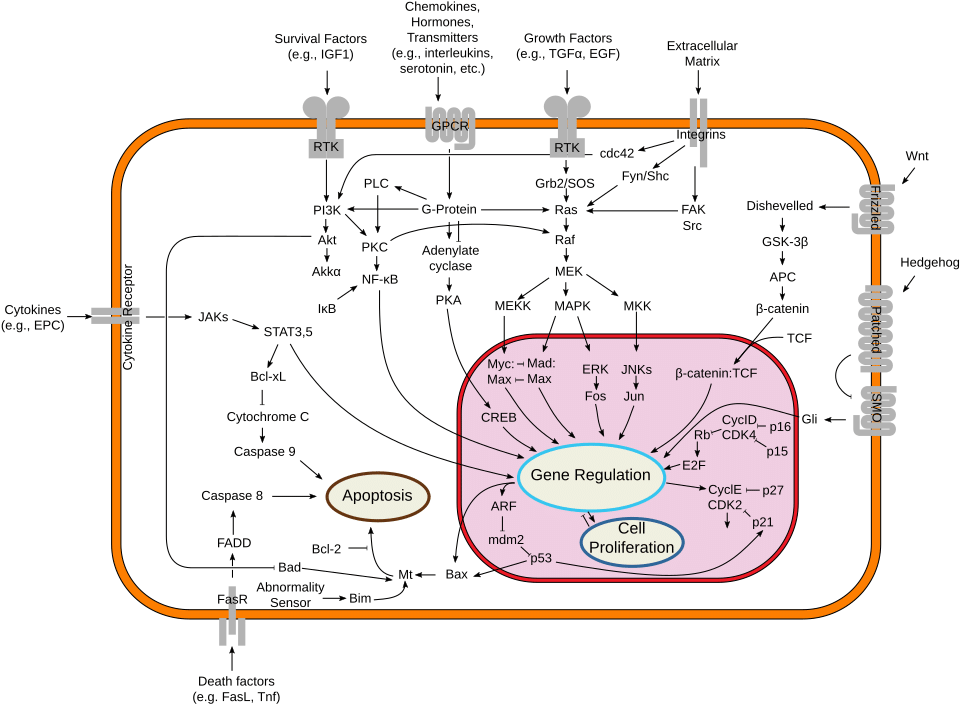
Reception. A water-soluble hormone (the ligand) binds a specific cell-surface receptor. Binding changes the receptor’s shape, the event that begins transduction. Lipid-soluble hormones instead bind receptors inside the cell, but the principle is identical: a ligand changes a receptor’s conformation.
Transduction. For surface receptors, the shape change activates relay molecules inside the cell. A common route uses a G protein to switch on an enzyme that produces a second messenger such as cyclic AMP. The second messenger spreads through the cytoplasm and activates a cascade of protein kinases, enzymes that add phosphate groups to the next protein in line, switching it on. Each activated enzyme can act on many target molecules, so the signal is amplified at every step.
Response. The end of the cascade produces the cellular response: an enzyme is switched on or off, a transport protein opens, or—if the cascade reaches the nucleus—a gene’s expression changes. Epinephrine, for example, binds a surface receptor on liver cells and, through a cAMP cascade, activates the enzymes that break down glycogen, rapidly raising blood glucose during a stress response.
Cells use several broad receptor types, and knowing the categories is enough for the exam:
| Receptor Type | How It Works |
| G protein-coupled receptor | Ligand binding activates a G protein, which turns on an enzyme that makes a second messenger |
| Receptor tyrosine kinase | Ligand binding triggers the receptor to phosphorylate itself and relay proteins, launching several pathways at once |
| Ligand-gated ion channel | Ligand binding opens or closes a channel, changing the flow of ions across the membrane |
| Intracellular receptor | Used by lipid-soluble signals; the complex acts as a transcription factor regulating genes |
This three-stage framework—reception, transduction, response—works for any signaling scenario the exam presents, which is exactly why the College Board emphasizes it over memorized anatomy.
Amplification and Why Cascades Matter
A frequently misunderstood point is why cells bother with long multi-step cascades instead of a single on/off switch. The answer is amplification. Suppose one hormone activates one receptor, that receptor activates several G proteins, each G protein switches on an enzyme, and each enzyme produces many second-messenger molecules. By the time the signal reaches its final targets, a single hormone molecule may have generated thousands or millions of product molecules.
Multi-step pathways also create opportunities for control and integration. Each step can be regulated independently, sped up, slowed down, or combined with signals from other pathways. A cell can therefore fine-tune its response, integrate multiple inputs, and produce graded rather than all-or-nothing outputs. On the exam, if you are asked why a cascade has so many steps, the highest-value answers are signal amplification and the chance to regulate the response at multiple points.
Changing the Response: How Pathways Are Modulated
Signal transduction pathways are not fixed; cells adjust them constantly, and the AP framework expects you to reason about what happens when a pathway is changed. Two ideas do most of the work here.
Phosphorylation and dephosphorylation act as molecular switches. Protein kinases turn proteins on by adding phosphate groups, while enzymes called phosphatases turn them off by removing those groups. This reversible switching lets a cell both launch a response and shut it down cleanly once the signal fades, which is essential for keeping responses temporary and proportional.
Blocking or overactivating any step changes the outcome. If a relay protein is mutated, a receptor cannot bind its ligand, or a toxin locks an enzyme in the “on” position, the response is altered even when the rest of the pathway is intact. A classic example is a toxin that keeps a G protein permanently active, causing the cell to overproduce a second messenger and respond as though the signal never stopped. This is the conceptual basis for many drugs as well: a molecule that blocks a receptor or a relay enzyme can silence a pathway on purpose.
Reasoning about altered pathways—predicting the effect of a missing, blocked, or overactive component—is far more representative of AP questions than recalling which gland makes which hormone.
Negative Feedback and Endocrine Axes
Hormone levels are not held constant by chance; they are controlled by negative feedback, in which the output of a pathway inhibits the steps that produced it. This keeps a regulated variable oscillating within a narrow range around a set point. Every feedback loop has the same components: a sensor that detects the variable, a control center that compares it to the set point, and an effector that carries out the correction.
The major endocrine “axes” are useful on the exam not as lists to memorize but as concrete examples of the negative-feedback principle. A representative axis runs from the hypothalamus to the pituitary to a target gland: the hypothalamus releases a signal that prompts the pituitary to release a tropic hormone, which prompts a target gland to release its hormone. As the final hormone rises, it inhibits both the hypothalamus and the pituitary, shutting down further stimulation—the defining feature of negative feedback.
Reading a feedback chain:
- If a target-gland hormone is low, its upstream stimulating hormone is usually high, because the brake (inhibition) has been released.
- If a target-gland hormone is high, the upstream stimulating hormone is usually low, because feedback has applied the brake.
- A broken target gland and a broken control center produce opposite patterns of upstream hormone—a favorite exam discriminator.
Not all hormonal control is negative. Positive feedback amplifies a change instead of opposing it, and it is used for decisive, self-limiting events. During childbirth, for example, stretching of the uterus triggers oxytocin release, oxytocin strengthens contractions, and stronger contractions cause more stretch—an escalating loop that ends only when the baby is delivered. Recognizing the difference between stabilizing negative feedback and amplifying positive feedback is a recurring exam skill.
Blood Glucose: A Model Feedback System
Blood glucose regulation is the endocrine example the AP exam returns to most often, because it cleanly illustrates antagonistic hormones operating through negative feedback. Two hormones from the pancreas push blood glucose in opposite directions toward a set point.
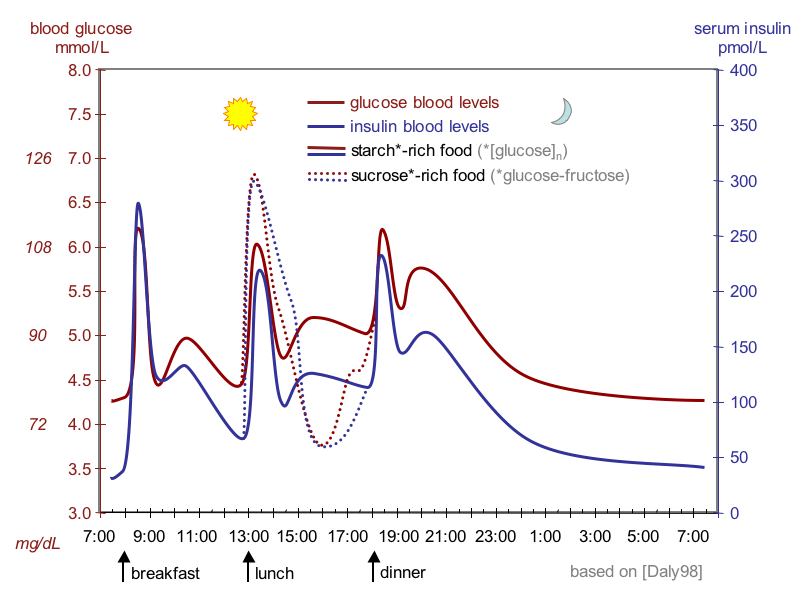
Insulin is released when blood glucose is high, after a meal. It lowers blood glucose by promoting glucose uptake into muscle and fat cells, stimulating storage of glucose as glycogen in the liver and muscles, and promoting fat synthesis. Insulin is water-soluble and acts through surface receptors, producing rapid effects.
Glucagon is released when blood glucose is low, during fasting. It raises blood glucose by stimulating the breakdown of liver glycogen, promoting the synthesis of new glucose, and increasing the breakdown of fats for energy. Because insulin and glucagon oppose each other, the system can correct deviations in either direction and return glucose toward its set point—textbook negative feedback, and a pattern you can reuse to analyze almost any other endocrine prompt.
When Signaling Breaks Down
Signal transduction pathways can be disrupted at any step, and the AP framework expects you to reason about the consequences. A mutation can leave a receptor unable to bind its ligand, a molecule can block a relay protein, or the signaling molecule itself can be missing. In every case, the downstream response fails even though other parts of the pathway are intact.
Diabetes mellitus is the classic illustration, and the two types map onto two different failure points:
- Type 1 diabetes results from autoimmune destruction of the insulin-producing cells, so the signal itself is missing (a ligand deficiency). Blood glucose cannot be lowered after a meal, and hyperglycemia results.
- Type 2 diabetes involves insulin resistance: the hormone is present, often at elevated levels, but target cells respond poorly because the receptor pathway is impaired (a reception/transduction problem).
Framing disorders this way—deficiency of the signal versus failure of the receiving cell—turns memorization into reasoning, which is precisely what the exam rewards. Whenever you meet an unfamiliar hormonal disorder, ask whether the problem is too little signal or a target cell that cannot respond.
Why the Same Hormone Can Cause Different Responses
One of the most powerful ideas in cell communication is that the response to a signal is determined by the receiving cell, not by the signal alone. Because a hormone travels everywhere in the blood, many cell types may be exposed to it—yet they can respond in completely different ways, or not at all.
Three factors explain this:
- Receptor presence. A cell responds only if it expresses a receptor for the hormone. Cells without the receptor ignore the signal entirely, which is why a body-wide hormone produces targeted effects.
- Receptor type. The same molecule can bind different receptor subtypes on different cells, triggering different internal pathways. Epinephrine, for instance, can prompt one tissue to constrict and another to dilate, depending on the receptor each cell carries.
- Downstream machinery. Even with the same receptor, two cells may contain different relay proteins and enzymes, so the cascade ends in different responses—one cell breaks down glycogen while another secretes a product.
This principle is a recurring exam theme: when asked why a single hormone causes several distinct effects, the answer is differences in receptors and downstream pathways among target cells, not differences in the hormone itself.
Common Mistakes to Avoid
Treating receptor location as a detail rather than the whole point. Whether a receptor sits on the surface or inside the cell follows directly from the hormone’s solubility and determines its entire mechanism. Water-soluble hormones cannot enter the cell, so they must use surface receptors and second messengers; lipid-soluble hormones cross the membrane and act on gene expression. Mixing these up reverses the speed, duration, and mechanism of the response.
Confusing negative and positive feedback. Negative feedback opposes a change and stabilizes a variable around its set point; positive feedback amplifies a change and drives the system away from baseline. If you cannot quickly classify a loop, you will mispredict how the hormones in it behave.
Assuming “more hormone” always means “more response.” If target cells lack functional receptors or the pathway is blocked, even high hormone levels produce little effect—exactly the situation in insulin resistance. Always check whether the receiving cell can actually respond.
Forgetting amplification. Students often picture one signal causing one effect. In reality, a cascade multiplies the signal, so a tiny amount of hormone can produce a large, rapid response. This is why second-messenger systems exist.
Test-Taking Strategies
Anchor everything to signaling and feedback. The endocrine system on the AP exam is really a vehicle for in-scope ideas: cell communication, signal transduction, and feedback. If a question names a hormone, immediately ask: Is it water-soluble or lipid-soluble? Where is its receptor? Does the scenario describe negative or positive feedback? Those questions earn points; reciting which gland sits where does not.
Master the two hormone classes. Water-soluble hormones bind surface receptors and act through second messengers (fast, short-lived); lipid-soluble hormones enter the cell and regulate transcription (slow, long-lasting). A reliable shortcut: if a hormone is a steroid or a thyroid hormone, expect an intracellular receptor and changes in gene expression.
Trace the signaling cascade. For “explain how this hormone produces its effect” prompts, walk through reception, transduction, and response, and mention amplification through the second-messenger cascade. This structure generalizes to any signaling example, including non-hormonal ones.
Read feedback loops carefully. If a stimulating hormone is elevated, the downstream hormone is often low (the brake is off); if it is depressed, the downstream hormone is often high. Decide first whether the loop is negative (stabilizing) or positive (amplifying)—almost all endocrine feedback is negative, with childbirth and lactation as the standard positive-feedback exceptions.
Diagnose broken pathways. When a question describes a disorder, classify it as a missing signal (like Type 1 diabetes) or an unresponsive target cell (like Type 2 diabetes). This single distinction unlocks most endocrine-disruption questions without requiring memorized disease lists.
Common question formats:
- “What hormone would be elevated or depressed if…”: a feedback-loop question. Trace the chain and apply the brake-on / brake-off logic.
- “Explain how this hormone produces its effect”: a signal-transduction question. Give reception, transduction, response, and amplification.
- “Predict the result of this mutation or blocker”: a pathway-disruption question. Identify which step fails and follow the consequence downstream.
- “Compare these two hormones”: usually antagonists such as insulin and glucagon. Emphasize their opposing roles in negative feedback.
Use glucose as your model. Insulin and glucagon are the most heavily tested hormones precisely because they demonstrate antagonistic control and negative feedback so clearly. If you can explain blood-glucose regulation in full, you can adapt that reasoning to most other endocrine prompts.
Putting It Together
If you step back, almost every endocrine question on the AP exam reduces to the same handful of in-scope ideas. A hormone is a long-distance signal whose specificity comes from the receptor on its target cell. Its chemistry—water-soluble or lipid-soluble—dictates where that receptor sits and whether the cell responds through fast second-messenger cascades or slower changes in gene expression. The signal is relayed and amplified through transduction, and the resulting response depends on the receiving cell’s own receptors and machinery. Hormone levels themselves are governed by feedback, overwhelmingly negative feedback that holds each variable near a set point, with a few positive-feedback exceptions for decisive events. And when a pathway is disrupted—by a missing signal, a faulty receptor, or a blocked relay—the response changes in predictable ways. Master those principles using blood-glucose regulation as your anchor example, and you can reason through endocrine prompts without memorizing a catalog of glands.