

Maximize your score with these resources:
- Albert.io AP® Biology question banks
- Free AP® Biology cheat sheets
- Free AP® Biology score calculator
What We Review
TLDR: Key Takeaways
- The Chromosomal Theory of Inheritance (Sutton & Boveri, ~1902): genes are located on chromosomes, and chromosome behavior during meiosis explains Mendel’s laws of segregation and independent assortment.
- Law of Segregation = homologous chromosomes separate at meiosis I (each gamete gets one allele per gene); Law of Independent Assortment = different chromosome pairs orient randomly at metaphase I, independent of each other.
- Three sources of genetic variation in gametes: independent assortment (metaphase I), crossing over/recombination (prophase I), and random fertilization.
- For humans (n = 23): independent assortment alone yields 223 ≈ 8.4 million gamete combinations; crossing over makes this number effectively infinite.
- Nondisjunction (failure of chromosomes to separate) → aneuploidy: Down syndrome = trisomy 21; Turner syndrome = monosomy X (45,X); Klinefelter = 47,XXY.
- X-linked recessive traits (hemophilia, color blindness) are more common in males because XY individuals have only one X — no second allele to mask a recessive mutation.
Introduction
The Chromosomal Theory of Inheritance is the bridge between Mendel’s abstract “factors” and the physical structures we can see under a microscope. Developed by Walter Sutton and Theodor Boveri in the early 1900s, it established that genes are located on chromosomes — and that the behavior of chromosomes during meiosis explains Mendel’s laws of segregation and independent assortment. For the AP® Biology exam, this theory connects Unit 5 (Heredity) directly to the cellular mechanics of Unit 4 (Cell Communication and Cell Cycle). You need to understand both the conceptual framework and the specific processes that generate genetic variation.
Understanding Chromosomal Inheritance
The core claim of the Chromosomal Theory of Inheritance is straightforward: genes have specific physical locations (loci) on chromosomes, and chromosomes are the vehicles that transmit genes from parents to offspring during sexual reproduction.
Sutton and Boveri arrived at this conclusion independently by observing that chromosomes during meiosis behave exactly the way Mendel’s hypothetical “factors” should behave:
- Chromosomes come in homologous pairs in diploid organisms — one from each parent — just as Mendel predicted two copies of each factor.
- Homologous chromosomes separate during meiosis I — each gamete receives one chromosome from each pair, mirroring Mendel’s Law of Segregation.
- Different chromosome pairs assort independently during meiosis I — the orientation of one pair at the metaphase plate doesn’t influence another, matching Mendel’s Law of Independent Assortment.
The key insight is that chromosomes are physical objects whose movements during cell division produce the inheritance patterns Mendel described mathematically. This isn’t just a historical footnote — the AP® exam frequently asks you to connect Mendelian ratios to the cellular events of meiosis.
Chromosomes as carriers of genetic information:
- Each chromosome is a single, continuous DNA molecule wrapped around histone proteins (in eukaryotes).
- A gene occupies a specific locus (position) on a chromosome. The different versions of a gene at that locus are called alleles.
- In diploid organisms (2n), each cell has two copies of each chromosome — and therefore two alleles for every gene (one on each homolog). If both alleles are the same, the organism is homozygous; if different, heterozygous.
Mechanisms of Genetic Variation
One of the most commonly tested questions on the AP® Biology exam is: what gives gametes genetic variation? Three mechanisms work together to ensure that no two gametes are genetically identical.
1. Independent assortment
During metaphase I of meiosis, homologous pairs line up at the metaphase plate in random orientations. Each pair’s orientation is independent of every other pair. For humans, with 23 chromosome pairs, this produces 223 = 8,388,608 possible combinations of maternal and paternal chromosomes in a single gamete — and that’s before crossing over.
2. Crossing over (recombination)
During prophase I, homologous chromosomes physically exchange segments at points called chiasmata. This shuffles alleles between maternal and paternal chromosomes, creating recombinant chromosomes that carry novel combinations of alleles not found in either parent. Crossing over is the reason linked genes (genes on the same chromosome) don’t always inherit together — and it’s the basis for genetic mapping.
3. Random fertilization
Any one of millions of genetically unique sperm can fertilize any one of the mother’s genetically unique eggs. This random combination multiplies the already enormous variation from meiosis. For humans, the total number of possible genetic combinations from independent assortment alone is 223 × 223 = over 70 trillion — and crossing over makes this number effectively infinite.
| Source of Variation | When It Occurs | What It Does |
|---|---|---|
| Independent assortment | Metaphase I | Randomizes which maternal/paternal chromosomes go to each gamete |
| Crossing over | Prophase I | Creates recombinant chromosomes with new allele combinations |
| Random fertilization | Fertilization | Combines two unique gametes, multiplying total variation |
Chromosomal Basis of Inherited Disorders


The image above illustrates how a single-gene mutation (in this case, in the beta-globin gene) is inherited: two carrier parents can have children with zero, one, or two copies of the mutated gene. Chromosomal disorders can result from either whole-chromosome errors or single-gene mutations — and the AP® exam tests both types.
Nondisjunction disorders (whole-chromosome errors):
Nondisjunction occurs when chromosomes fail to separate properly during meiosis I or meiosis II, producing gametes with too many or too few chromosomes. When these gametes are fertilized, the result is aneuploidy — an abnormal chromosome number.
| Disorder | Chromosomal Basis | Key Features |
|---|---|---|
| Down syndrome | Trisomy 21 (three copies of chromosome 21) | Most common autosomal trisomy; intellectual disability, characteristic facial features |
| Turner syndrome | Monosomy X (45,X) | Female phenotype; short stature, infertility; only viable monosomy in humans |
| Klinefelter syndrome | 47,XXY | Male phenotype; tall stature, reduced fertility, possible breast tissue development |
Single-gene disorders linked to specific chromosomes:
These disorders involve mutations at a single locus but reinforce the chromosomal theory because each gene maps to a specific chromosomal location:
- Cystic fibrosis — autosomal recessive mutation in the CFTR gene on chromosome 7. The defective protein can’t transport chloride ions properly, leading to thick mucus buildup.
- Sickle cell disease — autosomal recessive mutation in the HBB gene on chromosome 11. A single amino acid substitution (glutamic acid → valine) causes hemoglobin to polymerize, distorting red blood cells.
- Huntington’s disease — autosomal dominant mutation on chromosome 4 involving a trinucleotide repeat expansion.
The AP® exam often asks you to predict inheritance patterns using pedigrees or Punnett squares for these conditions. Remember: autosomal recessive disorders require two copies of the mutant allele (homozygous recessive), while autosomal dominant disorders need only one.
Implications for Understanding Inheritance
The Chromosomal Theory of Inheritance extends far beyond individual families — it connects to population genetics and evolution.
- Population-level variation. The variation generated by meiosis and fertilization is the raw material for natural selection. Without genetic variation, populations can’t adapt to changing environments. This links chromosomal inheritance directly to Unit 7 (Natural Selection) on the AP® exam.
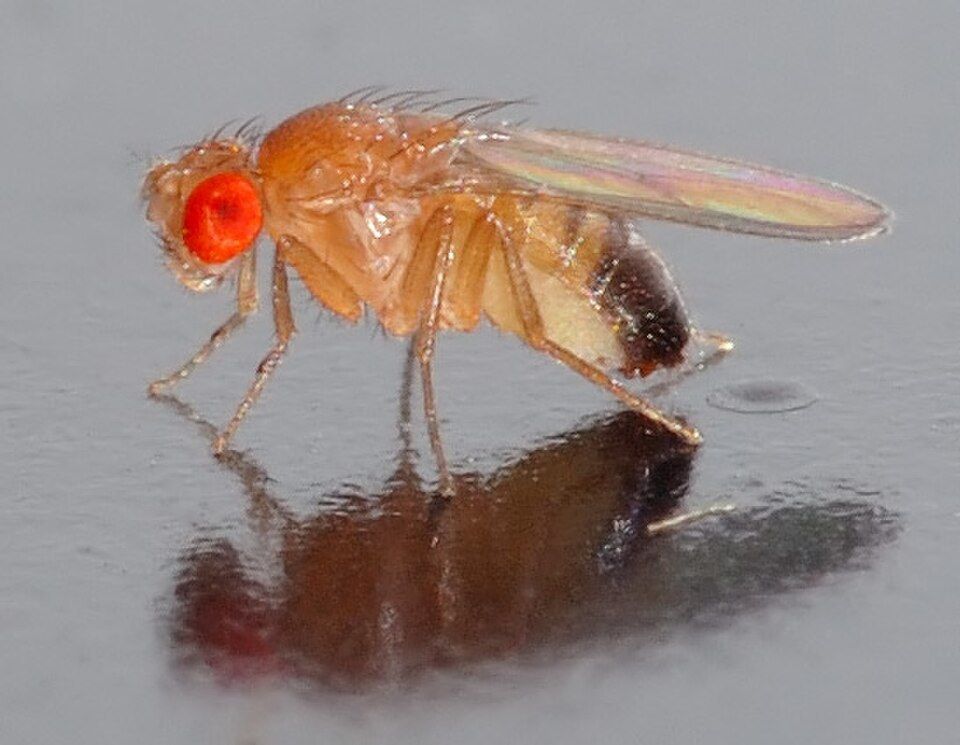
- Linked genes and recombination frequency. Genes on the same chromosome tend to be inherited together (linkage), but crossing over can separate them. The frequency of recombination between two genes reflects their physical distance on the chromosome — this principle is the basis of genetic mapping. Thomas Hunt Morgan’s experiments with Drosophila (fruit flies) provided the first direct evidence for this, confirming and extending the chromosomal theory.
- Sex-linked inheritance. Genes on the X chromosome follow distinct inheritance patterns because males (XY) have only one X. This explains why X-linked recessive conditions like color blindness and hemophilia are far more common in males — they have no second X to mask a recessive allele.
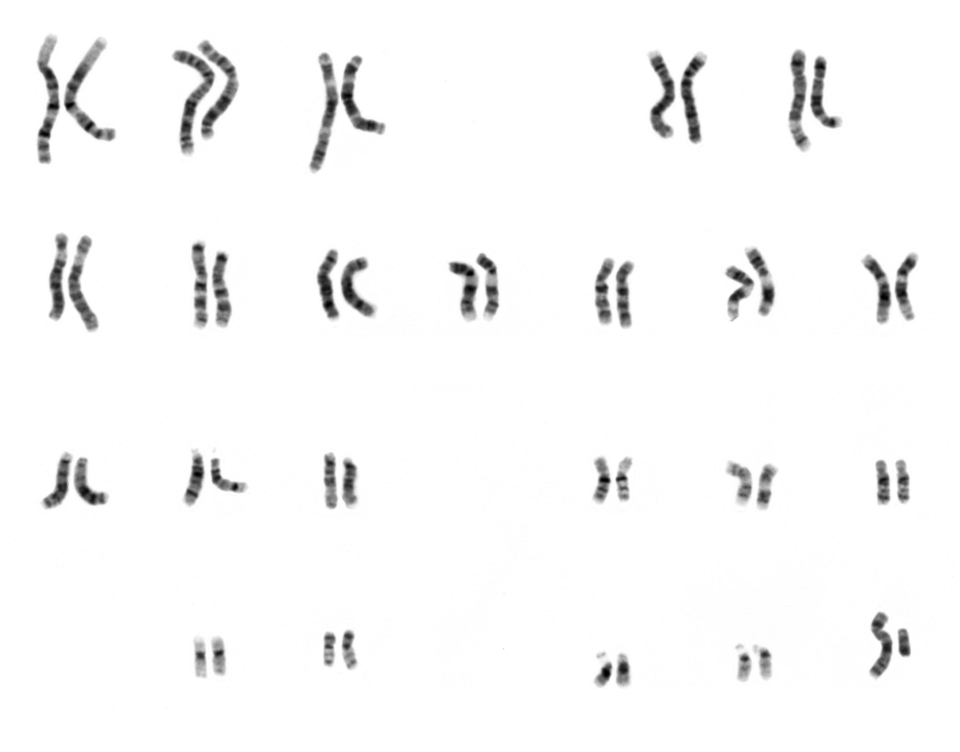
- Genetic counseling and medicine. Karyotyping (visualizing an organism’s chromosomes) allows clinicians to detect aneuploidies and large structural abnormalities. Pedigree analysis, built on Mendelian principles, helps families understand their risks for inherited conditions.
Test-Taking Strategies
Mnemonics and memory shortcuts
- “ICR” for sources of genetic variation: Independent assortment (metaphase I), Crossing over (prophase I), Random fertilization. If an FRQ asks “what gives gametes genetic variation,” these three are your complete answer — state each one with its meiotic stage.
- “Non-D = Not Dividing right”: Nondisjunction = chromosomes failing to separate correctly during meiosis. Trisomy = three copies (one extra); monosomy = one copy (one missing). Down syndrome = trisomy 21; Turner = monosomy X.
- 2n rule for independent assortment: The number of unique gamete types from independent assortment alone = 2n, where n = haploid chromosome number. For humans (n = 23), that’s 223 ≈ 8.4 million combinations per parent. Fertilization squares this — over 70 trillion before crossing over.
- “Crossing over breaks up linkage”: Genes on the same chromosome (linked genes) tend to be inherited together — UNLESS crossing over separates them during prophase I. Distance between genes determines recombination frequency: far apart = more crossing over = more independent-looking inheritance.
- “XY = only one X”: Males have one X chromosome, so any recessive allele on the X is expressed — there’s no second X to mask it. X-linked recessive conditions (hemophilia, color blindness) are therefore far more common in males.
Cross-topic connections
- Meiosis (Unit 5): Always specify the meiotic stage for each variation mechanism: crossing over = prophase I, independent assortment = metaphase I, segregation of homologs = anaphase I, segregation of sister chromatids = anaphase II. The AP® exam expects stage-specific precision.
- Pedigree analysis (Unit 5): Determine inheritance pattern before solving. Look for affected females — if an affected female has an unaffected father, the trait cannot be X-linked recessive (females need two recessive X alleles, one from each parent). If every affected child has an affected parent, consider autosomal dominant. If carriers appear normal and skip generations, consider autosomal recessive.
- Evolution and natural selection (Unit 7): Genetic variation from meiosis is the prerequisite for natural selection. If asked why sexual reproduction is evolutionarily advantageous, the answer is increased genetic variation in offspring, generated by the three mechanisms above.
- Biotechnology (Unit 6): Morgan’s genetic mapping using recombination frequency established the chromosomal location of genes — the conceptual basis for modern genome sequencing and gene therapy targeting specific chromosomal loci.
Common question formats
- Karyotype analysis MCQ: Count chromosomes in each gamete. If both members of a homologous pair are in the same gamete, nondisjunction occurred in meiosis I. If sister chromatids fail to separate, it’s meiosis II nondisjunction (only two of four gametes are abnormal).
- “Explain how meiosis contributes to genetic variation” FRQ: Structure your answer with three paragraphs — one each for independent assortment (metaphase I, random orientation), crossing over (prophase I, recombinant chromosomes), and random fertilization (combines two unique gametes). Include specific meiotic stages.
- Recombination frequency / genetic map distance: 1% recombination frequency = 1 map unit (centimorgan, cM). Genes at 50% recombination behave as if on different chromosomes. Genes with 0% recombination are tightly linked.
- Punnett square + pedigree combined FRQ: Given a pedigree, determine inheritance pattern (autosomal/X-linked, dominant/recessive), then calculate probability of an offspring having the trait using Punnett squares or probability rules.
Frequent student mistakes
- Confusing independent assortment with crossing over: These are two distinct processes. Independent assortment involves random orientation of intact chromosome pairs at metaphase I. Crossing over involves physical DNA exchange between homologs during prophase I. Both produce variation, but through different mechanisms — the exam expects you to distinguish them.
- Assuming all genes on the same chromosome are always linked: Crossing over breaks up linkage. Genes far apart on the same chromosome may recombine so frequently (approaching 50%) that they appear unlinked. “Linked” means on the same chromosome, not necessarily co-inherited.
- Confusing nondisjunction in meiosis I vs. meiosis II: Meiosis I nondisjunction: homologs fail to separate → both copies end up in one cell → ALL resulting gametes are abnormal. Meiosis II nondisjunction: sister chromatids fail to separate → only two of four gametes are abnormal. The exam can ask you to identify which division failed from a gamete diagram.
- Applying independent assortment to linked genes: Mendel’s Law of Independent Assortment technically applies only to genes on different chromosomes. Genes on the same chromosome don’t independently assort unless crossing over makes them appear to. Always check whether genes are on the same chromosome before applying the law.
Test-day shortcuts
- For any “sources of genetic variation” question, write out “ICR” (Independent assortment, Crossing over, Random fertilization) first, then fill in the stage and mechanism for each. This ensures you don’t miss a source under time pressure.
- For pedigree analysis, work backwards: identify all affected individuals first, then determine which pattern (autosomal dominant, autosomal recessive, X-linked recessive) is consistent. The fastest elimination is looking for “does the trait skip generations?” (recessive) or “is every affected person a parent of another affected person?” (dominant).
- When calculating recombination frequency, count the recombinant offspring (those with non-parental phenotype combinations), divide by total offspring, and multiply by 100%. If the result is less than 50%, the genes are linked.
Time management
- Chromosomal inheritance FRQs typically have 3–4 parts. Budget ~3 minutes per part. The hardest parts usually ask you to connect chromosomal behavior to Mendelian ratios or to evolution — get there by not over-writing on the easier parts.
- For “explain how meiosis generates variation” prompts, three sentences (one per mechanism, each naming the stage) will earn full credit. You don’t need to describe all of meiosis — just the specific events that produce variation.
- Punnett square questions in MCQ should take under 60 seconds. If a question requires a 4×4 Punnett square (two independent genes), use the probability shortcut instead: multiply individual probabilities (e.g., 1/4 × 1/4 = 1/16 for two recessive homozygous traits).