

Maximize your score with these resources:
- Albert.io AP® Biology question banks
- Free AP® Biology cheat sheets
- Free AP® Biology score calculator
What We Review
TLDR: Key Takeaways
- DNA: double-stranded helix, deoxyribose sugar (no 2′-OH), bases A/T/C/G, highly stable — the long-term storage molecule for genetic information.
- RNA: single-stranded, ribose sugar (has 2′-OH), bases A/U/C/G, less stable — the temporary working molecule for gene expression (transcription, translation, regulation).
- Three main RNA types: mRNA (carries the genetic message to ribosomes), tRNA (delivers amino acids during translation), rRNA (forms and catalyzes peptide bonds in the ribosome — a ribozyme).
- The 2′-OH difference is the key structural distinction: ribose’s extra -OH makes RNA chemically reactive and unstable; deoxyribose’s missing -OH makes DNA resistant to hydrolysis, ideal for permanent storage.
- Thymine (T) is unique to DNA; uracil (U) is unique to RNA — the fastest way to identify a nucleic acid molecule from a sequence.
- The RNA World hypothesis proposes that RNA preceded DNA and proteins in early life; rRNA’s catalytic role as a ribozyme supports this idea.
Introduction
DNA and RNA are both nucleic acids, but they play fundamentally different roles in the cell. DNA stores your genetic blueprint; RNA reads that blueprint and helps build proteins from it. The AP® Biology exam tests your ability to distinguish these molecules structurally and functionally — and to connect those differences to broader concepts like gene expression, evolution, and the central dogma. This review breaks down exactly what you need to know.
What Is DNA?
DNA (deoxyribonucleic acid) is the hereditary material in nearly all organisms. It carries the complete set of instructions for growth, development, and reproduction in every cell.
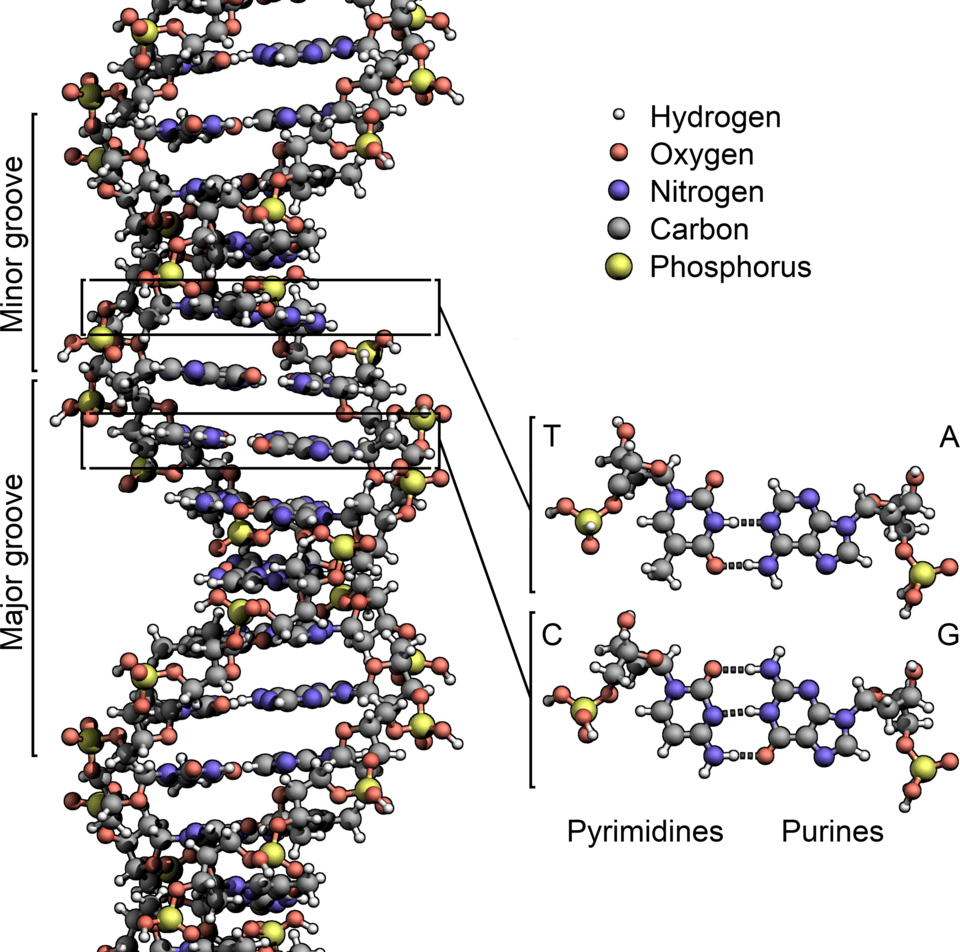
Structure of DNA:
- DNA forms a double helix — two antiparallel strands wound around each other, held together by hydrogen bonds between complementary bases.
- The base pairing rules are: Adenine (A) pairs with Thymine (T) via two hydrogen bonds, and Cytosine (C) pairs with Guanine (G) via three hydrogen bonds. The stronger C-G bond matters — regions rich in C-G are harder to denature (separate).
- The sugar in each nucleotide is deoxyribose, which lacks the 2′ hydroxyl group found on ribose. This missing oxygen makes DNA more chemically stable than RNA — a key reason it serves as the long-term genetic storage molecule.
- The two strands run in opposite directions (antiparallel): one strand runs 5′ → 3′ while the other runs 3′ → 5′. This directionality is critical for replication and transcription.


As shown in the diagram above, notice how the sugar-phosphate backbone forms the outer rails of the double helix while the nitrogenous bases point inward, forming the “rungs” of the ladder.
DNA in prokaryotes vs. eukaryotes:
- Prokaryotic cells (bacteria, archaea) typically have a single, circular chromosome in the nucleoid region of the cytoplasm. Many also carry plasmids — small, circular DNA molecules that can replicate independently and often carry genes for antibiotic resistance or other survival advantages.
- Eukaryotic cells have multiple, linear chromosomes housed within the nucleus. DNA is wrapped around histone proteins to form chromatin, which condenses into visible chromosomes during cell division. Eukaryotes also have DNA in mitochondria and (in plants) chloroplasts — evidence of endosymbiosis.
What Is RNA?
RNA (ribonucleic acid) is the molecular go-between that translates genetic information into functional proteins. While DNA stays safely stored in the nucleus, RNA carries instructions out to the cytoplasm and participates directly in protein assembly.
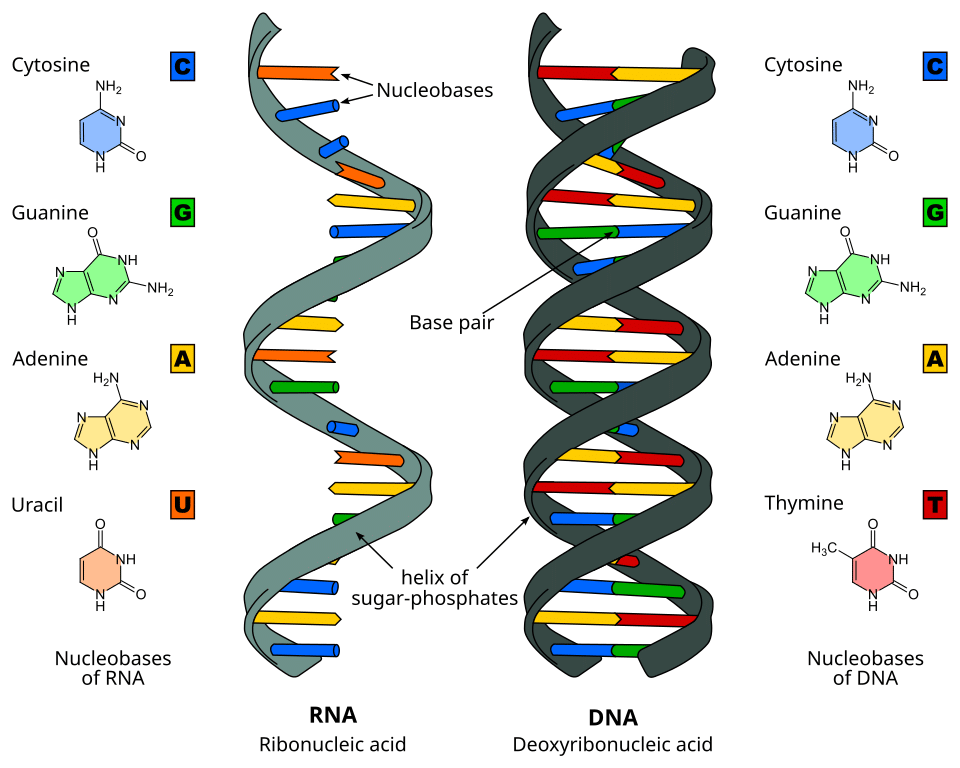
Structure of RNA:
- RNA is typically single-stranded, though it can fold back on itself to form complex secondary structures (like the cloverleaf shape of tRNA or the catalytic core of ribozymes).
- The base pairing rule changes: Adenine (A) pairs with Uracil (U) instead of thymine. Cytosine still pairs with Guanine.
- The sugar is ribose, which has a hydroxyl group (-OH) at the 2′ carbon. This extra oxygen makes RNA less stable than DNA — which is actually a feature, not a bug. RNA is meant to be temporary, produced when needed and degraded when its job is done.
Major types of RNA:
| RNA Type | Full Name | Function | Key Detail |
|---|---|---|---|
| mRNA | Messenger RNA | Carries the genetic code from DNA to ribosomes | Read in sets of three nucleotides (codons); each codon specifies an amino acid |
| tRNA | Transfer RNA | Delivers amino acids to the ribosome during translation | Has an anticodon that matches to the mRNA codon; cloverleaf structure with amino acid attachment site |
| rRNA | Ribosomal RNA | Forms the structural and catalytic core of the ribosome | Makes up ~60% of ribosome mass; the peptidyl transferase activity is an rRNA function (ribozyme) |
Beyond the big three, you should also know about small regulatory RNAs — including miRNA (microRNA) and siRNA (small interfering RNA), which regulate gene expression by silencing specific mRNA molecules. These are increasingly tested on the AP® exam as examples of post-transcriptional regulation.
Key Differences Between DNA and RNA
The differences between DNA and RNA fall into four categories: structure, base composition, function, and cellular location. Use this table as your quick-reference summary:
| Feature | DNA | RNA |
|---|---|---|
| Strands | Double-stranded (double helix) | Single-stranded (can form secondary structures) |
| Sugar | Deoxyribose (no 2′ -OH) | Ribose (has 2′ -OH) |
| Bases | A, T, C, G | A, U, C, G |
| Unique base | Thymine (T) | Uracil (U) |
| Primary function | Long-term storage of genetic information | Gene expression — carries, reads, and helps build proteins from the genetic code |
| Stability | Highly stable (resistant to hydrolysis) | Less stable (2′ -OH makes it prone to hydrolysis) |
| Location (eukaryotes) | Nucleus (also mitochondria, chloroplasts) | Made in the nucleus, functions mainly in the cytoplasm |
| Self-replicating? | Yes — uses DNA polymerase | No — transcribed from a DNA template by RNA polymerase |
| Lifespan | Permanent (persists through the life of the cell) | Temporary (degraded after use) |
Why does the sugar difference matter? The missing 2′ hydroxyl group on deoxyribose is the single most important structural distinction. Without that reactive -OH group, DNA resists hydrolysis, which makes it ideal for long-term information storage. RNA’s 2′ -OH makes it chemically reactive — useful for catalytic roles (ribozymes) but too unstable for permanent storage.
Why uracil instead of thymine? Thymine is essentially methylated uracil. The methyl group protects DNA from certain types of damage and helps DNA repair enzymes distinguish between normal bases and the uracil that sometimes appears from cytosine deamination. In RNA, which is temporary, this repair mechanism isn’t necessary — so the cell saves energy by using uracil directly.
Importance of These Differences in Biology
The structural differences between DNA and RNA aren’t just trivia — they directly explain why these molecules perform different jobs in the cell.
- DNA’s stability enables faithful inheritance. The double-stranded structure provides a built-in backup: if one strand is damaged, the complementary strand serves as a template for repair. This is why DNA — not RNA — is the molecule of heredity in all cellular organisms.
- RNA’s instability is a regulatory feature. Because mRNA is rapidly degraded, cells can quickly adjust which proteins they produce by changing transcription rates. If mRNA lasted forever, gene regulation would be far less responsive. This connects directly to how cells differentiate and respond to environmental signals.
- RNA’s catalytic ability points to evolutionary origins. The RNA World hypothesis proposes that early life used RNA for both information storage and catalysis, before DNA and proteins evolved as specialized molecules. The fact that rRNA catalyzes peptide bond formation (as a ribozyme) supports this idea — and it’s a favorite AP® exam topic.
- Plasmids connect to biotechnology. Prokaryotic plasmids — small, circular DNA molecules — are the foundation of genetic engineering. Scientists insert foreign genes into plasmids using restriction enzymes and ligase, then transform bacteria with these recombinant plasmids to produce proteins like insulin. This links the DNA vs. RNA topic directly to Unit 6 (Gene Expression and Regulation) and biotechnology.
Test-Taking Strategies
Mnemonics and memory shortcuts
- “TU” rule: Thymine is in DNA, Uracil is in RNA. If you see a nucleotide sequence containing T, it’s DNA. If you see U, it’s RNA. This is the single fastest way to identify a nucleic acid from a sequence on the AP® exam.
- “DeOxy = Double, One-less Oxygen”: Deoxyribose has one fewer oxygen than ribose, and DNA is double-stranded. The “D” in DNA links to “Double” and “Deoxy” — same letter, same idea.
- “mRNA = Messenger, tRNA = Taxi, rRNA = Ribosome”: mRNA carries the genetic message, tRNA is the taxi that delivers amino acids to the ribosome, and rRNA forms the ribosome itself and catalyzes peptide bond formation.
- “2′-OH = Reactive, useful, but unstable”: RNA’s extra hydroxyl group at the 2′ carbon explains both its catalytic ability (useful as a ribozyme) and its susceptibility to hydrolysis (why it’s temporary). DNA’s missing -OH is the reason it’s the permanent storage molecule.
- “U replace T in RNA”: RNA uses uracil (U) everywhere thymine (T) would appear in DNA. When transcribing or translating, swap every T for U as you write the RNA sequence.
Cross-topic connections
- Central dogma (Unit 6): DNA is transcribed into RNA; mRNA is translated into protein. Knowing which molecule is which at each step — and which enzyme acts on it — is foundational for every Unit 6 question.
- Evolution and RNA world (Unit 7): The RNA World hypothesis — that early life relied on RNA for both information storage and catalysis before DNA and proteins evolved — is tested in the context of the origin of life. rRNA’s ribozyme activity is direct supporting evidence.
- Gene regulation (Unit 6): miRNA and siRNA are RNA-based regulators of gene expression. They bind complementary mRNA sequences and target them for degradation or block translation. These are post-transcriptional regulation mechanisms — increasingly common on recent AP® exams.
- Biotechnology (Unit 6): Reverse transcriptase (from retroviruses) makes DNA from an RNA template — the reverse of normal transcription. It’s used to create cDNA libraries from mRNA, enabling scientists to clone expressed genes without introns.
- Endosymbiotic theory (Unit 4): Mitochondria and chloroplasts contain their own circular DNA (like prokaryotes), supporting the idea that they were once free-living bacteria engulfed by ancestral eukaryotes.
Common question formats
- Identify the molecule from a sequence: MCQs often give you a nucleotide sequence and ask whether it’s DNA or RNA. Scan for T vs. U first, then consider single- vs. double-stranded if the format indicates.
- Structure-to-function explanation: FRQ prompts say “explain the relationship between the structure and function” of DNA or RNA. Always lead with the specific structural feature (deoxyribose, double-stranded, 2′-OH) and then connect it to the functional consequence (stability, long-term storage, catalytic ability).
- Enzyme identification: If a question names an enzyme (RNA polymerase, reverse transcriptase, DNA polymerase, ribosome), identify whether it acts on DNA, RNA, or both — this reveals which step of the central dogma the question is testing.
- RNA type function: “Which RNA type delivers amino acids to the ribosome?” (tRNA) or “Which RNA is catalytic?” (rRNA/ribozyme). Know the function of all three major RNA types cold.
Frequent student mistakes
- Confusing the sugar with the base difference: DNA vs. RNA involves two independent structural differences — the sugar (deoxyribose vs. ribose) AND the unique base (thymine vs. uracil). Don’t conflate them; they’re separate features, both worth knowing.
- Assuming RNA is always single-stranded everywhere: While RNA is synthesized as a single strand, tRNA folds into a cloverleaf and rRNA forms complex 3D structures within the ribosome. “Single-stranded” describes synthesis, not necessarily final shape.
- Forgetting DNA outside the nucleus: Mitochondrial DNA (mtDNA) and chloroplast DNA exist in eukaryotic cells — both circular, like prokaryotic DNA. These are frequently tested in the context of maternal inheritance and endosymbiotic theory.
- Confusing mRNA with DNA as the template for translation: The ribosome reads mRNA, not DNA, during translation. Transcription produces mRNA from DNA; translation reads mRNA to make protein. Know which molecule is the template at each step.
Test-day shortcuts
- When identifying DNA vs. RNA from a sequence, check for T or U first — this single observation is faster and more reliable than trying to determine strandedness from a short sequence.
- For structure-function FRQs, use the formula: [structural feature] + “therefore” + [functional consequence]. Example: “DNA contains deoxyribose, which lacks a 2′ hydroxyl group; therefore, DNA is resistant to hydrolysis and functions as a stable long-term storage molecule.”
- When asked about RNA world or ribozymes, the key evidence statement is: “rRNA in the ribosome catalyzes peptide bond formation, demonstrating that RNA can function as both information carrier and enzyme.”
Time management
- DNA vs. RNA identification questions in the MCQ section should take under 30 seconds each. Scan for T vs. U and move on.
- On FRQs that ask about both DNA and RNA, structure your answer around the comparison table: pick two or three features (sugar, base, strands), state the difference, and connect each to function. This organized format earns points efficiently.
- If a multi-part FRQ connects DNA/RNA structure to central dogma to mutation consequences, budget ~3 minutes per part and write in a logical chain — don’t skip steps, as AP® graders look for explicit connections between structure and function.