
Maximize your score with these resources:
- Albert.io AP® Environmental Science question banks
- Free AP® Environmental Science cheat sheets
- Free AP® Environmental Science score calculator
What We Review
Introduction
The tragedy of the commons is a powerful concept that explains why shared resources often become overexploited. When everyone benefits from using a resource but no single user bears the full cost of depletion, individuals act in self-interest at the expense of collective well-being. This concept underlies many environmental problems, from overfishing to air pollution.
Definition of the Tragedy of the Commons
The tragedy of the commons describes a situation where individuals, pursuing self-interest, degrade shared resources that everyone depends on. The term originates from historical village commons—pastures shared by herders. If each herder adds more animals to maximize personal profit without coordinating with others, vegetation is overgrazed. Eventually, the commons become barren, and everyone suffers.
The fundamental problem: benefits from overuse accrue to the individual, but costs are distributed across all users. So each person has incentive to take more than their fair share.
How It Works: The Core Mechanism
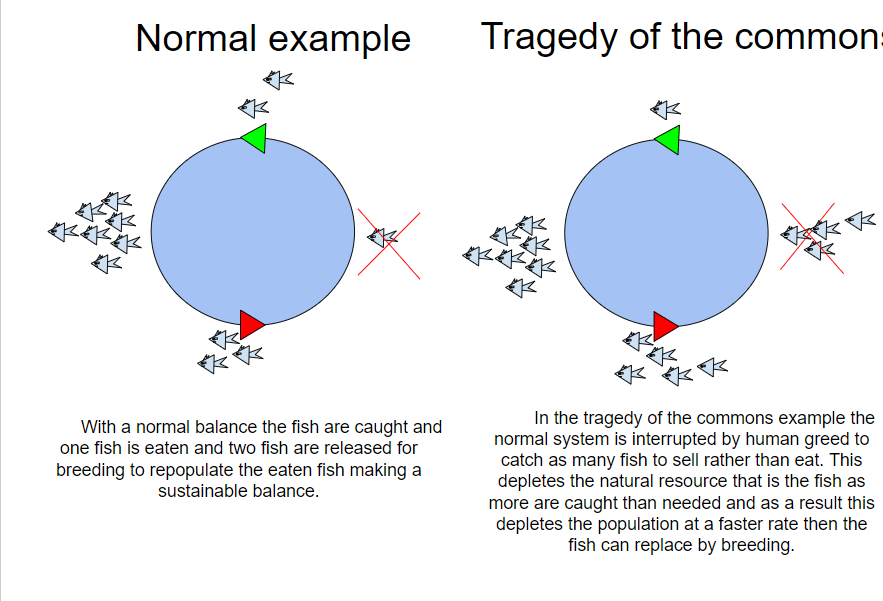

The mechanism unfolds as a vicious cycle:
- A shared resource exists with no ownership or weak enforcement.
- Each user reasons: “I gain full benefit from using more; the cost of depletion is shared by everyone.”
- Every user follows this logic independently.
- Cumulative overuse depletes the resource.
- When the resource becomes scarce, everyone loses access—but by then, recovery may be impossible.
Real-World Examples
Overfishing (Open-Access Fisheries)
Ocean fisheries are the classic tragedy of the commons. No one owns the fish; every nation can fish international waters. Each fisher reasons: “If I don’t catch these fish, someone else will. So I’ll maximize my catch.” The result: fish populations collapse (see North Atlantic cod), ecosystems degrade, and fisheries that supported communities for centuries disappear.
Overgrazing
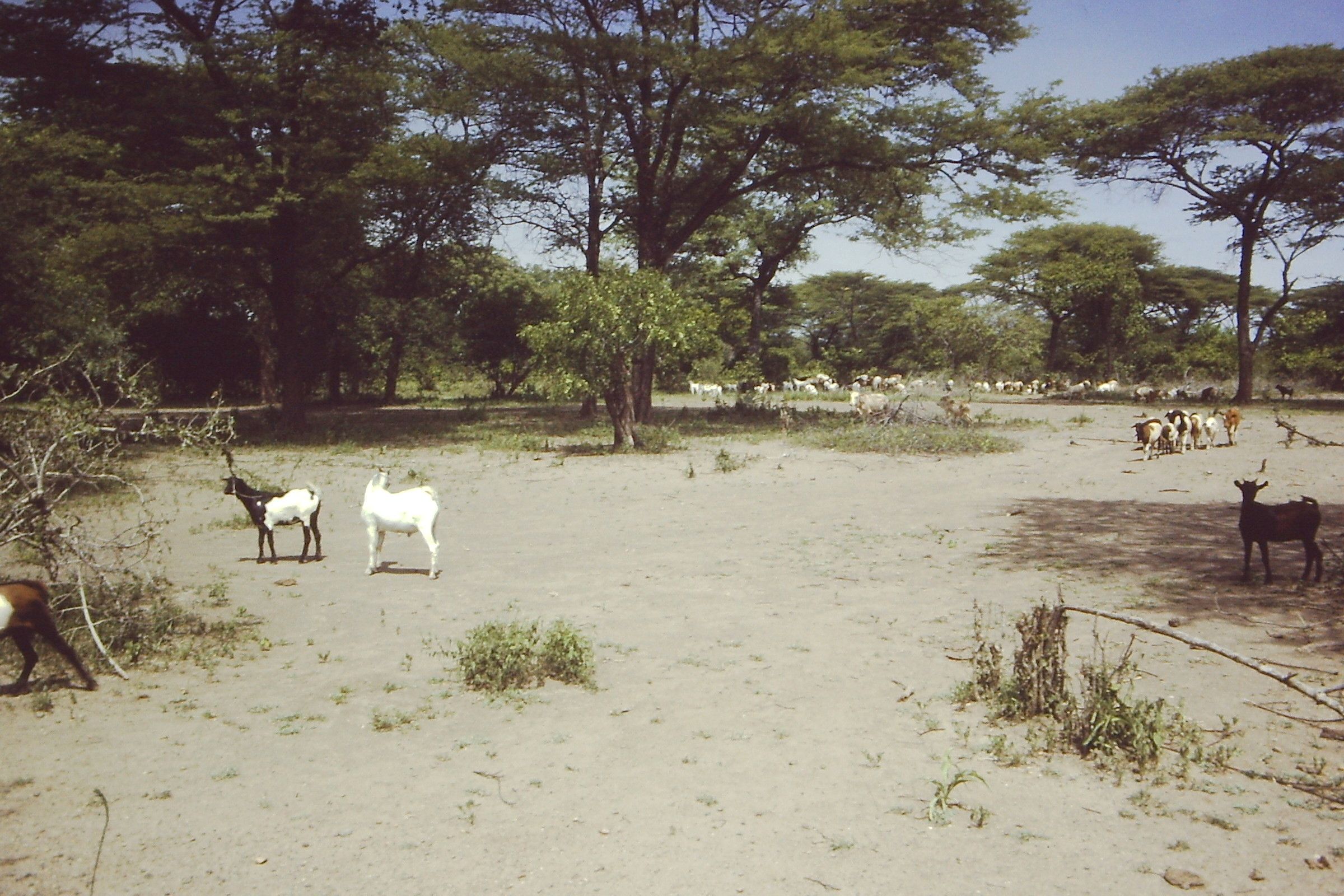
When herders share a pasture with no quota system, each adds animals to increase income. But everyone’s animals together exceed the land’s carrying capacity. Vegetation cannot regenerate; soil erodes; and eventually the land can support no livestock. The herders who “gained” short-term profit face long-term loss of the entire resource.
Pollution (Air and Water)
The atmosphere and rivers are shared resources. Factories emit pollutants without paying the cost of degraded air quality borne by downstream communities. Each polluter reasons: “The atmosphere is so large that my emissions are negligible.” But millions of polluters thinking this way create hazardous air quality, contaminated water, and public health crises. No individual polluter has incentive to reduce emissions unilaterally.
Groundwater Depletion
Aquifers are shared resources. When farmers pump groundwater for irrigation, they gain full benefit; aquifer depletion affects all users. Without regulation, everyone races to extract as much as possible before aquifers run dry. Case in point: the Ogallala Aquifer in the US Great Plains is being depleted far faster than it recharges, threatening agricultural sustainability across eight states.
Solutions to the Tragedy of the Commons

Government Regulation (Quotas and Enforcement)
Governments assign catch limits or harvest quotas. Individual incentive to overexploit is reduced because regulations create consequences for exceeding allocations. For fishing, quotas tied to population assessments ensure sustainable harvests. For air pollution, emissions caps force industries to reduce pollution rather than externalize the cost.
Community-Based Management
Local users often manage commons more sustainably than distant governments. Community norms and peer pressure enforce compliance. Examples:
- Rotational grazing: Herders move livestock among paddocks, allowing vegetation to regenerate before reuse.
- Seasonal fishing closures: Communities agree to ban fishing during breeding seasons, allowing population recovery.
- Water-sharing agreements: Farmers coordinate irrigation schedules to ensure no single user depletes the aquifer.
Privatization (Tradeable Permits)
Assigning ownership over shared resources can incentivize sustainable use. Examples:
- Individual Transferable Quotas (ITQs) in fisheries: Each fisher gets a guaranteed percentage of the total catch. Quota holders have incentive to prevent overfishing (otherwise their quota becomes worthless). ITQs can be bought and sold, creating a market for sustainability.
- Cap-and-trade carbon markets: Governments cap total emissions; companies that reduce emissions can sell excess credits. This incentivizes pollution reduction.
Technological Solutions
Cleaner technology reduces the tragedy’s impact:
- Industrial wastewater treatment: Factories treat discharge before releasing it, protecting shared water resources.
- Renewable energy: Eliminates fossil fuel emissions; reduces the tragedy of atmospheric pollution.
- Selective fishing gear: Reduces bycatch and habitat damage, making resource extraction less destructive.
Test-Taking Strategies
Tragedy of the commons questions test whether you understand: (1) why individuals overexploit shared resources, (2) how overexploitation cascades into collective harm, and (3) what solutions actually work.
Core Insight
- Individual rationality ≠ collective good. It’s rational for a single fisher to catch as many fish as possible, but if everyone thinks this way, fisheries collapse. The test rewards recognizing this paradox.
- “Shared” and “unowned” are key triggers. If a resource has no clear ownership and no enforcement, the tragedy of the commons likely applies.
- Solutions require accountability. Whether through regulation, community norms, or market mechanisms, something must align individual incentive with collective interest.
Common Question Patterns
- “Why do fishers overfish even though it harms them long-term?” → Each fisher benefits immediately from extra catch; harm is spread among all fishers. Individually rational, collectively destructive.
- “Which solution best prevents tragedy of the commons?” → Quotas + enforcement, ITQs, or community management. “Free market competition” or “encourage more efficient extraction” are traps.
- “How does tragedy of the commons differ from simple resource scarcity?” → Scarcity = resource is limited. Tragedy of commons = limited resource + weak governance = overexploitation + collapse.
- “What role does enforcement play?” → Quotas without enforcement are useless. The test often includes questions where “regulations exist but are not enforced,” and you must recognize this means the tragedy of the commons continues.
Student Pitfalls
- Blaming individual greed. While greed contributes, the tragedy arises from rational economic incentives. You don’t need greedy actors; ordinary self-interest suffices. Tests reward nuance here.
- Assuming private ownership solves everything. Privatization works when ownership is enforceable. But private owners can still pollute shared resources (air, water) affecting non-owners. Partial solutions are important to recognize.
- Missing the externality concept. The tragedy occurs because individuals don’t bear the full cost of their depletion (the cost is “externalized” to society). Understanding externalities clarifies why the tragedy happens.
- Forgetting that solutions require coordination. Individual rational action won’t solve tragedy of the commons. You need some mechanism (regulation, community agreement, property rights) that coordinates behavior.
Cross-Topic Bridges
- Carrying Capacity (Unit 3): Tragedy of the commons occurs when use exceeds carrying capacity indefinitely. Sustainable use = staying within carrying capacity.
- Sustainable Yield (Unit 5): Quotas set to sustainable yield prevent tragedy. Over-quota harvesting = tragedy of the commons.
- Overfishing (Unit 5): Overfishing is tragedy of the commons playing out in ocean fisheries.
- Externalities (economics): The tragedy happens because users don’t bear full cost of depletion. This is negative externality in action.
Test-Day Tactics
- “Open-access” resource = tragedy of the commons likely applies. Fish, groundwater, atmosphere, forests—if no one owns them and no enforcement exists, the tragedy mechanism activates.
- Look for temporal mismatch. “Short-term gain for individual; long-term loss for everyone” = classic tragedy of the commons signal.
- Solutions must include incentive realignment. Regulations, quotas, property rights, or community norms—all work by making individual incentive align with collective interest.
- Enforcement is non-negotiable. A quota without enforcement is fiction. The test often presents scenarios where regulations exist on paper but lack monitoring/penalties.
Time Management
Tragedy of the commons questions often present a scenario (herders on a commons, farmers using an aquifer, factories polluting a river). Take time to identify: (1) the shared resource, (2) the incentive structure, (3) the collective harm, (4) what solution is proposed. This analysis clarifies the correct answer.
Key Vocabulary
- Tragedy of the Commons: Situation where individuals, acting in self-interest, overexploit a shared resource, leading to depletion or degradation benefiting no one.
- Open-Access Resource: Shared natural resource with no clear ownership or enforcement; susceptible to tragedy of the commons.
- Carrying Capacity: Maximum population a resource can support indefinitely; exceeded in tragedy of the commons.
- Externality: Cost or benefit of an action borne by someone other than the decision-maker. Tragedy of commons involves negative externalities (depletion costs borne by all).
- Sustainable Yield: Maximum harvest rate that maintains resource availability; setting yield limits prevents tragedy.
- Individual Transferable Quota (ITQ): Market-based solution where users are assigned ownership shares of a resource, creating incentive for sustainable management.
- Cap-and-Trade: Regulatory system where a total limit (cap) is set, and users can buy/sell permits (trade) to stay within it.
- Enforcement: Monitoring and penalizing violations of resource regulations; essential for preventing tragedy of the commons.
Check for Understanding
Think you’ve got it? Complete the quiz below to make sure. Download your results at the end.