
What We Review
Maximize your score with these resources:
- Albert.io AP® Psychology question banks
- Free AP® Psychology cheat sheets
- Free AP® Psychology score calculator
Sexual orientation and gender diversity are tested in AP® Psychology across multiple units. The exam expects you to distinguish between biological sex, gender identity, and sexual orientation; explain how socialization shapes gender development; and connect stigma to psychological well-being outcomes. This review covers the distinctions, theories, and exam strategies you need.
Understanding the Psychology of Sexual Orientation and Gender Diversity
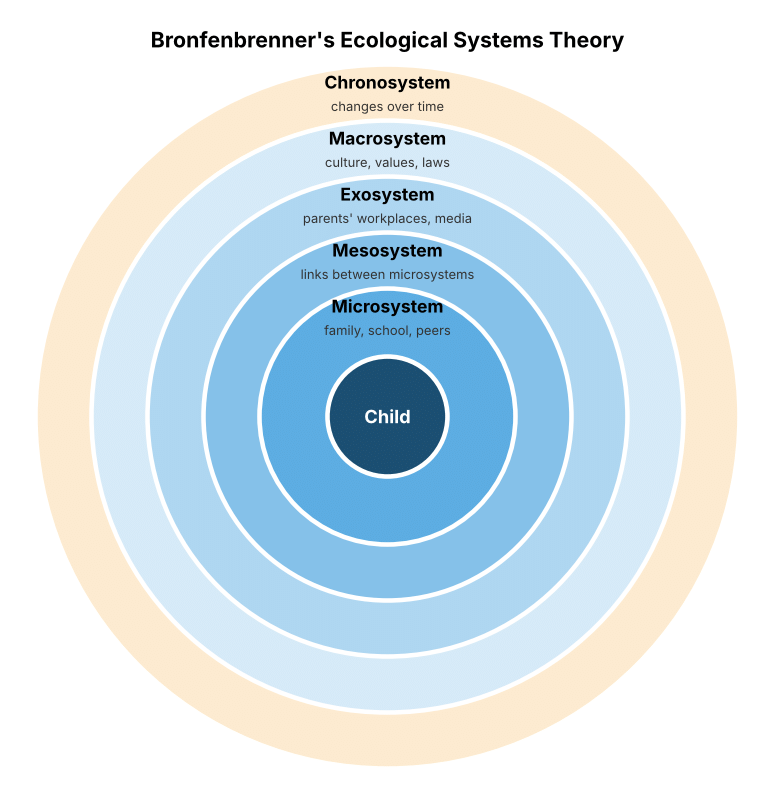
Three concepts are frequently confused on the AP exam. Biological sex refers to chromosomal, hormonal, and anatomical characteristics that categorize individuals as male, female, or intersex. Gender identity is a person’s internal psychological sense of their own gender, which may or may not align with biological sex. Sexual orientation describes the pattern of emotional, romantic, or sexual attraction a person feels toward others. These three are independent — knowing one tells you nothing about the others.
| Concept | Definition | Biological or Social? | AP Exam Signal Words |
|---|---|---|---|
| Biological Sex | Chromosomes, hormones, reproductive anatomy (male/female/intersex) | Biological | “chromosomes,” “hormones,” “anatomy” |
| Gender Identity | Internal sense of being man, woman, nonbinary, etc. | Psychological/Social | “identifies as,” “feels like,” “gender expression” |
| Sexual Orientation | Direction of emotional/romantic/sexual attraction | Complex (bio + social) | “attracted to,” “heterosexual,” “homosexual,” “bisexual” |
| Gender Role | Society’s expectations for masculine/feminine behavior | Social/Cultural | “expected to,” “socialized to,” “norms” |
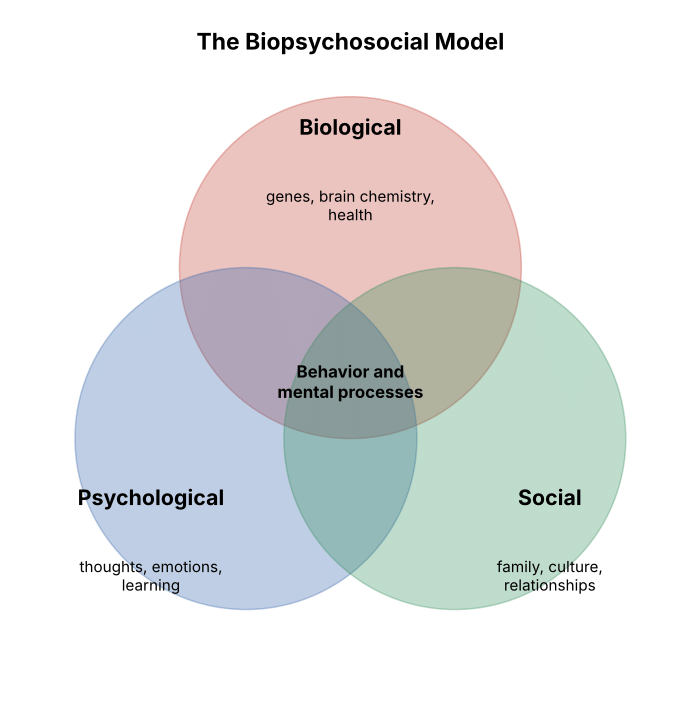
Mnemonic — SIGDS: Sex is biological, Identity (gender) is psychological, Gender roles are social expectations, Diversity extends beyond binary categories, Stigma (not orientation itself) causes psychological stress. This covers the five most AP-tested ideas in this topic.
Defining Key Concepts
Gender vs. Sex
Sex is assigned at birth based on observable biological traits. Gender is the psychological and social interpretation built on top of those traits through socialization. The AP exam consistently distinguishes these: sex is biological, gender is constructed. Intersex individuals are born with biological characteristics that don’t fit the typical male/female binary. Transgender individuals have a gender identity that differs from their biological sex assigned at birth. Cisgender individuals have a gender identity that aligns with their assigned sex.
The DSM-5 replaced the former diagnosis of “gender identity disorder” with gender dysphoria, recognizing that the distress about the mismatch — not the diversity itself — is the clinical concern. This shift illustrates how psychological classification evolves with scientific and cultural understanding. This example frequently appears in AP FRQs asking about how diagnostic categories change over time.
Sexual Orientation
Sexual orientation exists on a continuum. Alfred Kinsey’s scale (0–6) proposed a spectrum from exclusively heterosexual (0) to exclusively homosexual (6). Research suggests sexual orientation is influenced by a complex interaction of genetic, prenatal hormonal, and environmental factors. The AP exam does not require knowledge of a single cause because no definitive single cause has been scientifically established. Key established facts: sexual orientation is not a choice, is relatively stable once formed, and is not a mental disorder (removed from the DSM in 1973).
Gender Diversity
Nonbinary individuals do not identify exclusively as man or woman. Genderfluid individuals experience shifts in gender identity over time. Agender individuals identify with no gender. Cultures worldwide have long recognized gender categories beyond the binary — for example, hijra in South Asia and Two-Spirit people in many Indigenous North American traditions — demonstrating that binary gender is a cultural construction rather than a universal biological fact.
The Role of Socialization
Socialization is the lifelong process through which individuals learn the norms, values, and behaviors expected by their culture. Gender socialization shapes how individuals understand and express gender from birth. Two key theories explain the mechanism:
Gender schema theory (Sandra Bem) proposes that children actively construct cognitive frameworks for gender through which they filter new information, reinforcing norms through selective attention and memory. Children ask “Is this for boys or girls?” before deciding how to engage with it.
Social learning theory (Bandura) explains gender acquisition through observation of models and differential reinforcement — gender-conforming behaviors are rewarded; nonconforming behaviors are often discouraged.
| Agent of Socialization | Mechanism | Example |
|---|---|---|
| Family | Earliest gender norms; toy selection, clothing, praise patterns | Encouraging assertiveness in boys, emotional expressiveness in girls |
| Peers | Social reinforcement and punishment for conformity/nonconformity | Teasing a child who gravitates toward gender-atypical activities |
| Media | Models masculinity and femininity through characters and advertising | Action heroes vs. nurturing female leads; princess narratives |
| Culture/Religion | Embeds gender expectations in traditions, language, institutions | Cultures recognizing more than two genders vs. strictly binary cultures |
Developmental Aspects of Gender and Sexual Orientation
Gender identity is typically established by ages 2–3, well before children develop a full conceptual understanding of biological sex. Gender constancy, the understanding that gender remains stable over time and situations, develops around ages 6–7 (Piaget’s concrete operational stage). During adolescence, Erikson’s identity vs. role confusion stage intensifies exploration of both gender expression and sexual orientation.
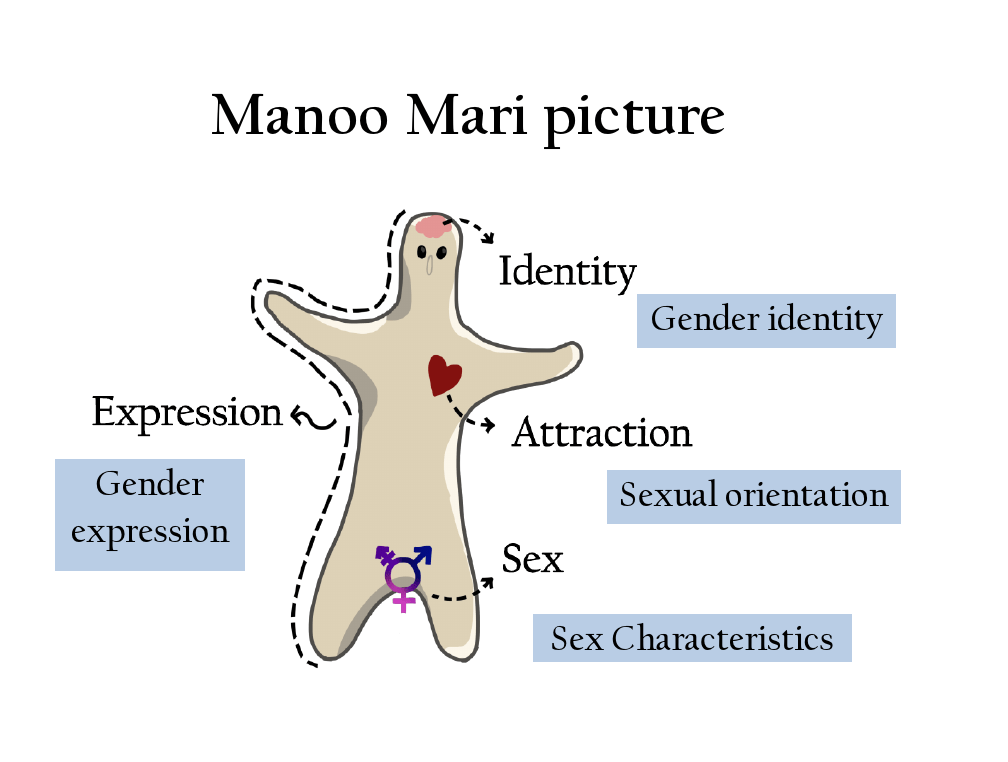

Adolescents experiencing same-sex attraction often first become aware of it in early adolescence, though public identification may be delayed for years due to social stigma. In adulthood, sexual orientation and gender identity generally remain stable, though individuals may adopt different labels over time as language and self-understanding evolve.
Challenges and Support Structures
Stigma operates at multiple levels: individual (prejudice), institutional (discriminatory policies), and cultural (heteronormativity — the default assumption that everyone is heterosexual and cisgender). Each level independently contributes to minority stress — chronic psychological stress produced by stigma, prejudice, and discrimination.
Research consistently shows that elevated rates of depression, anxiety, and suicidal ideation among LGBTQ+ youth compared to heterosexual peers are explained by minority stress, not by sexual orientation or gender identity themselves. When family acceptance is high, mental health outcomes of LGBTQ+ youth are comparable to those of heterosexual/cisgender peers. This directly connects to AP® Psychology’s unit on stress and mental health — social support is a protective factor; stigma is a stressor.
Conversion therapy, attempts to change sexual orientation through psychological intervention, has been condemned by all major psychological and psychiatric organizations as both ineffective and harmful. This is AP-testable as an example of how scientific consensus informs ethical practice.
Test-Taking Strategies
The AP exam most frequently tests: distinguishing sex vs. gender vs. orientation; identifying agents of socialization and their mechanisms; explaining how minority stress links discrimination to mental health outcomes; and recognizing the history of DSM classification changes (homosexuality removed 1973; gender identity disorder → gender dysphoria 2013).
Cross-topic connections:
- Social Psychology: Gender roles connect to conformity, norms, and social pressure — social learning theory (Bandura) explains gender-role acquisition through observation and reinforcement
- Developmental Psychology: Gender constancy develops in the concrete operational stage (Piaget); identity formation in adolescence is Erikson’s identity vs. role confusion stage
- Stress and Health: Minority stress is a direct application of stress models — chronic social stressors (stigma, discrimination) produce measurable psychological harm; social support buffers it
- Psychological Disorders: The evolution from “gender identity disorder” to “gender dysphoria” illustrates how classification criteria shift with scientific and cultural knowledge
Common mistakes:
- Confusing gender identity with sexual orientation — they are independent; a transgender person can have any sexual orientation
- Assuming biological sex determines gender identity
- Attributing LGBTQ+ psychological difficulties to orientation rather than social stigma
- Forgetting that sexual orientation was removed from the DSM in 1973 — the AP exam tests the history of this change