
Maximize your score with these resources:
- Albert.io AP® US History question banks
- Free AP® US History cheat sheets
- Free AP® US History score calculator
After World War I, many Americans concluded the war had been a mistake. They saw the profits of bankers and arms makers, the failure of the peace, and the more than 100,000 American dead, and they wanted no part of Europe’s next war. Yet the U.S. never fully withdrew from the world. It led naval disarmament talks, lent money to Europe, and pursued a “Good Neighbor” policy in Latin America. Topic 7.11 covers that mix of isolationism and engagement, and how it broke down as the world slid toward war.
This article covers Topic 7.11: Interwar Foreign Policy in Period 7, 1890 to 1945. The topic asks you to explain how the United States balanced isolationism with international engagement between the world wars, and how its policies changed as aggression grew in Europe and Asia.
By the end, you should be able to:
- Explain the roots of interwar isolationism.
- Describe U.S. diplomacy in the 1920s.
- Explain the Neutrality Acts and the Good Neighbor Policy.
- Describe how U.S. policy shifted toward aiding the Allies from 1939 to 1941.

What We Review
The Roots of Isolationism
- Disillusionment with World War I: The war hadn’t made the world “safe for democracy,” and the peace treaty seemed unjust.
- Rejection of the League: The Senate’s refusal to join the League of Nations set the tone for the next two decades.
- The Nye Committee (1934 to 1936): A Senate investigation suggested that bankers and arms manufacturers, the “merchants of death,” had pushed the U.S. into the war for profit.
- The Depression: Economic crisis turned Americans’ attention inward.
Engagement in the 1920s
Isolationism meant avoiding military alliances, not cutting all ties with the world.
| Agreement or Plan | Year | What It Did |
|---|---|---|
| Washington Naval Conference | 1921 to 1922 | The U.S., Britain, Japan, France, and Italy agreed to limit battleship construction |
| Dawes Plan | 1924 | American loans helped Germany pay reparations to Britain and France, which then repaid war debts to the U.S. |
| Kellogg-Briand Pact | 1928 | Signed by more than 60 nations, it renounced war as a tool of national policy but had no enforcement |
The U.S. also kept intervening in Latin America during the 1920s, including occupations of Nicaragua and Haiti.
The 1930s: Good Neighbors and Neutrality
The Good Neighbor Policy
Franklin Roosevelt promised that the U.S. would stop intervening militarily in Latin America. The marines left Haiti in 1934, and the U.S. gave up its right to intervene in Cuba under the Platt Amendment. The policy improved relations and trade in the hemisphere.
The Rise of Aggression
- Japan invaded Manchuria in 1931 and China in 1937.
- Italy invaded Ethiopia in 1935.
- Germany rearmed, took Austria and the Sudetenland in 1938, and invaded Poland in 1939.
The Neutrality Acts
| Act | Year | Key Provision |
|---|---|---|
| Neutrality Act of 1935 | 1935 | Banned arms sales to nations at war |
| Neutrality Act of 1936 | 1936 | Banned loans to warring nations |
| Neutrality Act of 1937 | 1937 | “Cash and carry” for non-military goods: buyers had to pay cash and use their own ships |
| Neutrality Act of 1939 | 1939 | Allowed arms sales on a cash-and-carry basis, which favored Britain and France |
These laws were designed to prevent the conditions, loans and ship attacks, that had pulled the U.S. into World War I.
From Neutrality to the “Arsenal of Democracy”
- Destroyers-for-bases deal (1940): The U.S. traded 50 old destroyers to Britain for leases on naval bases.
- Selective Training and Service Act (1940): The first peacetime draft in U.S. history.
- Lend-Lease Act (1941): Let the U.S. lend or lease weapons to any nation whose defense was vital to American security. Roosevelt called the U.S. the “arsenal of democracy.”
- Atlantic Charter (1941): Roosevelt and Churchill outlined shared goals for the postwar world, including self-determination.
- Embargo on Japan (1941): The U.S. cut off oil and froze Japanese assets after Japan moved into French Indochina.
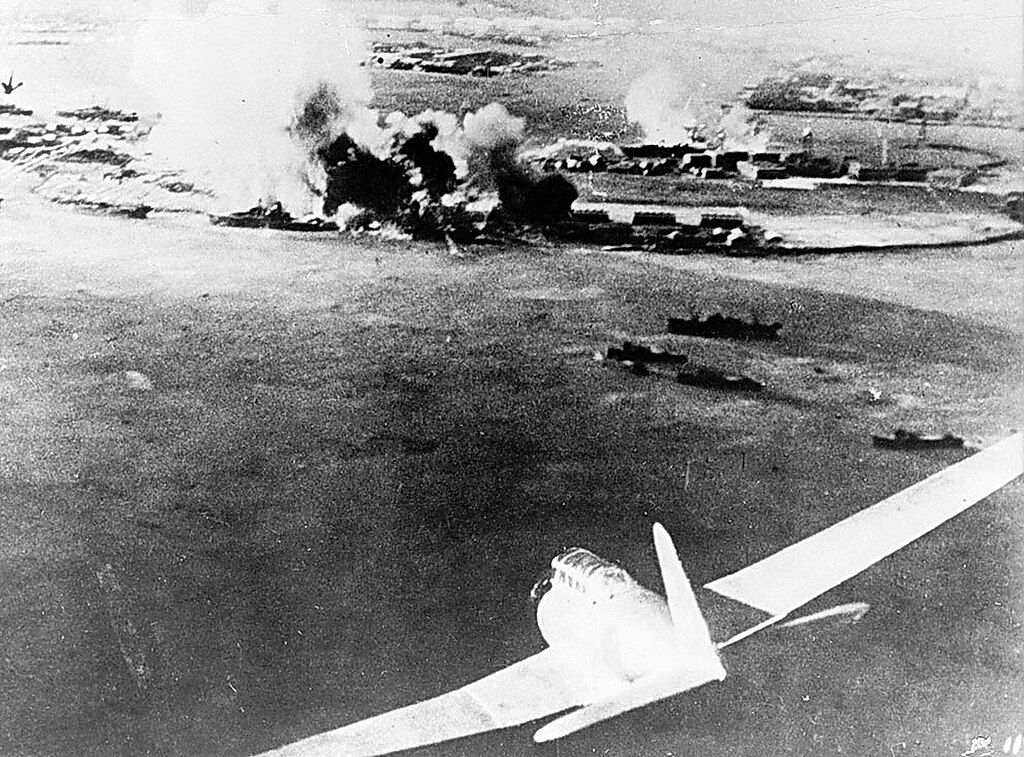
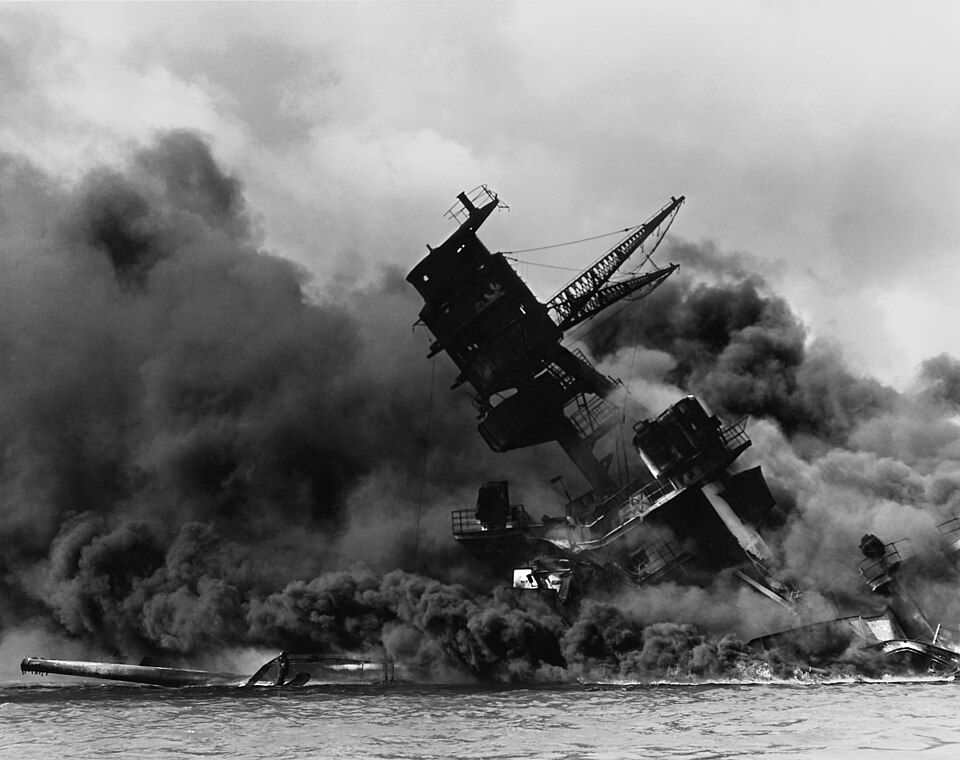
Isolationists, organized in the America First Committee with spokesman Charles Lindbergh, fought these steps. The debate ended on December 7, 1941, when Japan attacked Pearl Harbor.
Why does this matter? Interwar foreign policy is a classic continuity-and-change topic. It’s tempting to call the period “isolationist,” but the U.S. stayed active economically and diplomatically. The strongest essays show that the U.S. avoided military commitments while still engaging the world, then explain how events from 1937 to 1941 steadily eroded neutrality.
Test-Taking Strategies
Mnemonic Devices and Memory Shortcuts
- “Ships, money, peace.” The Washington Conference, the Dawes Plan, and the Kellogg-Briand Pact.
- “Cash, carry, then lend.” U.S. aid shifted from cash-and-carry to Lend-Lease.
- “Good neighbors don’t invade.” Roosevelt’s promise to Latin America.
Cross-Topic Connections
- Topic 7.5: The rejection of the League began the interwar period.
- Topic 7.2: The Good Neighbor Policy reversed the Roosevelt Corollary’s interventions. See our review of Big Stick diplomacy.
- Topic 7.9: The Depression reinforced isolationist sentiment.
- Topic 7.12: Pearl Harbor ended neutrality and launched full mobilization.
Common Question Formats
- Stimulus MCQ. An America First speech or a Roosevelt fireside chat, and you identify the debate it reflects.
- Continuity and change SAQ. You explain how U.S. foreign policy changed between 1920 and 1941.
- Causation SAQ. You explain why Congress passed the Neutrality Acts.
- LEQ. You evaluate the extent to which the U.S. was isolationist between the world wars.
Frequent Student Mistakes
- Calling the U.S. totally isolated. It was active in trade, loans, and disarmament.
- Confusing Lend-Lease with cash-and-carry. Lend-Lease dropped the cash requirement.
- Forgetting Asia. Tensions with Japan led directly to U.S. entry into the war.
- Dating the first peacetime draft to 1941. It came in 1940.
Test-Day Shortcuts
- Spot “merchants of death.” It signals the Nye Committee and its influence on neutrality laws.
- Track the sequence. 1935 to 1937 tightened neutrality. 1939 to 1941 loosened it.
- Use Lindbergh as evidence. He represents organized isolationism.
Time Management Tips
- Multiple choice: Section IA has 55 questions in 55 minutes, about 1 minute each. Check whether a source was written before or after 1939, since opinions shifted fast.
- Short answer: Section IB has 3 required questions in 40 minutes, roughly 13 minutes each. Name a specific law or agreement in each part.
- Essays: The DBQ gets 60 minutes, including a 15-minute reading period, and the single required LEQ gets 40 minutes. A qualified thesis like “mostly isolationist in military terms, but engaged economically” is strong.
Check for Understanding
Think you’ve got it? Complete the quiz below to make sure. Download your results at the end.