

Maximize your score with these resources:
- Albert.io AP® US History question banks
- Free AP® US History cheat sheets
- Free AP® US History score calculator
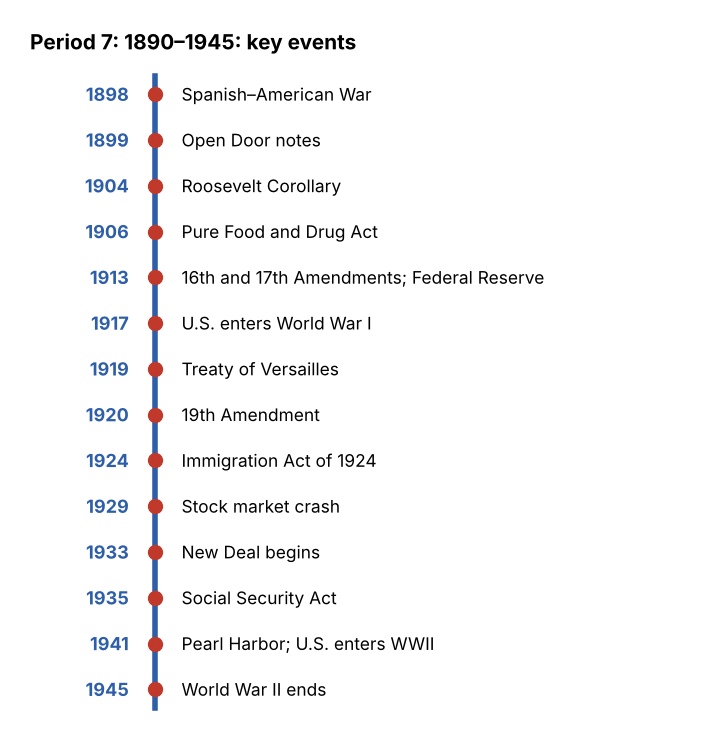
In 1941, American factories built about 3.7 million cars for civilians. From 1942 to 1945, they built almost none. Instead, they built tanks, jeeps, and planes, more than 300,000 aircraft by the end of the war. Unemployment, still around 15% in 1940, nearly disappeared. Millions of women went to work, millions of Americans moved to new cities, and more than 100,000 Japanese Americans were forced from their homes into camps. Topic 7.12 covers how World War II transformed the home front.
This article covers Topic 7.12: World War II: Mobilization in Period 7, 1890 to 1945. The topic asks you to explain how the United States mobilized its economy and society for World War II, and how the war created new opportunities for some Americans while limiting rights for others.
By the end, you should be able to:
- Describe how the government mobilized industry and labor.
- Explain how the war ended the Depression.
- Describe new opportunities and continuing discrimination for women and minorities.
- Explain the causes and effects of Japanese American internment.

What We Review
Mobilizing the Economy
| Agency or Policy | What It Did |
|---|---|
| War Production Board | Converted factories from civilian to military production and allocated raw materials |
| Office of Price Administration | Set price controls and rationed goods like gasoline, sugar, meat, and rubber |
| National War Labor Board | Settled labor disputes and limited wage increases. Unions mostly honored a no-strike pledge. |
| War bonds and taxes | Raised money from millions of Americans. Income tax expanded to cover most workers, with withholding from paychecks. |
Federal spending soared, and so did the national debt. Corporations earned large profits from “cost-plus” contracts. The economy roughly doubled in size between 1940 and 1945, and wartime spending finally ended the Great Depression.
Building a Military
About 16 million Americans served in the armed forces. Most were drafted under the Selective Service system. Scientists also mobilized. The secret Manhattan Project employed some 125,000 people to build the atomic bomb.
Opportunities and Limits: Women
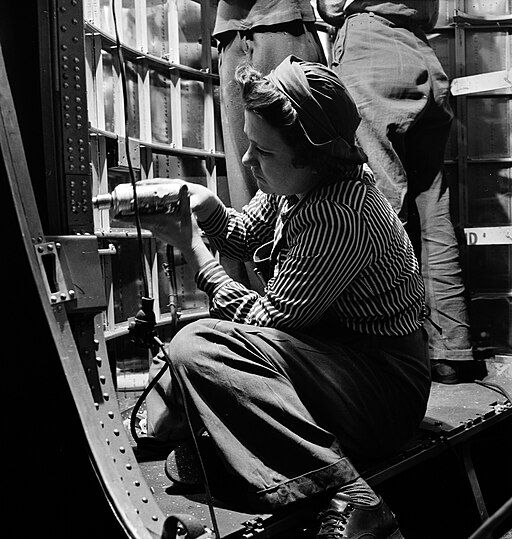
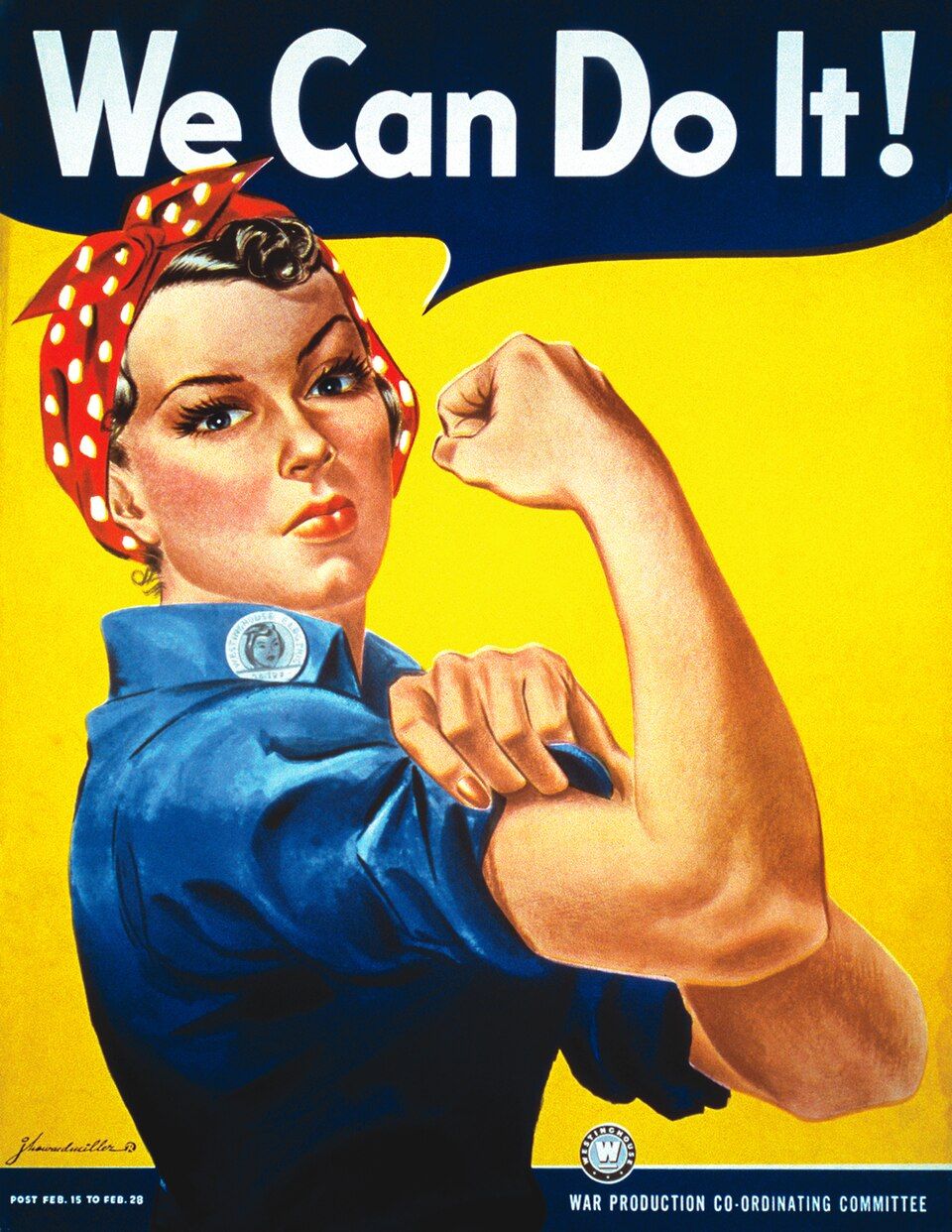
- About 6 million women entered the workforce, many in defense plants. “Rosie the Riveter” became a symbol of their contributions.
- About 350,000 women served in the military in units like the WACs and WAVES.
- Women usually earned less than men for the same work, and many were pushed out of industrial jobs when veterans returned.
Opportunities and Limits: Minority Groups
| Group | Opportunities | Discrimination and Conflict |
|---|---|---|
| African Americans | A. Philip Randolph’s threatened March on Washington led Roosevelt to issue Executive Order 8802, banning discrimination in defense industries. The Second Great Migration began. About 1 million served, including the Tuskegee Airmen. | The military stayed segregated. A race riot erupted in Detroit in 1943. The “Double V” campaign called for victory over fascism abroad and racism at home. |
| Mexican Americans | About 350,000 served. The Bracero Program (1942) brought Mexican workers to fill farm labor shortages. | The Zoot Suit Riots in Los Angeles in 1943, when servicemen attacked Mexican American youths. |
| American Indians | About 25,000 served. Navajo code talkers used their language to send unbreakable messages. | Many reservations lost workers and resources. |
| Japanese Americans | The 442nd Regimental Combat Team, made up of Japanese Americans, became one of the most decorated units of the war. | Forced removal and incarceration under Executive Order 9066. |
Japanese American Internment
After Pearl Harbor, fear and long-standing racism toward Asian Americans led Roosevelt to sign Executive Order 9066 in February 1942. About 120,000 people of Japanese descent on the West Coast, roughly two-thirds of them U.S. citizens, were forced into incarceration camps. Many lost homes and businesses.
In Korematsu v. United States (1944), the Supreme Court upheld the policy as a wartime necessity. In 1988, Congress formally apologized and paid $20,000 in reparations to each surviving internee.
Why does this matter? World War II mobilization is ideal evidence for arguments about how war changes society. It expanded federal power, ended the Depression, opened jobs for women and minorities, and sparked the civil rights activism of the postwar years. It also shows how wartime fear can override civil liberties. Comparing it with the World War I home front is a common exam task.
Test-Taking Strategies
Mnemonic Devices and Memory Shortcuts
- “8802 opened doors, 9066 closed them.” One order banned discrimination in defense jobs. The other ordered internment.
- “Double V.” Victory abroad and victory at home for African Americans.
- “War ended what the New Deal couldn’t.” Military spending ended the Depression.
Cross-Topic Connections
- Topic 7.6: World War I mobilization offers a direct comparison.
- Topic 7.10: New Deal agencies set a precedent for wartime government management.
- Topic 7.13: Industrial output supported the military victories in Europe and the Pacific.
- Topic 8.6: Wartime activism helped launch the postwar civil rights movement. See our review of the civil rights movement in the 1940s and 1950s.
Common Question Formats
- Stimulus MCQ. A “Rosie the Riveter” poster or a photo of an internment camp, and you identify its context.
- Comparison SAQ. You compare the World War I and World War II home fronts.
- Causation SAQ. You explain one effect of the war on women or minorities.
- DBQ. You evaluate how World War II changed American society.
Frequent Student Mistakes
- Saying the military was integrated. It stayed segregated until Truman’s 1948 order.
- Calling internees “enemy aliens.” Most were U.S. citizens.
- Assuming women kept their jobs. Many were pushed out after 1945.
- Forgetting the Bracero Program. It’s a key example of wartime labor policy.
Test-Day Shortcuts
- Spot “Korematsu.” It signals the Court’s approval of internment.
- Use specific numbers. 6 million women workers and 120,000 internees are strong evidence.
- Link to civil rights. Wartime experiences set up 1950s activism.
Time Management Tips
- Multiple choice: Section IA has 55 questions in 55 minutes, about 1 minute each. Propaganda posters often test intended audience and purpose.
- Short answer: Section IB has 3 required questions in 40 minutes, roughly 13 minutes each. Pair each opportunity with a limit to show nuance.
- Essays: The DBQ gets 60 minutes, including a 15-minute reading period, and the single required LEQ gets 40 minutes. Organize by group or by theme, but keep each paragraph tied to the thesis.
Check for Understanding
Think you’ve got it? Complete the quiz below to make sure. Download your results at the end.