
Maximize your score with these resources:
- Albert.io AP® Art History question banks
- Free AP® Art History cheat sheets
- Free AP® Art History score calculator
Topic 10.4 covers one of the most intellectually demanding areas of the AP® Art History exam: how we theorize, interpret, and contextualize global contemporary art. The exam doesn’t just ask you to identify artworks—it asks you to understand the frameworks art historians, critics, and theorists use to make meaning from art made after 1980. Learning Objective THR-1.A requires you to “identify and explain interpretations and theoretical frameworks used by art historians and critics to understand and evaluate contemporary art.” This isn’t about memorizing one correct answer; it’s about understanding how multiple lenses reveal different truths about the same artwork, and why those lenses matter. This article covers the major theoretical movements shaping contemporary art discourse: postmodernism and the rejection of grand narratives, identity-based theory, institutional critique, relational aesthetics, posthumanism, decolonial theory, periodization debates, pluralism versus relativism in criticism, the role of social media, and the “end of art history” debate.
Postmodernism and the Rejection of Grand Narratives
Postmodernism represents a fundamental break from the modernist belief in progress, universal truth, and singular artistic movements. Where modernism believed art history told a single, ascending story—from Impressionism through Cubism to Abstract Expressionism—postmodernism insisted that no single narrative could contain the complexity of human creative expression. This shift is central to understanding contemporary art theory.
- Grand narratives in modernism: Modernist critics like Clement Greenberg presented art history as a linear march toward formal abstraction, where each movement built on the last in pursuit of pure artistic essence. This narrative privileged Euro-American art and marginalized everything else as derivative or “primitive.”
- Postmodern skepticism: Theorists like Jean-François Lyotard argued that grand narratives had lost credibility in the late 20th century. Contemporary art could no longer pretend that one artistic direction was “correct” or inevitable. Instead, art became self-referential, playful, and ironic about its own meanings.
- Pastiche and appropriation: Postmodern artists like Sherrie Levine and Barbara Kruger didn’t create original works in the modernist sense; they re-presented, quoted, and remixed existing images and styles, exposing how meaning is constructed rather than inherent. This challenges the romantic notion of the artist as original genius.
- Local and plural truths: Postmodernism opened space for multiple interpretations and multiple art histories. Rather than asking “What is the next step in art’s evolution?” postmodern criticism asks “What does this artwork reveal about power, identity, and representation?”
Why this matters for the exam: When you see a contemporary artwork that feels ironic, referential, or skeptical of traditional artistic categories, postmodernism is likely the theoretical lens being used. The exam may ask you to explain how an artist “challenges grand narratives” or “references art history ironically”—these are postmodern moves.
Identity-Based Theory: Race, Gender, and Sexuality in Art
From the 1980s onward, contemporary art became increasingly concerned with how identity—race, gender, sexuality, disability, nationality—shapes both the making and interpretation of art. This represents a deliberate turn away from the modernist assumption that art transcends social categories. Identity-based theory argues that who you are fundamentally influences what you can say through art and how your work is read by others.
- Feminist art: Artists like the Guerrilla Girls, Judy Chicago, and Kara Walker use art to expose how women’s bodies, labor, and histories have been erased, commodified, or stereotyped. Feminist theory in art history examines how museums, galleries, and canons have historically excluded or marginalized women artists. The Guerrilla Girls’ famous 1989 poster asking “Do women have to be naked to get into the Met Museum?” directly challenged institutional sexism through ironic, accessible activism.
- Race and decolonization: Artists like Kehinde Wiley, Wangechi Mutu, and El Anatsui work explicitly with race and colonial histories. Wiley paints contemporary Black subjects in poses borrowed from Old Master paintings, inserting Black bodies into a visual tradition that systematically excluded them. This is both a reclamation and a critique—it claims space while making visible the violence of that exclusion.
- Queer and LGBTQ+ perspectives: Artists like Felix Gonzalez-Torres, Catherine Opie, and Zanele Muholi explore sexuality, desire, loss (particularly AIDS activism), and intimacy. Queer theory in art emphasizes how identity is performed, fluid, and resistant to stable categories. The work often directly confronts homophobia and heteronormative assumptions embedded in institutions and visual culture.
- Intersectionality: Contemporary theorists and artists recognize that race, gender, sexuality, class, and disability don’t exist in isolation—they intersect and compound each other. An artwork’s meaning depends on these multiple, overlapping identities. This is why interpretation is plural and contested; two viewers with different identities may legitimately read the same artwork in different ways.
Why this matters for the exam: The exam increasingly asks you to interpret artworks through the lens of identity. You might see a photograph or installation by an artist of color and be asked to explain how it engages with race or colonial history. The key is recognizing that identity-based interpretation is not “imposing politics on art”—it’s acknowledging that identity is always already present in how art is made and read.
Institutional Critique and Relational Aesthetics
Two major theoretical frameworks have shaped how artists think about the context and social function of art: institutional critique (which questions the museum and gallery system itself) and relational aesthetics (which emphasizes art’s role in creating human relationships and shared experiences).
Institutional Critique
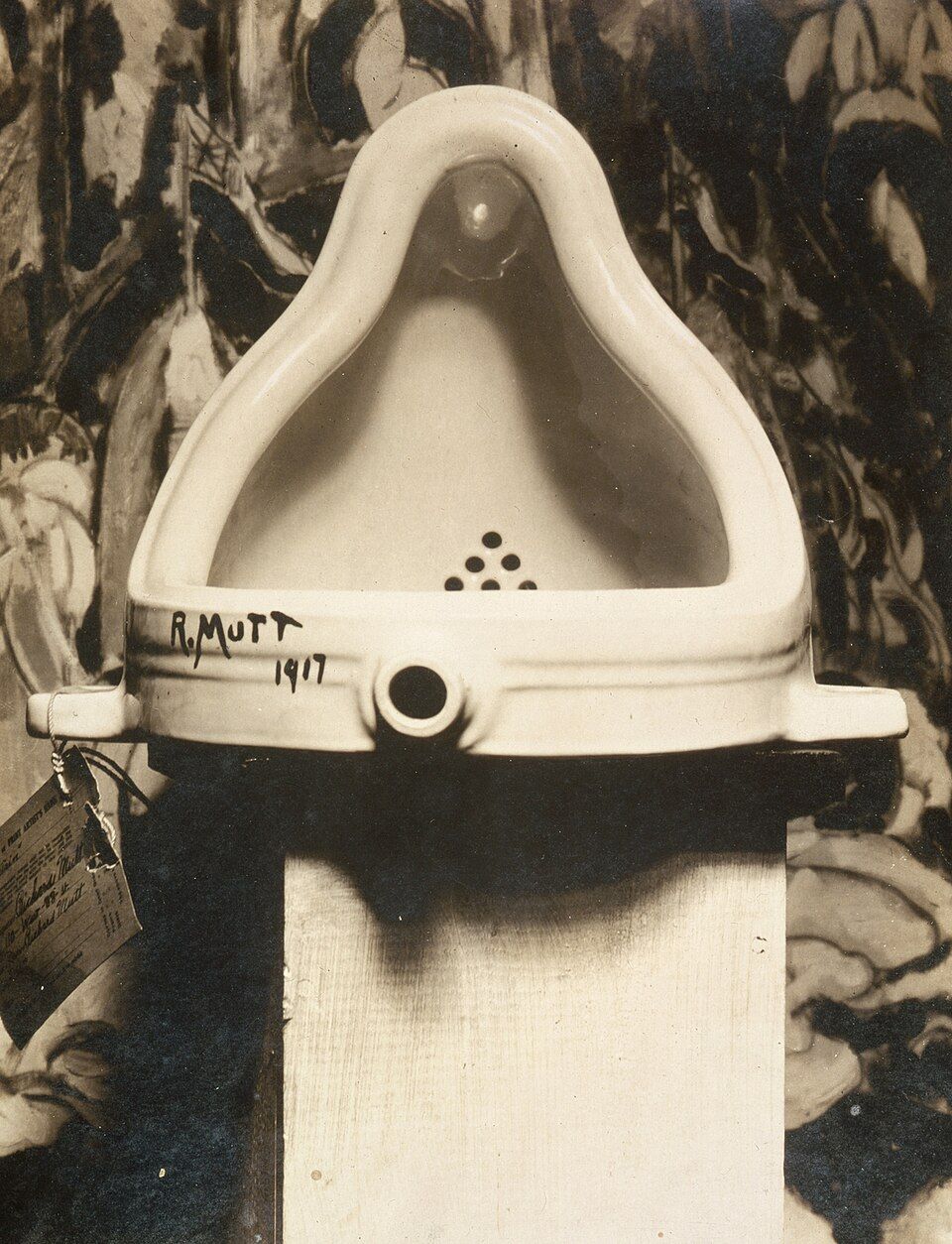
- The museum as artifact: Artists like Andrea Fraser argue that the museum is not a neutral container for art—it’s a social institution with its own history, politics, and power. Museums shape how we value art through lighting, framing, positioning, and curation. They also maintain class hierarchies: museums have traditionally served wealthy, educated audiences and excluded working-class visitors. Institutional critique art often happens inside galleries and museums, directly questioning their role.
- Fraser’s performances: Andrea Fraser’s performance pieces have included posing as a museum docent (Museum Highlights, 1989) and reacting physically to a museum’s official audio guide heard through headphones (Little Frank and His Carp, 2001). By making the museum’s hidden structure visible, she exposes how institutions construct meaning and taste.
- Beyond the white cube: Some contemporary artists reject traditional galleries altogether, working in the street, online, or in community spaces. This is partly a response to institutional critique—if museums reinforce exclusion, perhaps the alternative is decentralized, participatory art.
Relational Aesthetics
- Art as social interaction: Theorist Nicolas Bourriaud introduced relational aesthetics in the 1990s as a framework for understanding art that emphasizes human connection and lived experience over visual spectacle or conceptual complexity. In this view, art’s primary value isn’t aesthetic or intellectual—it’s social. The artwork creates a moment of genuine human encounter that might otherwise be rare in commodity-driven societies.
- Participatory and community art: Relational aesthetics celebrates work like Rirkrit Tiravanija’s communal dinners and Suzanne Lacy’s community-engaged projects. These works can’t be photographed or commodified in traditional ways; they exist primarily in the moment of participation and relationship.
- Critique of relational aesthetics: Some theorists argue that relational aesthetics can be vague and overly utopian—that simply gathering people together doesn’t automatically create meaningful social change. The framework is also criticized for potentially exploiting unpaid emotional labor and for sometimes reinforcing artist authority even while claiming horizontality.
Why this matters for the exam: You might encounter an artwork that exists as a performance or participatory experience rather than a traditional object. Understanding institutional critique helps you explain how the artwork questions the gallery system; understanding relational aesthetics helps you articulate what value the artwork generates through human interaction.
Posthumanism, Technology, and Decolonial Theory
Three cutting-edge theoretical frameworks are reshaping how we interpret global contemporary art: posthumanism (which challenges human exceptionalism), technology-driven theory (how digital culture transforms artistic practice), and decolonial theory (which centers non-Western epistemologies and histories of colonialism).
Posthumanism and Non-Human Agency
- Beyond anthropocentrism: Posthumanist theory questions the assumption that humans are the center of meaning and agency. Artists like Sougwen Chung create works that blur boundaries between human and non-human: Chung’s robotic arms respond to and recreate human gesture, raising questions about consciousness, creativity, and what counts as “art.” Other artists work with animals, plants, geological processes, and artificial intelligence as collaborators or co-creators.
- Speculative realism: This philosophical movement takes seriously the existence and agency of objects, materials, and non-human entities. An artwork might be staged as a conversation between human and non-human forces, challenging the romantic ideal of the artist as sole creator.
- Ecological art: Artists like Agnes Denes and Andy Goldsworthy create works that engage with natural systems and environmental change, often emphasizing the agency of nature itself. These works reflect posthuman concerns about humans’ relationship to the more-than-human world.
Technology and Digital Culture
- Digital art and new media: Contemporary art increasingly incorporates digital tools, internet culture, and technological processes. Artists use AI, algorithms, social media, video games, and VR to create work. This raises new questions: Can an algorithm be creative? What does authenticity mean when images are infinitely reproducible? How does the internet’s structure shape artistic meaning?
- Internet vernacular: Artists like Ryan Trecartin and Hito Steyerl engage with meme culture, glitch aesthetics, and internet temporality—the rapid, fragmented, ironic communication styles of online spaces. This work is sometimes difficult to interpret if you’re unfamiliar with digital culture, but that difficulty is often intentional; the artist is asking you to feel like an outsider to a community you might take for granted.
- Social media as gallery: The rise of Instagram and TikTok has created new forms of artistic distribution and criticism. Art that “performs well” online gets amplified; institutional gatekeepers have somewhat less power. But this also creates new inequalities and pressures toward commodification.
Decolonial Theory
- Decolonizing art history: Decolonial theory argues that Western art history has framed non-Western art as “primitive,” “traditional,” “folk,” or “ethnic” in ways that mask ongoing colonialism. Artists and theorists from the Global South argue for “epistemological decolonization”—rejecting Western categories and methods of understanding art. This isn’t just about inclusion; it’s about fundamental questions of whose knowledge counts and how power operates in interpretation.
- The contemporary as a category: Theorists like T.J. Demos and Carolyn Christov-Bakargiev ask whether “contemporary art” is a universal category or a Western imposition. Contemporary art discourses have historically centered New York, London, and other Western cities. Decolonial theory asks: Can an artist in Lagos or Jakarta have equal voice in determining what “contemporary art” means? Or does the global art system still replicate colonial hierarchies?
- Repatriation and heritage: Decolonial artists address stolen artifacts, cultural appropriation, and the ongoing presence of colonial violence in museums. Artists like Kara Walker and Yinka Shonibare engage with histories of slavery, extraction, and dispossession that Western institutions often obscure or minimize.
Why this matters for the exam: You may encounter artwork that engages with technology or explicitly addresses colonialism and global power structures. Understanding posthumanism helps you see how artists question human dominance; understanding decolonial theory helps you recognize when an artwork is claiming voice from a position historically marginalized by Western institutions.
Periodization Debates, Pluralism, and the “End of Art History”
Underlying all contemporary art theory is a fundamental question: How do we even define and periodize contemporary art? Is “contemporary” simply the art being made now? Or is it a specific aesthetic and theoretical movement? And what happens to art history itself when there is no single narrative to organize it?
What does “contemporary” mean?
- Chronological definition: Some use “contemporary” to mean art made roughly since 1980 (or the 1960s, depending on who you ask). By this definition, contemporary art is a historical period with observable characteristics.
- Phenomenological definition: Others define contemporary art as art that is culturally and intellectually relevant to viewers now—which means that artworks from previous centuries can be “contemporary” if they’re still actively shaping how we think and see. This definition is unstable but arguably more honest about how art history actually works.
- Global vs. Western: The challenge of periodizing global contemporary art is that different regions have different modern and contemporary moments. The 1980s may be “contemporary” in New York and Berlin, but not everywhere else. Decolonial theorists argue that imposing Western periodization onto the world is itself a colonial violence.
Pluralism versus Relativism
- Pluralism: Contemporary art theory often embraces pluralism—the idea that many interpretations of a single artwork can coexist, all with validity. A woman might interpret an artwork one way based on her gendered experience; a person from a colonized nation might interpret it differently; a critic focused on formalism might see something entirely different. All three interpretations might be legitimate.
- Relativism: But pluralism can slide into relativism—the claim that all interpretations are equally valid, that facts don’t matter, and that one person’s reading is as good as another’s. This threatens to undermine criticism itself. If every interpretation is valid, can we ever say an artwork is powerful, or failing, or dishonest? The exam distinguishes between pluralism (multiple valid readings grounded in evidence and theory) and relativism (anything goes).
- Evidence and argument: Good contemporary art interpretation is plural but not relativist. You support your reading with evidence from the artwork, knowledge of the artist’s context, and theoretical frameworks. You acknowledge other valid readings while explaining why your reading is persuasive and significant.
The “End of Art History” Debate
- Danto’s thesis: Philosopher Arthur Danto provocatively argued in the 1980s that art history had “ended”—not because art was no longer being made, but because modernism’s teleological narrative of progress had collapsed. There was no longer a direction toward which art was moving; instead, artists could choose from any aesthetic or conceptual approach. This represents an enormous liberation but also creates interpretive anxiety—without a shared narrative, how do we evaluate art?
- Belting’s end of the history of art: Art historian Hans Belting similarly suggested that art history as a discipline was entering a new phase in which the museum’s authority as gatekeeper had diminished. The global circulation of images, the rise of contemporary art biennales, and the emergence of non-Western art histories meant that no single institution could claim to define art.
- What this means: The “end of art history” doesn’t mean we stop interpreting art. It means we acknowledge that interpretation is now frankly plural, contested, and shaped by multiple frameworks simultaneously. This is both liberating and vertiginous—you have freedom to interpret, but less institutional guidance about which interpretations matter most.
Why this matters for the exam: You may be asked to explain why contemporary art is harder to periodize or canonize than modernist or historical art. Understanding these debates helps you articulate the intellectual stakes—it’s not just about cataloging artworks; it’s about fundamental questions of meaning-making, authority, and value.
Social Media, Interpretation, and the Viral Artwork
Social media has fundamentally transformed how contemporary art is created, circulated, interpreted, and valued. This is both a theoretical and practical issue that the exam increasingly touches on.
- Speed and circulation: Artworks that gain traction on Instagram or Twitter circulate globally at unprecedented speed, often divorced from institutional context or artist intention. A meme, a trending video, or a viral post can acquire meanings the creator never intended, shaped by the comments section and the network itself.
- Institutional mediation: Paradoxically, social media hasn’t eliminated the museum or gallery; it’s created new forms of mediation. Artists now cultivate Instagram presences; museums live-tweet exhibitions; collectors bid on NFTs. The question of institutional authority becomes more complex, not simpler.
- Democratization and inequality: Social media seems to democratize art—anyone can post, and a work might go viral regardless of who created it. But algorithmic visibility is not random. Artists with existing capital (fame, wealth, institutional backing, particular demographics) have advantages. Social media replicates inequalities in new forms.
- Critique and resistance: Some contemporary artists critically engage with social media itself. Hito Steyerl’s video essays explore how images circulate online and how meaning becomes fragmented across platforms. Jon Rafman collects screenshots of mundane internet moments, asking what these ephemeral, usually overlooked images reveal about contemporary life.
Why this matters for the exam: You might encounter an artwork created for or engaging with social media, or be asked to explain how digital circulation changes artistic meaning. Understanding social media as a theoretical framework—not just a marketing tool—is essential for interpreting 21st-century art.
Test-Taking Strategies
Mnemonic Devices and Memory Shortcuts
For the major contemporary theory frameworks, use the acronym PRRIT-D:
- Postmodernism (grand narratives rejected)
- Race/gender/sexuality (identity-based theory)
- Relational aesthetics
- Institutional critique
- Technology and posthumanism
- Decolonial theory
This helps you quickly remember the major theoretical lenses. When you see a contemporary artwork, run through PRRIT-D mentally and ask which framework best illuminates it.
Cross-Topic Connections
Learning Objective THR-1.A (understanding theoretical frameworks for contemporary art) connects directly to:
- Unit 4 (Later European and American Art, including 20th-century art movements): Contemporary theory is often explicitly responding to or building on modernist movements. Postmodernism is a reaction to modernism; institutional critique develops from Conceptual Art. Understanding these genealogies strengthens your interpretation of contemporary work.
- Topic 10.1-10.3 (contemporary art by region): Each regional contemporary art tradition brings its own theoretical frameworks. African contemporary art engages with decolonial theory; Latin American art often addresses institutional critique; Asian art frequently explores technology and globalization. Knowing regional contexts enriches theoretical interpretation.
- Global history and politics: Contemporary art theory can’t be separated from late-20th-century and 21st-century politics. Decolonial theory responds to ongoing imperialism; identity-based theory emerges from civil rights and feminist movements; relational aesthetics reflects anxieties about capitalism and atomization. Connecting art to its historical moment deepens interpretation.
Common Question Formats
Topic 10.4 appears on the AP exam in several formats:
- “How does this artwork exemplify [theoretical framework]?” You’ll see an image and be asked to explain how it demonstrates postmodernism, institutional critique, identity-based theory, etc. The key is identifying specific visual or conceptual features and connecting them to theoretical principles. For example, an appropriation artwork that quotes art history ironically exemplifies postmodernism; a participatory artwork that gathers strangers exemplifies relational aesthetics.
- “Which theoretical framework best helps us interpret this artwork, and why?” You might have multiple theory options and must choose and justify. Your answer should identify visual/conceptual evidence and explain why that framework is more illuminating than alternatives.
- “What does this artwork reveal about how identity, technology, or institutional power shapes art?” These questions ask you to use theory to interpret meaning. A successful answer identifies the theoretical issue at stake (How does the artwork engage with race? How does it challenge the gallery?) and explains why this interpretation matters.
- “How would different viewers interpret this artwork differently, and why?” These questions test your understanding of pluralism and multiple valid readings. You explain how identity, context, or theoretical framework shape interpretation without claiming any one reading is definitively correct.
Frequent Student Mistakes
- Mistake 1: Confusing postmodernism with relativism. Students often think postmodernism means “all interpretations are equally valid.” Correction: Postmodernism rejects grand narratives and universal truth claims, but it still demands evidence and argument. A postmodern artwork might be ironic and self-referential, but that irony serves a specific conceptual or political purpose. Your interpretation must explain that purpose.
- Mistake 2: Treating identity-based theory as “modern political correctness.” Some students dismiss race, gender, and sexuality as external politics imposed on “pure art.” Correction: Identity is intrinsic to artistic production and interpretation. Every artwork reflects the identity position of its maker and is received through viewers’ identities. Identity-based theory makes this structural reality explicit; it doesn’t invent it.
- Mistake 3: Overgeneralizing relational aesthetics. Students sometimes think that any artwork involving participation or community counts as relational aesthetics. Correction: Relational aesthetics specifically emphasizes human connection and social encounter as the primary artistic value. A workshop or participatory project might not be relational aesthetics if the artist’s goal is education, political organizing, or documentation rather than aesthetic encounter.
- Mistake 4: Ignoring global and decolonial perspectives. Students often interpret contemporary art primarily through Western (especially American and European) theoretical frameworks. Correction: Decolonial theory, African contemporary art theory, and Asian art history offer distinct and equally valid interpretive lenses. The exam increasingly includes works that require non-Western theoretical frameworks.
Test-Day Shortcuts
- Start with context, then theory: When you encounter a contemporary artwork, first ask: Who made it? Where and when? What’s the artist’s background and stated interests? This contextual information often points you toward the relevant theoretical framework. An artwork by a woman artist about her body likely engages feminist theory; an artwork by an artist from a formerly colonized nation likely engages decolonial theory.
- Look for irony, critique, and self-reference: Postmodernism and institutional critique often announce themselves through irony, quotation, and meta-commentary. If an artwork seems to comment on art, museums, representation, or beauty itself, you’re likely dealing with postmodern or institutional critique approaches.
- Identify the primary stakeholders: Theory matters because it answers the question: Whose perspective is being centered, and whose is being marginalized? Identity-based theory, institutional critique, and decolonial theory all ask “Who benefits from this interpretation? Whose voice is missing?” If an artwork raises these questions, these frameworks are relevant.
- Use “So what?” as your guide: Every theory explains why an artwork’s particular form matters. Postmodernism explains why irony matters (it exposes how meaning is constructed). Identity theory explains why an artist’s race matters (it shapes what they can say and how they’re heard). Ask “So what?” to determine which theoretical lens applies.
Time Management Tips
- Free response questions on contemporary theory: If you’re given a prompt asking you to interpret a contemporary artwork through a specific theoretical framework, allocate 2-3 minutes to context and visual analysis, then 5-7 minutes to explaining the theory and its application. Don’t spend excessive time describing every visual detail; use description only to support theoretical argument.
- Multiple choice with theoretical language: When you see terms like “postmodern,” “institutional critique,” “identity-based,” or “relational,” these are usually signal words. Pause and mentally apply the framework before reading the answer choices. This prevents you from second-guessing and gives you a baseline interpretation.
- Comparing frameworks: Some questions ask which framework best explains an artwork. Don’t overthink this. Eliminate obviously wrong frameworks first (if there’s no participatory element, relational aesthetics is less likely), then argue for your best choice based on one or two key features of the artwork.
- Acknowledge complexity in essays: If you have 20+ minutes for an essay on contemporary theory, don’t oversimplify. Acknowledge that artworks often engage multiple frameworks simultaneously. An artwork might be both institutionally critical and relational, or both postmodern and decolonial. This sophistication demonstrates mastery.
Check for Understanding
Think you’ve got it? Complete the quiz below to make sure. Download your results at the end.