
Maximize your score with these resources:
- Albert.io AP® Art History question banks
- Free AP® Art History cheat sheets
- Free AP® Art History score calculator
Purpose and audience are central concepts that shape how contemporary artists create, present, and position their work in the global art world. In Unit 10 (Global Contemporary, 1980 CE to Present), Topic 10.2 (Learning Objective PAA-1.A) asks you to understand how artists consciously define who their work is for and what it’s meant to accomplish — and how these decisions reveal broader ideas about art’s role in society. This article explores how contemporary artists use purpose and audience to challenge institutions, build community, engage in activism, and navigate the increasingly commodified global art market. By the end, you’ll see specific contemporary art movements and artists that exemplify these strategies, and you’ll have concrete exam tactics for approaching these questions.
Art as Social Activism: Redefining Art’s Purpose
Contemporary artists beginning in the 1980s increasingly embraced art as a vehicle for social and political change. Rather than creating work for museum walls or wealthy collectors, many artists explicitly targeted public audiences and used visual means to address injustice, environmental destruction, and human rights violations. This shift redefined the artist’s purpose: from aesthetician to witness, advocate, and organizer.
- Ai Weiwei (Chinese, b. 1957) — Uses installation, sculpture, and photography to critique authoritarian governance and censorship in China. His work often involves large-scale participation or documentation of collective trauma. Most famous example: Sunflower Seeds (2010), an installation of 100 million hand-painted porcelain seeds representing individual identity within the collective. Also created Remembering (2009, a facade installation of about 9,000 children’s backpacks at Munich’s Haus der Kunst) to honor children who died in the 2008 Sichuan earthquake due to poor construction — a disaster the Chinese government initially tried to suppress. Ai’s work demonstrates how contemporary artists deliberately position themselves as human rights activists, not just aesthetes. His audience is simultaneously the global art world and the Chinese public who will never see the work in person.
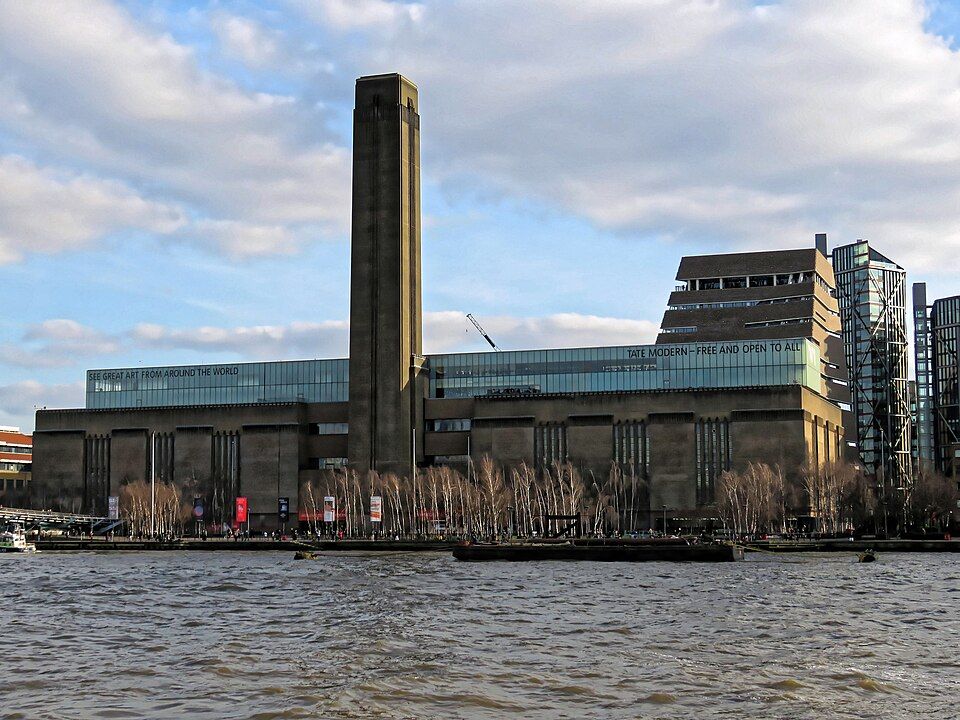
- Kara Walker (American, b. 1969) — Creates large-scale silhouette installations and drawings that visualize slavery, racism, and colonial violence in the Americas. Her silhouette tableaux force viewers to confront brutal historical realities in galleries and public spaces. Works like Fons Americanus (2019), a monumental public fountain in Tate Modern’s Turbine Hall addressing the transatlantic slave trade, show how her artistic purpose engages contemporary political urgency. Walker’s audience includes the general public (she creates public installations), Black communities reclaiming historical narratives, and international art institutions. She has been criticized by some and celebrated by others — precisely because her work’s purpose is not to please but to provoke reckoning.
- Banksy (British, pseudonymous, active since 1990s) — Creates stenciled street art that critiques war, consumerism, and state power. Works appear on public walls without permission; the audience is anyone who walks the street, not museum-goers. Famous examples include Girl with Balloon (which sold at auction for $1.4 million while simultaneously self-destructing as social commentary), Flower Thrower (in Bethlehem), and the installation Dismaland (2015, a temporary “dystopian” theme park). Banksy’s purpose is explicitly populist — to reach mass audiences outside the gallery system. Ironically, his work has become highly commodified, raising the very critique his art makes about capitalism and authenticity.
- Why this matters for the exam: The AP exam tests whether you understand that contemporary artists deliberately choose their audience and define their purpose as a formal decision, not an afterthought. When you see a question about Ai Weiwei or Banksy, you should be able to explain not just what the work looks like but for whom the artist made it and what change they intended. This is different from asking about aesthetic features — it’s about intentionality and the artist’s role in society.
Identity Politics and the Politics of Representation
Beginning in the 1980s-1990s, contemporary artists from non-Western cultures and marginalized communities began explicitly using art to reclaim narrative authority over their identities. Rather than being represented by Western institutions, they positioned themselves as authors of their own cultural narratives. This shift is called identity politics in contemporary art — the deliberate foregrounding of race, gender, sexuality, ethnicity, and colonial history as central to artistic meaning.

- Shahzia Sikander (Pakistani-American, b. 1969) — Creates intricate miniature paintings that blend South Asian classical traditions with contemporary feminist and anti-colonial critique. Her work deliberately reclaims the miniature form — historically used by male artists in Mughal courts — as a site of female authorship and LGBTQ+ visibility. Her audience includes South Asian diaspora communities, feminist art communities, and international museums. The work’s purpose is to demonstrate that South Asian art is not static or historical but living, contemporary, and centrally concerned with gender and power.
- Yinka Shonibare (British-Nigerian, b. 1962) — Combines African textiles (particularly Dutch-wax fabrics produced in industrialized mills and marketed as “authentically African”) with materials like mannequins, video, and found objects. His work critiques notions of “authentic” African identity and exposes how colonialism shaped what passes for African culture. His audience is global — museums in London, New York, Lagos, and beyond — and his purpose is to decode the politics of cultural commodification.
- Felix Gonzalez-Torres (Cuban-American, 1957-1996) — Created installations, photographs, and candy piles that addressed AIDS, loss, and queer identity during the height of the AIDS crisis. His candy pile installations allowed viewers to take candy — making the audience an active participant in the work, not a passive observer. His audience was simultaneously the general public, the queer community experiencing AIDS, and gallery-goers. The work’s purpose was to materialize grief, make the invisible visible, and assert queer desire and presence at a moment when the government refused to acknowledge the crisis.
- Comparison table: How Contemporary Artists Use Identity as Content
| Artist | Identity / Historical Context | Artistic Strategy | Intended Audience | Purpose |
|---|---|---|---|---|
| Shahzia Sikander | Pakistani-American woman; reclaiming South Asian traditions | Miniature paintings that blend classical forms with feminist/queer content | South Asian diaspora, feminist art world, international museums | Assert South Asian women’s authorship; challenge male-centered tradition |
| Yinka Shonibare | British-Nigerian; interrogating “authenticity” in postcolonial identity | Installations using factory-made African textiles with Western materials | Global art world; postcolonial audiences | Decode cultural commodification; expose colonialism’s legacy in identity |
| Felix Gonzalez-Torres | Cuban-American queer artist; AIDS crisis activist | Candy piles, photographs, installations where audience participates | General public, queer community, art institutions | Materialize invisible grief; assert queer presence during silence |
Why this matters: Identity politics in contemporary art means the artist’s identity (race, gender, sexuality, nationality, colonial history) is inseparable from the work’s meaning and purpose. The AP exam will test whether you understand that these artists aren’t simply representing identity — they’re strategically using their own identity and the identity of their audience as content. When you see a question about identity in contemporary art, think about power: Who has the authority to represent? Whose stories are being told? Who gets to see this work?
The Global Art World: Biennials, Markets, and Institutional Critique
The expansion of contemporary art as a global system — driven by international biennials, art fairs, and the rise of non-Western collectors — has created new audiences and purposes for contemporary artists. But it has also created new problems: commodification, cultural appropriation, and the flattening of local contexts into a homogenized “global contemporary” aesthetic that favors the wealthy.
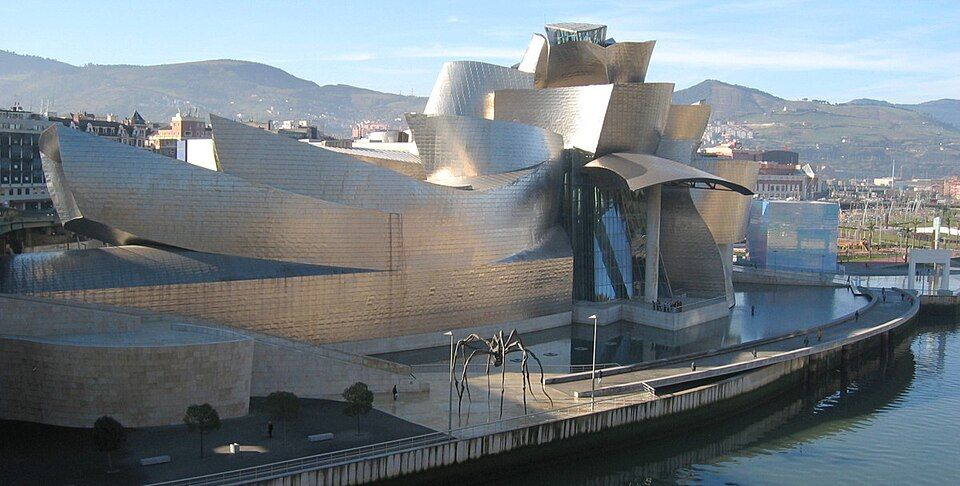
- The Biennial System — International art biennials (Venice, São Paulo, Istanbul, Dakar, etc.) emerged as mechanisms to circulate contemporary art globally and to establish national prestige. Artists are selected to represent their countries; curators choose themes that shape how work is interpreted. The biennial is simultaneously a democratic platform (giving visibility to non-Western artists) and an exclusionary gatekeeping system (only a few artists are chosen; the biennial audience is elite, expensive to attend). Contemporary artists are acutely aware of this audience and often create work that plays to biennial curators’ expectations.
- The Art Market and Commodification — As contemporary art became investment-grade in the 1990s-2000s, prices skyrocketed and the purposes of art shifted. Galleries and collectors demanded “investment-ready” work by recognizable artists. This created a feedback loop: artists who participated in prestigious institutions gained market value; their work became scarce and expensive; they were incentivized to create limited editions and authenticate scarcity. Some contemporary artists deliberately critique this system through their work.
- Institutional Critique — Artists like Andrea Fraser (American, b. 1965) and Michael Asher (American, 1943-2012) created work that exposed how museums shape meaning. Fraser’s performances in museums (she gives parody docent tours, or stands in galleries as a human artwork to be observed) reveal the museum as a space of power, not neutrality. Asher removed walls or altered gallery architecture to expose the museum’s hidden structures. Their audience is other artists, curators, and art-world insiders who understand institutional critique; their purpose is to make the invisible framework of the art world visible and therefore contestable.
- Why this matters: The AP exam tests whether you understand that contemporary artists are conscious of the systems circulating their work. When a question asks about a contemporary artist’s purpose, part of the answer involves their relationship to institutions: Are they critiquing the biennial system? Complicit with market forces? Resisting commodification? Using institutional platforms strategically despite their flaws?
Public Art and Participatory Practice
Many contemporary artists deliberately move outside the gallery to reach public audiences and to invite participation. The purpose shifts from object-creation to community engagement and social transformation. The audience is no longer museum-goers but pedestrians, communities, neighbors — people who did not choose to encounter the art.
- Public Art — Artists like Theaster Gates (American, b. 1973) create large-scale installations and community spaces in urban neighborhoods. His Rebuild Foundation in Chicago acquires vacant buildings and transforms them into libraries, gathering spaces, and archives. The work’s purpose is not aesthetic pleasure but community stabilization and cultural sovereignty. His audience is the neighborhood, not the international art world (though his work also appears in museums). Gates’s practice demonstrates how contemporary art can become infrastructure.
- Participatory and Relational Art — Artists like Tania Bruguera (Cuban, b. 1968) create performances and actions that invite (or demand) audience participation. Her work Tatlin’s Whisper #5 (2008) placed mounted police on horseback in the Turbine Hall at Tate Modern, London, where the officers used crowd-control techniques on visitors so that they physically felt the force of state power. Her work’s purpose is not to communicate a fixed message but to generate an encounter, a moment of collective presence. The audience becomes a co-creator of meaning.
- Digital and Online Audiences — Contemporary artists increasingly create work for social media, online platforms, and networked audiences. Artists like Hito Steyerl (German, b. 1966) make videos and installations that address surveillance, digital labor, and the politics of the image in networked culture. Her audience is simultaneously museum-goers and online viewers; her purpose involves critiquing digital culture from within digital culture. The boundary between “artwork” and “content” blurs — a strategic ambiguity that many contemporary artists embrace.
- Why this matters: Participatory and public art expand what counts as “purpose” and “audience” on the AP exam. A contemporary artwork’s purpose might not be to be beautiful or to express the artist’s inner vision — it might be to organize people, to transform a space, to create a moment of encounter, or to generate data. The audience might not be art-world insiders but the public, the community, or networked users. When you see a question about contemporary art, ask: Is this work trying to beautify? Organize? Critique? Participate?
Environmental Activism and Ecopolitical Art
Contemporary artists increasingly address the climate crisis and environmental destruction through work that makes ecological damage visible and mobilizes action. The purpose is explicitly activist; the audience is often the global public, policymakers, and communities bearing the brunt of environmental destruction.
- Olafur Eliasson (Icelandic-Danish, b. 1967) — Creates large-scale installations that make climate change felt rather than abstractly understood. His Ice Watch (2014-2019) transported massive icebergs from Greenland to city centers (Copenhagen, Paris, London) as a melting sculpture. The work’s purpose is to materialize climate change as a present, visible, melting crisis, not a future abstraction. His audience includes the general public encountering the melting ice in urban plazas.
- Environmental art and digital culture — Contemporary artists also address the environmental cost of digital technology and data centers. The audience is tech-literate and environmentally conscious; the purpose is to trace the hidden infrastructure and human labor behind digital culture.
- Why this matters: Environmental art represents a contemporary purpose that did not exist in earlier art history: art made explicitly to address ecological crisis. The AP exam may test your understanding of this, especially as climate change becomes more visible in exam content. Recognize that contemporary environmental art is not decorative — it’s activist and mobilizing.
The Museum as Contested Space
Contemporary artists and communities have increasingly questioned the museum itself as a site of Western authority, colonial history, and whiteness. Rather than accepting the museum as a neutral platform, artists and communities ask: Whose collection is this? Who does it represent? What power does the museum exercise? This questioning has led to new practices of decolonizing museums and creating alternative institutions.
- Decolonial Critique and Repatriation — Contemporary artists and curators from the Global South are demanding that Western museums acknowledge their colonial histories and return objects taken during colonialism. The purpose is not simply aesthetic but political: reclaiming cultural property and epistemological authority. The audience includes the communities from which objects were taken, as well as the museums themselves.
- Alternative and Community-Based Institutions — Artists are creating alternative galleries, museums, and archives outside Western institutional structures. These spaces prioritize local artists, marginalized voices, and community agency. The audience is the community; the purpose is to build autonomous cultural infrastructure.
- Why this matters: Questions about contemporary art increasingly involve institutional critique. When you see a question about a contemporary artist or artwork, consider: Does this work affirm institutional authority or challenge it? Who does the museum serve, and whose perspectives are missing? Contemporary artists are acutely aware of the museum as a contested space.
Test-Taking Strategies
Mnemonic Devices and Memory Shortcuts
Remember the acronym ACTIVIST to recall the core purposes of contemporary art:
- A — Activism (art addressing social/political injustice)
- C — Critique (institutional, market, colonial critique)
- T — Testimony (artists bearing witness to trauma, crisis)
- I — Identity (foregrounding race, gender, sexuality, nationality)
- V — Voice (amplifying marginalized communities)
- I — Infrastructure (art as social/cultural infrastructure)
- S — Solidarity (participatory, relational, community-based)
- T — Transformation (redefining what art is and what it does)
For biennial/market questions, remember: PRESTIGE-PRICE — Biennials confer prestige, which drives prices. But that system can be critiqued.
Cross-Topic Connections
Purpose and audience in contemporary art connect to:
- Topic 10.1 (Artists Responding to Global Changes) — Contemporary artists explicitly respond to globalization, technology, migration, and climate change. Purpose and audience are inseparable from those responses.
- Topic 10.3 (Artists’ Statements and Artistic Choices) — When you read an artist’s statement, it will often explain purpose (what the work is meant to accomplish) and intended audience. Cross-reference these topics.
- Earlier topics on colonialism and representation (Topic 5.2, 7.3, 8.4, 9.2) — Contemporary identity politics art is a direct response to centuries of Western representation of non-Western peoples. Understanding colonial art history helps you understand why contemporary artists are asserting their own authorship.
Common Question Formats
Format 1: Artist-and-Purpose Question
Question: “Which of the following best describes the purpose of Ai Weiwei’s Remembering (2009)?”
What you’ll see in the stimulus: An image of the museum facade covered with children’s backpacks. The context will mention that the Chinese government suppressed information about deaths caused by poor construction.
Your approach: The artwork’s purpose is not aesthetic but testimonial and activist — to honor victims and challenge state censorship. Look for answer choices that reference activism, memory, critique, or bearing witness. Eliminate answers that focus only on aesthetic qualities or that suggest the work is celebratory or decorative.
Format 2: Audience and Context Question
Question: “Banksy’s street art is most accurately characterized as addressing which of the following audiences?”
What you’ll see in the stimulus: Images of stenciled street art on public walls. Context about the work appearing without permission, often on walls facing traffic or pedestrian areas.
Your approach: The audience is explicitly the general public, not museum-goers. Banksy’s purpose is to reach mass audiences outside the gallery. Look for answers that emphasize public/democratic access. Eliminate answers suggesting elite, specialist, or art-world-only audiences.
Format 3: Identity Politics Question
Question: “Shahzia Sikander’s use of the miniature form in her paintings represents a strategic claim about which of the following?”
What you’ll see in the stimulus: Images of intricate miniature paintings mixing traditional forms with contemporary, feminist, or queer imagery.
Your approach: The miniature form has a history (male artists in Mughal courts). Sikander reclaims it as a site of female authorship and identity assertion. She’s not simply creating beautiful objects — she’s strategically using a historical form to make a claim about who gets to be an artist and whose stories get told. Look for answers about authorship, identity assertion, or challenging traditional hierarchies.
Format 4: Market and Commodification Question
Question: “Banksy’s Girl with Balloon sold at auction for $1.4 million before self-destructing. This event most directly illustrates which of the following about contemporary art?”
What you’ll see in the stimulus: Information about the sale price, the shredder embedded in the frame, the irony of the work’s self-destruction at auction.
Your approach: The work comments on its own commodification — Banksy is critiquing the art market through an act that happens at the moment of commodification. The purpose is ironic commentary on valuation. Look for answers about commodification, irony, or critique of market systems. Eliminate answers suggesting technical innovation or pure aesthetics.
Frequent Student Mistakes
Mistake 1: Assuming contemporary art is purely aesthetic. Many students analyze contemporary work as if the question were “Is this beautiful?” or “What is the formal composition?” In fact, contemporary art is often explicitly not pursuing aesthetic pleasure. It’s pursuing activism, critique, testimony, or social change. Before answering, ask: Is this work trying to be beautiful, or is it trying to accomplish something else?
Mistake 2: Missing the intentional provocations. Kara Walker’s silhouettes are intentionally difficult to look at. Tania Bruguera’s performances are intentionally confusing or uncomfortable. These are not bugs in the work — they’re features. Discomfort is part of the purpose. Don’t try to “solve” the discomfort by assuming the artist wants to make the experience pleasant. Instead, ask: What is the artist making me feel, and why?
Mistake 3: Conflating “global” with “homogenous.” The phrase “global contemporary” can make it sound like all contemporary art worldwide looks the same. In fact, contemporary artists are often in tension with global systems. Yinka Shonibare participates in global art exhibitions while critiquing globalization. Ai Weiwei makes work that circulates internationally while addressing Chinese politics. Don’t assume “global” means “shared aesthetic” — it means “circulating through global systems,” which many artists are simultaneously critiquing.
Mistake 4: Underestimating the role of audience as part of the work’s meaning. For participatory art, the specific audience is the work, not external to it. Felix Gonzalez-Torres’s candy pile only means something because the viewer can take candy — the audience’s action completes the work. If you encounter a question about participatory art, don’t analyze it as if it’s a traditional object. Analyze it as an encounter or event.
Test-Day Shortcuts
1. Ask “For whom?” before “What is it?” When you encounter a contemporary artwork, your first question should be: Who is the intended audience? Public or art-world? Local community or global? General public or specific activist community? This single question often eliminates wrong answers immediately. Banksy makes work for the public — not sophisticated art-world insiders. Ai Weiwei makes work that circulates globally but addresses Chinese audiences. One simple question about audience can structure your entire interpretation.
2. Look for “contradiction” or “irony” in the answer choices. Contemporary art often works through irony, paradox, or intentional contradiction. If an answer choice suggests that the artwork simultaneously participates in and critiques a system (like Banksy participating in the art market while critiquing commodification), that’s often correct. Contemporary artists are rarely simply for or against something — they’re usually strategically engaged with the systems they critique.
3. Prioritize historical context over formal analysis. For contemporary art, historical context (colonialism, racism, environmental crisis, surveillance) often explains the purpose better than formal features. When in doubt, choose answers that reference the historical moment or political context rather than answers focused purely on color, composition, or medium.
4. Use the artist’s name as a clue. If you see a question about Ai Weiwei, expect it to involve activism, censorship, or human rights. If you see Banksy, expect it to involve public audience or market critique. If you see Kara Walker, expect it to involve racism or silhouette imagery. Learning 4-5 contemporary artists and their signature themes will help you recognize question patterns and narrow your choices.
Time Management Tips
1. Expect longer stimuli for contemporary art questions. Contemporary art questions often provide more context (artist statements, biographical information, historical moment) than questions about earlier periods. Allocate 1-2 extra minutes to read these carefully — the context is essential to understanding purpose and audience.
2. For image-heavy questions, read the caption first. Contemporary art questions often include captions, dates, and contextual information below the image. Read these before studying the image itself. The caption will tell you the intended audience and context, which will frame how you interpret the visual.
3. In a timed test, eliminate answers that use generic language first. Avoid answers that could apply to any art (e.g., “to create beauty,” “to express emotion”). Contemporary art questions reward specificity. If an answer doesn’t reference activism, identity, audience, or a specific historical moment, it’s usually wrong.
4. For questions you’re unsure about, anchor to “purpose and audience.” You might not remember whether it was Yinka Shonibare or Shahzia Sikander, or you might be fuzzy on the specific date. But if you remember the purpose (critique of commodity, assertion of female authorship) and audience (global art world, diaspora communities), you can often infer the correct answer. Purpose and audience are the organizing principles for contemporary art on the AP exam.
Check for Understanding
Think you’ve got it? Complete the quiz below to make sure. Download your results at the end.