
Maximize your score with these resources:
Gustavo Adolfo Bécquer’s Rima LIII — “Volverán las oscuras golondrinas” (“The dark swallows will return”) — is one of the most frequently analyzed poems in AP® Spanish Literature. This poem appears in the unit on la literatura romántica, realista y naturalista and exemplifies the core themes of late Spanish Romanticism: the irreversibility of time, the impossibility of recovering lost love, and the relationship between nature and human emotion. After reading this article, you’ll understand the poem’s structure, major themes, literary devices, and the specific ways it’s tested on the AP exam.
Understanding Rima LIII in Context
Rima LIII comes from Bécquer’s collection Rimas (1871), a slim volume of 79 short lyric poems that became one of the most influential works in Spanish poetry. Bécquer wrote during the decline of Spanish Romanticism, after the revolutionary fervor of the 1830s and 40s had given way to Realism and Naturalism. His poetry bridges both movements: it carries the emotional intensity and symbolism of Romanticism but with the restraint and precision that anticipate modern poetry. He is sometimes called the father of modern Spanish lyric poetry.
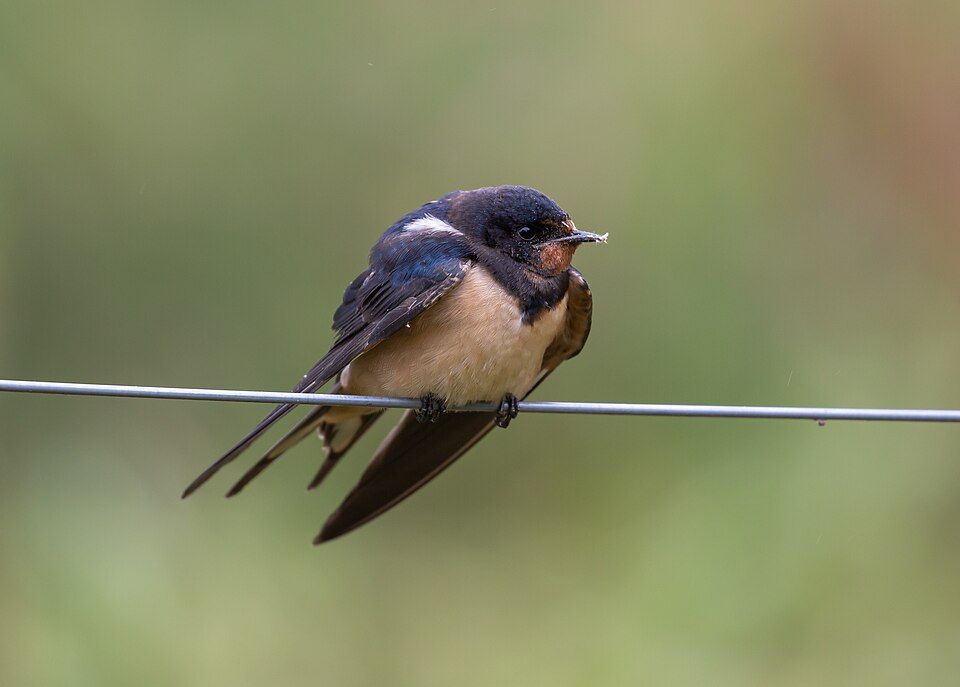
The Rimas collection was organized without explicit titles — each poem is numbered. This numbering suggests a progression through emotional states rather than a narrative arc. Rima LIII falls near the end of the collection and is thematically grouped with other poems about loss and the passage of time.
The Poem’s Structure and Argument
The poem consists of six stanzas in three paired sections, each section following an identical pattern: an affirmation of natural return (introduced by “Volverán”) followed immediately by a negation (“pero…no volverán”). This anaphoric antithesis is the entire poem’s logical and emotional architecture.
Section 1 (Swallows): External nature — dark swallows will return to hang their nests on the balcony, calling at dawn. But those particular swallows who paused in their flight to contemplate the beloved’s beauty and the speaker’s happiness will not return. Section 2 (Honeysuckle): Nature touching the beloved — the thick honeysuckle (madreselvas) will climb her garden walls again and its flowers will open. But those flowers heavy with dew, whose drops the lovers watched tremble and fall “como lágrimas del día,” will not return. Section 3 (Love): The speaker’s inner world — ardent words of love will sound again in her ears, her heart may awaken from its deep sleep. But mute and absorbed and kneeling, as God is adored before His altar, as the speaker has loved her — she should not deceive herself — no one will love her like that.
The progression moves inward: from the world (external nature), to the beloved’s garden (dewdrops on her flowers), to the speaker’s unique devotion. Each stanza escalates the loss and makes the irreversibility more personal and absolute.
Major Themes: The Impossibility of Return
| Theme | How It Appears in the Poem | Significance for the AP Exam |
|---|---|---|
| The irreversibility of lost love | Each section pairs a natural return with a negation: “ésas… ¡no volverán!” / “¡así… no te querrán!” — the specifics of this love, these moments, this man’s devotion, can never be replicated | The poem’s philosophical core; when AP questions ask about the poem’s central claim, lead with irreversibility — nature cycles but human emotion does not, making each lost love permanently gone |
| Nature as indifferent cycle vs. human experience as unique | Swallows will return to the balcony, honeysuckle will climb the garden walls, other voices of love will sound — but these will not be the same swallows, the same dew-laden flowers, the same devoted man | Bécquer uses natural repetition to intensify human loss; exam questions about nature imagery in Romantic poetry expect you to see nature not as solace but as a contrast that sharpens the pain of what cannot return |
| The speaker’s absolute, irreplaceable devotion | The final stanza: “pero mudo y absorto y de rodillas, / como se adora a Dios ante su altar, / como yo te he querido…, desengáñate, / ¡así… no te querrán!” — no one will love her with such absolute, worshipful devotion | The poem ends not with the beloved’s loss but with the speaker’s claim of uniqueness; this shift from nature to self is the poem’s emotional climax — AP essay questions often focus on this turn and what it reveals about late Romantic idealization of love |
Literary Devices: How Form Creates Meaning
| Device | Example from the Poem | Effect |
|---|---|---|
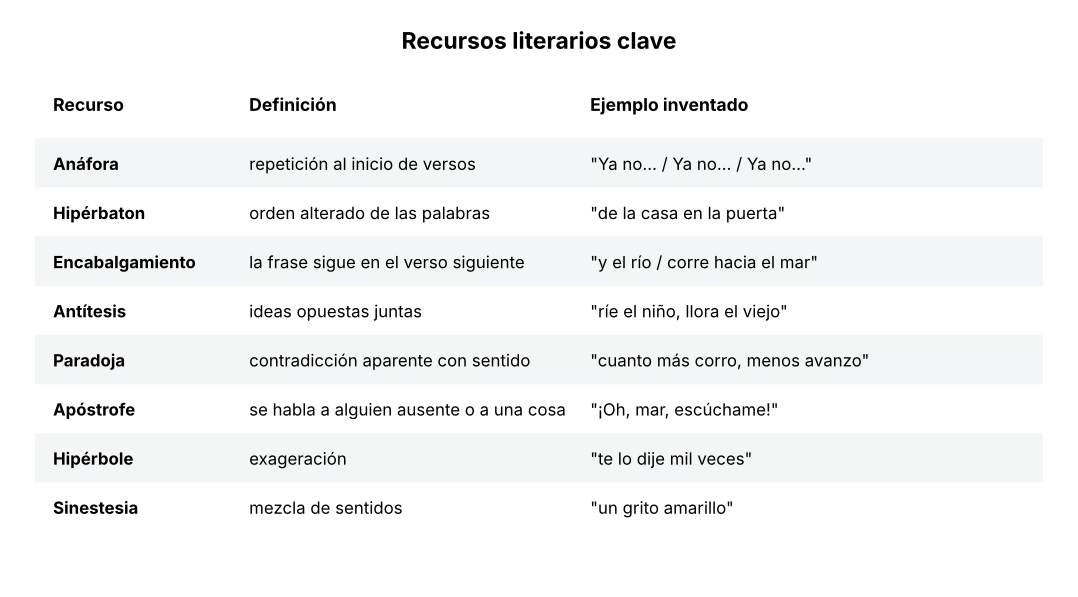
| Anaphora | “Volverán las oscuras golondrinas…” / “Volverán las tupidas madreselvas…” / “Volverán del amor en tus oídos…” — each section opens with the same verb form | Creates a rhythmic, almost incantatory effect that mimics the cyclical nature the speaker is describing; the repetition feels like a natural law being declared — yet because each “return” is immediately contradicted by “pero,” the anaphora also enacts the poem’s bitter irony |
| Antithesis | Each section follows: affirmation (“They will return”) followed immediately by negation (“but those ones won’t”) — the structural opposition is never resolved | Transforms description into argument; the poem doesn’t simply say things are lost forever but proves it through counterexample, making the argument emotionally and logically airtight |
| Personification | Swallows “call” at dawn; honeysuckle “climbs” the garden walls and its flowers “open” | Nature is portrayed as active and purposeful, yet indifferent to human meaning; the gap between nature’s aliveness and its indifference to the speaker’s grief sharpens the poem’s central contrast |
| Enjambment | “pero aquellas que el vuelo refrenaban / tu hermosura y mi dicha a contemplar” — the thought spans two lines without breaking | Creates a sense of rushing emotion, of thoughts tumbling out; breaks the neat rhyme scheme and creates tension — formal perfection disrupted by authentic feeling |
| Rich sensory imagery | Visual: “dark swallows,” “thick honeysuckle,” “dewdrops”; auditory: “calling at dawn,” “burning words sounding in your ears”; tactile: “on his knees” | Grounds abstract loss in concrete sensory experiences, making the poem vivid and immediate; the accumulation of specific images makes each lost moment feel irreplaceable rather than generic |
Bécquer and Late Spanish Romanticism
Early Spanish Romanticism (1820s–1840s) — poets like the Duke of Rivas and José de Espronceda — emphasized grandeur, political passion, and the sublime. Bécquer stripped away the grandiosity. His poems are short, personal, and intimate, focusing on individual emotion rather than universal truths or political ideals. Bécquer essentially invented the modern lyric poem in Spanish — a radical move that anticipates Modernismo and even the Generation of ’27.
When comparing Romantic poetry across time periods, recognize that Bécquer represents Romanticism in crisis. He still believes in emotion, beauty, and the power of feeling (core Romantic values), but he no longer believes in the Romantic dream that those emotions can be sustained or returned to. Rima LIII is quintessentially Romantic in its emotional intensity but modern in its resignation. The AP exam may ask you to position Bécquer between Romanticism and Modernismo — be prepared to argue both sides.
Test-Taking Strategies
Use the mnemonic SHL — Swallows, Honeysuckle, Love — to remember the three paired sections and their progression from external nature, to nature touching the beloved, to the speaker’s irreplaceable devotion. This helps you recall specific imagery quickly and keeps the poem’s emotional arc clear under exam pressure.
AP® Spanish Literature topic connections:
- For Romanticism vs. Realism questions: Bécquer’s emotional sincerity (Romantic) coexists with his refusal to romanticize or provide false hope (realistic/modern). This tension is his signature and is frequently tested.
- For nature as a literary motif: this poem shows how Romantic poets use nature symbolically — not as nature itself, but as a mirror for human emotion and ultimately as a contrast to human irreplaceability.
- For temporal themes (time, memory, loss): Rima LIII is a canonical example. Pair it with other AP texts about irreversibility: Quevedo’s treatment of time as a destroyer, or Heredia’s storm as a force that overwhelms human control.
Frequent mistakes to avoid:
- Don’t misread the poem as optimistic — the speaker says things return but makes clear that the things that mattered do not. The tone is resigned and melancholic, not hopeful.
- Don’t confuse speaker with poet — analyze the literary voice, not Bécquer’s biography.
- Don’t name devices without explaining effects — “the anaphoric repetition of ‘Volverán’ initially suggests cyclical return, but the subsequent negation argues that love is irreplaceable” earns points; “the poem uses anaphora” does not.
- Don’t ignore the final section’s turn toward the speaker’s own constancy — many students focus only on the first two sections and miss the poem’s final emotional claim.
Test-day shortcuts and time management tips:
- Pre-annotate in 2 minutes: mark the 3 “Volverán” openings and 3 “pero” pivots. These six markers give you the poem’s entire architecture at a glance. Draw a bracket around each pair of stanzas and label what returns (Swallows / Honeysuckle / Love-words) and what doesn’t. Every MCQ about structure, theme, or tone becomes answerable from this map.
- Use SHL as your FRQ body paragraph scaffold. S → H → L tracks the poem’s argument from world, to garden, to self. This progression IS Bécquer’s argument: the loss becomes more personal with each stanza. Your three body paragraphs write themselves if you track how each stanza escalates the loss inward.
- MCQ instant signal: “pero…no volverán” = Romantic irreversibility, eliminate all hopeful answers. The moment you see this negation pattern, you know the poem’s claim: nature recycles, love doesn’t. Eliminate any answer option suggesting hope, consolation, or the possibility of reunion. This takes under 10 seconds.
- FRQ: anchor your thesis on the antithesis structure, not just the imagery. A weak thesis says “Bécquer uses imagery of nature to express loss.” A strong thesis says “Bécquer’s repeated antithesis — each affirmation of natural return followed by a negation of love’s return — argues that human emotion is uniquely irreversible in a way nature is not.” Lead with the structural argument, then let the images serve as your evidence.
Check for Understanding
Think you’ve got it? Complete the quiz below to make sure. Download your results at the end.