

Maximize your score with these resources:
- Albert.io AP® US History question banks
- Free AP® US History cheat sheets
- Free AP® US History score calculator
In 1980, most Americans had never used a personal computer. By 2000, about half of American households had one, and many used it to browse a World Wide Web that hadn’t existed a decade earlier. Meanwhile, steel mills in Pittsburgh and auto plants in Detroit closed, and jobs moved to the South, to suburbs, and overseas. Topic 9.4 covers how technology, globalization, and the shift to a service economy changed the way Americans worked and lived.
This article covers Topic 9.4: A Changing Economy in Period 9, 1980 to the present. The topic asks you to explain how technological innovation, deindustrialization, and globalization transformed the American economy, and how these changes affected workers, regions, and income distribution.
By the end, you should be able to:
- Explain the causes and effects of deindustrialization.
- Describe the growth of the service and information economy.
- Explain the role of free trade and globalization.
- Describe how economic change affected inequality and the labor movement.

What We Review
From Factories to Services
Deindustrialization is the decline of manufacturing jobs. In 1979, U.S. manufacturing employment peaked at about 19.5 million jobs. By 2010, it had fallen to under 12 million, even as factory output kept rising thanks to automation.
| Cause | Explanation |
|---|---|
| Automation | Machines and computers let factories produce more with fewer workers |
| Foreign competition | Japan, Germany, South Korea, and later China produced cars, steel, and electronics more cheaply |
| Outsourcing | Companies moved production to countries with lower labor costs |
| Regional shifts | Factories moved from the unionized Northeast and Midwest to the Sun Belt and abroad |
Hard-hit areas of the Northeast and Midwest became known as the Rust Belt. Cities like Detroit, Youngstown, and Gary lost population and tax revenue.
In place of factory work, the service sector grew: health care, retail, finance, education, and food service. Some of these jobs paid well, but many offered lower wages and fewer benefits than the union factory jobs they replaced.

The Information Revolution
- Personal computers: Companies like Apple (founded 1976), Microsoft, and IBM brought computers into homes and offices in the 1980s.
- The internet: Developed from a 1960s defense research network, the internet reached the public in the 1990s, when the World Wide Web made it easy to use.
- The dot-com boom: Investment in internet companies drove rapid growth in the late 1990s, followed by a crash in 2000 and 2001.
- Mobile technology: Cell phones, and after 2007, smartphones, changed communication, business, and daily life.
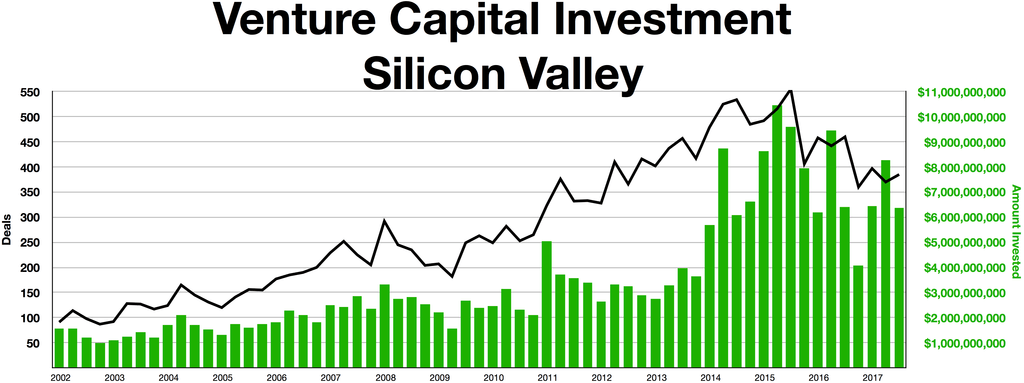
The information economy rewarded workers with college degrees and technical skills. High-tech regions like California’s Silicon Valley grew rapidly.
Globalization and Trade
| Agreement | Year | Effect |
|---|---|---|
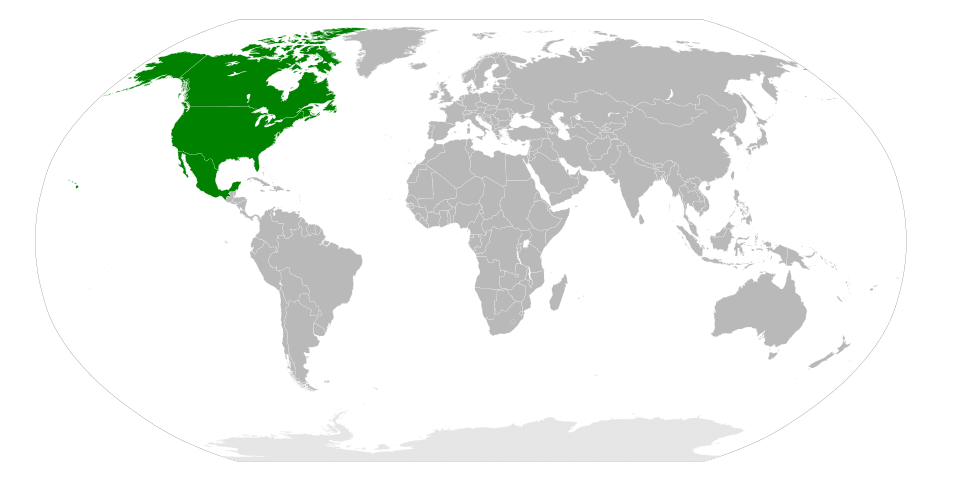
| North American Free Trade Agreement (NAFTA) | 1994 | Removed most trade barriers among the U.S., Canada, and Mexico |
| World Trade Organization | 1995 | Replaced GATT to oversee global trade rules |
| Normal trade relations with China | 2000 | China joined the WTO in 2001, and imports from China surged |
Supporters said free trade lowered prices for consumers and opened markets for American exports. Critics, including many unions, argued it sent manufacturing jobs overseas and pushed down wages.
Workers and Inequality
- Union decline: Union membership fell from about 20% of workers in 1983 to about 10% by 2020, partly because manufacturing jobs disappeared.
- Wage gaps: Incomes grew fastest at the top, while wages for many workers without college degrees stagnated.
- Women in the workforce: Women’s labor force participation kept rising, and two-income households became the norm.
- Deregulation and finance: Looser rules on banking contributed to growth in finance, but also to crises like the savings and loan collapse of the late 1980s and the 2008 financial crisis.
Why does this matter? Economic change in Period 9 links many other topics: the decline of unions, the rise of the Sun Belt, debates over immigration and trade, and growing political polarization. On essays, compare deindustrialization with the earlier industrial revolution of the Gilded Age to show change and continuity in how technology reshapes work.
Test-Taking Strategies
Mnemonic Devices and Memory Shortcuts
- “Rust Belt lost, Sun Belt gained.” The regional shift in jobs and population.
- “Machines, markets, moves.” Automation, foreign competition, and outsourcing caused deindustrialization.
- “NAFTA 94, WTO 95, China 2001.” The key steps in trade liberalization.
Cross-Topic Connections
- Topic 6.5: Gilded Age innovation offers a comparison with the information revolution. See our review of technological innovation.
- Topic 8.4: The postwar boom created the industrial jobs later lost.
- Topic 9.2: Reagan’s deregulation and anti-union stance shaped the new economy.
- Topic 9.5: Immigration supplied labor to the growing service sector.
Common Question Formats
- Stimulus MCQ. A graph of manufacturing jobs or union membership, and you identify the trend and its cause.
- Causation SAQ. You explain two causes of deindustrialization.
- Comparison SAQ. You compare the effects of technology in the Gilded Age and the late 20th century.
- LEQ. You evaluate the extent to which the American economy changed between 1980 and 2010.
Frequent Student Mistakes
- Saying manufacturing output fell. Jobs fell, but output kept growing.
- Blaming trade alone. Automation also eliminated many jobs.
- Dating the internet to the 1980s for the public. Widespread public use came in the 1990s.
- Treating service jobs as uniform. They range from surgeons to cashiers.
Test-Day Shortcuts
- Spot “Rust Belt.” It signals deindustrialization in the Northeast and Midwest.
- Use the union statistic. 20% to about 10% is clear evidence of change.
- Link trade to politics. Debates over NAFTA divided both parties.
Time Management Tips
- Multiple choice: Section IA has 55 questions in 55 minutes, about 1 minute each. Graphs usually test direction of change, not exact values.
- Short answer: Section IB has 3 required questions in 40 minutes, roughly 13 minutes each. Name one specific agreement, company, or region per part.
- Essays: The DBQ gets 60 minutes, including a 15-minute reading period, and the single required LEQ gets 40 minutes. A Gilded Age comparison makes a strong complexity move.
Check for Understanding
Think you’ve got it? Complete the quiz below to make sure. Download your results at the end.