
Maximize your score with these resources:
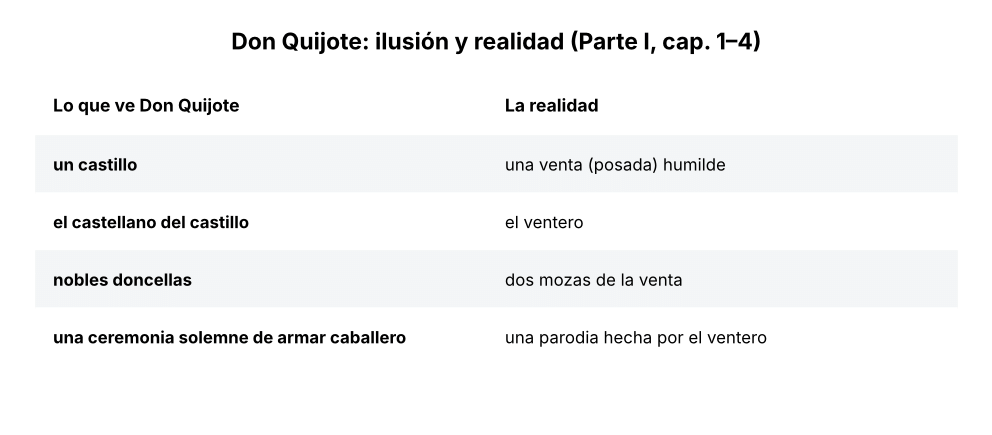
In Capítulo 3 of Don Quijote Parte I, Cervantes delivers one of the novel’s most famous and philosophically rich scenes: Don Quixote is “knighted” in a mock ceremony at a roadside inn that he believes is a grand castle. Everyone around him plays along — the innkeeper performs the ritual with exaggerated solemnity, the women gird his sword as if they were noble ladies — and Don Quixote leaves utterly convinced of his new identity. For the AP® Spanish Literature exam, this chapter is essential for understanding satire (sátira), parody (parodia), reality versus illusion, and how Cervantes uses performance (la actuación) to question the nature of identity itself.
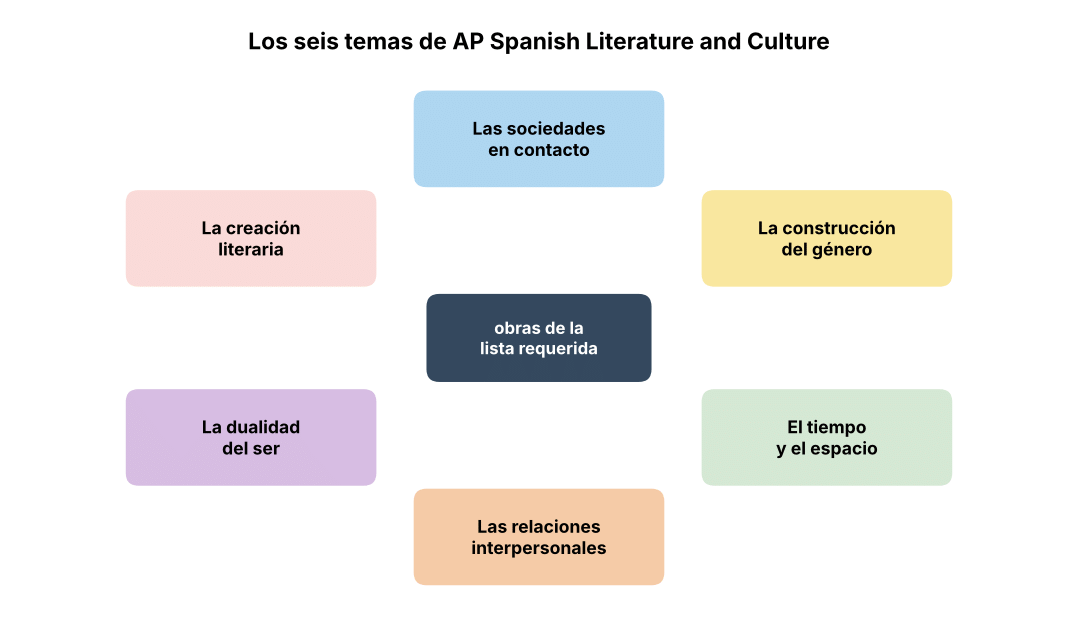
This chapter connects to the AP theme Las relaciones interpersonales: Quixote’s identity as a knight-errant exists only if the community around him validates it. The innkeeper’s decision to play along is the central moment — it shows that identity is a social contract, not an individual fact.
The Mock Knighting: Reality, Illusion, and Performance
Don Quixote arrives at an inn and, in a magnificent moment of delusion, insists on being “knighted” before dawn. The innkeeper, amused but perceptive, decides to humor him. Don Quixote lays his armor on a trough by the well for the vigil of arms and attacks the muleteers who move it, which prompts the innkeeper to rush the ceremony. The innkeeper “knights” him with exaggerated ceremony. The women gird on his sword and fasten his spur. Everyone except Don Quixote recognizes the absurdity, yet the ceremony is performed with respect for its form. Don Quixote leaves convinced he is now a true knight.
Cervantes’ Satire of Chivalric Literature
| What Chivalric Romances Depicted | How Cervantes Parodies It | What This Reveals |
|---|---|---|
| Knights of impossible virtue undertake magical quests | An aging hidalgo’s madness causes him to see ordinary reality through this fictional lens | Gap between literary ideals and messy reality |
| Elaborate, formal, self-referential descriptions | Cervantes mimics this style while undermining it with comic detail | Form can be separated from substance; ritual can be performed without meaning |
| Magical solutions, heroic virtue, romantic adventures | Reality refuses to cooperate with fiction; the mundane resists idealization | Literature shapes perception dangerously when taken literally |
| Unswerving commitment to chivalric codes | Don Quixote’s commitment makes him ridiculous, yet also sympathetic | The gap between idealism and reality is both comic and tragic |
Major Themes
| Theme | How It Appears in Capítulo 3 | Significance for AP |
|---|---|---|
| Reality versus illusion (realidad versus ilusión) | Don Quixote sees a castle where there is an inn, nobles where there are innkeeper and servants | Cervantes asks: if perception is internally consistent, is it wrong? If everyone treats the inn as a castle, does it become one? |
| Performance and identity (actuación e identidad) | Don Quixote becomes a knight by performing the role; the innkeeper and women perform their roles too, creating multiple coexisting realities | Identity is performative — created through action and language, not fixed in nature |
| Social class and transgression (clase social y transgresión) | A hidalgo of modest means claims the identity of a knight-errant; a commoner innkeeper confers knighthood | Cervantes satirizes the pretensions of rising classes while mocking the obsolescence of nobility |
Literary Devices
| Device | How It Works in the Chapter | Effect |
|---|---|---|
| Dramatic irony (ironía dramática) | Reader and all characters except Don Quixote understand the truth: the inn is not a castle, the women are not nobles, the knighting is a farce | Creates humor and raises philosophical questions about perception and belief |
| Burlesque (burlesco) | The knighting ceremony is performed with solemnity and language of genuine ritual, even though everyone knows it’s false | Mock-serious imitation of elevated forms creates ironic humor and questions whether ritual derives meaning from belief or form |
| Verbal irony (ironía verbal) | The innkeeper declares he will perform the knighting “with all due ceremony” — speaking with awareness it’s mockery; Don Quixote takes it at face value | The gap between literal meaning and intended meaning sustains the chapter’s comedy |
| Shifting narrative tone (cambio de tono narrativo) | The narrator is sometimes amused, sometimes mock-solemn, sometimes sympathetic | Avoids settling the reader into a single attitude; we laugh and simultaneously recognize something noble in Don Quixote’s commitment |
Test-Taking Strategies
Use the mnemonic RICE to organize your Capítulo 3 analysis:
- R = Ritual — the mock knighting ceremony performed with exaggerated formality
- I = Illusion (ilusión) — Don Quixote’s inability to perceive reality (inn vs. castle)
- C = Class (clase) — the social transgression of a hidalgo claiming knighthood
- E = Exaggeration (exageración) — the burlesque gap between form and content
AP Theme connections:
- Las relaciones interpersonales: Chapter 3 is the clearest demonstration that identity requires communal validation. Quixote is a knight only because the innkeeper plays along. The community’s consent — even a farcical, insincere consent — creates the social reality he inhabits.
- La dualidad del ser: The innkeeper and women perform their roles while knowing they’re false. Don Quixote performs his role in complete sincerity. Both types of performance create social reality — the chapter asks which is more authentic.
- Compare to El burlador de Sevilla: Both texts feature a male character performing a false identity to achieve his goals. Don Quixote’s performance is sincere delusion; Don Juan’s is calculated deception. The contrast illuminates how identity performance can be both innocent and predatory.
Common question formats:
- Satire identification: “Cervantes uses this passage to satirize which of the following?” Answer: chivalric literature and its conventions. Look for exaggeration, inversion of expectations, or the gap between perception and reality.
- Thematic analysis: “Which best describes Cervantes’ treatment of reality?” Key: Cervantes doesn’t dismiss Don Quixote as simply mad. He shows how subjective perception reshapes how others treat him.
- Device and effect: “The narrator’s solemn description of the ceremony primarily serves to…” This tests understanding of burlesque — treating trivial things with elevated language creates ironic humor while raising questions about ritual and meaning.
Frequent student mistakes:
- Viewing Don Quixote as simply crazy: His delusion is absolute and internally consistent. Cervantes presents him with sympathy and complexity, not as a figure of mere ridicule.
- Misidentifying satire’s target: Cervantes satirizes chivalric literature and the fantasy of chivalry, not chivalry itself or the values of honor. Don Quixote’s problem is confusing fictional representation with reality.
- Treating the innkeeper as a villain: He’s amused but also kind — he feeds Don Quixote, shelters him, and performs the ceremony without cruelty. He recognizes that Don Quixote is harmless and perhaps sympathetic.
Test-day shortcuts:
- The inn-vs-castle contrast is your master key. Almost every analytical question about this chapter can be answered by returning to Don Quixote’s transformation of the inn into a castle.
- For MCQ, immediately identify the gap between Don Quixote’s perception and reality. Eliminate answers that are purely negative (“to show Don Quixote is foolish”) and look for answers that acknowledge complexity.
- When you see an answer choice that reduces Don Quixote to “simply mad” or the innkeeper to “cruel,” eliminate it immediately.
- FRQ structure: technique → effect → theme in each body paragraph.
- Spend 90 seconds identifying which RICE element the prompt targets before writing. Write the element at the top of your scratch paper, then list one concrete example. This gives you a structured argument before you write a single sentence.
Check for Understanding
Think you’ve got it? Complete the quiz below to make sure. Download your results at the end.