
Maximize your score with these resources:
- Albert.io AP® Human Geography question banks
- Free AP® Human Geography cheat sheets
- Free AP® Human Geography score calculator
Modern agriculture feeds eight billion people on far less cropland per person than the world used a century ago. That accomplishment came with serious environmental, social, and economic costs — soil erosion, water depletion, biodiversity loss, the consolidation of family farms, and growing tension between industrial and sustainable agricultural systems. The AP® Human Geography exam expects you to understand both the costs and the responses, and to connect them to the geographic patterns of land use you’ve studied earlier in Unit 5.
This article covers Topic 5.11: Challenges of Contemporary Agriculture in Unit 5 (Agriculture and Rural Land-Use Patterns and Processes). The CED learning objective is:
Explain the geographic causes and consequences of major challenges facing contemporary agriculture, including environmental, social, and economic dimensions.
By the end you should be able to:
- Identify the major environmental challenges of industrial agriculture.
- Explain how globalization has reshaped food systems and farm economics.
- Describe the social effects of farm consolidation and rural decline.
- Recognize the alternative agricultural systems that have emerged as responses (organic, urban, community-supported).
The Environmental Bill
| Impact | What’s Happening | Geographic Hotspots |
|---|---|---|
| Soil degradation | Erosion, salinization, and loss of organic matter from continuous monoculture and heavy tilling. | US Great Plains; Sahel; northern China; Indian Punjab. |
| Water depletion | Aquifers drawn down faster than they recharge; rivers reduced by irrigation withdrawal. | Ogallala Aquifer (US High Plains); Colorado River basin; Aral Sea; North China Plain. |
| Eutrophication | Fertilizer runoff causes algal blooms and oxygen-depleted “dead zones” in coastal waters. | Gulf of Mexico; Chesapeake Bay; Baltic Sea. |
| Pesticide resistance and pollinator loss | Overuse of herbicides and insecticides drives resistance in weeds and pests while killing pollinators. | US Midwest (glyphosate resistance); global pollinator decline. |
| Deforestation | Forests cleared for cropland and grazing. | Brazilian Amazon (soy, cattle); Southeast Asia (palm oil); Central Africa. |
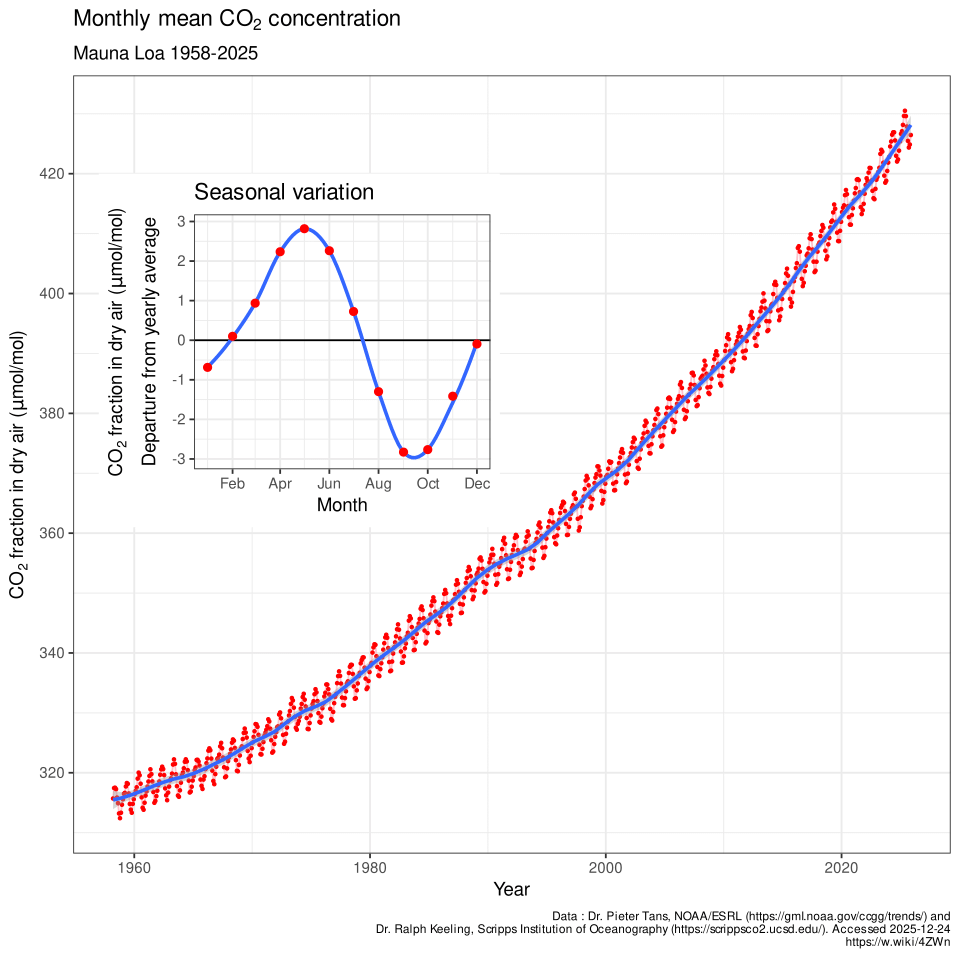
| Greenhouse gas emissions | Roughly a quarter of human-caused emissions come from agriculture, food processing, and land-use change. | Global; concentrated in cattle-producing regions and rice paddies. |
| Biodiversity loss | Monoculture and habitat conversion reduce wild species and crop genetic diversity. | Global; especially severe near tropical biodiversity hotspots. |
Globalization and Farm Economics
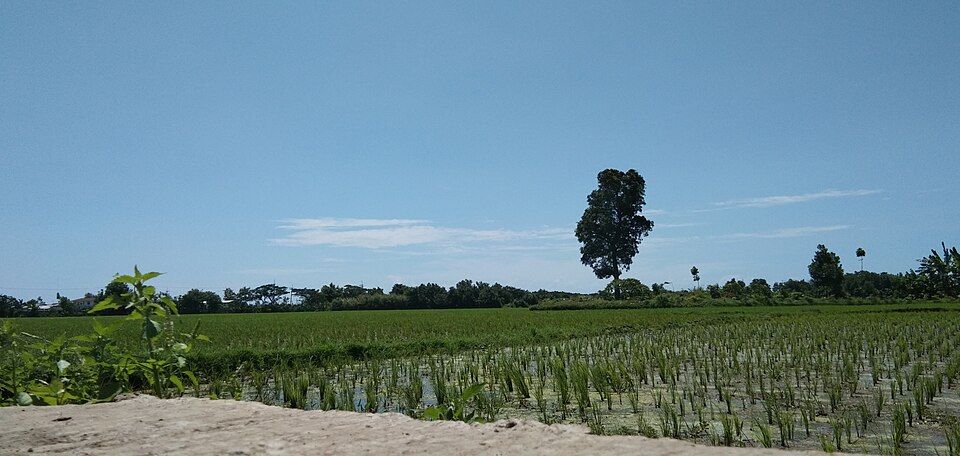
- Commodification. Crops like corn, wheat, soy, and rice trade as standardized global commodities with prices set by global supply and demand.
- Farm consolidation. Larger farms spread fixed costs more efficiently; smaller farms struggle to compete. US farm count fell from nearly 6 million to about 2 million since 1950.
- Vertical integration. Companies like Tyson and Smithfield combine seed, feed, livestock, processing, and distribution.
- Trade flows. Wealthy countries import labor-intensive crops from lower-income countries while exporting subsidized grains.
- Land grabs. Large-scale land purchases by foreign governments or corporations have become controversial.
Social Effects: Rural Decline and Farm Labor
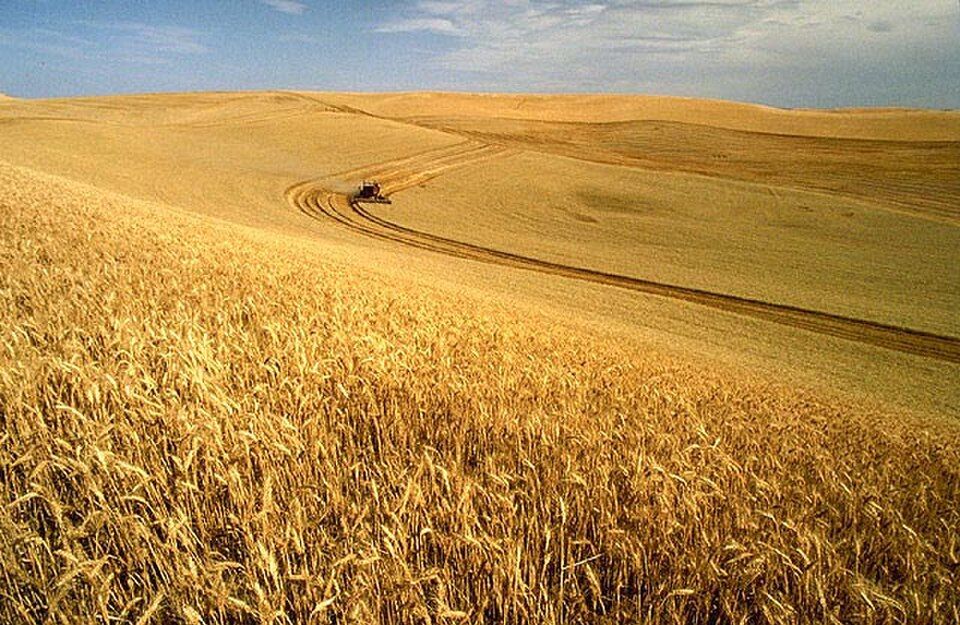
- Rural depopulation. Across the US Great Plains, much of rural Europe, and rural Japan, populations have aged and shrunk for decades.
- Farm consolidation and inequality. A small number of large farms produce most of the food.
- Farm labor. Immigrant labor sustains labor-intensive crops. Wages and working conditions are frequent flashpoints.
- Food deserts. Urban neighborhoods, especially low-income and predominantly Black neighborhoods, often lack supermarkets within walking distance.
Responses: Alternative Agriculture
- Organic agriculture. Excludes synthetic pesticides, fertilizers, and GMOs. Certified under USDA standards in the US since 2002.
- Sustainable and regenerative agriculture. Emphasizes practices that build soil — cover crops, no-till, crop rotation.
- Community-supported agriculture (CSA). Consumers buy “shares” of a local farm’s production and receive weekly produce.
- Farm-to-table and local food movements. Restaurants, schools, and consumers prioritize locally sourced ingredients.
- Urban agriculture. Rooftop farms, hydroponic and vertical farms, community gardens.
- Fair trade certification. Pays producers a price floor and a “social premium” for commodities like coffee and cocoa.
- Plant-based and cultured meat. Aim to reduce livestock-related emissions and land use.
Genetic Modification and the GMO Debate
GMOs account for the majority of US soy, corn, and cotton acreage. Most scientific bodies have concluded approved GMOs are safe to eat. Critics raise concerns about herbicide overuse, seed-company concentration, and corporate control of seeds. Regulatory regimes differ: the US treats GMOs as substantially equivalent to conventional crops; the EU requires labeling and stricter approval.
Food Security and the Future
Key pressures: population projected to reach roughly 9.7 billion by 2050; climate change affecting production unevenly; dietary transitions toward meat-heavy diets in middle-income countries; biofuels competing with food production; and geopolitical disruption (Russia’s 2022 invasion of Ukraine).
Test-Taking Strategies
Mnemonic devices and memory shortcuts
- “SWE-PDF-B” for environmental challenges — Soil, Water, Eutrophication, Pesticide resistance, Deforestation, Forcing climate (GHG), Biodiversity.
- “Ogallala = US water depletion poster child.”
- “Amazon = beef + soy.”
- “6 million → 2 million” — drop in US farm count since 1950, anchor for farm consolidation.
- “OSAC” for alternative agriculture systems — Organic, Sustainable/regenerative, Agroecology, CSA/local.
Cross-topic connections
- Topic 5.1–5.10 → 5.11. Earlier topics on land use, agricultural origins, and the Green Revolution set up the challenges of 5.11.
- Topic 5.11 ↔ Unit 1 (geography concepts). Scale matters — local farm decisions aggregate into regional environmental impacts.
- Topic 5.11 ↔ Unit 2 (population). Rural decline links to demographic transition and migration toward cities.
- Topic 5.11 ↔ Unit 6 (cities) and Unit 7 (development). Food deserts in urban areas; uneven food security in lower-income countries.
Common question formats
- FRQ with a chart or map. A map of US farm size by county, a graph of Ogallala water levels, a chart of fertilizer use over time. Identify the trend and one consequence.
- MCQ with a stimulus. A satellite image of deforestation, a CSA brochure, a USDA organic seal. Identify the system or impact.
- FRQ with a scenario. “A small farmer in the US Midwest faces declining income despite higher yields. Explain three causes.” Use globalization, commodity prices, and consolidation.
Frequent student mistakes
- Treating “industrial” and “commercial” agriculture as opposites. Industrial agriculture is one form of commercial agriculture.
- Calling all GMOs unsafe. The scientific consensus is that approved GMOs are safe to eat. Critiques focus on environmental and economic consequences.
- Confusing organic with local. Organic refers to production methods; local refers to distance from consumer.
- Ignoring the global dimension. Strong essays mention both US-focused and global cases (Amazon, Aral Sea, Sahel).
Test-day shortcuts
- If a stimulus references aquifer depletion in the US, default to Ogallala.
- If it references an oceanic dead zone fed by US agriculture, default to Gulf of Mexico.
- If it references rapid deforestation for soy or cattle, default to Amazon basin.
- If it references shrinking lakes from cotton irrigation, default to Aral Sea.
- If it references food retail access in low-income neighborhoods, default to food deserts.
Time management tips
- For FRQs, organize your response by category (environmental / economic / social) rather than by example.
- If you blank on a specific case, fall back to the structural argument: “Industrial agriculture has produced enough food to feed eight billion people while damaging soil, water, and biodiversity — driving experimentation with organic, regenerative, and local alternatives.”
- On FRQs with charts, write down the trend in one sentence before reading the question.
Check for Understanding
Think you’ve got it? Complete the quiz below to make sure. Download your results at the end.