
Maximize your score with these resources:
- Albert.io AP® Human Geography question banks
- Free AP® Human Geography cheat sheets
- Free AP® Human Geography score calculator
Cities have always been engines of opportunity — and arenas for conflict. The 21st-century city is no exception. Today’s urban regions face the simultaneous challenges of housing affordability, sprawl, gentrification, traffic, environmental sustainability, racial and ethnic segregation, and the long shadow of redlining. The AP® Human Geography exam expects you to be able to name these challenges, explain their geographic causes, and connect them to the urban models you’ve studied earlier in Unit 6.
This article covers Topic 6.10: Challenges of Urban Changes in Unit 6 (Cities and Urban Land-Use Patterns and Processes). The CED learning objective is:
Explain the social, economic, and environmental challenges that arise from urban change, and the strategies cities have used to respond.
By the end you should be able to:
- Identify the major social, economic, and environmental challenges facing contemporary cities.
- Explain the geographic causes of housing crises, sprawl, and segregation.
- Describe how gentrification and disinvestment reshape urban neighborhoods.
- Recognize the planning strategies cities have used to respond — smart growth, new urbanism, mixed-use zoning.
Social Challenges
Several intertwined social issues dominate contemporary urban geography. The AP exam wants you to recognize the patterns and their causes.
- Housing affordability. Median home prices and rents in major metros have outpaced incomes for decades, producing “cost-burdened” households.
- Homelessness. US homelessness reached a record in 2024; concentrations are highest in West Coast cities where housing is least affordable.
- Segregation by race and class. US cities remain highly segregated, the legacy of redlining, restrictive covenants, and urban renewal.
- Food deserts. Urban neighborhoods without nearby supermarkets — disproportionately low-income and Black or Latino neighborhoods.
- Aging populations. European, Japanese, and increasingly some US cities face shrinking working-age populations and growing care needs.
Economic Challenges
- Gentrification. Higher-income residents move into formerly lower-income neighborhoods; property values rise; long-term residents are displaced.
- Deindustrialization and “shrinking cities.” Detroit, Cleveland, Pittsburgh, and former industrial cities lost manufacturing jobs from roughly 1970 onward.
- Brownfields. Abandoned industrial sites contaminated by past use requiring costly cleanup before redevelopment.
- Tax-base erosion. When middle-class households leave for suburbs, the urban tax base shrinks while social-service needs remain.
- Inequality within cities. Major global cities have extreme wealth alongside concentrated poverty.
Environmental Challenges
| Challenge | What’s Happening | Notable Examples |
|---|---|---|
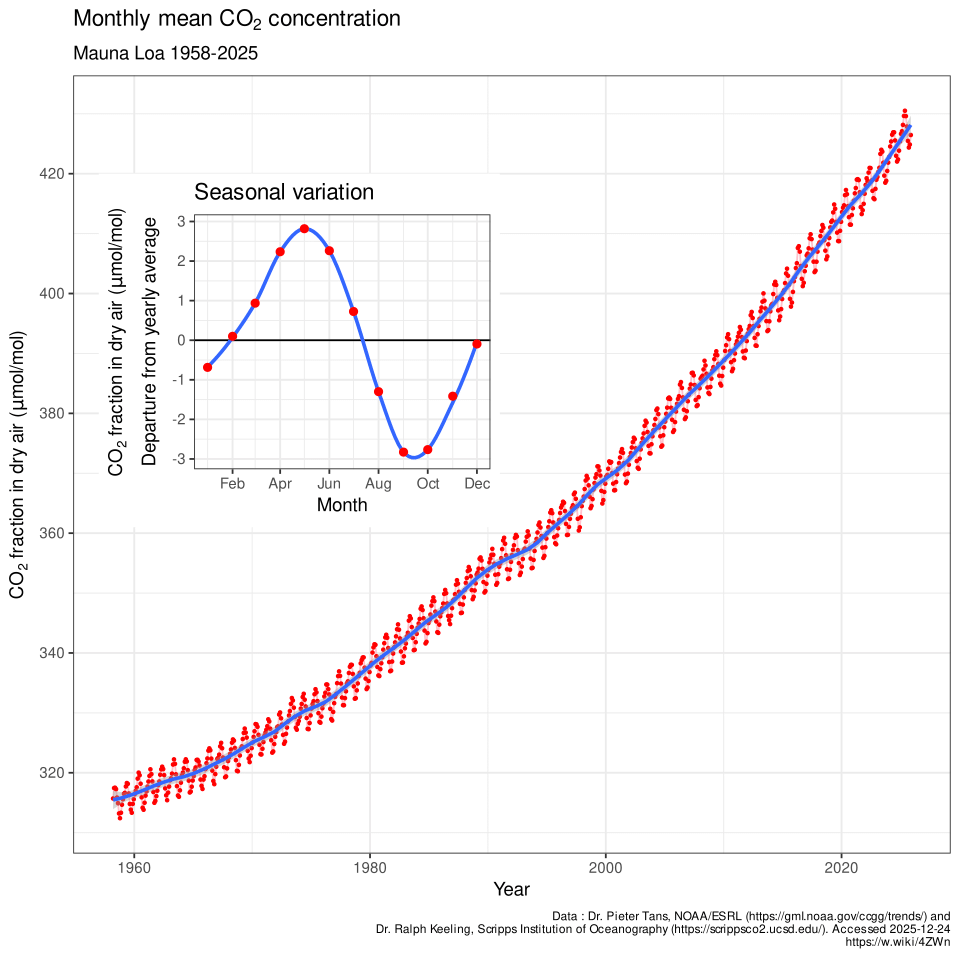
| Urban heat island | Asphalt, concrete, and reduced vegetation make cities warmer than surrounding rural areas. | Phoenix, Houston, Athens, Chongqing. |
| Air pollution | Traffic and industrial emissions concentrate in dense areas. | Delhi, Beijing, Mexico City, Los Angeles basin. |
| Water stress | Drought and infrastructure failures threaten urban water supplies. | Cape Town (2018 “Day Zero”), Chennai (2019), São Paulo (2014–2015). |
| Sea-level rise and flooding | Coastal cities increasingly vulnerable to storm surge and chronic flooding. | Miami (chronic), New Orleans (Katrina 2005), Jakarta (sinking). |
| Waste and sanitation | Solid waste management overwhelmed in rapidly growing cities. | Lagos, Manila, Mumbai. |
Sprawl and Its Discontents
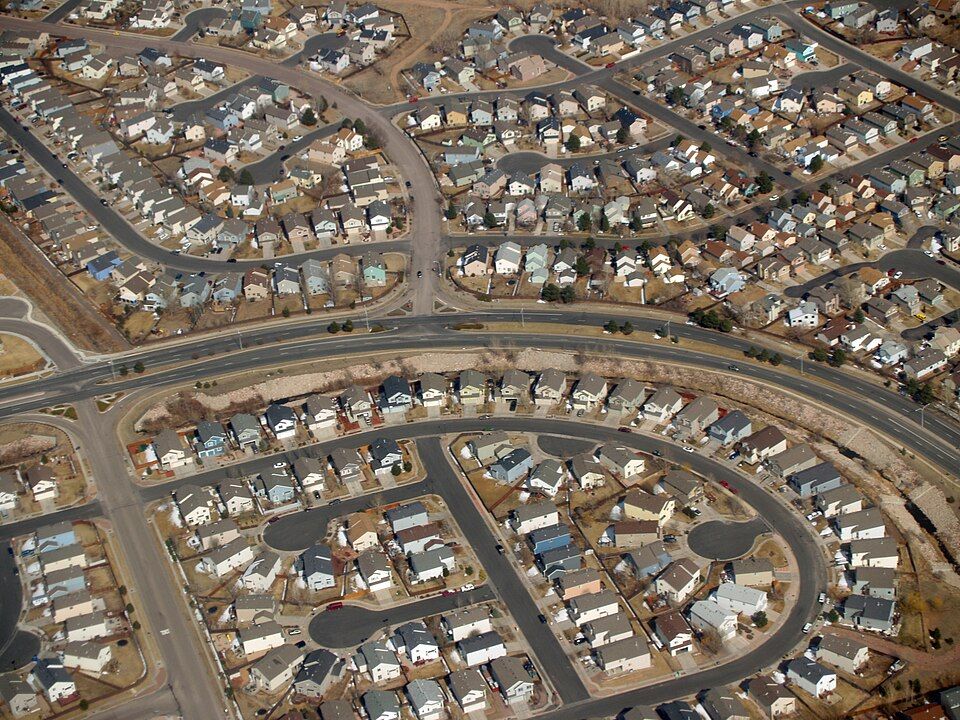
Urban sprawl is the outward expansion of low-density, automobile-dependent development on the urban edge. Especially characteristic of US, Canadian, and Australian cities since 1950. Consequences include long commutes, loss of farmland, automobile dependence, inefficient infrastructure, “edge cities,” and “boomburbs.”
Gentrification: Detailed Treatment
The standard gentrification pattern has four stages:

- Disinvestment phase. A neighborhood faces decades of underinvestment — redlining, deferred maintenance, declining city services.
- Pioneer phase. Artists and students move in attracted by cheap rents and architectural character.
- Maturation phase. Cafés, galleries, renovated storefronts; property values begin to climb.
- Displacement phase. Long-term residents priced out by rising rents and property taxes.
Planning Responses
- Smart growth. Compact development, mixed land uses, transit-oriented neighborhoods, and preservation of open space. Portland, Oregon’s urban growth boundary is the canonical US example.
- New urbanism. Walkable, mixed-use neighborhoods with traditional street grids. Examples include Seaside, Florida, and Celebration, Florida.
- Transit-oriented development (TOD). Concentrating housing, jobs, and services around mass-transit stations.
- Mixed-use zoning. Allowing residential, commercial, and sometimes light industrial uses in the same area.
- Affordable housing policies. Inclusionary zoning, rent control, housing trust funds, and public housing programs.
- Brownfield redevelopment. Federal and state programs to clean and redevelop contaminated industrial sites.
- Climate adaptation. Sea walls, green infrastructure, urban tree-planting, permeable pavements.
- Urban growth boundaries (UGBs). Lines beyond which dense development is restricted.
The Global South: Different Urban Challenges
Global South cities face squatter settlements (“favelas,” “townships,” “barrios,” “kampungs”), megacity scale, primate city dominance, large informal economies, and high climate vulnerability. Indonesia’s planned relocation of its capital from Jakarta to Nusantara is driven partly by Jakarta’s land subsidence and flooding, along with congestion and regional development goals.
Test-Taking Strategies
Mnemonic devices and memory shortcuts
- “SEE” for challenge categories — Social, Economic, Environmental.
- “Disinvestment → Pioneer → Maturation → Displacement” — the gentrification arc in four words.
- “Portland = urban growth boundary.”
- “Heat + flood + drought” — three climate stressors increasingly facing cities.
- “Favela / township / kampung” — informal-settlement vocabulary for major Global South regions.
Cross-topic connections
- Topic 6.1–6.5 → 6.10. Concentric-zone, sector, and multiple-nuclei models provide the spatial framework for understanding contemporary challenges.
- Topic 6.10 ↔ Unit 2 (population). Urbanization is one of the largest demographic stories of the last century.
- Topic 6.10 ↔ Unit 3 (cultural geography). Gentrification often involves cultural displacement, not just economic.
- Topic 6.10 ↔ Topic 5.11. Food deserts and urban agriculture connect city challenges to agricultural ones.
Common question formats
- FRQ with a map. Heat maps of urban segregation, satellite images showing sprawl, photographs of gentrifying neighborhoods. Identify the challenge and explain one cause.
- MCQ with data. Tables of rent-burdened households, homelessness counts, commute times. Identify the underlying challenge.
- FRQ with a scenario. “A formerly industrial neighborhood is experiencing rising rents and demographic turnover. Identify and explain two consequences.”
Frequent student mistakes
- Treating gentrification as only positive or only negative. The CED expects you to recognize both investment gains and displacement losses.
- Confusing sprawl with growth. Sprawl is a specific pattern — low-density, automobile-dependent, leapfrog development. Not all urban growth is sprawl.
- Ignoring Global South cities. The CED explicitly expects familiarity with informal settlements, megacities, and primate cities.
- Forgetting historical causes. Many present challenges trace to specific 20th-century policies. Strong essays mention redlining or urban renewal.
Test-day shortcuts
- If a stimulus references rising rents and neighborhood demographic change, default to gentrification.
- If it references low-density, auto-dependent edge development, default to sprawl.
- If it references heat exposure or asphalt-dominated neighborhoods, default to urban heat island.
- If it references squatter settlements or “favela,” default to informal housing / Global South.
- If it references Portland and zoning, default to urban growth boundary / smart growth.
Time management tips
- For FRQs, organize your response under “Social / Economic / Environmental” headings. Hits all CED dimensions and saves planning time.
- For gentrification questions, anchor on the four-stage arc (disinvestment → pioneer → maturation → displacement) before writing.
- If you blank on a specific city, fall back to the structural claim: “Contemporary cities face simultaneous challenges of housing affordability, gentrification, sprawl, segregation, and climate exposure — each rooted in 20th-century policy choices and reshaped by 21st-century economic restructuring.”
Check for Understanding
Think you’ve got it? Complete the quiz below to make sure. Download your results at the end.