
Maximize your score with these resources:
- Albert.io AP® Human Geography question banks
- Free AP® Human Geography cheat sheets
- Free AP® Human Geography score calculator
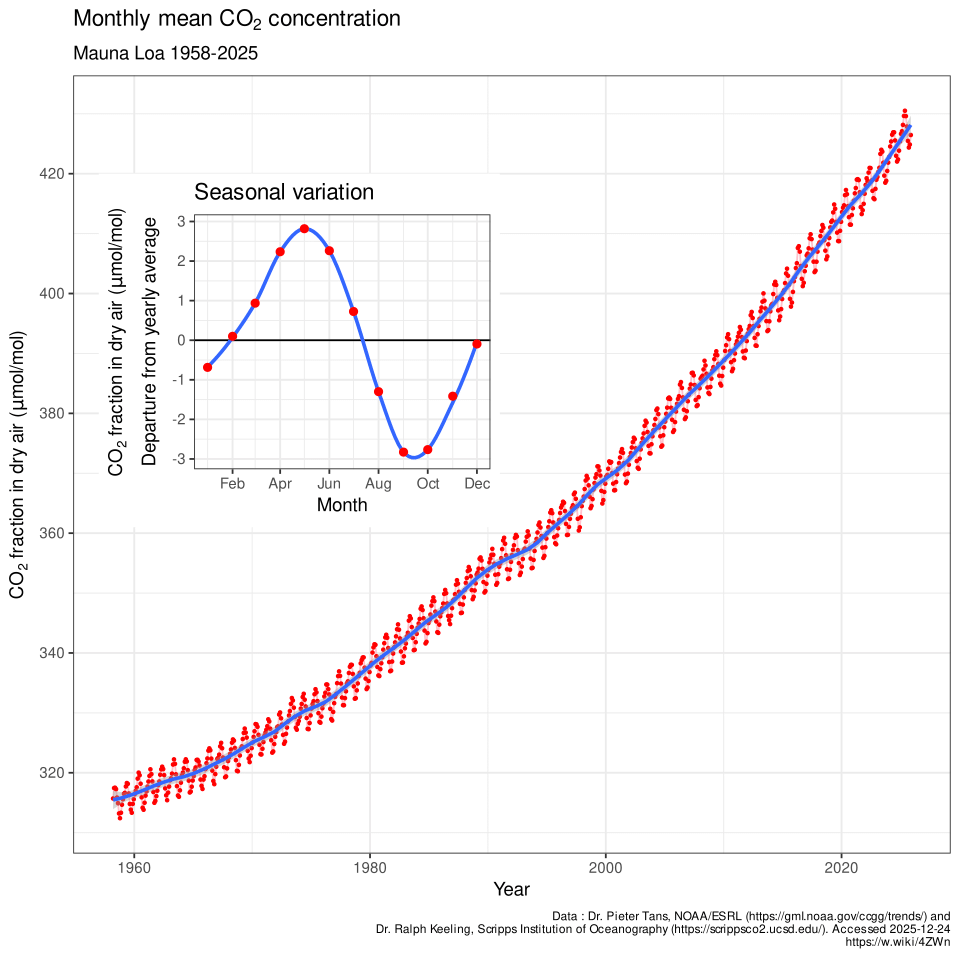
Cities now hold more than half of humanity and are projected to hold nearly 70% by 2050. They consume roughly 75% of the world’s energy and emit a similar share of carbon dioxide. They are also where most adaptation to climate change will happen — protecting coastlines, cooling neighborhoods, designing transportation that works in a warming world. The AP® Human Geography exam treats urban sustainability as the central question of 21st-century city planning, and Topic 6.11 asks you to know both the challenges and the strategies cities are using to respond.
This article covers Topic 6.11: Challenges of Urban Sustainability in Unit 6 (Cities and Urban Land-Use Patterns and Processes). The CED learning objective is:
Explain the challenges urban areas face in becoming more sustainable, and evaluate the strategies and policies cities use to balance environmental, economic, and social goals.
By the end you should be able to:
- Define urban sustainability and explain its three pillars (environmental, economic, social).
- Identify the major environmental challenges cities face.
- Describe the planning strategies that promote sustainability — smart growth, new urbanism, green infrastructure, transit-oriented development.
- Explain the trade-offs cities navigate between sustainability and other priorities.
What Urban Sustainability Means
Urban sustainability is the practice of organizing cities so that they can meet present needs without compromising the ability of future generations to meet theirs. The phrase is borrowed from the Brundtland Commission’s 1987 definition of sustainable development.
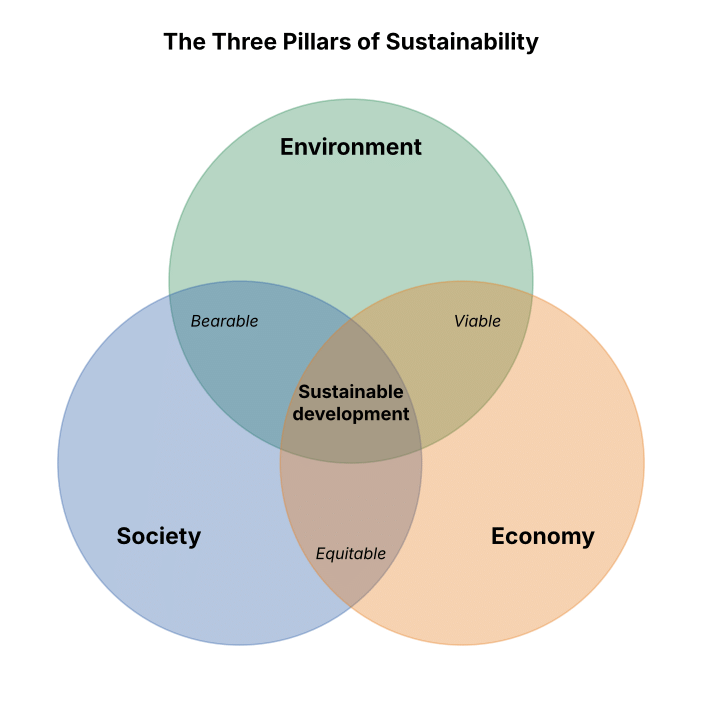
Sustainability has three widely cited pillars (often visualized as overlapping circles):
- Environmental. Reducing emissions, conserving water, protecting biodiversity, managing waste.
- Economic. Maintaining productive economies that provide jobs and tax revenue to fund services.
- Social. Ensuring that all residents — across income, race, age, and neighborhood — share in the benefits and don’t bear disproportionate costs.
Cities rarely advance all three pillars simultaneously. Sustainability planning is the work of balancing trade-offs — a new transit line may reduce emissions (environmental) but displace lower-income residents (social) unless paired with affordable housing.
Environmental Challenges
The exam expects you to recognize the main environmental challenges cities face. Each has a geographic logic worth naming.
| Challenge | What’s Happening | Notable Examples |
|---|---|---|
| Greenhouse gas emissions | Transportation, buildings, and electricity use concentrate carbon emissions in urban areas. | Houston, Dubai, and other sprawl-heavy cities have higher per-capita emissions than dense compact cities. |
| Urban heat island | Pavement and lack of vegetation make cities several degrees warmer than rural surroundings. | Phoenix, Athens, Chongqing summers; deadly heat waves increasingly frequent. |
| Air pollution | Vehicle and industrial emissions concentrate in dense areas; effects fall hardest on neighborhoods near highways and industry. | Delhi, Beijing, Mexico City, Lahore. |
| Water stress | Demand outstrips supply in arid-region cities; aging infrastructure loses water in transit. | Cape Town (2018 “Day Zero”), Chennai (2019), Mexico City, Cairo. |
| Sea-level rise and flooding | Coastal cities face higher tides, storm surges, and chronic “sunny day” flooding. | Miami, New Orleans, Jakarta, Bangkok, Venice. |
| Waste management | Solid waste accumulates faster than landfills can absorb it; recycling infrastructure varies. | Mumbai, Manila, Lagos. |
| Biodiversity loss | Urbanization replaces habitat with impervious surface; surviving green spaces become essential refuges. | Global; mitigated by urban parks and green corridors. |
Smart Growth and New Urbanism
Smart growth is a planning approach that emphasizes compact, mixed-use development, preservation of open space, range of transportation choices, and walkable neighborhoods. Portland, Oregon’s urban growth boundary (1979) is the canonical US example.
New urbanism is a closely related architectural and design movement emphasizing walkable, human-scale neighborhoods with traditional street grids, public spaces, and mixed housing and commercial uses within walking distance. Examples include Seaside, Florida, and Celebration, Florida.
Transit-Oriented Development
Transit-oriented development (TOD) concentrates housing, jobs, and shops within a short walk of transit stations. Notable examples include Stockholm’s satellite towns, Hong Kong’s rail-plus-property MTR model, and Curitiba, Brazil’s bus rapid transit system.
Green Infrastructure and Climate Adaptation
Cities are investing in physical infrastructure that delivers environmental services: urban tree planting, green roofs and walls, permeable pavements, bioswales and rain gardens, sea walls and flood barriers, cool roofs and pavements, and compact district energy systems.
Affordable Housing and Social Sustainability
Environmental gains can undermine social sustainability if they push out lower-income residents. Tools include inclusionary zoning, rent control/stabilization, housing trust funds, community land trusts (CLTs), and public housing reinvestment. “Green gentrification” — where sustainability investments raise property values and accelerate displacement — is documented in cases like New York’s High Line.
Strategies in Specific Cities
- Curitiba, Brazil. Bus rapid transit (BRT), planned growth axes, recycling programs.
- Portland, Oregon. Urban growth boundary, light rail, bicycle infrastructure.
- Copenhagen, Denmark. Bicycle-first transportation planning.
- Singapore. Compact land use, greater water self-reliance through NEWater, vertical greening.
- Stockholm. Early TOD; carbon-neutrality targets.
- Freiburg, Germany. Solar power, car-light planning, model district of Vauban.
- Bogotá, Colombia. TransMilenio BRT and ciclovía.
- New York after Sandy (2012). Coastal resilience planning, Rebuild by Design.
Trade-offs and Critiques
Sustainability planning faces NIMBY-ism, high cost, equity concerns, trade-offs with growth, and federal-local coordination problems. Strong AP responses do not present sustainability planning as costless or universally welcome.
Test-Taking Strategies
Mnemonic devices and memory shortcuts
- “Three E’s of sustainability” — Environment, Economy, Equity.
- “Compact + Connected + Coordinated” — the three C’s of smart growth.
- “Curitiba = BRT pioneer”; “Portland = UGB pioneer”; “Copenhagen = bike pioneer.”
- “Green gentrification” — a key concept linking environmental and social sustainability.
Cross-topic connections
- Topic 6.10 → 6.11. The challenges of 6.10 (sprawl, gentrification, segregation) are what sustainability planning tries to address.
- Topic 6.11 ↔ Topic 5.11. Urban food systems, food deserts, and urban agriculture link the two challenge topics.
- Topic 6.11 ↔ Unit 2 (population). Urbanization rates set the scale of the sustainability challenge.
- Topic 6.11 → Unit 7 (development). Sustainability is one major framing of contemporary development debates.
Common question formats
- FRQ with a map. A growth boundary, a transit network, a heat-island map. Identify the planning strategy and explain one trade-off.
- MCQ with a photograph. A High Line scene, a Curitiba BRT station, a Copenhagen bike lane, a Singapore green roof. Identify the city and the strategy.
- FRQ with a scenario. “A city is considering an urban growth boundary. Identify two intended consequences and two unintended consequences.”
Frequent student mistakes
- Treating “sustainable” as only environmental. The exam expects the three pillars; an answer focused only on green roofs misses social and economic dimensions.
- Conflating smart growth with new urbanism. Smart growth is a regional planning approach; new urbanism is an architectural-design movement.
- Ignoring trade-offs. Strong essays acknowledge that sustainability investments can drive green gentrification or displace lower-income residents.
- Skipping Global South cities. Curitiba, Bogotá, Mumbai, Jakarta belong in this conversation.
Test-day shortcuts
- If a stimulus references “growth boundary” or “Portland,” default to smart growth.
- If it references walkable design, traditional street grids, or Seaside, default to new urbanism.
- If it references buses or BRT, default to Curitiba / Bogotá.
- If it references bicycle infrastructure as primary transportation, default to Copenhagen.
- If it references the High Line, default to green gentrification.
Time management tips
- For FRQs, plan three short paragraphs (environmental, economic, social) before writing.
- If you blank on a specific case, fall back to the structural claim: “Cities pursue sustainability through compact mixed-use development, transit investment, and green infrastructure — strategies that must be paired with affordability tools to prevent displacement and ensure equitable benefits.”
- On scenario questions, list intended and unintended consequences in your scratch outline before writing.
Check for Understanding
Think you’ve got it? Complete the quiz below to make sure. Download your results at the end.