

Maximize your score with these resources:
- Albert.io AP® US History question banks
- Free AP® US History cheat sheets
- Free AP® US History score calculator
In the summer of 1787, delegates from twelve states gathered in Philadelphia to fix the Articles of Confederation. What began as a repair job became something far more ambitious: the creation of an entirely new framework for government. The Constitutional Convention didn’t just produce a document; it sparked one of the most consequential debates in American history about the very nature of power, representation, and liberty. For AP® US History, understanding what happened behind those closed doors and the fierce arguments that followed in state ratifying conventions is essential to grasping how America’s political system actually took shape.
This topic sits at a critical juncture in Unit 3. The Revolution established that Americans could govern themselves, but it didn’t settle how. The Constitutional Convention and ratification debates forced the nation to confront fundamental questions: Who should hold power? How should power be distributed? What protections do ordinary people need against concentrated authority? These questions didn’t vanish once the Constitution passed. They echo through every major political conflict you’ll study afterward.
You need to understand not just what the Constitution created, but why it was created the way it was, and why so many people fought against it. The document itself is less important than the conflicts, compromises, and worldviews it represents. Let’s break this down.
The Constitutional Convention: Problems and Solutions
By 1786, the Articles of Confederation had proven too weak to hold the nation together. Congress couldn’t tax, couldn’t regulate interstate or foreign commerce, and couldn’t enforce treaties. Shays’ Rebellion in Massachusetts that year frightened the elite: angry farmers rebelling against debt made it clear that something had to change, and change fast. The weak federal government couldn’t restore order.
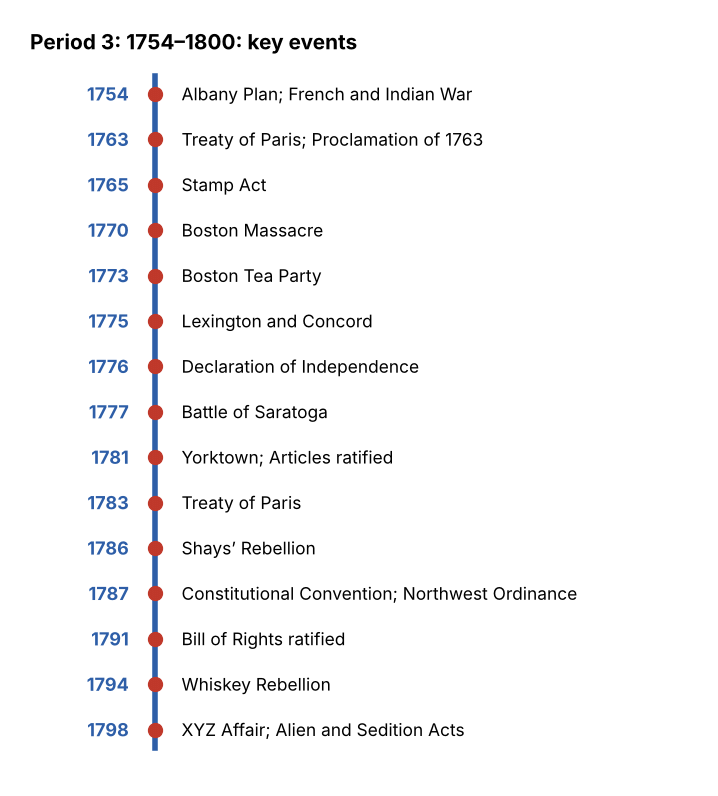
The convention that met in Philadelphia was supposed to revise the Articles. Instead, the delegates—fifty-five of them, representing twelve states—essentially threw the Articles away and wrote a new system from scratch. Most were lawyers, merchants, or planters. Most owned enslaved people. Most were propertied. They shared a basic fear: democracy unchecked would lead to chaos.
Several core problems demanded solutions:
- Power of the federal government: It needed to be strong enough to pay war debts, regulate commerce, and maintain order, but not so strong that it threatened liberty.
- Representation: Should states have equal power regardless of size, or should representation be based on population?
- Executive power: What would a chief executive look like in a republic? Could you even have a president without creating a new king?
- State versus federal authority: Where should sovereignty ultimately rest?
- Slavery: How would enslaved people be counted for representation?
These debates produced the document’s fundamental structures and compromises.
Key Compromises and the Architecture of Power
The Constitution wasn’t hatched from a single brilliant idea. It was built through conflict and compromise, and every major provision reflected a clash of interests.
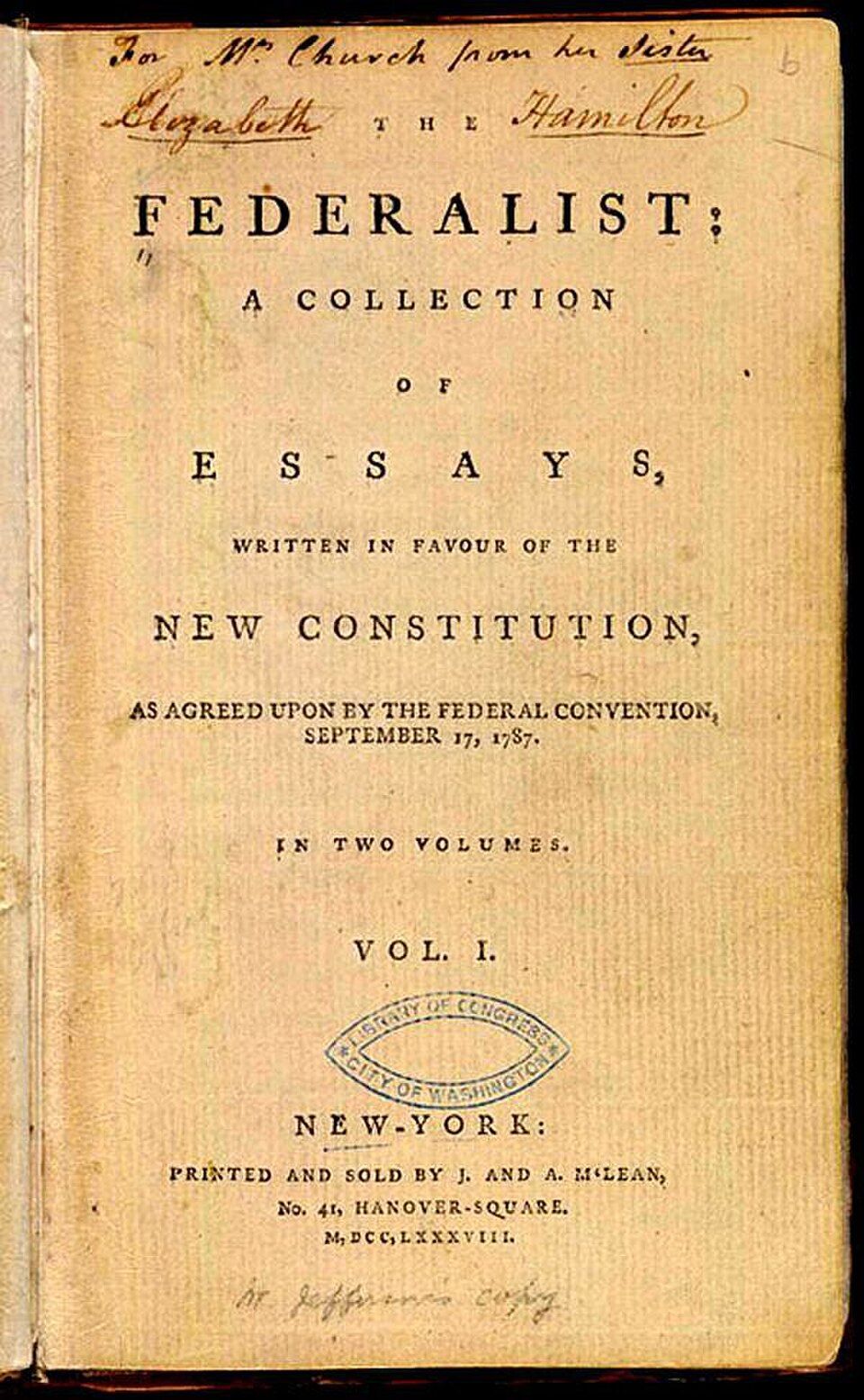
The Great Compromise (or Connecticut Compromise) resolved the representation crisis. Large states wanted representation based on population; small states wanted equal state representation. The solution: a bicameral legislature. The House would be based on population (favoring large states). The Senate would give each state two representatives (protecting small states). This wasn’t elegant, but it worked. No large state could dominate the Senate, and no small state could block the House.
The Three-Fifths Compromise addressed slavery directly, though most delegates avoided using the word. For purposes of representation and taxation, enslaved people would count as three-fifths of a person. This inflated the political power of slave states without giving enslaved people any rights. Southern delegates, who enslaved the most people, got more representatives in the House and more electoral votes for president without those they held in bondage having any voice. This wasn’t an abolition debate; it was a power grab dressed in compromise language.
The Electoral College emerged from related tensions. Direct popular election of the president alarmed many delegates. How would ordinary voters across a vast nation even know the candidates? The Electoral College seemed like a filter: electors (chosen by states) would vote for president, and Congress would break ties. It also meant that southern states’ inflated representation from the Three-Fifths Compromise extended to presidential elections. Southern power was baked into the system from the start.
The Commerce Clause gave Congress power to regulate interstate and foreign commerce but protected the slave trade until 1808. Delegates wanted federal control over commerce but wouldn’t block southern slavery’s expansion for two more decades. Again, slavery wasn’t debated directly; it was protected indirectly.
The separation of powers and system of checks and balances reflected fear of concentrated authority. Power was split among three branches. Each had tools to limit the others: presidential veto, congressional override, Senate confirmation of judges, and so on. This wasn’t about creating a weak government. It was about creating a government powerful enough to function but incapable of tyranny through concentrated power.
Federalists versus Antifederalists: The Ratification Debates
Writing the Constitution wasn’t the hard part. Getting it ratified was. Nine states needed to approve it for it to take effect. In state ratifying conventions, fierce battles erupted between two camps: those who supported the Constitution and those who opposed it.
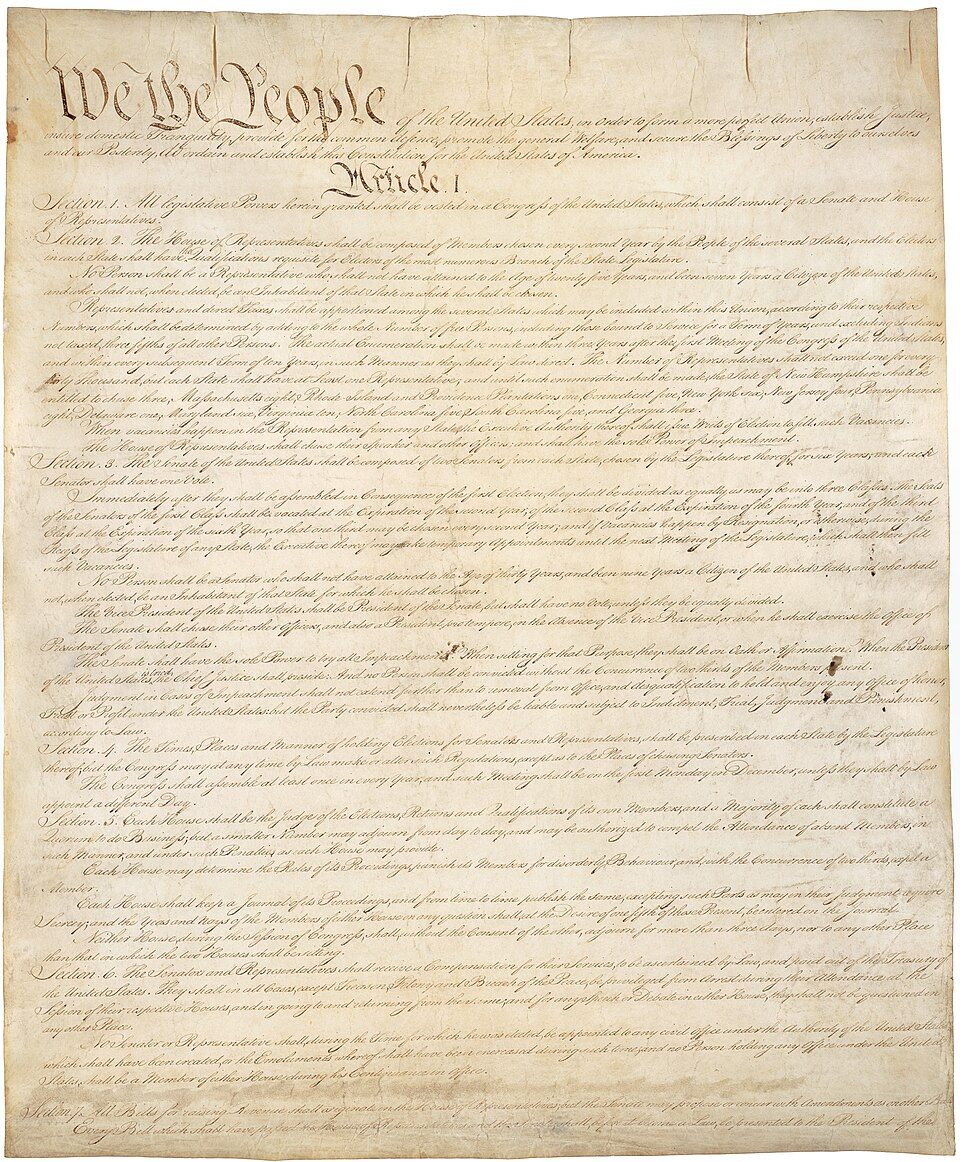
Federalists (don’t confuse this with the later Federalist Party) supported ratification. They included Alexander Hamilton, James Madison, and John Jay, who wrote The Federalist Papers to defend the Constitution. Their argument was straightforward: the Articles had failed, the nation needed a stronger federal government, and the Constitution provided checks and balances to prevent tyranny. They believed in energetic government and feared disunion more than concentrated power. They weren’t exactly democrats; they believed in representative government and distrusted direct popular rule.
Antifederalists opposed ratification. They were more diverse and didn’t have as clear a national voice, but their concerns were powerful. They saw the Constitution as a betrayal of Revolutionary ideals. Specifically:
- The central government was too strong and threatened state sovereignty.
- A president could become a tyrant. Why should we fight a king only to create a new one?
- Congress was too distant from ordinary people. Representatives couldn’t truly represent constituents spread across such a vast nation.
- There was no Bill of Rights protecting individual liberties against federal power.
- The Constitution abandoned direct democracy and true republicanism in favor of elite rule.
The Bill of Rights was crucial to ratification. Antifederalists demanded explicit protection of individual rights. James Madison drafted the first ten amendments, which were ratified in 1791. They promised that the federal government couldn’t restrict speech, religion, the press, assembly, petition, the right to bear arms, or due process. These protections didn’t satisfy everyone, but they gave enough cover for wavering states to vote yes.
In close states like Virginia and New York, ratification passed by slim margins. Without those states, the Constitution dies. But by 1789, enough states had ratified it, and the new government began. The Constitution’s unusual ambiguity was actually a strength: it was vague enough to be ratified, and its framework was flexible enough to evolve.
Why Structure Matters More Than Words
Most students memorize the compromises and moves on. But the deeper story is about how institutional design shapes politics. The Constitution’s framers made choices that benefited their interests and shaped American politics for centuries.
Consider: the Three-Fifths Compromise and Electoral College meant that southern states held disproportionate power despite lower free populations. This shaped everything. It meant southern interests (especially slavery protection) would dominate presidential elections and federal power for decades. It’s why slaveholders held the presidency for most of the early republic. It’s why expansionism favored the South. When you ask “why did slavery persist so long in America?” part of the answer is baked into the Constitution’s structure.
The federal system itself—power split between national and state governments—allowed slavery to persist. The Constitution protected it in states where it existed while allowing northern states to abolish it. This wasn’t an accident. It was a feature designed to hold the Union together by not forcing abolition on unwilling states. Slavery required constitutional protection because it was unpopular even then in many parts of the country.
The separation of powers wasn’t just about preventing tyranny. It also made it hard to pass major legislation. Proposals had to survive presidential veto, Senate and House approval, and often court challenges. This slowed change and protected existing power structures. For those benefiting from the status quo (merchants, planters, creditors), that was the point.
Understanding the Constitution means understanding that it wasn’t neutral. It was designed by men with particular interests, and those interests are embedded in its structure.
Slavery, the Constitution, and American Politics
You can’t understand the Constitutional Convention without understanding slavery. It shaped nearly every major debate, yet delegates barely discussed it openly. Instead, they protected it indirectly.
Southern delegates made clear: no constitution without slavery protection. The document protects the slave trade until 1808, protects slavery in states where it exists, requires northern states to return fugitive slaves, and inflates southern representation through the Three-Fifths Compromise. Northern delegates accepted all this because they wanted a union and feared southern withdrawal if pushed.
This wasn’t a side issue. Slavery’s protection was central to why the Constitution took the form it did. The deep tensions between free and slave states that would explode in the Civil War were already present in 1787. The Constitution papered over them rather than resolving them. For your exam, remember: slavery shaped the Constitution as much as fears of tyranny or questions about representation.
Test-Taking Strategies
Now that you understand the substance, here’s how to tackle exam questions on this topic:
Mnemonics and Memory Devices
For the major compromises, use CGTS: Connecticut (Great Compromise), Great (slave trade allowed until 1808), Three-Fifths (slavery representation), Slavery (protected in Constitution). This isn’t elegant, but it locks in that every major compromise touched slavery or representation.
For Federalist versus Antifederalist positions, remember Strong Fed, Weak Anti. Federalists wanted a strong central government; Antifederalists feared strong central power and wanted states strong and individual rights protected. When you see a quote or position on the exam, ask: “Does this person trust the federal government to use power responsibly?” Federalists said yes; Antifederalists said no.
Cross-Topic Connections
The Constitutional Convention sits between the Revolutionary War and the early republic. Connect backward: the Revolution promised self-governance and individual rights, but left Americans with a weak government. The Constitution tried to balance both. Connect forward: the conflicts unresolved in 1787 (especially slavery) drove every major political fight through the 1850s. The Constitution didn’t settle these questions; it deferred them.
Also connect to Unit 2 if you’ve studied it: the state constitutions written during the Revolution were more democratic than the US Constitution. Many had bills of rights. Some states had broader voting rights. The 1787 Constitution was actually more conservative and elite-friendly than what many states had already done. For Antifederalists, that was a huge problem.
Common Question Formats
Questions on this topic usually fall into four patterns:
“Why did delegates choose [provision]?” Look for interest-based answers. The Electoral College existed partly because delegates distrusted mass democracy and partly because southern states wanted electoral votes from enslaved people. The Senate gave small states protection. Always ask: who benefited?
“How would [Federalist/Antifederalist] respond to [quote or scenario]?” These test whether you understand the underlying philosophies. Federalists trusted representative government and energetic federal power. Antifederalists distrusted concentrated authority and wanted direct democracy, state power, and explicit rights protection. When you see the question, mentally sort the position into one camp or the other.
“Why did ratification require [Bill of Rights / specific compromises]?” These test understanding of what it took to get nine states to say yes. The answer usually involves Antifederalist concerns (especially the Bill of Rights) and the threat that powerful states like Virginia or New York wouldn’t ratify without changes.
“What does [historical document] reveal about [Constitutional issue]?” You might get quotes from The Federalist Papers, Antifederalist writings, or Convention notes. Read carefully for the underlying argument: Is the writer defending federal power or state/individual liberty? Is slavery mentioned or protected indirectly? What fears or values drive the position?
Frequent Student Mistakes
Avoid these common errors:
- Treating the Constitution as inevitable. It wasn’t. If New York or Virginia had rejected it, the Union might have splintered. Students often write as if ratification was guaranteed. It wasn’t. It was contested and close.
- Ignoring slavery. Many students treat the Constitution as if slavery were a marginal issue. It wasn’t. It shaped the Three-Fifths Compromise, electoral politics, and federal structure. Don’t minimize it.
- Confusing Federalists in 1787 with the later Federalist Party. Same name, different things. In 1787, Federalists were pro-Constitution. Alexander Hamilton was one. Later, Hamilton’s Federalist Party (1790s onward) was something else entirely. The exam might test whether you keep these straight.
- Oversimplifying compromises. The Great Compromise wasn’t just about large and small states. It also protected slavery by splitting power. The Three-Fifths Compromise wasn’t about fairness to enslaved people; it was about slave-state power. Don’t treat these as neutral problem-solving.
- Missing the conservatism of the Constitution. Antifederalists had a point: the Constitution was more elite-friendly and less democratic than the Revolutionary ideals suggested. Many students assume the Constitution was obviously good and Antifederalists were just wrong. The reality is more complex. The Constitution solved practical problems but also protected elite interests and slavery. Both things are true.
Test-Day Shortcuts
When you’re pressed for time on the exam, use these quick tactics:
For DBQ and free-response: Always mention slavery explicitly if the topic allows it. “The Constitution protected slavery” or “delegates disagreed about slavery representation” shows you understand the document’s actual purpose, not just its stated ideals. Even if the question doesn’t ask about slavery, a thoughtful mention demonstrates depth.
For multiple choice on Federalist/Antifederalist positions: If you’re unsure, ask which position trusts federal power more. The answer that sounds skeptical of central government is Antifederalist. The answer that sounds confident in representative government and federal strength is Federalist. This works about 80% of the time.
For questions on compromises: Ask who benefited. If the answer helps small states or slave states, name it: “This compromise protected southern interests because…” The specificity will earn points even if you’re not 100% sure.
Time Management Tips
This topic can feel overwhelming because it’s densely detailed. On the exam, prioritize like this:
- Read the question first. If it’s about why a specific compromise happened, focus on that compromise. You don’t need to memorize every detail of every provision. Understand the major conflicts and how they were resolved.
- For long passages, skim the first and last sentences to find the main argument. Then read for specific details. On an exam with time pressure, you can’t read every word carefully.
- Build a personal hierarchy: What matters most? The Three-Fifths Compromise, the Great Compromise, separation of powers, and Federalist/Antifederalist disagreements over ratification. Everything else is supporting detail. If you’re running out of time, nail these four things.
- For free response, spend two minutes outlining before you write. One minute on setup, one minute on examples. This prevents rambling and gets your best ideas on the page quickly.
You’ve got this. The Constitutional Convention and ratification debates aren’t just history; they’re the foundation of every political argument America has had since. Understand why the framers chose what they chose, and you’ll understand American politics itself.