
Maximize your score with these resources:
- Albert.io AP® European History question banks
- Free AP® European History cheat sheets
- Free AP® European History score calculator
By the 1840s, Europe’s industrial cities had become dangerous places to live. Cholera swept through crowded neighborhoods, children worked twelve-hour shifts in textile mills, and the people who suffered most had no vote and no voice. Governments that had once left economic life alone started to act. They wrote factory laws, built sewers, hired police, opened schools, and slowly widened the vote. This is the story of Topic 6.9: Institutional Responses and Reform in Unit 6 (Industrialization and Its Effects) of AP® European History.
Topic 6.8 covers reform pushed from below by reformers, charities and social movements. This topic covers what states and their institutions did in response. The CED asks you to explain how and why governments responded to the problems industrialization created, and why their responses differed from country to country.
By the end of this guide you should be able to:
- Name the major government reforms in labor, public health, policing, education and welfare, with their countries and dates.
- Explain the motives behind them, from humanitarian concern to fear of revolution.
- Compare how Britain, France and Germany used reform for different political ends.
Why Governments Stepped In
Early industrial Britain ran on laissez-faire thinking. Classical liberals like Adam Smith and David Ricardo argued that markets worked best with little state interference, and many factory owners agreed. Several pressures broke that consensus between about 1830 and 1880.
- Visible human cost. Parliamentary commissions collected testimony from child workers and miners, and the evidence shocked the reading public. Once the facts were printed, doing nothing became a political choice that ministers had to defend.
- Epidemic disease. Cholera struck Britain in 1831–32, 1848–49, 1853–54 and 1866, and it did not stay in the slums. Disease that killed the middle class too gave property owners a direct reason to fund sewers and clean water.
- Fear of revolution. The revolutions of 1830 and 1848 showed that urban workers could topple governments. Reform became a way to drain anger before it boiled over, and conservatives often supported it for exactly that reason.
- New ideas about the state. Utilitarians such as Jeremy Bentham argued that government should promote “the greatest happiness of the greatest number.” That gave reformers a respectable, rational argument for regulation.
- Competition between states. A healthy, literate, loyal population made better soldiers and workers. After 1870, governments increasingly saw schooling and public health as matters of national strength.
Why does this matter? The exam rarely asks you to list reforms for their own sake. It asks you to explain why they happened. A strong answer pairs each reform with a motive: humanitarian, practical, or political. Most reforms had all three.
Regulating Work and Relief: Factory Acts and the Poor Law
Britain, the first industrial nation, was also the first to regulate industrial work. Its laws were narrow at first and grew step by step.
| Law | What It Did | Why It Mattered |
|---|---|---|
| Factory Act (1833) | Banned children under 9 from textile mills, capped hours for older children and created paid factory inspectors. | Inspectors gave the law teeth. It is the start of the modern regulatory state. |
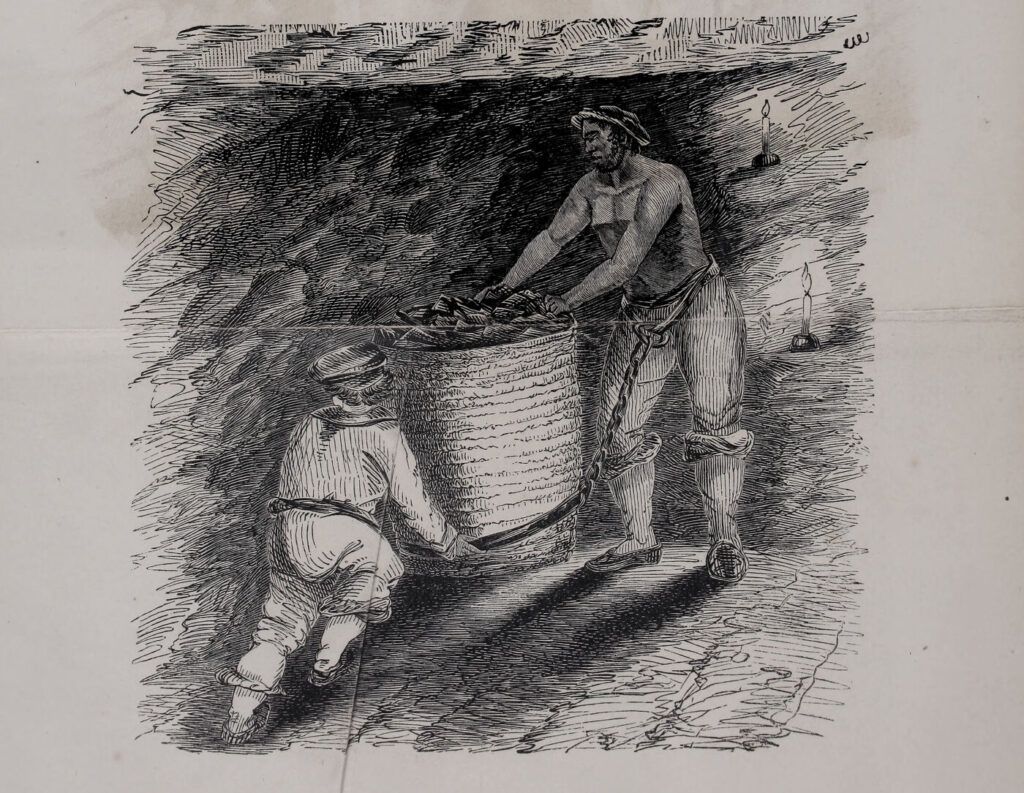
| Mines Act (1842) | Barred women and girls, and boys under 10, from working underground. | Followed a commission report with illustrations of children hauling coal carts, a turning point in public opinion. |
| Ten Hours Act (1847) | Limited women and young people in textile mills to 10 hours a day. | Since mills needed their whole workforce, it often shortened the day for men as well. |
| Poor Law Amendment Act (1834) | Replaced local cash relief with workhouses run on “less eligibility”: relief had to be worse than the lowest wage. | A reform meant to push the poor into work. It shows reform was not always humane. |
The New Poor Law is the one students forget. It was a major institutional response to industrial poverty, but it was built to discourage dependence, not to relieve suffering. Workhouses split up families and were deliberately grim. Charles Dickens attacked them in Oliver Twist (1837–39). If an exam stimulus describes the workhouse, read it as evidence that liberal reformers saw poverty as a moral failing to be corrected, not only a social problem to be solved.
Continental states followed more slowly. Prussia restricted child labor in 1839, and France passed a child-labor law in 1841, but both were weakly enforced at first. The pattern is the same everywhere: limited laws first, real inspection later.
Cleaning and Rebuilding the City
Industrial cities grew faster than anyone could plan for them. Public health reform was where state power grew most visibly in the 19th century.
- Edwin Chadwick’s Report on the Sanitary Condition of the Labouring Population (1842) linked disease to filth, bad drainage and overcrowding. Chadwick, a follower of Bentham, argued that preventing disease was cheaper than supporting widows and orphans. His report led to the Public Health Act of 1848, which created a central Board of Health and allowed towns to set up local boards for drains, water and street cleaning.
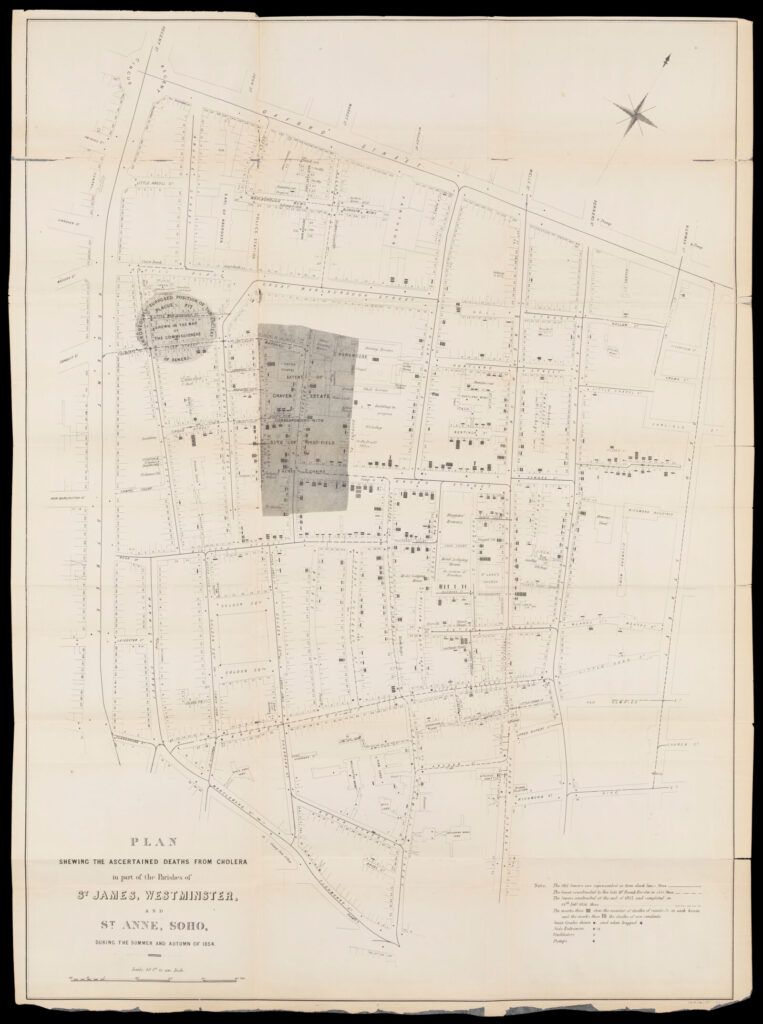
- John Snow and the Broad Street pump (1854). During a London cholera outbreak, the physician John Snow mapped deaths and traced them to one contaminated water pump. His work helped prove that cholera spread through water, not “miasma” (bad air), and it strengthened the case for clean water systems.
- London’s sewers. After the “Great Stink” of 1858, when the smell of the Thames reached Parliament itself, Joseph Bazalgette built a vast sewer network that carried waste away from the city. Cholera deaths in London fell sharply after it was finished.
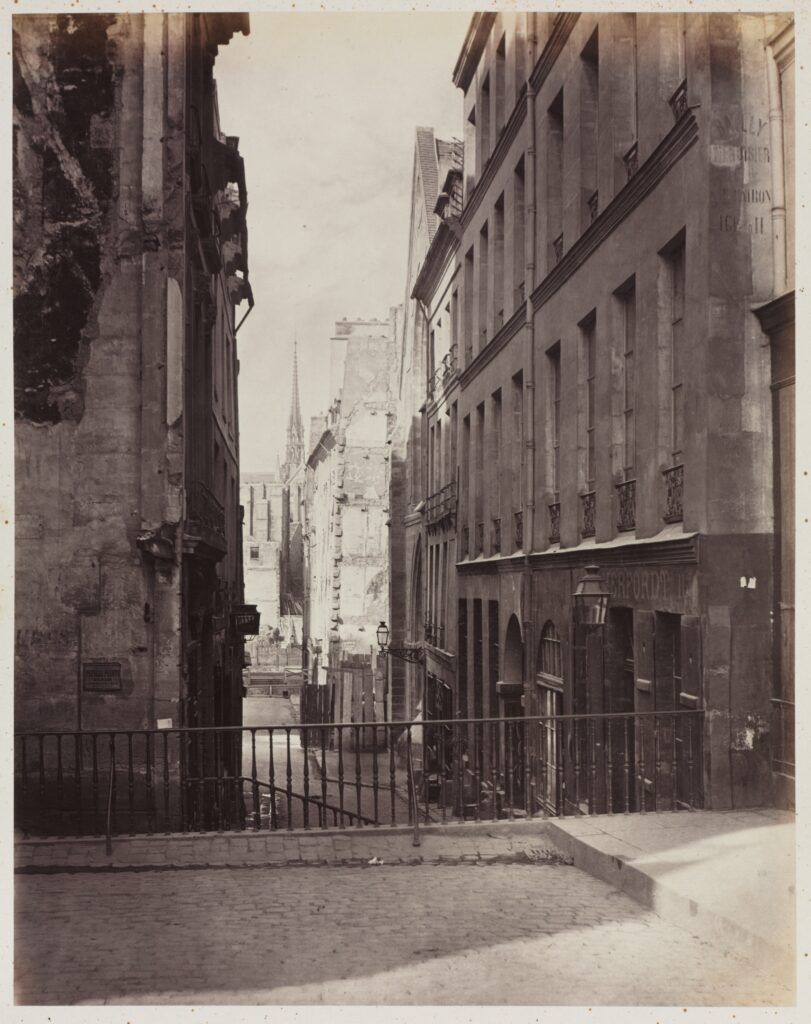
- Haussmann’s Paris (1853–1870). Under Napoleon III, Baron Georges-Eugène Haussmann tore down crowded medieval districts and built wide boulevards, parks, aqueducts and sewers. The project improved light, air and sanitation. It also made the barricades of 1830 and 1848 much harder to build and let troops move quickly. Haussmann’s Paris is the classic example of reform serving both public health and political control.
Why does this matter? Urban reform shows the state taking on new responsibilities it had never held before: water, sewage, building codes and street plans. When an exam asks how industrialization changed the role of government, public health is your strongest evidence, because it touched every class and almost every city.
Police, Prisons and Schools: The State Reaches Into Daily Life
Growing cities also brought new worries about crime and disorder. Governments answered with institutions designed to watch, discipline and train citizens.
| Institution | Key Example | Purpose and Significance |
|---|---|---|
| Professional police | Robert Peel’s Metropolitan Police Act (1829) created London’s uniformed police, the “bobbies” or “peelers.” | Replaced unpaid watchmen with a salaried force that prevented crime and kept order without using the army. |
| Prison reform | Pentonville Prison (1842) used the “separate system,” keeping inmates in individual cells. | Shifted punishment from public pain to reform through discipline and solitude, building on Bentham’s Panopticon design. |
| Public schooling (Britain) | The Elementary Education Act (1870) set up local school boards; attendance became compulsory in 1880. | Produced a literate workforce and electorate, especially after more men gained the vote in 1867. |
| Public schooling (France) | The Ferry Laws (1881–82) made primary education free, compulsory and secular. | The Third Republic used schools to build loyal, republican citizens and reduce the Catholic Church’s influence. |
Mass schooling is a strong example for essays because it served several goals at once. It trained workers for an industrial economy, taught the national language and national history, and turned peasants and workers into citizens who identified with the state. Prussia had compulsory elementary schooling long before this period, which helped make its army and workforce among the best educated in Europe.
Widening the Vote and the First Welfare State
The deepest institutional response was political: bringing new groups into the system so they would work within it rather than against it.
- Britain’s Reform Acts. The Great Reform Act of 1832 abolished many “rotten boroughs” and gave seats to industrial cities like Manchester, enfranchising much of the middle class. The Second Reform Act of 1867, passed by Benjamin Disraeli’s Conservatives, extended the vote to many urban working men. The Third Reform Act of 1884 did the same for rural laborers, and the secret ballot (1872) protected voters from intimidation. Britain avoided revolution partly because it reformed step by step.
- Chartism as the pressure behind reform. The Chartists (1838–1848) demanded universal male suffrage and a secret ballot. Parliament rejected their petitions, but most of their demands became law over the following decades. Chartism shows how pressure from below (Topic 6.8) fed institutional change from above (Topic 6.9).
- France. The Second Republic adopted universal male suffrage in 1848, and Napoleon III kept it, using plebiscites to give his authoritarian rule a democratic look.
- Bismarck’s social insurance. In Germany, Otto von Bismarck created the first national welfare system: sickness insurance (1883), accident insurance (1884), and old-age and disability pensions (1889). His goal was openly political. Alongside the Anti-Socialist Laws (1878), he used welfare to win workers away from the Social Democratic Party. This “carrot and stick” approach is one of the most tested examples in Unit 6.
Why does this matter? Compare the three great powers. Britain reformed gradually through Parliament and avoided revolution. France swung between revolution and authoritarian rule, yet still widened the vote. Germany built a welfare state from the top down to strengthen a conservative monarchy. All three were responding to the same industrial problems. Their different political systems produced different answers, and that comparison is exactly what LEQs reward.
Test-Taking Strategies
Mnemonic Devices and Memory Shortcuts
- “Factories, Filth, Felons, Futures, Franchise” covers the five areas of state reform: factory laws, public health, police and prisons, schooling, and the vote.
- Bismarck’s insurance runs “Sick, Hurt, Old” in order: sickness (1883), accident (1884), old age (1889). The sequence is easy to remember once you link it to rising risk.
- Britain’s Reform Acts climb “32, 67, 84”: middle class, urban workers, rural workers. Each step adds the next group down the social ladder.
Cross-Topic Connections
- Topic 6.4 (Social Effects of Industrialization): the problems in Topic 6.4, such as slums, disease and child labor, are the causes of the reforms here. Read the Social Effects of Industrialization guide alongside this one.
- Topic 6.8 (19th-Century Social Reform): reform from below (Chartists, unions, charities) versus reform from above (Parliament, Bismarck). The exam often asks you to connect the two.
- Topics 6.5–6.7 (Conservatism and Ideologies of Change): liberal, conservative and socialist ideas explain who supported each reform and why. Bismarck is a conservative using a socialist-looking policy for anti-socialist ends.
Common Question Formats
- Stimulus MCQs often quote a parliamentary report, a Chadwick passage or a factory inspector’s testimony, then ask what reform followed or what motive it reveals.
- SAQs ask you to explain one cause and one effect of a government response to industrialization, or to compare two countries’ approaches.
- LEQs ask you to evaluate the extent to which governments responded to industrialization between roughly 1815 and 1914. Strong answers use evidence from at least two countries and two reform areas.
Frequent Student Mistakes
- Treating all reform as humanitarian. The New Poor Law and Bismarck’s welfare system both had control motives. Show complexity by naming the mixed motive.
- Mixing up Topics 6.8 and 6.9. Chartism and trade unions are movements; the Reform Acts and Factory Acts are the state’s responses. Label which one you are using.
- Getting the order wrong. The Factory Act of 1833 came before the Public Health Act of 1848, and Bismarck’s welfare laws came in the 1880s, after German unification. Misdating them weakens your claim about causation.
Test-Day Shortcuts
- If a stimulus mentions cholera, sewers or a sanitary report, think Chadwick, the 1848 Public Health Act and Snow before reading the answer choices.
- If a question names Bismarck and workers in the same sentence, the answer almost always involves undercutting socialism.
- For “why did reform happen” questions, test each answer choice against the three motives: humanitarian, practical and political. The best answer usually names the political one.
Time Management Tips
- On stimulus sets about reform, read the source line first: a government report suggests a state response, a pamphlet suggests a movement from below.
- In an LEQ on this topic, spend about five minutes planning a two-country comparison, such as Britain’s gradual reform against Germany’s top-down welfare. That frame gives you an argument and complexity at once.
- Don’t stall on exact dates in MCQs. Knowing the decade and the order of reforms is enough to rule out most wrong choices.
Check for Understanding
Think you’ve got it? Complete the quiz below to make sure. Download your results at the end.