
Maximize your score with these resources:
- Albert.io AP® Business with Personal Finance question banks
- Free AP® Business with Personal Finance score calculator
A kitchen fire, a fender bender, a broken arm, or a text claiming your bank account is locked. None of these is something you plan for, and any one of them can wipe out months of savings. You cannot eliminate every risk, but you can decide which risks to carry yourself, which to pay someone else to carry, and which scams to avoid entirely. Topic 5.2 covers the insurance that protects households from financial loss and the habits that protect them from fraud.
This article covers Topic 5.2: Managing Personal Risk in Unit 5, Personal Goals, Budgeting, and Investing. The topic asks you to identify insurable risks, describe the main types of insurance, recommend coverage based on risk tolerance and needs, and explain how households can protect themselves from financial fraud.
By the end, you should be able to:
- Define insurable risk and classify risks as personal, property, or liability.
- Describe health, auto, homeowner’s, renter’s, and life insurance, plus warranties.
- Explain premiums, claims, and deductibles, and match coverage to risk tolerance and dependents.
- Describe how to avoid predatory lending, phishing, identity theft, and scams.
Insurable Risks
An insurable risk involves a possible loss due to chance, such as an accident or a storm. It must also be quantifiable and statistically predictable, so the insurer can estimate how likely and how costly a loss would be.
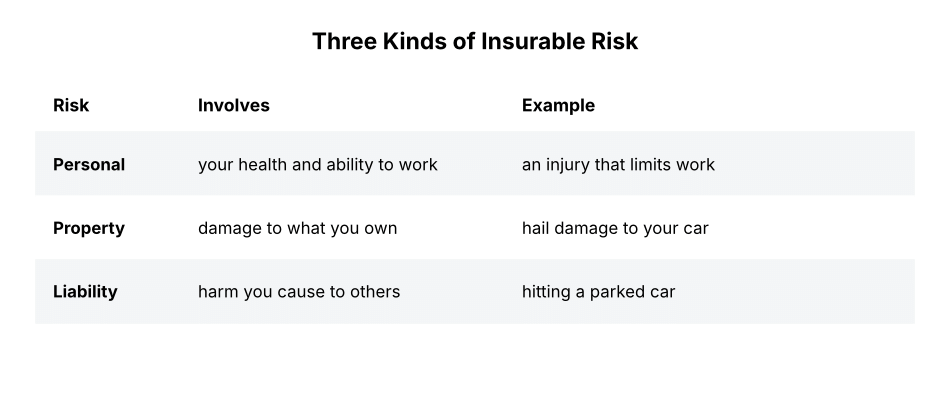
| Risk type | Involves | Example |
|---|---|---|
| Personal risk | The insured person’s health and well-being | An injury or illness that limits the ability to work |
| Property risk | Loss or damage to the insured person’s property | Hail damage to your car or home |
| Liability risk | Harm to someone else’s property or health | Hitting a parked car or a pedestrian while driving recklessly |
Types of Insurance
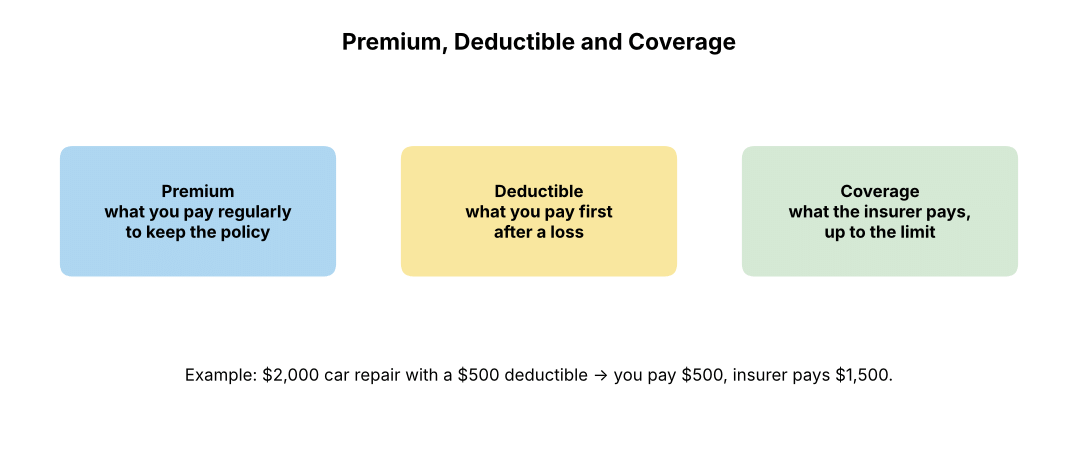
Buyers pay a premium (annually, semiannually, or monthly) for a policy with a chosen amount of coverage, and file a claim for reimbursement after a loss.
| Insurance | What it covers |
|---|---|
| Health | Medically necessary care and sometimes preventive care; often an employee benefit with employer-paid premiums |
| Auto, homeowner’s, renter’s | Losses to your own property plus legal liability for damage you cause to others |
| Life | Pays designated beneficiaries after the insured person’s death, to replace income, pay end-of-life costs, or fund dependents’ needs |
| Extended warranties and service contracts | Repairs on expensive items like cars or appliances; can act as a type of insurance |
Choosing the Right Coverage
How much insurance a household needs depends on three factors:
- Legal requirements. Most U.S. states require auto liability insurance, and mortgage lenders require homeowners to buy property insurance.
- Risk tolerance. People with low risk tolerance may buy comprehensive coverage with higher premiums to avoid surprise costs. People with higher risk tolerance may buy less coverage or choose a higher deductible, accepting larger out-of-pocket costs if something goes wrong.
- Dependents. People with dependents often need family health coverage, insurance on several vehicles, and more life insurance.
Households can lower premiums by reducing risky behavior, such as keeping a clean driving record or not smoking. Lying on an application or filing a false claim is insurance fraud, a crime, and so is an insurance seller misrepresenting a policy.
Worked Example: Two Renters
| Ava, 23, single, healthy savings | Ben, 34, two young children, little savings | |
|---|---|---|
| Risk tolerance | Higher | Lower |
| Auto | Required liability coverage with a higher deductible to keep premiums low | Fuller coverage with a lower deductible, since a big repair bill would strain his budget |
| Renter’s | Basic policy for belongings and liability | Policy sized to cover a family’s belongings |
| Life | Little need, no dependents | A larger policy to replace income for his children |
Protecting Against Financial Fraud
Households face risks from predatory lending (deception and aggressive sales tactics) and fraud such as phishing, identity theft, and online scams.
- Against predatory lending: compare loan terms from several sources, resist pressure to agree quickly, and get advice from a nonprofit credit counselor before signing.
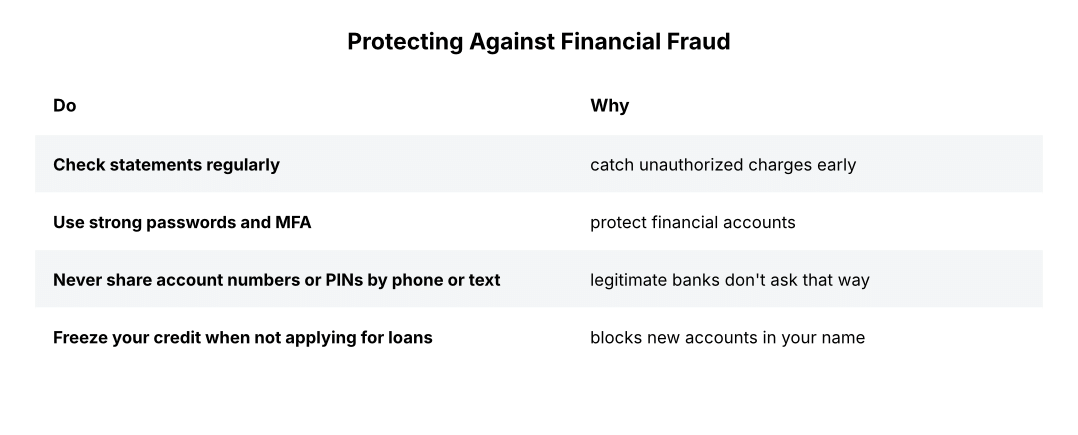
- Against fraud: judge whether an offer is credible, refuse to share personal or financial information under pressure online or by phone, freeze your credit, and seek legal aid if you are scammed.
Why does this matter? A single uninsured loss or scam can undo years of saving. Matching insurance to your situation and building anti-fraud habits protects every other financial goal.
Test-Taking Strategies
Mnemonic Devices and Memory Shortcuts
Risk types: “Me, My stuff, Someone else” = personal, property, liability. For coverage decisions: “Law, Tolerance, Dependents.”
Cross-Topic Connections
- Topic 3.4: Business Expenses shows how businesses also buy insurance based on risk tolerance.
- Topic 3.2: Borrowing, Credit, and Debt covers alternative lenders and consumer protection laws.
- Topic 2.1: Marketing to Customers explains how customer data can lead to identity theft.
- Topic 5.1: Taxes, Net Income, and Budgeting shows health insurance as a pay stub deduction.
Common Question Formats
- A loss scenario asking whether it is a personal, property, or liability risk.
- A household profile asking which coverage fits best.
- A suspicious message asking which response best protects the consumer.
Frequent Student Mistakes
- Classifying damage you cause to someone else’s car as property risk. It is liability risk.
- Assuming a higher deductible means more protection. It means lower premiums and more out-of-pocket cost.
- Thinking only buyers commit insurance fraud. Sellers can too.
Test-Day Shortcuts
Ask “Whose loss is it?” Your body is personal risk, your belongings are property risk, and someone else’s loss is liability risk.
Time Management Tips
Unit 5 is not assessed on the AP Business with Personal Finance Exam on May 4, 2027. Insurance and fraud protection still support the managing-risk ideas that appear in Units 1 through 4, so a quick review of this table pays off.
Check for Understanding
Think you’ve got it? Complete the quiz below to make sure. Download your results at the end.