
Maximize your score with these resources:
- Albert.io AP® US History question banks
- Free AP® US History cheat sheets
- Free AP® US History score calculator
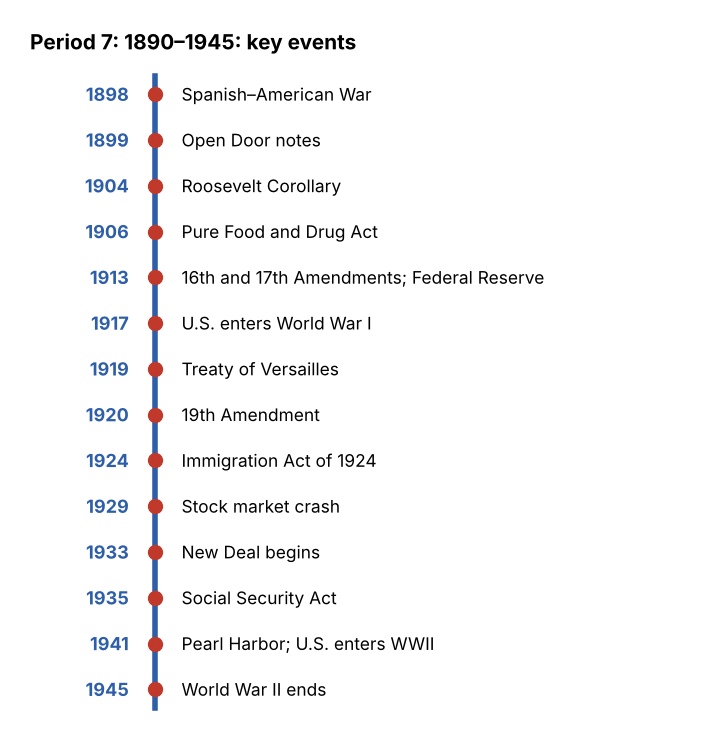
Even before World War II ended, the Allied leaders were redrawing the map of the world. At Tehran, Yalta, and Potsdam, Franklin Roosevelt, Winston Churchill, and Joseph Stalin argued over Poland, Germany, and the shape of a new international organization. The U.S. also led the creation of new institutions to manage the world economy. These decisions settled the war but planted the seeds of the Cold War. Topic 7.14 covers the diplomacy that shaped the postwar order.
This article covers Topic 7.14: Postwar Diplomacy in Period 7, 1890 to 1945. The topic asks you to explain how wartime and postwar diplomacy created a new international order led by the United States, and how disagreements among the Allies set the stage for the Cold War.
By the end, you should be able to:
- Describe the major wartime conferences and their decisions.
- Explain the creation of the United Nations.
- Describe the new international economic institutions.
- Explain why disagreements over Eastern Europe led to tension with the Soviet Union.

What We Review
The Wartime Conferences
| Conference | Date | Leaders | Key Decisions |
|---|---|---|---|
| Atlantic Charter | August 1941 | Roosevelt, Churchill | Shared goals: self-determination, free trade, collective security |
| Casablanca | January 1943 | Roosevelt, Churchill | Demand for “unconditional surrender” from the Axis |
| Tehran | November 1943 | Roosevelt, Churchill, Stalin | Agreed on the D-Day invasion of France |
| Yalta | February 1945 | Roosevelt, Churchill, Stalin | Germany to be divided into zones. Stalin promised free elections in Eastern Europe and agreed to enter the war against Japan. Plans for the UN were finalized. |
| Potsdam | July 1945 | Truman, Churchill (then Attlee), Stalin | Details of the occupation of Germany, war crimes trials, and a final demand for Japan’s surrender |
The Yalta Controversy
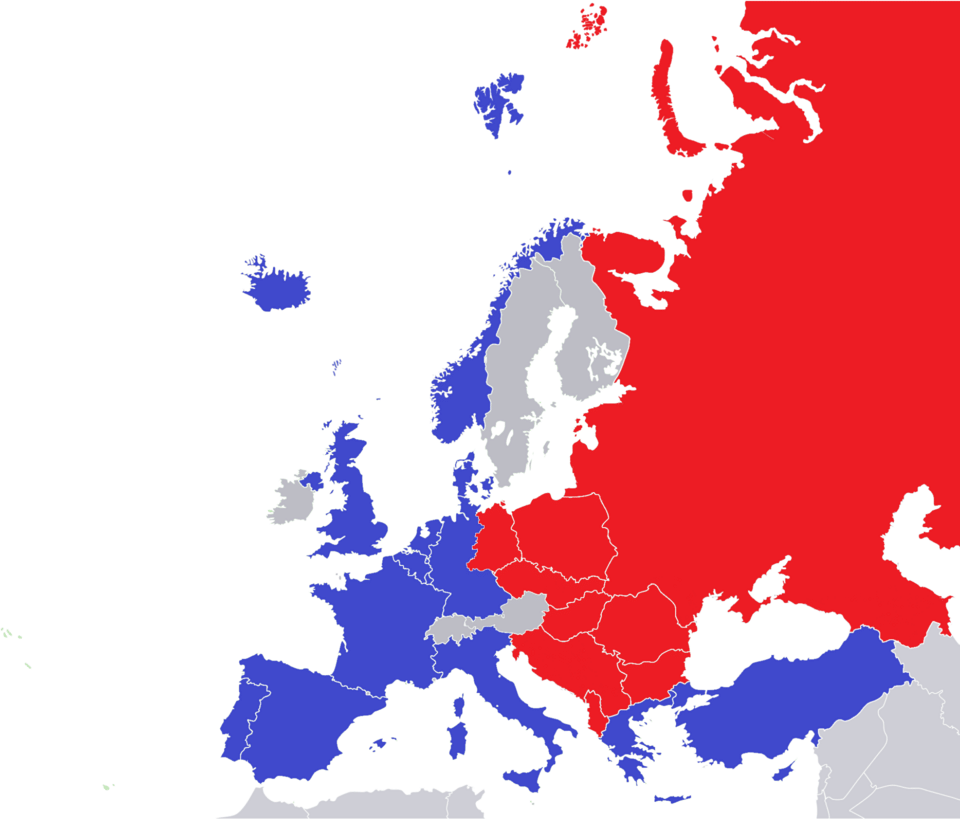
Critics later charged that Roosevelt, who was gravely ill, gave away too much at Yalta. Defenders pointed out that the Soviet army already occupied much of Eastern Europe, so the U.S. had little leverage. When Stalin installed communist governments in Poland and other nations instead of holding free elections, the promises of Yalta became a major source of Cold War mistrust.
The United Nations
The U.S. hosted the founding conference of the United Nations in San Francisco in 1945. Unlike the League of Nations after World War I, the UN Charter passed the Senate easily, 89 to 2.
- General Assembly: Every member nation gets one vote.
- Security Council: Five permanent members, the U.S., the Soviet Union, Britain, France, and China, each with veto power.
- Universal Declaration of Human Rights (1948): Drafted by a committee chaired by Eleanor Roosevelt.
The U.S. shift from rejecting the League to leading the UN is one of the clearest changes in American foreign policy in the 20th century.
A New Economic Order
At the Bretton Woods Conference (1944), the Allies created institutions to prevent the economic chaos of the 1930s from returning.
| Institution | Purpose |
|---|---|
| International Monetary Fund (IMF) | Stabilize currencies and help nations with balance-of-payments problems |
| World Bank | Lend money to rebuild war-torn nations and develop poorer ones |
| Fixed exchange rates | Currencies were pegged to the U.S. dollar, which was backed by gold |
These arrangements made the dollar the center of the world economy. Later, the General Agreement on Tariffs and Trade (1947) worked to lower trade barriers.
Occupation and Justice
- Germany: Divided into four occupation zones run by the U.S., Britain, France, and the Soviet Union. Berlin, deep inside the Soviet zone, was also divided.
- Nuremberg Trials (1945 to 1946): Nazi leaders were tried for crimes against humanity, establishing the principle that individuals can be held responsible for war crimes.
- Japan: Occupied by the U.S. under General Douglas MacArthur, who oversaw a new democratic constitution that renounced war.
Why does this matter? Postwar diplomacy is the bridge between Periods 7 and 8. It explains how the U.S. became the leader of a new world order, and why the wartime alliance with the Soviet Union quickly fell apart. On essays, compare the UN with the League of Nations to show change over time, or use Yalta to explain the causes of the Cold War.
Test-Taking Strategies
Mnemonic Devices and Memory Shortcuts
- “T-Y-P.” Tehran, Yalta, Potsdam, in order.
- “League rejected, UN accepted.” The Senate’s reversal between the two world wars.
- “Bretton built the bank.” Bretton Woods created the World Bank and IMF.
Cross-Topic Connections
- Topic 7.5: The rejection of the League provides the key comparison.
- Topic 7.11: The Atlantic Charter began wartime planning for peace.
- Topic 7.13: Military advances, especially the Soviet push west, shaped bargaining at Yalta.
- Topic 8.2: Broken Yalta promises fueled the Cold War. See our review of the Cold War.
Common Question Formats
- Stimulus MCQ. An excerpt from the Yalta agreement or a map of occupation zones, and you identify its significance.
- Comparison SAQ. You compare U.S. policy after World War I and after World War II.
- Causation SAQ. You explain one way wartime diplomacy contributed to the Cold War.
- LEQ. You evaluate how the U.S. role in the world changed between 1919 and 1945.
Frequent Student Mistakes
- Placing Truman at Yalta. Roosevelt attended Yalta. Truman attended Potsdam.
- Thinking the U.S. joined the League. It joined the UN instead.
- Forgetting the economic institutions. Bretton Woods is key evidence for U.S. economic leadership.
- Calling Germany’s division permanent at first. The zones were meant to be temporary.
Test-Day Shortcuts
- Spot “unconditional surrender.” It points to the Casablanca Conference.
- Use the 89 to 2 vote. It’s vivid evidence of changed attitudes toward international organizations.
- Link Eastern Europe to mistrust. Poland is the best single example.
Time Management Tips
- Multiple choice: Section IA has 55 questions in 55 minutes, about 1 minute each. Watch the dates, since conferences only a few months apart had different leaders.
- Short answer: Section IB has 3 required questions in 40 minutes, roughly 13 minutes each. Name the conference or institution in each part.
- Essays: The DBQ gets 60 minutes, including a 15-minute reading period, and the single required LEQ gets 40 minutes. Postwar diplomacy makes a strong conclusion for essays on 20th-century foreign policy.
Check for Understanding
Think you’ve got it? Complete the quiz below to make sure. Download your results at the end.