
Maximize your score with these resources:
- Albert.io AP® Art History question banks
- Free AP® Art History cheat sheets
- Free AP® Art History score calculator
Theories and interpretations of Pacific art are not neutral descriptions of what the works mean. The frameworks we use to understand these traditions are shaped by history, power, and perspective. This article covers Topic 9.3: Theories and Interpretations of Pacific Art (Learning Objective THR-1.A) from Unit 9. Understanding how Pacific art is interpreted—and misinterpreted—is central to the broader exam theme of evaluating art historical frameworks and recognizing their biases. You’ll encounter questions asking you to evaluate different interpretive approaches, identify problems with Western-centric museum display practices, and recognize the role of indigenous knowledge systems. By mastering this topic, you’ll develop critical thinking about how art is understood, displayed, and valued.
The key to mastering this topic is understanding that art history itself has a history—and a problematic one. Western scholars, museums, and collectors didn’t objectively discover Pacific art; they filtered it through their own assumptions, economic interests, and colonial power structures. When you learn the theories themselves, you’re learning to recognize bias in art historical practice.
The European Curiosity Cabinet and Early Misframing
When Pacific art first entered European consciousness through exploration and trade, it arrived not as art but as oddities. The early European approach to Pacific objects centered on the curiosity cabinet (or Wunderkammer—literally “room of wonders”)—collections that displayed exotic materials and unfamiliar forms side by side with natural specimens, minerals, and mechanical devices. Objects from the Pacific were grouped with ethnographic curiosities rather than recognized as sophisticated artistic traditions. This framing—treating cultural objects as scientific specimens or novelties—established a foundational problem that resonates through art historical practice to the present day.
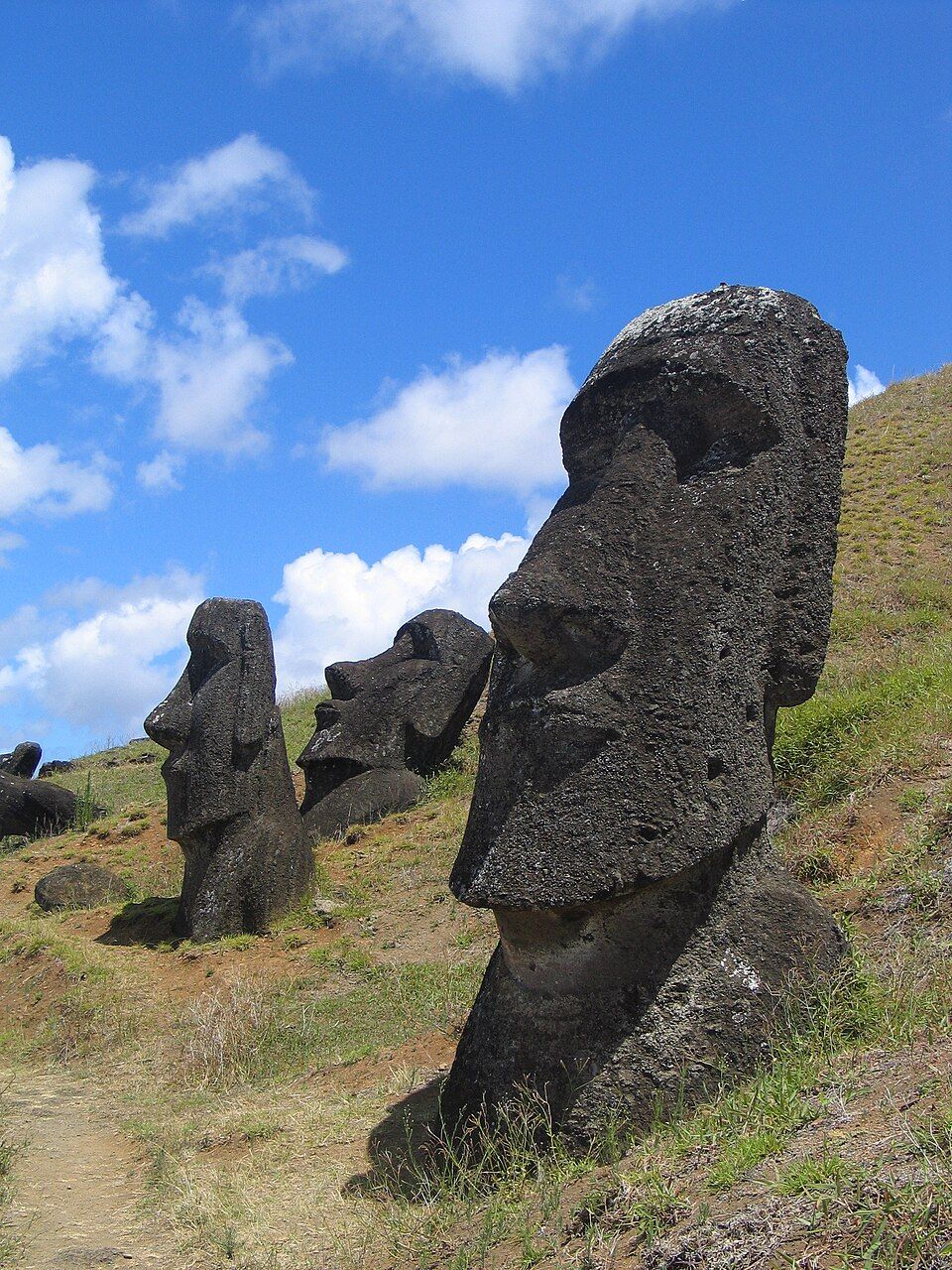
- Display logic: Pacific objects were arranged by geographic origin, material (wood, shell, fiber), or rarity rather than by cultural significance or artistic intent. A finely carved moai from Easter Island might sit next to a shell ornament from Polynesia with no contextual connection, flattening the distinct artistic traditions across the vast Pacific.
- Power of framing: By placing Pacific objects in the same category as scientific specimens, Europeans asserted intellectual authority over them—the curator, not the culture of origin, determined meaning. This act of classification itself was a form of colonial power.
- Removal from context: Objects were stripped from their original settings (temples, meeting houses, ritual spaces, graves) where their meaning was inseparable from function, community, and spiritual purpose. Displayed in glass cases in European museums, they became decontextualized artifacts—beautiful forms without function or significance.
The curiosity cabinet model persisted well into the 20th century and shaped how major museums organized their “ethnographic” collections. This history matters for the exam because it illustrates a fundamental interpretive problem: the framework you use to display an object *creates* meaning rather than simply presenting it neutrally.
Ethnographic vs. Aesthetic Approaches: Two Ways of Seeing
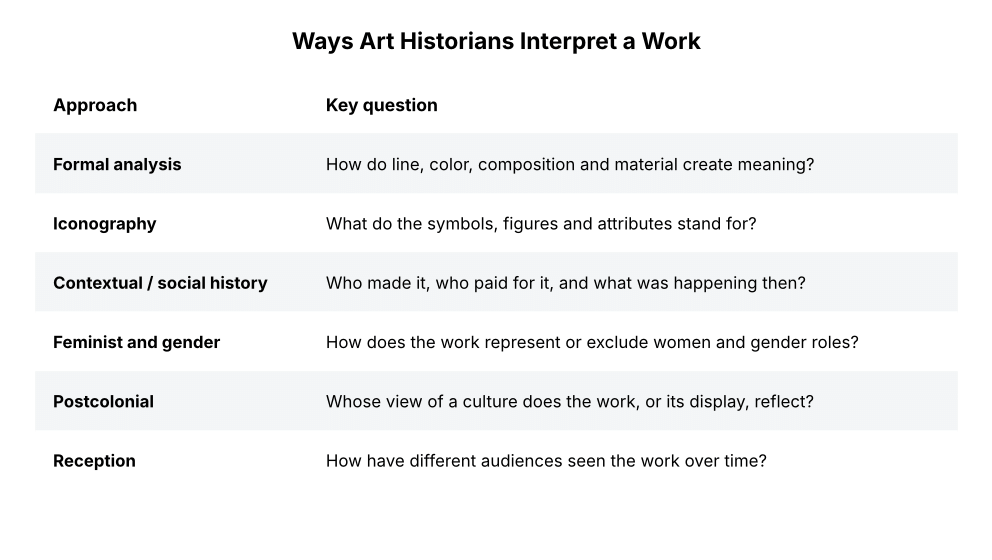
As art history professionalized in the late 19th and 20th centuries, Pacific objects were evaluated under two competing interpretive frameworks. Understanding the tension between these approaches—and their limitations—is essential for this topic.
| Approach | Core Question | How It Works | What It Misses |
|---|---|---|---|
| Ethnographic | What does this object tell us about the culture that made it? | Focuses on cultural context, function, materials, and social meaning. Treats the object as a window into beliefs, social structures, and daily life. Emphasizes the “ethnographic facts” (what the object was used for, who made it, rituals associated with it). | Can reduce art to documentary evidence, missing aesthetic sophistication. Treats the object primarily as a historical record rather than an artistic achievement. Risk of patronizing tone: “This reveals their beliefs” rather than “This is a masterwork of carving.” |
| Aesthetic | What makes this object beautiful or powerful as art? | Focuses on formal qualities: composition, balance, symmetry, use of negative space, material properties, technical skill. Evaluates the work by universal or transcultural standards of beauty and artistic excellence. Emphasizes the maker’s virtuosity. | Strips the object from cultural meaning and spiritual significance. Risk of appropriating Pacific art into a Western canon of “universal” beauty. Ignores that Pacific artists may have valued different aesthetic principles than Europeans. Can reinforce the idea that art only counts if it’s “beautiful” by European standards. |
The problem is that both approaches risk distorting Pacific art. Treating a carved figure purely ethnographically might overlook its extraordinary compositional sophistication. Treating it purely aesthetically ignores that the carver was not trying to make something that pleased the European eye—they were creating an object of spiritual or social power. The most rigorous contemporary interpretation integrates both: examining the object’s formal brilliance while understanding its cultural function and the artist’s own interpretive framework.
Postcolonial Critique: Questioning Museum Authority
Beginning in the 1980s and accelerating through the present, postcolonial scholars have fundamentally challenged how Western museums present Pacific art. This critique isn’t abstract theory—it directly affects how questions appear on the AP exam and how art historians now defend their interpretations.
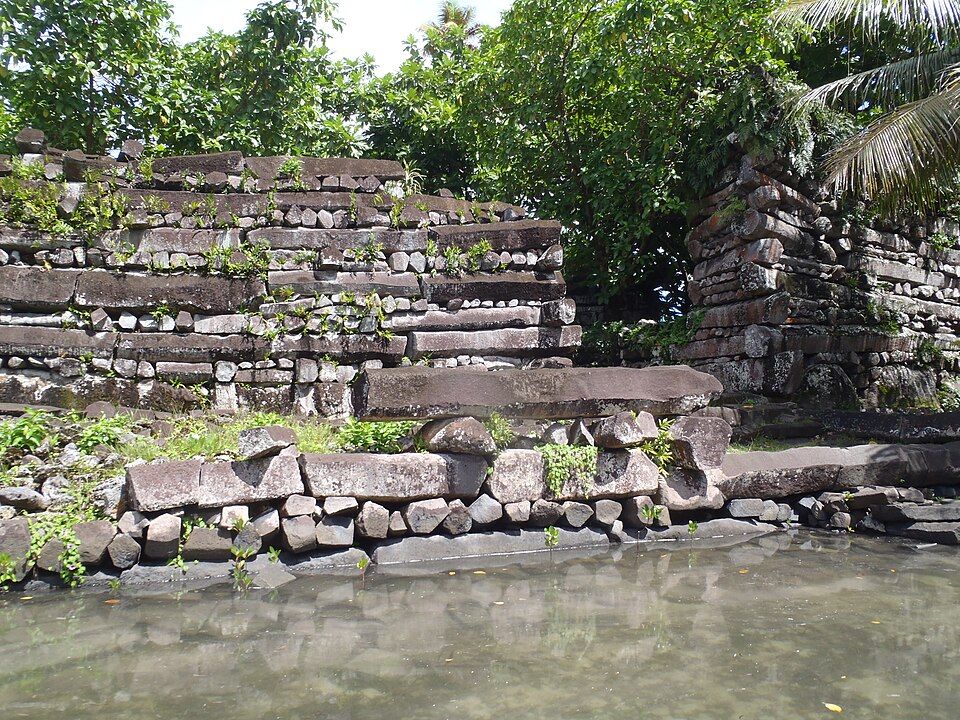
- The museum as colonial instrument: Museums were not neutral spaces of education. They were repositories of colonial power. By acquiring Pacific objects through trade, theft, or military conquest and displaying them in Western institutions, museums made a claim: that Western institutions have the authority to define and interpret world cultures. The museum label, not the Pacific Islander community, became the official source of meaning.
- Display strategies that reinforce hierarchy: Postcolonial analysis reveals how seemingly innocent curatorial choices embed colonial ideology. Displaying a Pacific carving in a dimly lit room with dramatic lighting, isolated on a pedestal, tells the viewer: “This is an exotic rarity, separated from normal reality.” Displaying it in a crowded case labeled “Ethnography” tells a different story: “This is a specimen for study, not a sophisticated artwork.” The choice of label—”Tribal art,” “Primitive art,” “Ethnographic objects”—subtly subordinates Pacific traditions to Western art.
- The problem of attribution and authorship: Western museum labels often omit the names and identities of Pacific artists, reducing centuries of sophisticated tradition to anonymous “tribal production.” By contrast, European paintings are displayed with artist names, biographical information, and analysis of individual genius. This anonymity itself is a form of subordination.
- Challenging Western periodization: Pacific art histories don’t fit Western chronological frameworks. Western art history divides time by “periods” (Renaissance, Baroque, Modern)—but these reflect European history, not Pacific history. Postcolonial scholars argue that imposing Western periodization onto Pacific traditions is itself a form of cultural domination.
On the AP exam, you might see a question asking you to evaluate a museum’s display of Pacific objects or to identify problematic assumptions in an art historical interpretation. The postcolonial framework gives you tools to recognize these problems: ask whether the interpretation centers Western authority, strips objects from context, or denies Pacific peoples agency in creating and interpreting their own traditions.
Indigenous Knowledge Systems and Insider Interpretation
A central move in contemporary Pacific art history is recognizing that Pacific Islanders themselves—artists, community leaders, scholars—are the primary interpreters of their own traditions. This represents a fundamental shift from the museum model where Western experts held exclusive interpretive authority.
- Insider vs. outsider knowledge: Pacific artists and communities possess “insider” knowledge that no outsider can fully access: the oral traditions that explain why a figure is carved a particular way, the spiritual beliefs embedded in formal choices, the social meanings of materials and techniques, the way an object functioned in actual use. A Western scholar studying a Maori meeting house can observe and describe its architectural features, but only Maori people know the genealogical narratives encoded in its carvings and the spiritual protocols for entering it safely. Legitimate interpretation requires collaboration with and deference to insider knowledge.
- Oral tradition as interpretive framework: Pacific traditions are fundamentally oral. Knowledge is encoded in chants, stories, and performances rather than written texts. When a Western scholar approaches a Pacific artifact with text-based analysis, they’re already operating in a foreign interpretive mode. Contemporary scholarship increasingly recognizes that to understand Pacific art, you must understand Pacific oral traditions—how stories explain visual forms, how genealogies structure meaning, how ritual performance activates objects.
- Living knowledge vs. archaeological knowledge: Pacific traditions are not “dead” history. Many communities continue carving, weaving, and performing in continuity with ancient traditions. Contemporary Pacific artists are not antiquarians recreating the past—they are living practitioners updating traditions for the present. This means interpretation must account for both historical objects and contemporary practice, and it must grant contemporary artists interpretive authority over their own traditions.
This shift has practical consequences. Museums are increasingly hiring Pacific Islander curators, repatriating objects to source communities, and collaborating with cultural practitioners on how objects should be displayed and interpreted. These changes aren’t just ethical—they produce better scholarship by incorporating knowledge that outsiders cannot access.
“Living Art” and Objects with Spiritual Power
A concept that challenges Western art historical categories is the idea of “living art”—objects that retain spiritual power and function rather than serving purely as museum pieces or historical records. This concept is particularly important for understanding Pacific traditions, where many objects are understood to embody ancestors, spirits, or sacred power.
- Objects as entities, not representations: In Western art history, an object usually represents something (a portrait represents a person; a landscape represents a place). But in many Pacific traditions, an object is something—it houses spiritual power, embodies an ancestor, or functions as a conduit for sacred forces. A moai doesn’t represent an ancestor; it is understood to contain the ancestor’s mana (spiritual power). A Hawaiian ahu ula (feathered cloak) doesn’t merely display status—it embodies the wearer’s genealogical connection to the gods. This ontological difference (what an object fundamentally “is”) goes far beyond representation.
- Function in ritual and spiritual life: Many Pacific objects continue to function in ceremony, ritual, and spiritual practice. A shield is not just a museum piece displaying warrior culture—it might be used in actual performance or ritual. A mask is not simply an artifact showing belief in spirits—it may be worn to actually call forth or represent a spirit being. The object’s meaning and power are inseparable from use. Removing it to a museum case deactivates its primary function.
- Controversy over display and stewardship: This raises an ethical question: Should a living sacred object be displayed in a museum at all? If an object’s power depends on ritual activation and community stewardship, does displaying it in a glass case—where it cannot be touched, used, or properly cared for according to cultural protocols—fundamentally damage it? Some Pacific communities have requested that sacred objects be removed from museum display or that museums allow restricted access and ritual use. These are not just preservation debates—they’re debates about what it means to be a responsible caretaker of another culture’s sacred property.
For the exam, understand that the Western framework of “art as aesthetic object for viewing” doesn’t fit all Pacific traditions. Some objects are better understood as active, functional entities with spiritual power rather than passive artworks awaiting interpretation.
Repatriation Debates: Whose Property, Whose Interpretation?
The question of who owns Pacific art—and who has the right to interpret and display it—has moved from academic debate to legal and political reality. Repatriation cases have become high-profile conflicts between Western museums and Pacific communities seeking the return of ancestral objects.
- The moai controversy: Easter Island’s moai (monumental stone figures) were carved by Rapa Nui people over centuries. In the late 19th and early 20th centuries, European and American collectors looted or purchased moai and shipped them to museums worldwide. Today, major museums house Easter Island moai—the British Museum and others. Rapa Nui has requested repatriation, arguing that moai are sacred ancestors and community property, not museum specimens. Museums have resisted, citing universal access to world heritage and claiming that moai are safer in climate-controlled institutions. This conflict reveals the tension between two views: moai as communal sacred property (belonging to their source community) vs. moai as world heritage (belonging in major museums for global access).
- Aboriginal sacred objects: Australian Aboriginal communities have successfully reclaimed some sacred objects from Western museums. Sacred objects used in initiation rituals, burial ceremonies, or other restricted contexts should not be on display; only initiated community members should access them. Museums and collectors kept these objects visible to all viewers, violating Aboriginal law and spiritual protocols. Repatriation allows these objects to return to appropriate stewardship and restricted access.
- The underlying principle: Repatriation arguments center on the idea that Pacific and Indigenous peoples have superior claims to their own cultural property than Western museums do. This reverses the long-standing assumption that museums are the rightful caretakers of world art. Repatriation asks: Why should a British museum decide how an Easter Island moai is interpreted and displayed, rather than Rapa Nui people themselves?
- Practical complications: Repatriation raises questions that have no simple answers. If a moai is repatriated, will it be better preserved (communities may lack climate control and technical conservation)? Will access be restricted (museum visits allow global audiences; repatriation might limit viewing)? Which community has rightful claim (the place of origin, the nation-state, diaspora communities)? These practical concerns don’t invalidate the principle of repatriation, but they complicate implementation.
On the AP exam, repatriation cases illustrate broader themes about interpretive authority, colonial history, and the ethics of collection and display. A question might ask you to evaluate arguments for and against repatriating a particular object, or to recognize how debates about repatriation reflect different assumptions about who owns history.
Oral Tradition and Interpretation: How Stories Shape Visual Meaning
To interpret Pacific art fully, you must understand that visual forms are inseparable from oral narrative. In cultures without written text, stories told and retold across generations encode knowledge in language and performance. Pacific artists often create visual forms to accompany, represent, or embody these oral traditions.
- Visual forms as mnemonic devices: In oral cultures, visual objects function as memory aids. A carved genealogical board doesn’t just display information—it triggers recitation of genealogical chants that connect people to ancestors and gods. A pattern woven into a cloth serves as a visual record of stories and relationships. Understanding these objects requires knowing the stories they prompt, which means the interpreter must have access to oral traditions.
- Stories embedded in form: Maori artists carve genealogical narratives into meeting house posts and panels. Each figure represents a person or ancestor, and the arrangement of figures tells genealogical and historical relationships. To interpret these carvings, you must understand Maori genealogy and narrative structure. A Western viewer seeing only formal arrangement misses the entire interpretive layer of meaning.
- Performance and oral activation: Some objects gain meaning only when activated through performance. A musical instrument is not merely a sculptural form—it’s an object that produces sound and is understood through the songs it plays. A mask is not a static sculpture—it’s activated through dancing and performance, where the story it represents is literally enacted. Interpretation that treats these as static museum objects strips away their most essential function.
- The problem of translation: When oral stories are translated into Western languages and writing systems, they change. Details get simplified, nuances get lost, and the translator’s interpretive choices shape the story. A fully “faithful” interpretation of Pacific visual traditions may be impossible for outsiders precisely because the oral knowledge embedded in them is inaccessible outside the community that holds it.
For the exam, recognize that interpreting Pacific art requires engaging with narrative and storytelling as central to artistic meaning, not as peripheral context. The visual form and the oral tradition are unified; analyzing one without the other produces incomplete interpretation.
Contemporary Pacific Islander Scholarship and Decolonizing Art History
Since the 1990s, Pacific Islander scholars have produced sophisticated art historical work that centers Pacific perspectives and interpretive frameworks. This scholarship represents both a reclamation of interpretive authority and a fundamental rethinking of how art history itself should be practiced.
- Reclaiming the narrative: Pacific Islander scholars write Pacific art history not from the perspective of curious Europeans encountering the exotic, but from the perspective of Pacific peoples navigating, adopting, adapting, and resisting European contact. They treat Pacific artists as active agents making sophisticated choices, not passive bearers of tradition. This shifts the interpretive authority decisively away from Western museums and into the hands of people from the cultures being studied.
- Interrogating Western categories: Contemporary Pacific scholarship questions whether Western art historical categories (“primitive,” “traditional,” “fine art” vs. “craft”) apply at all to Pacific traditions. It asks: Why should a Western definition of “art” determine how we analyze Pacific visual culture? What is lost when we force Pacific traditions into Western frameworks? This critique doesn’t just fault Western scholars—it reimagines the entire project of art historical interpretation.
- Emphasizing continuity and innovation: Earlier interpretations often treated Pacific traditions as static, unchanging “traditional” forms. Contemporary scholarship shows Pacific artists constantly innovating, adapting, and reinterpreting traditions in response to historical change. A Samoan tapa (bark cloth) maker in 2024 is not recreating an “ancient” form—she is practicing a living tradition that has evolved through centuries. This framing treats Pacific artists as creative agents, not as keepers of museum pieces.
- Collaborative and community-engaged scholarship: Increasingly, art historical work on Pacific traditions is conducted in collaboration with source communities, with community members as co-authors and decision-makers. This represents a fundamental shift in how knowledge is produced—not Western experts studying Pacific cultures, but Pacific peoples and Western scholars working together.
This scholarship matters for your exam preparation because it models how to recognize and challenge interpretive bias, and it shows what rigorous, ethical interpretation of Pacific art looks like.
Problems with Applying Western Art Historical Categories
A recurring theme in this topic is the danger of forcing Pacific traditions into Western art historical frameworks. Let’s be explicit about specific problems.
| Western Category | How It Distorts Pacific Art | More Accurate Approach |
|---|---|---|
| “Artist” as individual creative genius | Western art history privileges individual named artists and their personal styles. But many Pacific traditions are communal, with knowledge passed down through families or guilds, and authorship often intentionally unmarked. Forcing the “genius” model onto traditions where community and continuity matter more is a category error. | Recognize that in many Pacific traditions, the artist’s contribution is valued for how skillfully they execute inherited forms, not for how much they depart from tradition. The continuity itself is the achievement. |
| “Art for art’s sake” (aesthetic autonomy) | Western modernism treats art as valuable for its formal/aesthetic properties independent of function. But Pacific objects are typically functional—tools, ritual objects, architectural elements. Isolating them from function and displaying them as “pure art” fundamentally misrepresents them. | Understand that form and function are unified in Pacific traditions. The beauty of an object and its utility are not separate values; aesthetic excellence and functional effectiveness are the same achievement. |
| The “masterwork” canon | Western art history builds canons of masterpieces—objects judged to be universally excellent and worthy of study. But this canon-building process is itself colonial, as it asserts that Western experts can judge which Pacific objects are worthy. It also distorts interpretation by removing canonical objects from context and overemphasizing them while ignoring less famous work. | Treat all well-made traditional objects as worthy of serious interpretation, not just those deemed “masterpieces” by Western curators. Recognize that importance and meaning are defined within traditions, not by external judgment. |
| Evolution and “progress” narratives | Western art history often frames history as evolutionary—earlier forms are primitive, later forms are more sophisticated. Applied to Pacific traditions, this frame is patronizing and inaccurate. Sophisticated artistic traditions existed in the Pacific for millennia before contact; “progress” is a narrative imposed from outside. | Understand Pacific art histories as complex, adaptive, and non-linear. Change is not evolution toward European forms; it is innovation within traditions. |
The deeper point is this: applying Western categories to Pacific art isn’t a small technical error—it’s a form of interpretive colonialism. It asserts that Western frameworks are universal and that Pacific traditions should be understood through them. Rigorous interpretation requires consciously resisting these frameworks and asking whether they serve or distort understanding.
Test-Taking Strategies
Mnemonic Devices and Memory Shortcuts
For organizing the major interpretive frameworks in your mind, remember PELIO:
- Postcolonial critique (challenge museum authority)
- Ethnographic approach (cultural context)
- Living art (objects with spiritual power)
- Indigenous knowledge (insider interpretation)
- Oral tradition (stories as interpretive framework)
For the major repatriation cases: MERC (Moai, Easter Island, Resistance by European museums, Community claims)
When confronted with an interpretation of a Pacific object, ask: FAD (Frame, Authority, Decontextualization)—What interpretive frame is being used? Who has authority to interpret? Has the object been separated from its original context in problematic ways?
Cross-Topic Connections
This topic connects to three major themes throughout the AP® Art History curriculum:
- Colonial encounter and cultural power: Topic 9.3 exemplifies how colonialism shaped not just political and economic systems but also how we interpret and value art. Compare to Unit 5 (Indigenous Americas), Unit 6 (African art), and Unit 7 (Islamic art)—all show how Western interpretation has distorted non-Western traditions. Understanding postcolonial critique in one unit helps you recognize these patterns everywhere.
- Authenticity and meaning-making: Connected to Unit 8 (Asian) and Unit 10 (Modern Global)—how do we determine what an object “means”? In contemporary art, artists deliberately play with meaning; in traditional art, meaning is embedded in function and community knowledge. This topic teaches you to question who determines meaning and why interpretations change.
- Function vs. aesthetics: Appears repeatedly in Islamic architecture, African masks, and indigenous American art. Understanding that Pacific traditions unify form and function helps you interpret other traditions that do the same.
Common Question Formats
Expect these types of questions:
- Museum display critiques: “A museum displays Easter Island moai in a dimly lit room on individual pedestals with labels identifying them only by provenance. What interpretive problems does this display create?” (Answer: removes cultural context, treats objects as exotic specimens, denies Pacific interpretation, creates a frame of aesthetic contemplation inappropriate for sacred objects.)
- Interpretive framework evaluation: “Which interpretation best accounts for the social meaning of this Maori genealogical carving?” The correct answer will reference oral tradition, genealogy, and community meaning—not purely formal analysis or ethnographic documentation.
- Repatriation ethics: “Evaluate arguments for and against repatriating Aboriginal sacred objects from Western museums to source communities.” This requires understanding both sides but recognizing that indigenous community claims typically have stronger ethical foundation.
- Identifying bias: You might see a museum label or scholarly description with problematic framing (calling objects “primitive,” denying artist identity, using ethnographic tone). The question asks you to identify and explain what’s wrong.
- Oral tradition interpretation: A question might provide a Pacific oral narrative and a visual object, asking you to explain how the narrative shapes interpretation of the visual form.
Frequent Student Mistakes
Mistake 1: Separating form from function. Treating a Pacific canoe prow as pure sculpture, analyzing its formal properties without considering that it functions to protect the canoe and represent identity. Correction: Always ask what the object did or does. Aesthetic value and functional excellence are unified in Pacific traditions.
Mistake 2: Using ethnographic tone uncritically. Writing “The Maori believe that genealogy determines status” is fine; writing “The Maori primitively based their social system on genealogy” treats the tradition as less sophisticated than it is. Correction: Describe traditions respectfully and on their own terms, not as survivals of earlier stages that Europeans have progressed beyond.
Mistake 3: Assuming Western museum interpretation is objective. Treating museum labels as neutral fact rather than interpretive choices shaped by specific frameworks and power dynamics. Correction: Always ask: Who created this interpretation? What framework are they using? What are they emphasizing or omitting?
Mistake 4: Denying contemporary agency to Pacific traditions. Treating Pacific art as “traditional” and unchanging, so that contemporary Pacific artists making new work are either “abandoning tradition” or “recreating the past.” Correction: Recognize that traditions are living and evolving. Contemporary artists are legitimate practitioners, not antiquarians.
Test-Day Shortcuts
- When analyzing an interpretation: Spend 30 seconds asking: Is this frame centering Western authority? Is it stripping the object from context? Is it recognizing indigenous agency? These quick questions often reveal whether an interpretation is rigorous or problematic.
- When comparing interpretive approaches: Aesthetic-only analysis is too thin; purely ethnographic analysis risks reducing art to documentation; the best interpretation integrates both while centering insider knowledge. Any answer that does this is likely correct.
- On repatriation questions: Museums almost always argue for “universal access” and “preservation”; source communities argue for cultural property and spiritual stewardship. The exam typically expects you to recognize and explain both arguments, not to rank them ethically.
- Identifying bias: Watch for: “primitive,” anonymous attribution, exotic framing (dimly lit, isolated display), denial of function, use of Western artist frameworks. These are red flags for problematic interpretation.
Time Management Tips
- Questions on this topic are rarely pure identification. They typically require you to evaluate interpretations or analyze display choices. Budget time to think about why something is problematic, not just what it is.
- If a question provides an image and a museum interpretation, spend half your time analyzing the image itself and half evaluating the interpretation. Don’t assume the label is correct.
- On longer questions, organize your answer into: (1) What interpretation is being used, (2) What assumptions does it make, (3) What does it illuminate, (4) What does it miss or distort? This structure works for almost any question on this topic.
- If you’re unsure of a specific repatriation case, use the general principle: indigenous communities have primary claims to their cultural property and interpretive authority over their traditions. This gets you most of the way to correct answers.
Check for Understanding
Think you’ve got it? Complete the quiz below to make sure. Download your results at the end.