
Maximize your score with these resources:
- Albert.io AP® Art History question banks
- Free AP® Art History cheat sheets
- Free AP® Art History score calculator
Understanding how scholars interpret prehistoric art is essential for AP® Art History. The challenge: we have no written records, no artist statements, no contemporary accounts. What we have are objects, images, and contexts. This gap between evidence and interpretation makes prehistoric art one of the most theoretically contested subjects in art history. Topic 1.3 focuses on the theories and interpretations scholars have used to understand prehistoric art (Learning Objective THR-1.A), and the AP exam tests your ability to recognize how different theoretical frameworks shape our understanding of the same artworks.
This article covers the major interpretive theories, how they apply to specific prehistoric artworks, their strengths and limitations, and how archaeological context informs interpretation. By mastering these frameworks, you’ll understand why prehistoric art means different things to different scholars—and why that complexity matters on test day.
The Hunting Magic Theory and Early Interpretation
For much of the 20th century, the dominant interpretation of Paleolithic cave paintings centered on a single functional explanation: hunting magic theory. This theory proposes that cave paintings, especially animal depictions, were created as magical rituals designed to ensure successful hunts. Scholars argued that by painting or engraving animals on cave walls, prehistoric hunters believed they could magically influence the actual hunt through sympathetic magic.
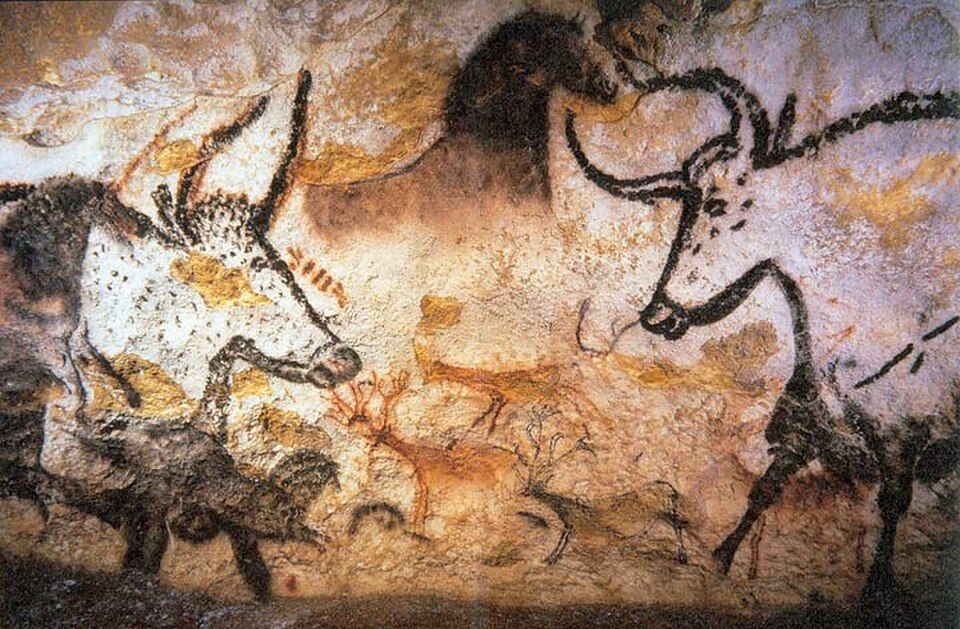
The appeal of hunting magic theory was its parsimony: it offered a simple, rational explanation for a complex phenomenon. Applied to sites like Chauvet Cave, with its dense concentration of animal imagery, or Altamira, with its dramatic bison paintings, the theory provided a functional narrative. Prehistoric people made art to eat. Done.
- Evidence supporting the theory: Animals dominate Paleolithic cave art. Handprints are less common. Some paintings show spears or weapons near animals. At Chauvet and other French caves, dangerous predators (lions, hyenas, bears) appear frequently—animals that wouldn’t have been hunted, which complicates the theory but can be explained as power-gaining or protection magic.
- Where it breaks down: Not all cave art shows animals or hunting scenes. Many caves contain abstract signs, hand stencils, and geometric patterns with no obvious hunting connection. If the primary function was hunting magic, why spend enormous effort creating hand stencils deep in caves where no hunt took place? Why are some animals depicted in caves found in regions where that animal was rare or absent? Hunting magic theory explains some art but struggles to account for the full complexity of what we find.
Why this matters for interpretation: Hunting magic theory demonstrates how powerful a single functional framework can be. It answers the fundamental question—”Why did they make this art?”—with an answer that made sense to 20th-century scholars. But the theory also shows the danger of retrofitting one explanation onto diverse evidence. Modern interpretation doesn’t abandon hunting magic theory; it sits it alongside other frameworks that explain different pieces of the same archaeological record.
Shamanism, Trance States, and the Lewis-Williams Hypothesis
In the 1990s, archaeologist David Lewis-Williams proposed a radical reinterpretation of Paleolithic cave art centered on shamanism and altered states of consciousness. Rather than viewing cave paintings as functional hunting magic, Lewis-Williams argued that much prehistoric art depicted shamanic visions experienced during trance states. His approach drew on neuropsychology, ethnographic parallels with contemporary shamanic cultures, and a close reading of the images themselves.
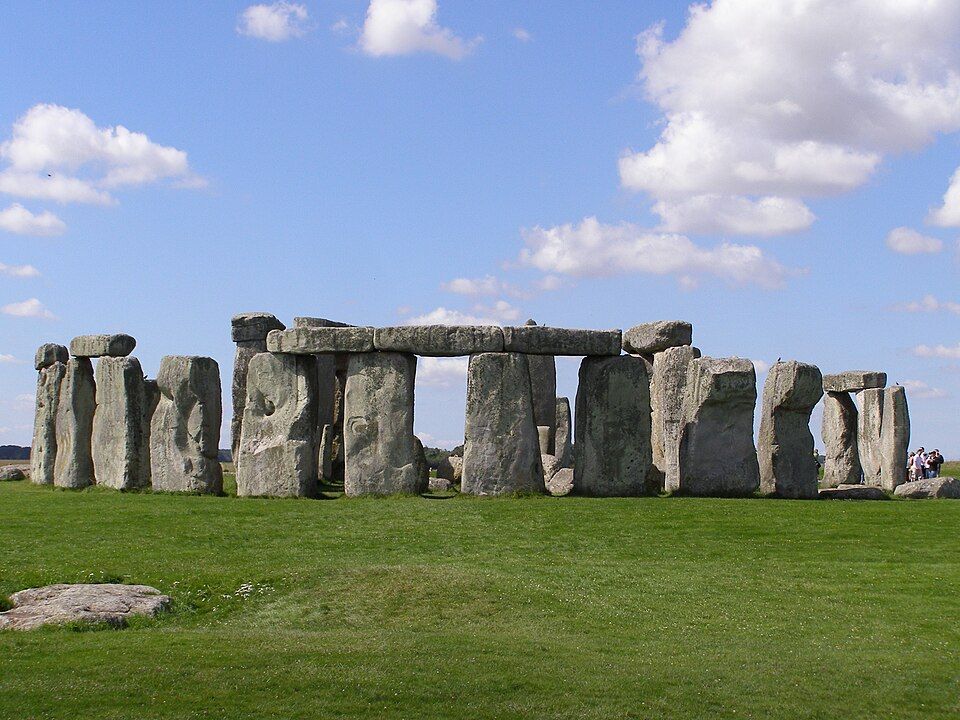
The Lewis-Williams hypothesis begins with neuropsychology: when humans enter trance states—through rhythmic drumming, sensory deprivation, hyperventilation, or drugs—the visual cortex fires in predictable patterns, generating characteristic visual phenomena. People see geometric forms (grids, zigzags, dots, spirals), then shifting tunnel visions, then complex hallucinations. Lewis-Williams argued that Paleolithic artists, who were likely shamans, were depicting these neurologically universal experiences on cave walls.
- Evidence supporting the hypothesis: Paleolithic art contains abundant abstract geometric signs—grids, dots, lines, spirals—exactly the visual phenomena produced during trance states. Many animals in cave paintings appear distorted, superimposed, or positioned strangely, as if depicting hallucinated rather than observed forms. Caves themselves are dark, enclosed, and acoustically complex—ideal environments for inducing altered states through drumming or chanting. At sites like El Castillo in Spain, hand stencils occur at specific depths in caves, suggesting ritual use rather than casual marking.
- Ethnographic parallels: Lewis-Williams drew on studies of San (Bushmen) rock art in southern Africa and shamanic practices in Siberia and Mesoamerica, where shamans are known to depict their spiritual experiences. If trance-based art-making is a cross-cultural phenomenon, it becomes plausible that Paleolithic shamans did the same.
- Limitations: The hypothesis relies on assumed similarities between Paleolithic and modern shamanic cultures across tens of thousands of years and vastly different environments. It privileges shamanism over other possible religious or social structures. The theory explains abstract imagery and distorted animals well but is harder pressed to explain purely naturalistic, anatomically accurate animal paintings in caves like Chauvet, where clarity rather than distortion dominates.
Why this matters: The Lewis-Williams hypothesis shifted interpretation from function (magic for hunting) to psychology and spirituality (shamanic experience). This opened new questions: What was the cognitive and spiritual life of Paleolithic humans? How did they experience altered states? What was the relationship between image-making and ritual? The hypothesis also shows how a theoretical framework can be tested against multiple types of evidence simultaneously—neuropsychology, ethnography, archaeological context, formal analysis of the images themselves.
Structuralism, Meaning-Making, and Symbolic Interpretation
Structuralism is an interpretive approach that looks for underlying systems of meaning in art and culture. Rather than assuming art has a single function (hunting magic) or depicts a single content (shamanic visions), structuralism asks: What binary oppositions and symbolic systems organize how prehistoric people understood their world? How did they encode meaning through art?
Applied to prehistoric art, structuralist interpretation focuses on patterned contrasts: male/female, dangerous/safe, human/animal, inside/outside, culture/nature. For example, some caves contain both hand stencils and animal paintings. A structuralist might argue that the hand represents human culture and identity, while animals represent the wild, and the cave itself becomes a space where these oppositions meet and interact. The placement, juxtaposition, and style of images encode meaning through relationship, not through the content of individual images alone.
- Application to Paleolithic Venus figurines: Structuralists interpret the exaggerated breasts and hips of Paleolithic Venus figurines not as sexualized objects (a common misreading) but as symbols of fertility, female power, and cosmic creative force. The female body, in this reading, is not an object of desire but a fundamental symbol of generation and continuity—a structuring principle in how Paleolithic people understood reproduction and social order.
- Strengths: Structuralism moves beyond simplistic functional readings and opens interpretation to symbolic complexity. It acknowledges that prehistoric people had sophisticated systems of meaning-making, not just survival strategies. It explains why abstract symbols matter as much as representational imagery.
- Weaknesses: Structuralism can become over-interpretive. Without written records or ethnographic data, how do we know which binary oppositions mattered to Paleolithic people? Different structuralist scholars can impose different symbolic systems on the same evidence, leading to competing interpretations that are hard to test empirically.
Fertility Cults, Gender, and Social Interpretation
A cluster of interpretations treats Paleolithic art as evidence of female-centered fertility religions. These readings emerged partly in reaction to male-dominated scholarship and partly from the prominence of female figurines in the archaeological record. Scholars like Marija Gimbutas proposed that Paleolithic and Neolithic societies were organized around fertility cults honoring a mother goddess or Earth goddess. Art—especially female figurines, cave paintings with animal imagery tied to reproduction, and abstract symbols representing water, seeds, or the womb—reflected this religious system.
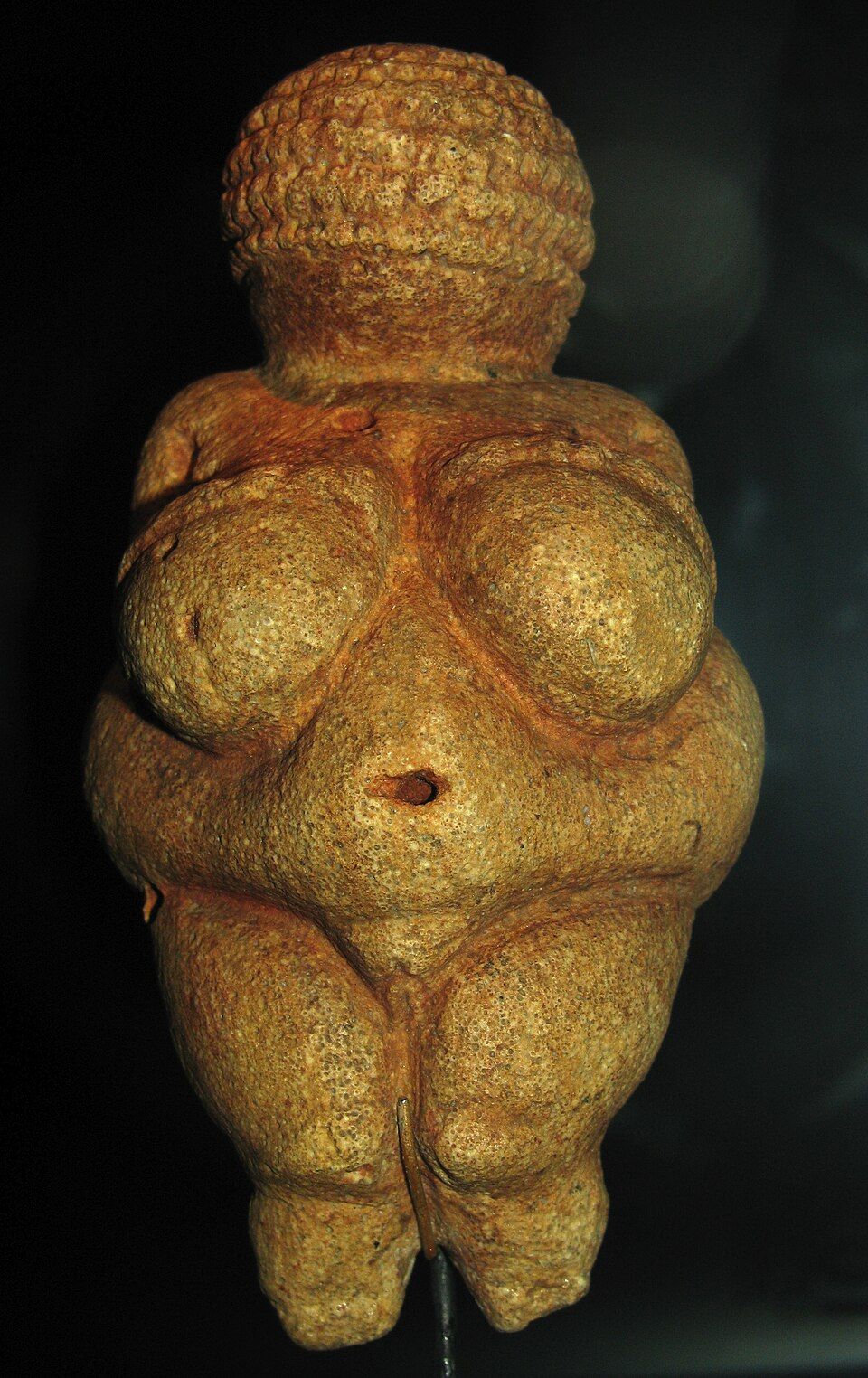
This interpretation emphasizes that Paleolithic women likely held significant social power, as shamans, artists, or ritual specialists. Women’s roles in reproduction gave them authority over fertility magic and religious knowledge. The prominence of female imagery in portable art and the association of caves with earth and womb-like spaces supported this reading.
- Evidence cited: The frequency of Venus figurines across Eurasia. The relative rarity of clearly male imagery. The placement of animals associated with fertility and abundance in caves. The geometric symbols that scholars argued represented female reproductive anatomy or cosmic cycles.
- Strengths: This interpretation centers female agency and power in Paleolithic societies, correcting a long tradition of male-focused interpretation. It opens the possibility that Paleolithic religion was fundamentally different from later patriarchal religions.
- Controversies: Modern gender archaeology has questioned whether Venus figurines really represent goddesses or whether we’re projecting modern feminist ideals onto ambiguous evidence. Some figurines may represent individual women, ancestors, or spirits unrelated to fertility. The “Paleolithic goddess” narrative, while culturally powerful, may simplify a more diverse religious landscape. Contemporary scholarship is more cautious about assuming gender from archaeology alone.
Social Cohesion and Ritualized Art
Recent interpreters emphasize that making art in caves was a social and ritualistic practice, not merely functional or spiritual. Creating hand stencils, painting animals, and etching lines required coordination, planning, knowledge of materials and techniques, and repeated visits to caves. These activities reinforced group identity, transmitted knowledge, and created communal spaces of meaning.
From this perspective, the content of the art matters less than its role in holding communities together. Hand stencils might be signatures—evidence of individual identity and participation in a shared ritual. Painting a bison might have been a rite of passage. The repetition of motifs across sites and centuries suggests cultural continuity and shared symbolic systems among geographically dispersed groups.
- Key evidence: The consistency of hand stencil and animal motifs across Paleolithic Eurasia despite vast geographic and temporal separation. The presence of multiple hand stencils in single caves, suggesting repeated group participation. The inaccessible locations of some painted caves, suggesting exclusive or ceremonial use. The layering of images over time, indicating that caves were pilgrimage sites visited across generations.
- Why it matters: This interpretation treats Paleolithic people as members of complex societies with shared beliefs, rituals, and cultural systems—not isolated groups responding to immediate survival needs. It emphasizes continuity, transmission of knowledge, and the social function of art in creating and maintaining community.
Archaeological Context and the Limits of Interpretation
Every interpretation of prehistoric art is constrained by evidence we do and do not have. Understanding these limitations is crucial for AP® Art History because it explains why scholars disagree and why a single artwork can support multiple interpretations.
| Type of Evidence | What We Know | What We’re Missing | Impact on Interpretation |
|---|---|---|---|
| Written records | None from Paleolithic period | No artist statements, no contemporary commentary, no recorded meanings | We cannot ask artists why they made something or what it meant. We interpret based on speculation and cross-cultural analogy. |
| Archaeological context | Locations of caves, artifact associations, carbon dating of pigments, evidence of repeated use | Unclear ritual or functional context. We don’t know if a hand stencil marked a sacred moment or casual marking. | We can establish when art was made and with what materials, but not why or what it meant to makers and viewers. |
| Material analysis | Pigment composition, tool marks, hand impressions, firing techniques | Makers’ intentions, cultural meanings of specific colors or techniques | We can identify how art was made but struggle to connect technique to meaning without ethnographic or textual evidence. |
| Comparative ethnography | How contemporary or recent hunter-gatherer and shamanic cultures create and use art | Direct continuity between Paleolithic and modern practices; differences across 40,000 years obscure similarities | We can propose plausible interpretations based on ethnographic parallels, but these are analogies, not proof. |
The core problem: Prehistoric art exists in a context of profound silence. We have objects and images but no voices explaining them. Every interpretation—hunting magic, shamanism, fertility religion, social ritual—is constructed by modern scholars using frameworks available to us: functionalism, psychology, structuralism, gender studies, ritual theory. These frameworks tell us something true about human behavior, but they also limit what we can see in the evidence. A scholar committed to shamanism might see trance imagery where another scholar sees purely spiritual narratives unrelated to altered consciousness. A structuralist might find encoded symbolic oppositions where a functionalist sees only hunting strategies.
This doesn’t mean interpretation is merely subjective or that all theories are equally valid. Strong interpretations must account for as much of the evidence as possible, avoid contradictions, acknowledge what they cannot explain, and remain open to revision. Weak interpretations ignore inconvenient evidence, over-generalize from limited examples, or project modern assumptions onto the past without justification.
Test-Taking Strategies
Mnemonic Devices and Memory Shortcuts
Remember the four major interpretive camps with SHFS: Shamanism (Lewis-Williams), Hunting magic, Fertility religion, Social cohesion. Each offers a different answer to “Why did they make this art?”—for spiritual experience, for hunting success, for religious practice, for community identity. When you see a question about interpretation, ask yourself which framework is being tested.
For Venus figurines specifically, remember the interpretive journey: early scholars called them “fertility symbols” or “Venus figures” (projecting modern sexuality onto the past), feminist scholars reinterpreted them as evidence of goddess religion or female power, and contemporary archaeologists treat them as diverse objects with possibly multiple meanings—not all fertility-related. This shows how interpretation evolves and why newer scholarship doesn’t simply replace older views but complicates them.
Cross-Topic Connections
Prehistoric art interpretation connects to multiple later topics. Recognize these connections on test day: Topic 1.2 (Characteristics of Prehistoric Art) covers the formal features you analyzed (hand stencils, animal imagery, geometric signs) and these become evidence for testing different theories. Unit 6 (Africa, 1100-1980 CE) shows later art inviting similar interpretive questions. Big Idea 1 (Cultures, Beliefs, and Behaviors) is fundamental—archaeological context determines interpretation.
Common Question Formats
The AP exam tests prehistoric art interpretation in recognizable patterns: “Which theory best explains…?” presents a cave painting or figurine and asks which interpretive framework—hunting magic, shamanism, fertility religion, or social ritual—best accounts for it. “Why do scholars disagree about the meaning of…?” acknowledges that a single artwork has been interpreted multiple ways. “What evidence supports…?” asks you to marshal evidence for each framework. Stimulus-based interpretation shows you a cave painting and asks what it suggests about Paleolithic beliefs, society, or spiritual life. The answer depends on which theory you apply, so know how to marshal evidence for each framework.
Frequent Student Mistakes
Mistake 1: Assuming one interpretation is “correct” and others are “wrong.” Prehistoric art interpretation is genuinely contested. Hunting magic, shamanism, fertility religion, and social ritual all explain some evidence. The exam tests your ability to recognize which theory fits which evidence, not to declare one theory the official truth. If a question asks which theory “best explains” something, you must choose the strongest fit—but acknowledge that other interpretations have merit.
Mistake 2: Projecting modern values onto prehistoric people. Old scholarship sometimes treated Venus figurines as evidence that Paleolithic people were preoccupied with sexuality and fertility in ways that match modern assumptions. Contemporary scholarship questions this projection. Be careful not to assume that modern categories (sexuality, gender, religion) map directly onto Paleolithic materials without evidence.
Mistake 3: Confusing “we don’t know” with “it must mean X.” Because we lack written records, we cannot definitively know what prehistoric art meant. This absence of evidence is not evidence of absence—it’s evidence of genuine interpretive limits. The strongest answers acknowledge these limits while still making well-supported interpretive claims.
Test-Day Shortcuts
When you encounter a question about prehistoric art interpretation, quickly ask yourself these questions in order:
- What artifact or image am I interpreting? (Hand stencil? Animal painting? Figurine? Abstract sign?)
- Which theory is most relevant? (Hunting magic applies best to hunting scenes; shamanism to abstract/distorted imagery; fertility religion to Venus figurines; social ritual to repeated motifs and cave use patterns.)
- What evidence supports this theory? (Neuropsychology supports shamanism; frequency of animals supports hunting magic; prominence of female imagery supports fertility religion; layered images support social ritual.)
- What evidence challenges this theory? (Every theory has limits—know them so you can acknowledge complexity.)
This structured approach takes 30 seconds per question and prevents you from choosing an answer that’s technically correct but fails to address the nuance of the question.
Time Management Tips
Prehistoric art interpretation questions are typically medium-difficulty multiple-choice or short-answer prompts. They’re not as technically demanding as later art history topics but require careful reasoning. Budget under a minute per MCQ (80 questions in 60 minutes) and 7-10 minutes per short-answer response. Don’t rush—the key is distinguishing between theories and matching them to evidence, which requires careful reading. If a question asks you to compare two theories or interpretations, make sure your answer explicitly addresses both before concluding which fits better. This precision separates good answers from great ones.
Check for Understanding
Think you’ve got it? Complete the quiz below to make sure. Download your results at the end.