

Maximize your score with these resources:
- Albert.io AP® US History question banks
- Free AP® US History cheat sheets
- Free AP® US History score calculator
What We Review
The Constitutional Convention: AP® US History Review
The Constitutional Convention of 1787 was not meant to write a new constitution—the delegates were officially tasked with revising the Articles of Confederation. What actually happened was a quiet revolution. Over four months in Philadelphia, fifty-five delegates scrapped the Articles entirely and created a federal system with three branches of government, separated powers, and mechanisms for collective action. Understanding the Convention is essential for the AP exam because the document it produced became the framework for American government and the foundation for all constitutional debates that followed.
The Context: Why the Convention Was Called
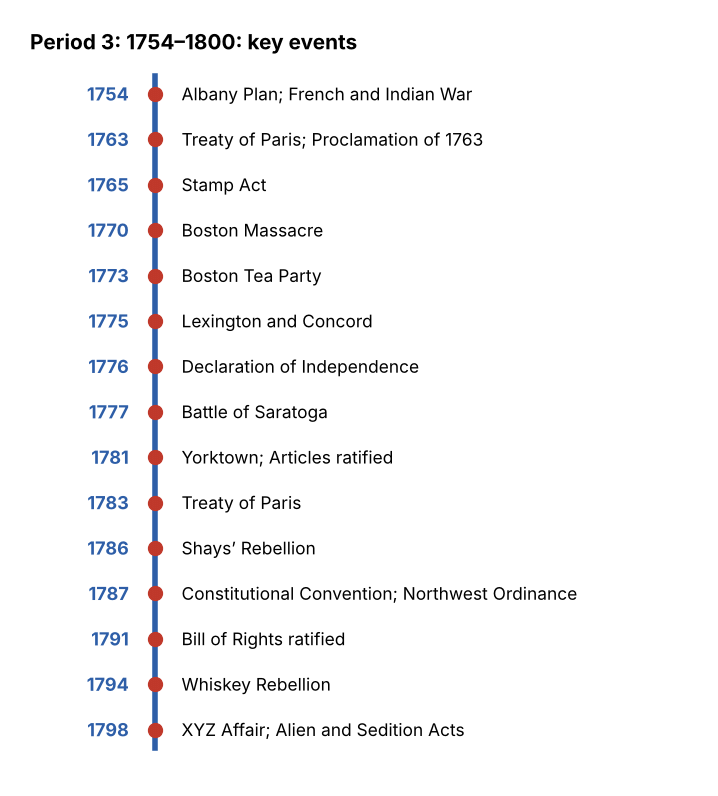
By 1786, the Articles of Confederation had proven catastrophically inadequate. Interstate trade wars, financial chaos, and Shays’ Rebellion demonstrated that the federal government could neither function internally nor command respect abroad. The Annapolis Convention (1786) failed to produce results, but it prompted Alexander Hamilton and James Madison to call for a broader meeting to address the crisis.
The Delegates: Who Came to Philadelphia
Fifty-five delegates attended from twelve states (Rhode Island, dominated by debtors opposed to reform, boycotted). They were not a cross-section of American society—nearly all were wealthy merchants, planters, lawyers, or landowners. Key figures included:
- James Madison — “Father of the Constitution,” he came with a detailed plan (the Virginia Plan) and took extensive notes of the debates.
- George Washington — Lent legitimacy to the Convention by his presence; his support for a stronger executive was crucial.
- Benjamin Franklin — At 81, the elder statesman who helped broker compromises between competing interests.
- Roger Sherman — Connecticut delegate who helped craft the Great Compromise.
The Virginia Plan vs. the New Jersey Plan
| Feature | Virginia Plan | New Jersey Plan |
|---|---|---|
| Legislature | Bicameral; both chambers based on population | Unicameral; one vote per state (like the Articles) |
| Federal power | Strong national government replacing confederation | Strengthened confederation; states retain most power |
| Executive | Chosen by legislature | Chosen by legislature; slightly stronger than Articles |
| Key sponsor | James Madison (Virginia) | William Paterson (New Jersey) |
The Great Compromise and Three-Fifths Compromise
The Great Compromise (Connecticut Compromise) resolved the large vs. small state deadlock:
- House of Representatives: Representation based on population (favors large states)
- Senate: Two senators per state regardless of population (favors small states)
- All revenue bills must originate in the House
The Three-Fifths Compromise resolved the slavery and representation conflict. Enslaved people would be counted as 3/5 of a person for both representation and tax apportionment. This was not a neutral technical fix—it gave southern slaveholders disproportionate power in the House of Representatives and Electoral College, directly enabling southern domination of federal government for the next seventy years.
Key Convention Decisions
| Issue | Problem | Solution | AP Exam Significance |
|---|---|---|---|
| Representation in Congress | Large vs. small states | Great Compromise (bicameral legislature) | Most important compromise; shows Founders’ deliberative process |
| Counting enslaved people | Southern states wanted representation without taxation obligations | Three-Fifths Compromise | Empowered slavery interests; influenced U.S. politics for 70 years |
| Presidential election | How to select executive fairly? | Electoral College | Complex system combining federalism and representation |
| Interstate commerce | States warring over trade | Congress gets power to regulate interstate and foreign commerce | Commerce Clause became most expansive federal power |
The Final Document: Ratification and Reception
On September 17, 1787, the Convention signed the completed Constitution. Federalists (Hamilton, Madison) argued that the Constitution created a necessary stronger government while protecting liberty through separated powers and federalism. Anti-Federalists (Patrick Henry, George Mason) feared a powerful national government would recreate the tyranny colonists had just escaped.
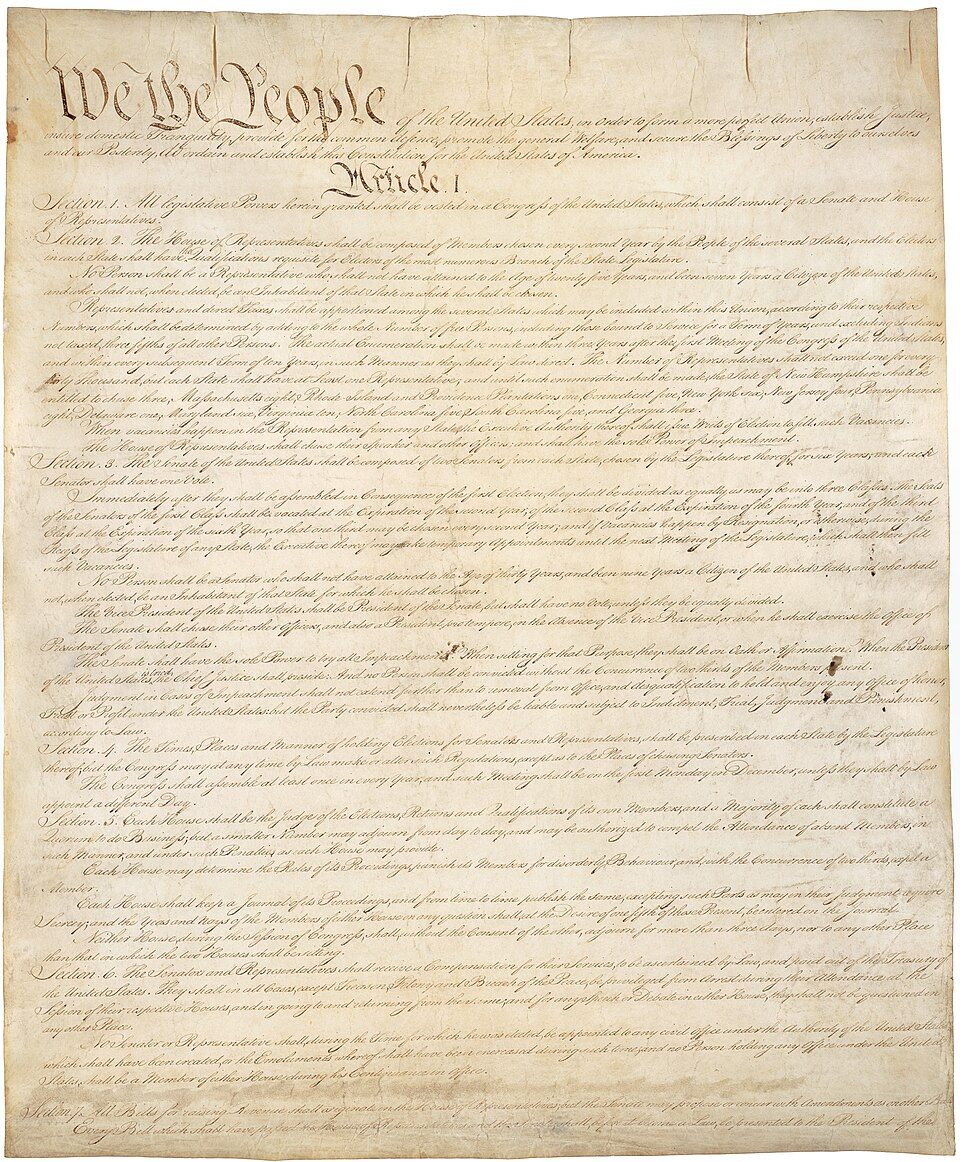
The Constitution was ratified in 1788. The Bill of Rights (1791) addressed Anti-Federalist concerns by explicitly protecting individual liberties.
Quick Reference Vocabulary Chart
| Term | Definition | AP Exam Significance |
|---|---|---|
| Virginia Plan | Madison’s proposal for strong federal system with bicameral legislature based on population | Blueprint for the Constitution’s basic structure |
| New Jersey Plan | Small-state proposal to preserve confederation with modest federal power | Represents alternative vision; highlights the central tension at Convention |
| Great Compromise | Bicameral legislature: House by population, Senate with two per state | Most important and frequently tested compromise at Convention |
| Three-Fifths Compromise | Enslaved people counted as 3/5 of a person for representation and taxation | Empowered slavery; lasted until Civil War; increasingly emphasized in AP exams |
| Electoral College | System for electing President through state-based electors | Complex compromise; still controversial; frequently tested |
| Federalism | Division of power between national and state governments | Core concept of Constitution; tested across all periods |
| Separation of Powers | Division of government into three co-equal branches with checks and balances | Fundamental to Constitution’s structure; applies Enlightenment theory |
Test-Taking Strategies
Mnemonic: CHIEF for Major Compromises
- C = Connecticut (Great Compromise)
- H = House representation (based on population)
- I = Interstate commerce (federal power)
- E = Electoral College
- F = Federalism (dividing power)
Cross-topic connections the AP exam tests:
- Convention → Federalist vs. Anti-Federalist debate: The ratification debates continued the tension between federal power and state sovereignty that defined the Convention.
- Convention → Marbury v. Madison: The Supreme Court’s power of judicial review was implied by the Constitution but established by this case. Understanding the Convention helps explain why the Founders didn’t explicitly address it.
- Three-Fifths Compromise → Missouri Compromise → Civil War: Slavery’s constitutional status, rooted in the Convention, drove all subsequent sectional crises.
Common question formats:
- Stimulus-based MCQs: Read excerpts from Convention debates or from Federalist/Anti-Federalist writings. Identify which group or which compromise the source reflects.
- SAQs: “Explain how the Great Compromise addressed concerns of both large and small states” or “Describe the impact of the Three-Fifths Compromise on federal representation.”
- LEQs: “Evaluate the extent to which the Constitutional Convention successfully balanced the need for federal power with the protection of individual liberty.” Organize around key compromises and their outcomes.
Frequent student mistakes:
- Treating the Convention as if it was meant to write a new constitution. Delegates were officially tasked with revising the Articles—understanding that they went beyond their mandate is important for understanding the controversy over ratification.
- Underestimating the importance of the Three-Fifths Compromise. This gave slaveholders vastly disproportionate power. The AP increasingly emphasizes this.
- Confusing the Great Compromise with the Three-Fifths Compromise. The Great Compromise was about representation structure; the Three-Fifths Compromise was about counting slaves for representation purposes.
Test-day shortcuts:
- If a question asks what the Convention created → Answer involves three elements: a bicameral legislature (Great Compromise), a President, and a Supreme Court.
- If a question mentions the Convention and slavery → Think Three-Fifths Compromise and its impact on southern political power.
- If a question mentions the Electoral College → Explain it as a compromise between popular election and state-based selection, with the Three-Fifths Compromise influencing its design.
Time management: For essays comparing the Articles to the Constitution, allocate time to explain the problem each compromise solved and why both sides accepted it. For MCQs about specific compromises, differentiate: Great Compromise = representation structure; Three-Fifths = counting slaves; Electoral College = presidential selection.