
Maximize your score with these resources:
- Albert.io AP® US History question banks
- Free AP® US History cheat sheets
- Free AP® US History score calculator
In August 1969, about 400,000 young people gathered on a dairy farm in upstate New York for three days of music at Woodstock. Five years earlier, students at the University of California, Berkeley, had shut down their campus to protest limits on political speech. In between, millions of young Americans grew their hair long, marched against the war, and questioned nearly every rule their parents had followed. Topic 8.12 covers the youth culture of the 1960s: the New Left, the counterculture, and the reactions they provoked.
This article covers Topic 8.12: Youth Culture of the 1960s in Period 8, 1945 to 1980. The topic asks you to explain how young people in the 1960s challenged political and cultural norms, and how their activism and lifestyle choices affected American society.
By the end, you should be able to:
- Explain why the baby boom generation challenged authority.
- Describe the goals of the New Left.
- Describe the counterculture and its values.
- Explain the backlash against 1960s youth culture.

What We Review
Why the Young Rebelled
- Numbers: The baby boom produced an unusually large generation. By 1970, about 8 million Americans were in college, roughly double the number in 1960.
- Affluence: Growing up in prosperity let many young people question material success rather than chase it.
- Civil rights: Many students learned activism through the Freedom Rides and Freedom Summer.
- Vietnam and the draft: The war gave young men a direct personal stake in government decisions.
- 1950s influences: The Beats, rock and roll, and critics of conformity had already questioned mainstream values.
The New Left
The New Left was a political movement of mostly college students who wanted to make American democracy more participatory and challenge powerful institutions.
| Group or Event | Year | Significance |
|---|---|---|
| Students for a Democratic Society (SDS) | 1960 | The leading New Left organization |
| Port Huron Statement | 1962 | SDS manifesto calling for “participatory democracy” and criticizing racism, Cold War militarism, and alienation |
| Free Speech Movement | 1964 | Berkeley students protested campus limits on political activity |
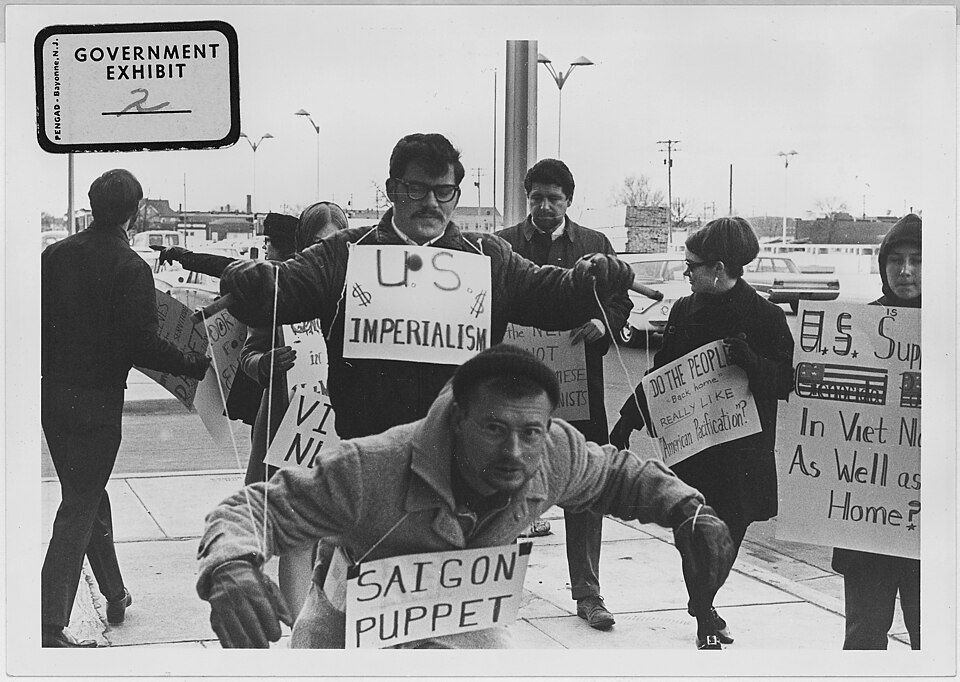
| Antiwar protests | 1965 onward | Teach-ins, marches, and draft resistance against the Vietnam War |
| Columbia University occupation | 1968 | Students seized buildings to protest the war and university expansion into Harlem |
By the late 1960s, the New Left fractured. Some members turned to radical and even violent groups like the Weather Underground, while others moved into mainstream politics.
The Counterculture
The counterculture focused less on changing laws and more on changing how people lived. Its followers, often called “hippies,” rejected what they saw as the materialism, conformity, and hypocrisy of mainstream society.
- Values: Peace, personal freedom, community, and authenticity.
- Music: Rock music by artists like Bob Dylan, the Beatles, Jimi Hendrix, and Janis Joplin carried political and personal messages. Woodstock in 1969 became its defining event.
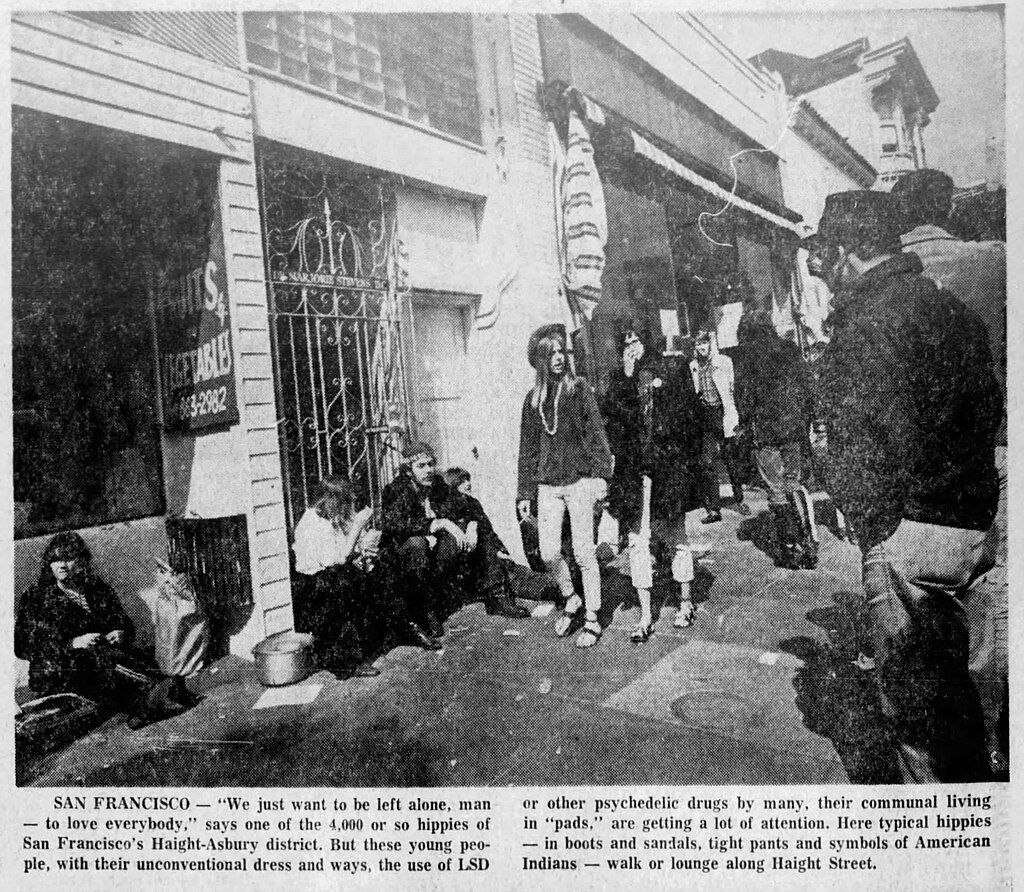
- Lifestyles: Some young people moved to communes or to neighborhoods like San Francisco’s Haight-Ashbury, especially during the “Summer of Love” in 1967.
- Drugs: Marijuana and LSD use spread. Timothy Leary urged young people to “turn on, tune in, drop out.”
- Sexual revolution: The birth control pill, approved in 1960, contributed to changing attitudes about sex and relationships.
- Spirituality and environment: Interest grew in Eastern religions and in living closer to nature.
New Left vs. Counterculture
| Feature | New Left | Counterculture |
|---|---|---|
| Focus | Political change | Cultural and personal change |
| Methods | Protests, organizing, sit-ins | Alternative lifestyles, music, communes |
| Attitude toward institutions | Reform or confront them | Withdraw from them |
| Key symbol | The Port Huron Statement | Woodstock |
The Backlash
Many Americans, including many young people, rejected the counterculture.
- Older and working-class Americans often saw protesters as unpatriotic and privileged.
- Violence at the 1968 Democratic National Convention and the Altamont concert in 1969 damaged the movement’s image.
- Richard Nixon won the presidency in 1968 by appealing to “law and order” and later to the “silent majority.”
- Young conservatives organized too. Young Americans for Freedom, founded in 1960, supported Barry Goldwater and laid groundwork for the New Right.
Why does this matter? 1960s youth culture changed American attitudes toward authority, sex, music, and the environment, and some of those changes lasted. It also provoked a conservative reaction that shaped politics for decades. On essays, show both sides by pairing the New Left or counterculture with the backlash it created.
Test-Taking Strategies
Mnemonic Devices and Memory Shortcuts
- “Port Huron for politics, Woodstock for lifestyle.” The two wings of 1960s youth culture.
- “Participatory democracy.” The New Left’s core idea.
- “Turn on, tune in, drop out.” The counterculture’s slogan of withdrawal.
Cross-Topic Connections
- Topic 8.5: 1950s critics and the Beats laid the groundwork.
- Topic 8.8: The Vietnam War fueled the antiwar movement.
- Topic 8.13: Counterculture values fed the environmental movement.
- Topic 7.7: The youth culture of the 1920s offers a comparison. See our review of the Roaring Twenties.
Common Question Formats
- Stimulus MCQ. An excerpt from the Port Huron Statement, and you identify its goals.
- Comparison SAQ. You compare the New Left and the counterculture.
- Causation SAQ. You explain one cause of student activism in the 1960s.
- LEQ. You evaluate the extent to which 1960s youth changed American culture.
Frequent Student Mistakes
- Treating all young people as radicals. Many supported the war or joined conservative groups.
- Merging the New Left and counterculture. They overlapped but had different focuses.
- Ignoring the backlash. Nixon’s victories show the limits of youth influence.
- Placing Woodstock too early. It took place in 1969.
Test-Day Shortcuts
- Spot “participatory democracy.” It points to SDS and Port Huron.
- Use college enrollment. Doubling numbers show why youth had new influence.
- Link to the 26th Amendment. Youth activism helped lower the voting age in 1971.
Time Management Tips
- Multiple choice: Section IA has 55 questions in 55 minutes, about 1 minute each. Cultural sources often test point of view, so note the creator’s age or group.
- Short answer: Section IB has 3 required questions in 40 minutes, roughly 13 minutes each. Use one named group or event per part.
- Essays: The DBQ gets 60 minutes, including a 15-minute reading period, and the single required LEQ gets 40 minutes. A thesis that weighs change against backlash is strongest.
Check for Understanding
Think you’ve got it? Complete the quiz below to make sure. Download your results at the end.