
Maximize your score with these resources:
- Albert.io AP® Human Geography question banks
- Free AP® Human Geography cheat sheets
- Free AP® Human Geography score calculator
Some people move because they want a better job, a new climate, or a place closer to family. Others move because staying would mean persecution, war, or death. That difference, whether a person chose to leave, is the dividing line between voluntary and forced migration. The AP® Human Geography exam expects you to name the specific types on each side, use precise terms like refugee and internally displaced person correctly, and match real examples to each type.
This article covers Topic 2.11: Forced and Voluntary Migration in Unit 2, Population and Migration Patterns and Processes. The topic asks you to describe the types of forced and voluntary migration, from slavery and refugee flows to chain, step, guest worker, and rural-to-urban migration.
By the end, you should be able to:
- Distinguish refugees, internally displaced persons, and asylum seekers.
- Explain slavery as a form of forced migration and its lasting geographic effects.
- Define seven types of voluntary migration and give an example of each.
- Classify a migration scenario correctly on a multiple-choice or free-response question.
Forced Migration
Forced migration happens when people are compelled to move by violence, persecution, disaster, or coercion. They have little or no real choice. According to the United Nations refugee agency, the number of forcibly displaced people worldwide has passed 100 million, the highest level on record.
Slavery
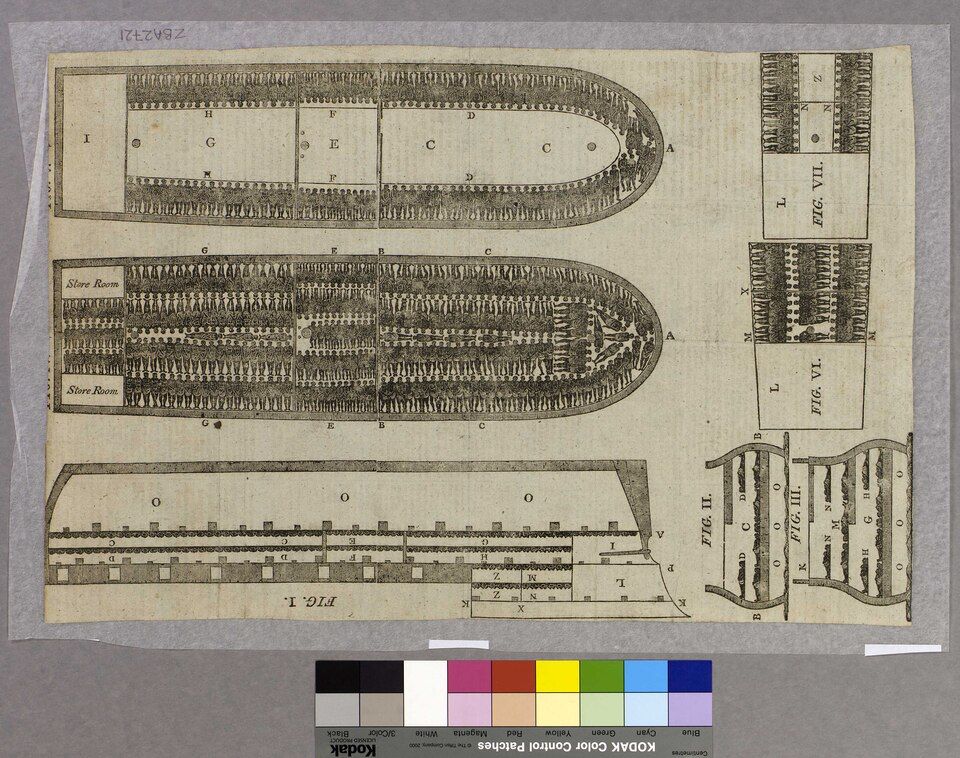
The largest forced migration in history was the transatlantic slave trade. Between the 1500s and the 1800s, roughly 12 million Africans were forced onto ships bound for the Americas, and more than a million died during the Middle Passage. Most were taken to Brazil and the Caribbean to work on sugar plantations. The trade reshaped the population, culture, and economy of the Americas. Today, the descendants of enslaved Africans form large shares of the population in Brazil, the Caribbean, and the United States, and African influences run through music, religion, and food across the hemisphere.
Forced labor hasn’t disappeared. Human trafficking moves people across borders into forced labor and exploitation today, and it’s a form of forced migration too.
Refugees, Internally Displaced Persons, and Asylum Seekers
The exam tests these three terms constantly, and the differences are precise.
| Term | Definition | Example |
|---|---|---|
| Refugee | A person who has crossed an international border to escape persecution or conflict and can’t safely return. | Millions of Syrians fled to Turkey, Lebanon, and Jordan after civil war began in 2011. |
| Internally displaced person (IDP) | A person forced from home who remains inside their own country. | Millions of Sudanese were displaced within Sudan after fighting broke out in 2023. |
| Asylum seeker | A person who has fled and applied for protection in another country but hasn’t yet received a decision. | Migrants from Central America who request asylum at the U.S. border. |
The legal definition of a refugee comes from the 1951 Refugee Convention. It covers people with a well-founded fear of persecution because of their race, religion, nationality, political opinion, or membership in a particular social group. Countries that sign the convention agree not to send refugees back to a place where they face serious threats.
Why does this matter? The key question is whether the person crossed an international border. An IDP faces the same dangers as a refugee but doesn’t receive the same international legal protections, because they haven’t left their country. If an exam question describes people fleeing violence to another region of the same country, the answer is IDP, not refugee.
People are also displaced by environmental disasters, like hurricanes, droughts, and rising seas. They’re often called environmental refugees or climate migrants, though international law doesn’t formally recognize them as refugees.
Voluntary Migration
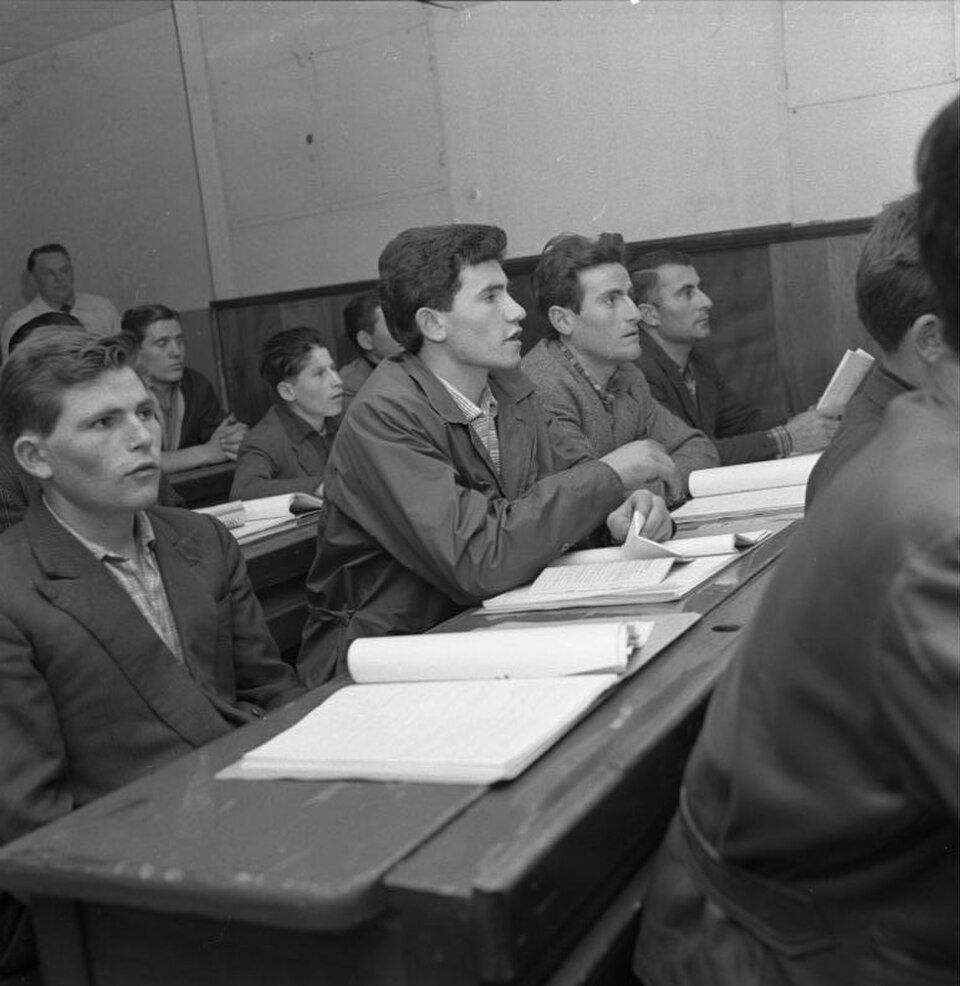


Voluntary migration happens when people choose to move, usually for economic opportunity, family, education, or quality of life. The push and pull factors from Topic 2.10 explain why. See our review of the causes of migration. The exam expects you to know seven types.
| Type | What It Is | Example |
|---|---|---|
| Internal | Movement within one country. | The Great Migration of about 6 million Black Americans from the rural South to Northern and Western cities, 1910 to 1970. |
| Rural-to-urban | Movement from the countryside to cities, usually for jobs. | Hundreds of millions of Chinese workers moved from farming villages to coastal factory cities after the 1980s. |
| Chain | Migrants follow family members or neighbors who moved before them. | Immigrants from the same Italian village settling on the same blocks in New York. |
| Step | Movement in stages, from a village to a town to a large city. | A worker moves from a Nigerian village to a regional town, then later to Lagos. |
| Guest worker | Temporary, legal migration to fill labor shortages. | Turkish workers recruited to West Germany starting in 1961; South Asian workers in the Persian Gulf states today. |
| Transnational | Migrants maintain strong ties to both their home and host countries. | Mexican immigrants in the U.S. who send remittances and travel home regularly. |
| Transhumance | Seasonal movement of herders and livestock between pastures. | Herders moving flocks to high Alpine meadows in summer and back to valleys in winter. |
Two of these deserve extra attention because students often confuse them.
- Chain migration is about who you follow. It builds ethnic neighborhoods, because newcomers settle near relatives and friends who can help them find housing and work.
- Step migration is about how you get there. It happens in stages, with each move to a larger or more distant place. Geographers also note intervening opportunities: a migrant headed for a big city may stop along the way if they find work in a closer town.
The United States had its own guest worker program. From 1942 to 1964, the Bracero Program brought millions of Mexican workers to American farms on temporary contracts. Guest worker programs assume workers will go home, but many settle permanently, which is one reason these programs remain politically contentious.
When the Line Blurs
Real migration doesn’t always fit neatly into “forced” or “voluntary.” A farmer who leaves after years of failed harvests from drought made a choice, but it wasn’t much of one. Economic collapse, gang violence, and climate stress all push people in ways that fall between the two categories.
Migration also changes form over a person’s life. Someone may arrive as a refugee, become a permanent resident, and then sponsor relatives in a chain migration. A guest worker may become a transnational migrant who lives in two countries. On the exam, choose the category that best fits the situation described in the stimulus, and use the stimulus’s own details to justify your choice.
Test-Taking Strategies
Mnemonic Devices and Memory Shortcuts
- “Refugees cross, IDPs stay.” Refugees cross an international border. Internally displaced persons stay inside their country.
- “Asylum is asking.” An asylum seeker has asked for protection but hasn’t been approved yet.
- “Chain follows people, step follows places.” Chain migration follows family and friends. Step migration moves through a series of places.
- “Trans + humus = across the ground.” Transhumance comes from Latin words meaning “across” and “ground.” Herders move their animals across the land with the seasons.
Cross-Topic Connections
- Topic 2.10: Push and pull factors, and Ravenstein’s laws of migration, explain why each type of migration happens.
- Topic 2.12: Every type here has political, economic, and cultural effects on sending and receiving places. See our review of the effects of migration.
- Topic 3.5: The slave trade and colonial labor systems spread languages, religions, and foods across the world.
- Topic 6.2 and 6.10: Rural-to-urban migration drives urbanization and the growth of informal settlements in developing countries.
Common Question Formats
- Classification MCQ. A scenario describes a migrant’s journey, and you identify the type: chain, step, guest worker, refugee, or IDP.
- Map-based MCQ. A flow map shows refugees moving from one country to its neighbors, with questions about why neighboring countries receive the most.
- FRQ with a stimulus. A chart shows refugee numbers by country of origin. You describe the pattern and explain a cause, such as civil war.
- No-stimulus FRQ. You define a type of voluntary migration and explain its effect on the receiving country.
Frequent Student Mistakes
- Calling IDPs refugees. If people haven’t crossed an international border, they’re IDPs.
- Calling all immigrants refugees. Most international migrants move voluntarily for work or family. Refugee status requires fleeing persecution or conflict.
- Confusing chain and step migration. Chain is about following people; step is about moving through places in stages.
- Forgetting transhumance. It’s a type of voluntary migration that appears on the exam even though it doesn’t involve moving permanently.
Test-Day Shortcuts
- Ask two questions. Did the person choose to move? Did they cross an international border? Those answers sort most migration questions.
- Look for “temporary” or “contract.” These words point to guest workers.
- Look for “relatives” or “followed.” These words point to chain migration.
Time Management Tips
- Multiple choice: Classification questions should take under 45 seconds once you know the terms. Map-based questions take longer, so read the legend first.
- Free response: Budget about 25 minutes per FRQ. When asked to describe a type of migration, give the definition and one real example in two sentences.
- Be precise with terms. Writing “internally displaced persons” instead of “refugees” when the stimulus describes movement within a country is the difference between earning and losing a point.
Check for Understanding
Think you’ve got it? Complete the quiz below to make sure. Download your results at the end.