
Maximize your score with these resources:
- Albert.io AP® Human Geography question banks
- Free AP® Human Geography cheat sheets
- Free AP® Human Geography score calculator
Migration changes two places at once. The place people leave loses workers, gains money sent home, and sometimes sees whole villages empty out. The place they arrive gains labor and new cultures, and often faces political fights over who belongs. The AP® Human Geography exam asks you to explain these effects at different scales, using both historical and contemporary examples, and it expects you to consider sending and receiving places separately.
This article covers Topic 2.12: Effects of Migration in Unit 2, Population and Migration Patterns and Processes. The topic asks you to explain the political, economic, and cultural effects of migration, past and present.
By the end, you should be able to:
- Explain the economic effects of migration, including remittances and brain drain.
- Describe how migration shapes immigration policy and politics in receiving countries.
- Explain the cultural effects of migration, from ethnic neighborhoods to the diffusion of food and language.
- Compare effects on sending countries with effects on receiving countries.
Economic Effects
Remittances
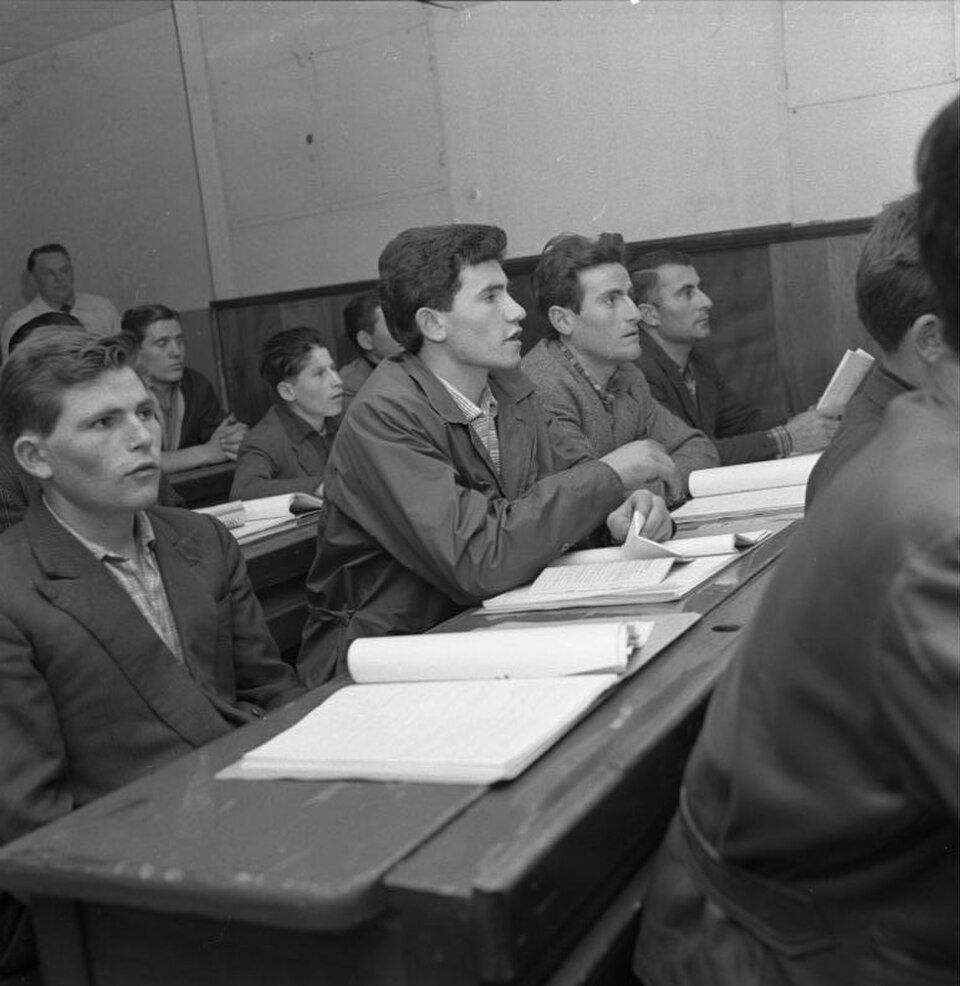
Remittances are money migrants send back to family in their home country. They’re one of the largest financial flows in the world. Migrants send hundreds of billions of dollars a year to low- and middle-income countries, more than those countries receive in foreign aid. India receives more remittances than any other country, and Mexico and the Philippines are also among the largest recipients.
In some smaller economies, remittances equal a quarter or more of the country’s entire economic output. That money pays for food, school fees, medical care, and new houses, and it can lift families out of poverty. It also creates dependence. When the economy of the host country slows, remittances fall, and families back home feel it immediately.
Brain Drain and Brain Gain
Brain drain is the emigration of highly educated and skilled workers. When doctors, engineers, and nurses leave a developing country for higher pay abroad, the sending country loses the return on its investment in their education. Many African countries, for example, have trained doctors who now practice in the United Kingdom or the United States. For the receiving country, the same move is a brain gain: skilled workers arrive already trained.
Some sending countries have embraced labor export as a strategy. The Philippines trains large numbers of nurses and other workers partly with overseas employment in mind, and remittances from overseas Filipino workers are a major part of its economy.
Labor in Receiving Countries
Receiving countries gain workers, often in jobs that are hard to fill. Countries with aging populations and low birth rates, like Germany and Japan, rely increasingly on immigrant labor to staff hospitals, factories, and elder care. In the Persian Gulf states, foreign workers make up the majority of the labor force. Debates about whether immigrants raise or lower wages for native-born workers are common, but the demand for labor in these countries is clear.
| Effect | On the Sending Country | On the Receiving Country |
|---|---|---|
| Money | Gains remittances that support families and local economies. | Loses some income to remittances but gains taxes and spending from workers. |
| Skills | May suffer brain drain. | Gains trained workers (brain gain). |
| Population | Loses young adults, leaving older and more female populations in some villages. | Gains young workers, which can offset an aging population. |
Political Effects
Migration is one of the most contested political issues in many countries. Governments decide who may enter, how many, and on what terms.
- Immigration policy. The United States shows how policy responds to migration. The Immigration Act of 1924 set national quotas that sharply limited arrivals from Southern and Eastern Europe and banned most Asian immigration. The Immigration and Nationality Act of 1965 ended the national-origins quotas, and immigration from Latin America and Asia grew sharply afterward.
- Refugee crises. In 2015, more than a million asylum seekers, many fleeing war in Syria, Afghanistan, and Iraq, arrived in Europe. Germany accepted large numbers, while some countries closed borders. The crisis strained cooperation within the European Union.
- Nationalism and backlash. Large-scale immigration has fueled support for anti-immigration parties in several European countries. Concerns about migration were a major theme in the United Kingdom’s 2016 vote to leave the European Union.
- Refugee camps and host countries. Most refugees live in countries next to the one they fled. Camps like Zaatari in Jordan and Kakuma in Kenya have housed tens of thousands of people for years, putting pressure on host governments and local resources.
Why does this matter? Political effects often decide what happens next. A country that tightens immigration law changes future flows, and a country that welcomes refugees reshapes its own population. When an FRQ asks for a political effect, describe a specific policy, election, or government response, not a general statement that “people disagree.”
Cultural Effects


Migrants carry their languages, religions, foods, and customs with them. Over time, those traditions change the cultural landscape of receiving places and are changed by it.
- Ethnic neighborhoods. Chain migration builds ethnic enclaves such as Chinatowns, Little Italys, and Little Havana in Miami. They offer newcomers familiar language, food, and support networks. Their shops, signs, and places of worship leave a visible mark on the landscape.
- Diffusion of culture. Tacos, pho, and curry are now common across the United States because of migration. Spanish is the second most spoken language in the country. Relocation diffusion, the spread of culture through the movement of people, explains these patterns.
- Acculturation and assimilation. Over generations, many immigrant families adopt the language and customs of the host society, a process that can range from partial acculturation to full assimilation. Others maintain distinct identities in a multicultural society. These processes are covered in more depth in our review of the effects of diffusion.
- Tension and conflict. Cultural change can produce friction. Xenophobia, the fear or dislike of foreigners, has led to discrimination and sometimes violence against immigrant communities.
Historical and Contemporary Examples
| Migration | Major Effect |
|---|---|
| Transatlantic slave trade (1500s to 1800s) | Created large African-descended populations in the Americas and spread African music, religion, and foodways across the hemisphere. |
| European migration to the U.S. (1880 to 1920) | Built immigrant neighborhoods in industrial cities and led to the restrictive quotas of the 1920s. |
| The Great Migration (1910 to 1970) | Transformed the population and politics of Northern cities and spread blues and jazz nationwide. |
| Syrian refugee crisis (2011 onward) | Strained neighboring countries like Lebanon and Jordan and reshaped European politics. |
Test-Taking Strategies
Mnemonic Devices and Memory Shortcuts
- “PEC” for effects. Political, Economic, Cultural. The CED groups migration’s effects into these three categories, so organize your FRQ answers the same way.
- “Money goes home, brains go abroad.” Remittances flow back to sending countries, while skilled workers flow out.
- “Both ends change.” Every migration affects the sending place and the receiving place. Check which one the question asks about.
Cross-Topic Connections
- Topic 2.11: The type of migration shapes its effects. Refugee flows affect host countries differently than guest worker programs. See our review of forced and voluntary migration.
- Topic 2.9: Immigration can offset population aging in countries with low birth rates. See our review of aging populations.
- Topic 3.8: Acculturation, assimilation, and multiculturalism are cultural effects of migration and diffusion.
- Topic 7.3: Remittances are part of how geographers measure and explain development.
Common Question Formats
- Data-based MCQ. A chart shows remittances as a share of GDP for several countries, and you explain what high dependence on remittances means for an economy.
- Scenario MCQ. A description of doctors leaving a country for higher salaries abroad asks you to identify brain drain.
- FRQ with a stimulus. A photo of an ethnic neighborhood or a map of immigrant populations asks you to explain a cultural effect of migration.
- No-stimulus FRQ. You explain one economic and one political effect of migration on a receiving country.
Frequent Student Mistakes
- Describing only the receiving country. Many questions ask about sending countries. Remittances, brain drain, and population loss are sending-country effects.
- Treating effects as all positive or all negative. Remittances help families but create dependence. Immigration fills labor shortages but can fuel political conflict. The best answers acknowledge both.
- Confusing acculturation and assimilation. Acculturation means adopting some traits of another culture while keeping your own. Assimilation means fully blending into the dominant culture.
- Leaving out specific examples. “Migration causes cultural change” is too vague. Name an enclave, a policy, or a country.
Test-Day Shortcuts
- Identify the scale. Effects look different at the household, community, national, and global scales. Naming the scale sharpens your answer.
- Match the effect category to the prompt. If the prompt says “political effect,” don’t describe remittances. Stick to the category asked.
- Use cause-and-effect language. “Because many young men emigrated, the village’s population became older and more female” shows the reasoning graders look for.
Time Management Tips
- Multiple choice: With 60 minutes for 60 questions, give data-based questions a little extra time by answering definition questions quickly.
- Free response: Budget about 25 minutes per FRQ. For “explain an effect” parts, write two sentences: the effect, then why it happens.
- Keep a few examples ready. Remittances to India or the Philippines, the 2015 European refugee crisis, and U.S. ethnic enclaves cover most effects questions. Having them ready saves thinking time.
Check for Understanding
Think you’ve got it? Complete the quiz below to make sure. Download your results at the end.