

Maximize your score with these resources:
- Albert.io AP® Human Geography question banks
- Free AP® Human Geography cheat sheets
- Free AP® Human Geography score calculator
Culture shapes every aspect of human life. The foods you eat, the languages you speak, the holidays you celebrate, and the values you hold all reflect your culture. For the AP® Human Geography exam, understanding culture is foundational. Culture explains why human societies differ and how those differences persist despite globalization.
Defining Culture
Culture is the shared beliefs, values, practices, and material items that a group of people have in common. It includes everything from religion and language to food, music, art, and architecture. Culture is learned, not inherited genetically. You acquire culture through socialization within your family, community, and society.

Culture is shared. Individual preferences alone don’t constitute culture. A culture requires that multiple people hold similar beliefs or participate in similar practices. When millions of Americans celebrate Thanksgiving or millions of Chinese celebrate Lunar New Year, those shared practices reflect culture.
Culture is dynamic. It changes over time and varies across space. The culture of medieval Europe differed dramatically from modern Europe. The culture of Tokyo differs from rural Japan.
Material vs. Nonmaterial Culture
Material culture consists of physical objects that a culture creates and values. These are tangible items you can see and touch. Examples include architecture, clothing, tools, weapons, vehicles, food, art, and religious objects. A traditional mosque reflects Islamic material culture. A Buddhist temple reflects Buddhist material culture.
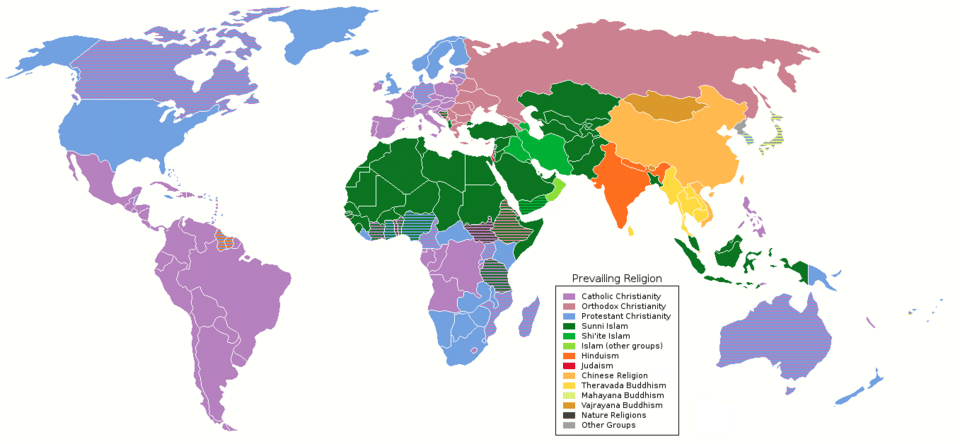
Nonmaterial culture consists of the beliefs, values, norms, and practices of a group. These are intangible. Examples include religion, language, customs, traditions, marriage practices, gender roles, and attitudes toward family and work. Nonmaterial culture is invisible but powerful. It guides behavior and shapes how people interpret the world.
Material and nonmaterial culture are linked. A culture’s religious beliefs (nonmaterial) influence the architecture and art it produces (material). A culture’s language and values (nonmaterial) shape its cuisine and clothing (material).
Components of Culture
Language is the most important cultural component. Language transmits culture across generations and enables human communication. More than 7,000 languages exist globally. Language families (like Indo-European or Sino-Tibetan) show how languages evolved and spread. When a language dominates a region, it often reflects political power or historical conquest.
Religion provides moral frameworks, answers to life’s big questions, and community identity. Major world religions include Christianity, Islam, Hinduism, Buddhism, and Judaism. Religion influences law, ethics, art, architecture, food practices, and family structures.
Ethnicity refers to a group’s sense of shared identity based on ancestry, language, religion, or culture. Ethnicity is different from race (which is a social construct based on perceived physical characteristics). Ethnic identity is cultural, not biological.
Customs and traditions are specific practices that define a culture. Customs include greetings, dining etiquette, marriage ceremonies, coming-of-age rituals, and holiday celebrations. What’s polite in one culture may be offensive in another.
Food and cuisine are important cultural markers. Dietary practices reflect religion (kosher, halal, vegetarian), geography (available crops and animals), and historical trade routes (spices, cooking techniques).
Music and art express cultural identity and values. Every culture has music and visual art. Architecture is a major form of cultural art that shapes the landscape.
Folk Culture vs. Popular Culture
Folk culture refers to the practices and beliefs of a small, localized group. Folk culture is traditionally produced, practiced, and transmitted within a community. Examples include folk music, folk crafts, traditional clothing, local legends, and regional food traditions. Folk culture is typically tied to specific places and communities, transmitted orally or through direct participation, relatively stable and resistant to change, practiced within limited geographic distribution, and associated with rural or isolated communities.
Popular culture refers to the practices and beliefs of large, diverse groups, typically in urban areas or connected by modern media. Popular culture is commercially produced and mass-distributed. Examples include movies, pop music, fashion, fast food, video games, and television shows. Popular culture is typically produced for mass markets and profit, transmitted through media and technology, rapidly changing and trend-oriented, distributed widely across geographic areas, and associated with urban, developed societies.
| Feature | Folk Culture | Popular Culture |
|---|---|---|
| Scale | Small, localized community | Large, diverse mass market |
| Production | Traditional, handcrafted, non-commercial | Commercial, mass-produced for profit |
| Transmission | Oral tradition, direct participation | Mass media (TV, internet, radio) |
| Rate of change | Slow, stable across generations | Rapid, trend-driven |
| Geographic distribution | Concentrated in one area | Widespread, potentially global |
| Diffusion type | Contagious (slow, contact-based) | Hierarchical (fast, media/urban-center-based) |
| Examples | Appalachian folk music, Amish quilts, regional food traditions | Pop music, Hollywood films, fast food chains |
The key difference is scale, production method, and diffusion. Folk culture diffuses slowly through direct contact. Popular culture diffuses rapidly through mass media and technology – everyone sees the same movie, hears the same song.
The AP exam asks about diffusion patterns. Folk culture spreads through contagious diffusion (slowly from person to person through direct contact with neighbors). Popular culture spreads through hierarchical diffusion (rapidly from large urban and media centers to smaller places).
Cultural Traits, Complexes, and Regions
Cultural traits are specific practices or beliefs within a culture. Examples include celebrating Christmas, speaking English, or eating with chopsticks. Traits are small units of culture, often borrowed from other cultures through cultural diffusion.
Cultural complexes are clusters of related traits that form a cohesive unit. A wedding ceremony is a cultural complex that may include multiple traits: specific clothing, religious rituals, food, music, and gift-giving.
Cultural regions are areas where similar cultures are practiced. A cultural region might be “the Islamic world” or “East Asia.” Cultural regions don’t match political boundaries – the Islamic world spans multiple countries.
Cultural Hearths: Where Cultures Originate
Cultural hearths are centers where cultures originate and from which they spread. Major cultural hearths include Mesopotamia and the Fertile Crescent (birthplace of agriculture and writing), Ancient Egypt (along the Nile River), the Indus Valley (early urban civilization in South Asia), China (philosophies and traditions that spread across East Asia), and Mesoamerica (Aztec and Mayan civilizations).
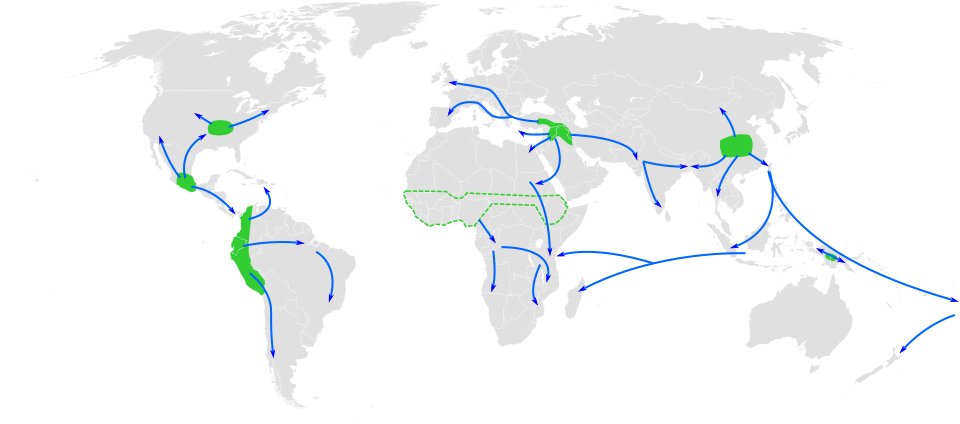
Understanding cultural hearths explains cultural distributions. Why is Islam dominant in the Middle East and North Africa? Because it originated there. Why are Romance languages concentrated in Europe and the Americas? Because the Roman Empire was a major cultural hearth.
How Culture Shapes and Is Shaped by Environment
Environment shapes culture. The physical environment influences what cultures can produce and value. Societies in snowy climates developed skills for snow and ice. Coastal societies developed fishing traditions. Desert societies developed water conservation practices.
Culture shapes environment. Humans use culture to modify their environment. Agricultural practices reflect cultural values about land use. Religious beliefs influence whether people hunt certain animals or cut certain trees. Industrialization and technology have dramatically reshaped landscapes.
Ethnocentrism vs. Cultural Relativism
Ethnocentrism is the tendency to judge other cultures by the standards of your own culture and to believe that your culture is superior. Ethnocentric perspectives lead to cultural misunderstanding and conflict. Historically, ethnocentrism justified colonialism and imperialism.
Cultural relativism is the approach of understanding another culture on its own terms, without judging it by the standards of your own culture. A practice that seems strange from one cultural perspective may make perfect sense from another. AP® Human Geography emphasizes cultural relativism.
Cultural Convergence and Divergence in a Globalized World
Cultural convergence is the process by which cultures become more similar. Globalization is accelerating cultural convergence. Mass media, the internet, international migration, and multinational corporations spread cultural traits globally.
Cultural divergence is the process by which cultures become more different. Divergence occurs when groups deliberately preserve or emphasize their distinct cultural identity. Religious groups may isolate themselves. Nationalist movements emphasize local language and customs.
The reality is complex. Convergence and divergence happen simultaneously. Global culture spreads, but local cultures resist or adapt global influences. K-pop is a global phenomenon but distinctly Korean. Traditional practices like Carnival, Diwali, and Ramadan persist despite globalization.
Test-Taking Strategies
Memory Device: FPC Remember the three core relationships: Folk vs. Popular (diffusion mechanisms), Process (traits to complexes to regions), and Convergence vs. Divergence (globalization dynamics).
Cross-Topic Connections: Culture links to agriculture (Topic 5.1, agricultural practices reflect cultural and environmental factors), development (Unit 7, how cultures distribute globally relates to development patterns), migration (Topics 2.10-2.12, diaspora communities maintain cultural identity), and political geography (Topics 4.1-4.2, cultural boundaries create political tensions).
Common Question Formats: The AP exam tests culture by asking you to identify cultural components in a scenario. You might be given a landscape description and asked which cultural trait or complex explains it. Another format presents cultural diffusion and asks whether it’s folk or popular, hierarchical or contagious. Globalization questions ask whether a scenario demonstrates convergence or divergence.
Frequent Student Mistakes: First, assuming all cultures are equally valid prevents you from critically analyzing practices. Cultural relativism means understanding practices on their own terms before evaluating them – not accepting everything. Second, confusing folk with traditional or rural. Folk culture can be urban; popular culture can be traditional. The distinction is about scale of production and diffusion, not location. Third, oversimplifying convergence. Global culture spreads, but people also create hybrid cultures that blend global and local elements.
Test-Day Pattern Recognition: When you encounter a culture question, immediately identify which components appear (language, religion, ethnicity, customs, food, art). Then ask: is this about folk or popular culture? Is it changing (convergence) or staying distinct (divergence)? Is it reflecting environmental adaptation or deliberate cultural choice? If the question involves a judgment about another culture, pause and apply cultural relativism.
Time Management Tip: Culture questions often include rich descriptive scenarios. Don’t try to analyze everything mentioned. Scan for the specific cultural elements the question asks about. Most culture questions can be answered by identifying one or two key concepts (folk/popular, convergence/divergence, relativism/ethnocentrism) and applying them precisely.
Check for Understanding
Think you’ve got it? Complete the quiz below to make sure. Download your results at the end.