
Maximize your score with these resources:
- Albert.io AP® Business with Personal Finance question banks
- Free AP® Business with Personal Finance score calculator
A dog walker, a neighborhood bakery, and a global software company look nothing alike. One person with a leash, a shop with ten employees, and a firm with offices on four continents. Yet all three are businesses for the same reason: each one found a group of customers with a problem, need, or want and built a product to address it. Topic 1.1 starts the course with that idea, because every later topic, from marketing to accounting, builds on it.
This article covers Topic 1.1: What Is a Business? in Unit 1, Businesses, Competition, and New Ideas. The topic asks you to identify how businesses address customers’ problems, needs, and wants, and to distinguish between creating value and capturing it.
By the end, you should be able to:
- Define a business and explain why size and location do not decide whether something is one.
- Tell the difference between a customer and a consumer.
- Explain how businesses select market opportunities and achieve problem-solution fit.
- Distinguish value creation from value capture with a concrete example.
What Counts as a Business?
The CED defines a business as an organization or entity that produces and distributes products. A product can be a good (something physical, like a bike) or a service (something performed, like a bike repair), or both.
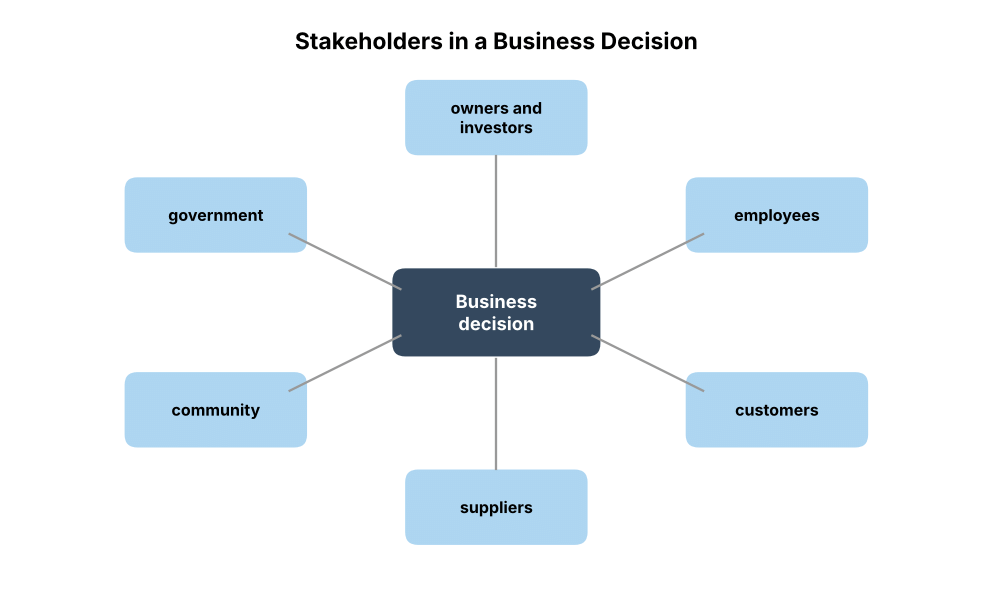
Size does not matter. A business can be small or large based on:
- Geographic reach: one neighborhood, one country, or the whole world.
- Number of employees: a single owner or hundreds of thousands of workers.
- Revenues: a few thousand dollars a year or billions.
A business can also serve customers face-to-face, like a barbershop, or virtually, like an online tutoring service.
Customers vs. Consumers
These two words sound alike, but the exam treats them differently.
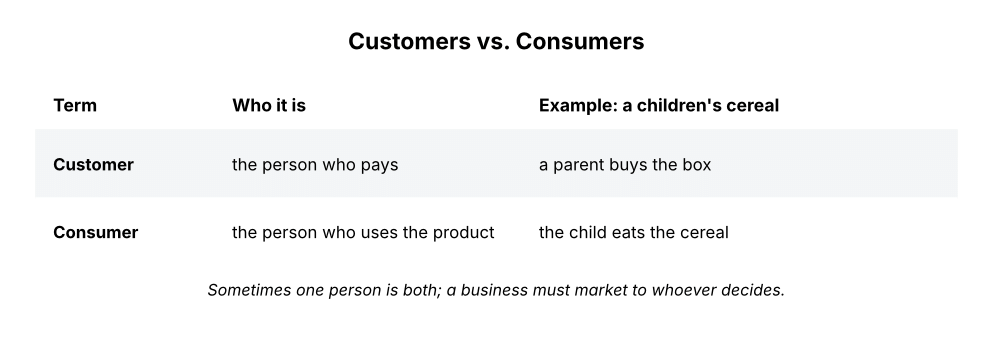
| Term | Definition | Example: a box of cereal |
|---|---|---|
| Customer | An individual or business that purchases a good or service | The parent who buys the cereal at the store |
| Consumer | An individual who uses a good or service, whether or not they bought it | The child who eats the cereal |
The distinction matters because a business has to persuade the customer to buy, while also keeping the consumer satisfied. Cereal companies often design colorful boxes for kids and print nutrition claims for parents. A customer can also be another business: a restaurant that buys flour from a mill is the mill’s customer.
Problems, Needs, Wants, and Problem-Solution Fit
Businesses look for market opportunities: customer problems, needs, and wants that are not yet being met well. They then develop goods and services to address them. When a product truly addresses a real customer problem, need, or want, the business has achieved problem-solution fit.
No business can satisfy every possible customer. Each one must choose which problems, needs, and wants to focus on and which customers to serve. A gym that targets competitive weightlifters will make very different choices from a gym that targets older adults who want low-impact exercise.
Why does this matter? Your Business Canvas Project begins with this exact step. Task 1 asks you to identify and describe a customer’s problem, need, or want. If you skip it and start with a product idea instead, the rest of the project has nothing solid to rest on.
Value Creation vs. Value Capture
Value is the worth or benefit of a product to customers. The CED splits what a business does with value into two steps.
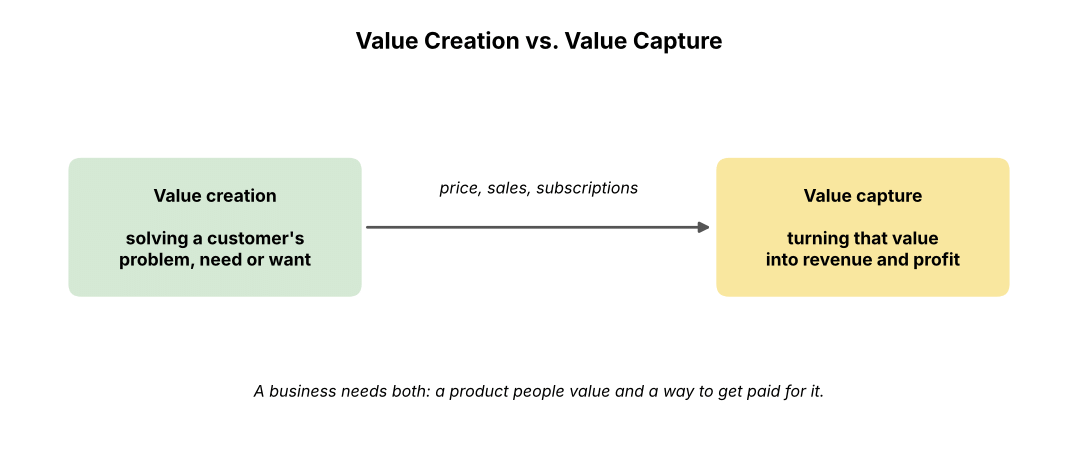
| Concept | What it means | Question to ask |
|---|---|---|
| Value creation | The business provides a product that responds to customers’ problems, needs, and wants. | Does this product help the customer? |
| Value capture | The business charges customers a higher price for the product than it cost to produce. | Does the business keep some of that value as money? |
Worked Example: A Phone Repair Kiosk
Maya notices that students at her local mall wait days to get cracked phone screens fixed through the manufacturer. She opens a kiosk that replaces screens in under an hour.
- Customer problem: Students need a working phone quickly and cannot wait a week.
- Value creation: Fast, convenient repairs solve that problem.
- Value capture: A screen and labor cost Maya $45 per repair. She charges $90, so she keeps $45 of value per repair.
- Customer vs. consumer: When a parent pays for a teen’s repair, the parent is the customer and the teen is the consumer.
Now imagine a competitor opens next door and charges $50. Maya still creates value, but her ability to capture it shrinks. A business can create plenty of value and still fail if it cannot capture enough of it to cover costs.
Test-Taking Strategies
Mnemonic Devices and Memory Shortcuts
Remember “Create helps them, Capture pays us.” Value creation is about the customer’s benefit. Value capture is about the business’s price exceeding its cost. For buyers, think “Customer = Cash, Consumer = Uses.”
Cross-Topic Connections
- AP® Microeconomics Topic 1.1: Scarcity explains why needs and wants always exceed available resources.
- AP® Microeconomics Topic 2.1: Demand shows how customers’ willingness to buy changes with price.
- AP® Microeconomics Topic 3.4: Types of Profit goes deeper into the gap between revenue and cost behind value capture.
- The AP Business with Personal Finance score calculator shows how each exam section adds up to your final score.
Common Question Formats
- A short business scenario asking you to identify the customer problem, need, or want.
- A question asking which person in a scenario is the customer and which is the consumer.
- A pair of statements asking which describes value creation and which describes value capture.
Frequent Student Mistakes
- Assuming a business must be large or have a storefront. One person selling online is a business.
- Using “customer” and “consumer” as synonyms.
- Calling high customer satisfaction “value capture.” Satisfaction is value creation; capture is about price above cost.
Test-Day Shortcuts
When a question mentions money flowing to the business, think capture. When it mentions a benefit to the buyer or user, think creation. That one check eliminates most wrong answers.
Time Management Tips
The AP Business with Personal Finance Exam on May 4, 2027, is fully digital in Bluebook. Section I has 60 multiple-choice questions in 70 minutes, a little over a minute each. Definition questions like these should take well under a minute, so bank that time for longer case-based question sets.
Check for Understanding
Think you’ve got it? Complete the quiz below to make sure. Download your results at the end.