
In Emily Dickinson’s poem, Death does not snatch the speaker away. He arrives in a carriage, “kindly” stops for her, and drives slowly, like a polite gentleman on a date. By giving Death human manners, Dickinson changes how readers feel about dying itself. This technique, giving human qualities to something that is not human, is called personification, and it is one of the most vivid tools a poet has.
This article covers Topic 3.3: Personification in Unit 3, Figurative Language and Sound. The topic asks you to identify personification, distinguish it from related devices, and analyze how it shapes tone and meaning.
By the end, you should be able to:
- Define personification and identify it in poems.
- Recognize personification in verbs, adjectives, and pronouns.
- Distinguish personification from apostrophe and anthropomorphism.
- Explain how personification affects tone and theme.
What Personification Is
Personification gives human traits, actions, or feelings to animals, objects, forces of nature, or ideas. It is a type of implied metaphor, since it suggests that the subject is like a person without saying so directly.
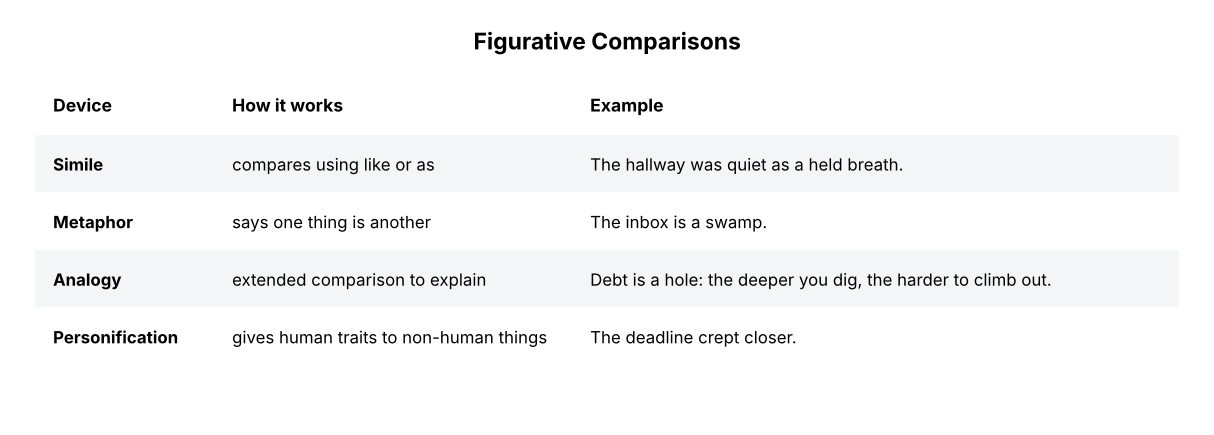
- The wind whispered through the trees.
- The old car groaned up the hill.
- Time marches on.
Wind cannot whisper, cars cannot groan, and time cannot march. Each verb gives a human action to something nonhuman.
Where to Find It
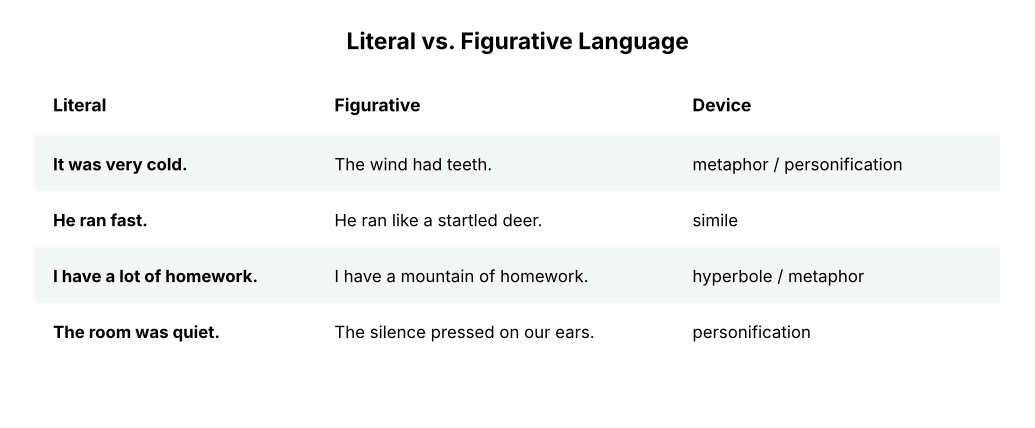
| Part of Speech | Example | Human Quality |
|---|---|---|
| Verbs | The sun smiled on the fields. | Smiling |
| Adjectives | The angry sea tossed the boat. | Anger |
| Pronouns | Death… He kindly stopped for me. | Being a “he,” a person |
| Capitalization | Hope, Love, Time used as names | Treated as characters |
Watch for verbs first. Most personification lives in what a nonhuman subject does.
Worked Example: “To Autumn”
In John Keats’s “To Autumn” (1819), the season appears as a person in several scenes. Autumn sits “careless on a granary floor,” her hair lifted by the wind, and sleeps in a half-harvested field, “drows’d with the fume of poppies.”
- Personification: Autumn sits, sleeps, and has hair, all human traits.
- Effect: the season seems relaxed, generous, and close, like a harvest worker resting after hard labor.
- Tone: peaceful and appreciative, not mournful.
- Meaning: by making autumn a gentle person, Keats invites readers to accept the season of endings with calm rather than fear.
Why does this matter? Personification turns abstract ideas into characters readers can picture and feel something about. A season, death, or time becomes easier to understand when it has a face and a personality.
Personification and Tone
The kind of person the poet creates shapes the tone. Compare:
- “The storm raged against the windows.” (violent, threatening)
- “The rain tapped politely at the windows.” (gentle, calm)
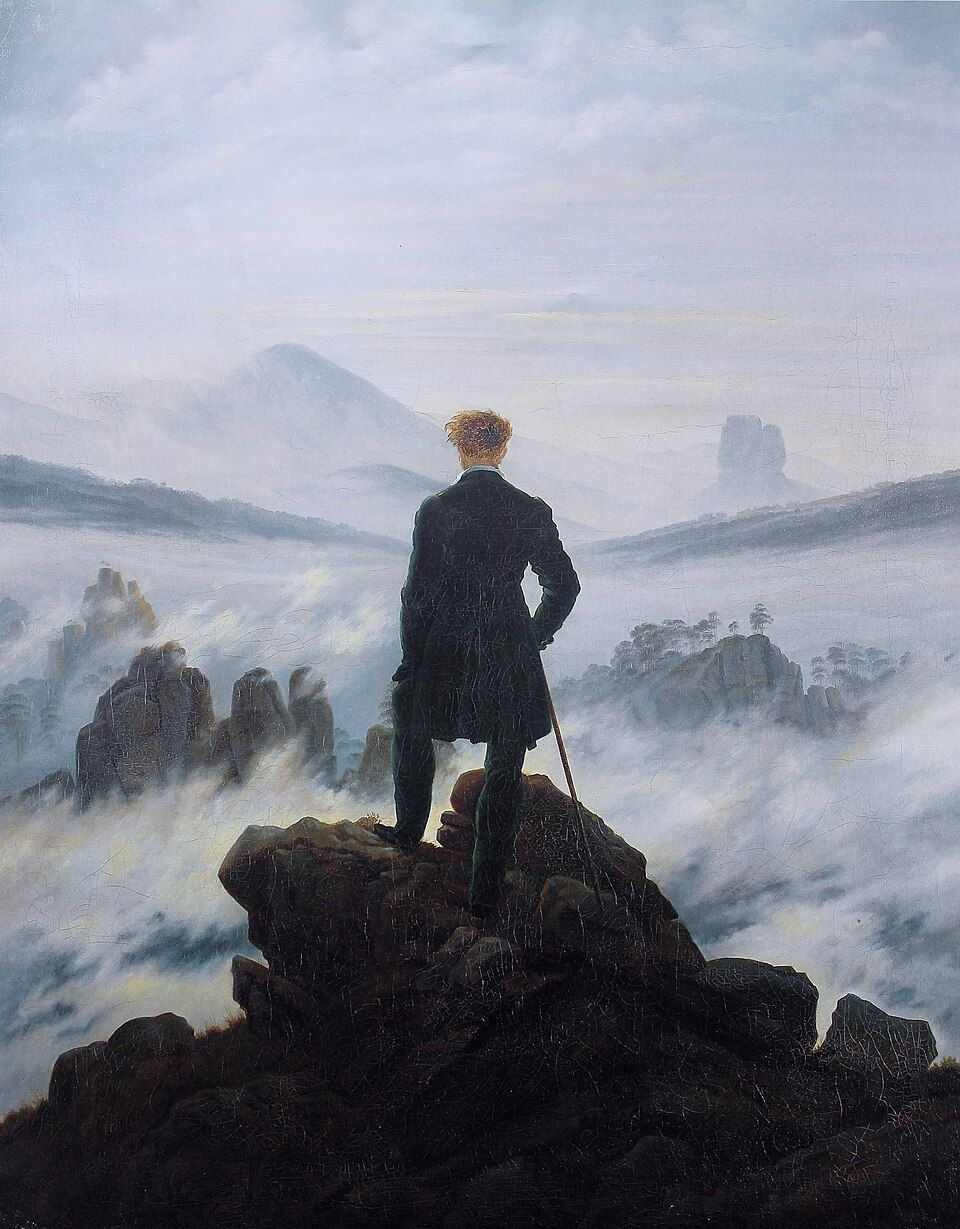
Same weather, different personalities, different moods. When you analyze personification, name the human trait and the feeling it creates.
Related Devices
- Apostrophe: directly addressing something absent or nonhuman, as in John Donne’s “Death, be not proud” (1633). Apostrophe often includes personification, because speaking to Death treats it as someone who can listen.
- Anthropomorphism: presenting nonhuman things as actually behaving like humans throughout a story, such as talking animals in fables. Personification is usually a brief figure of speech; anthropomorphism is a sustained characterization.
- Pathetic fallacy: a term for describing nature as sharing human emotions, such as clouds that “weep” at a funeral. It is a specific kind of personification.
Why does this matter? Tests sometimes ask you to choose between these terms. If the speaker talks to the thing, think apostrophe. If the thing simply acts human, think personification.
Personifying Abstract Ideas
Poets often personify abstractions such as Love, Time, Death, Fame, and Hope, frequently with capital letters. In Donne’s sonnet, the speaker scolds Death as if it were a boastful bully and ends by declaring that “Death, thou shalt die.” Turning an idea into a character lets the speaker argue with it, mock it, or make peace with it. When you see a capitalized abstract noun acting like a person, ask what kind of personality the poet gives it and why.
Personification in Everyday Language
We use personification constantly without noticing: “My phone died,” “The computer is thinking,” “Opportunity knocks.” Poets make it fresh and purposeful, choosing human traits that reveal something surprising about the subject.
Test-Taking Strategies
Mnemonic Devices and Memory Shortcuts
“Person-ification makes it a person.” Ask, “Could a person do this?” If yes, and the subject is not a person, it is personification.
Cross-Topic Connections
- Personification is a kind of implied comparison from Topic 3.2: Simile and Metaphor.
- Addressing absent things connects to Topic 2.8: The Ode.
- The human traits chosen shape Topic 1.3: Tone and Mood in Poetry.
- Figurative language in prose is reviewed in Reading Skills Topic 2.3: Interpreting Figurative Language.
Common Question Formats
- Identify the line that contains personification.
- Name the human quality given to a nonhuman subject.
- Explain how personification contributes to tone.
- Distinguish personification from apostrophe.
Frequent Student Mistakes
- Calling animal behavior personification when the animal is acting naturally.
- Confusing personification with apostrophe.
- Naming the device without explaining its effect.
Test-Day Shortcuts
Scan for nonhuman subjects paired with human verbs. That pairing is the fastest way to spot personification in a passage.
Time Management Tips
Personification questions on English unit tests and standardized reading tests such as the SAT and ACT take 20 to 40 seconds. Save time for questions about effect and tone.