
Maximize your score with these resources:
- Albert.io AP® US History question banks
- Free AP® US History cheat sheets
- Free AP® US History score calculator
The United States fought World War II on two fronts separated by half the globe. In Europe, Americans joined Britain and the Soviet Union to defeat Nazi Germany, landing in North Africa, Italy, and finally Normandy. In the Pacific, they fought Japan island by island across thousands of miles of ocean. The war ended in August 1945 with the only use of nuclear weapons in history. Topic 7.13 covers the strategy, the turning points, and the hard choices that shaped the Allied victory.
This article covers Topic 7.13: World War II: Military in Period 7, 1890 to 1945. The topic asks you to explain how the United States and its allies won World War II, including key strategic decisions, major turning points, and the debate over the use of the atomic bomb.
By the end, you should be able to:
- Explain the Allies’ “Europe First” strategy.
- Identify turning points in the European and Pacific theaters.
- Describe the Allied response to the Holocaust.
- Evaluate the decision to use the atomic bomb.

What We Review
Strategy: Europe First
After Pearl Harbor, Roosevelt and Churchill agreed to concentrate first on defeating Germany, which they saw as the greater threat. The Pacific war continued, but with fewer resources at first. Throughout the war, the Soviet Union pressed for a “second front” in Western Europe to relieve pressure on the Eastern Front, where most German forces were fighting.
The European Theater
| Campaign | Dates | Significance |
|---|---|---|
| Battle of the Atlantic | 1939 to 1943 | Allied convoys, radar, and code-breaking defeated German U-boats, keeping supply lines to Britain open |
| North Africa (Operation Torch) | November 1942 to May 1943 | First major U.S. ground campaign against Germany. Led by Dwight Eisenhower. |
| Stalingrad | 1942 to 1943 | Soviet victory that turned the tide on the Eastern Front |
| Italy | 1943 to 1945 | Allies invaded Sicily and the mainland. Mussolini fell, but fighting lasted until 1945. |
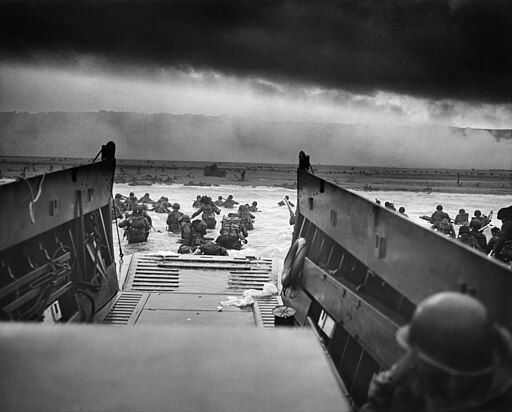
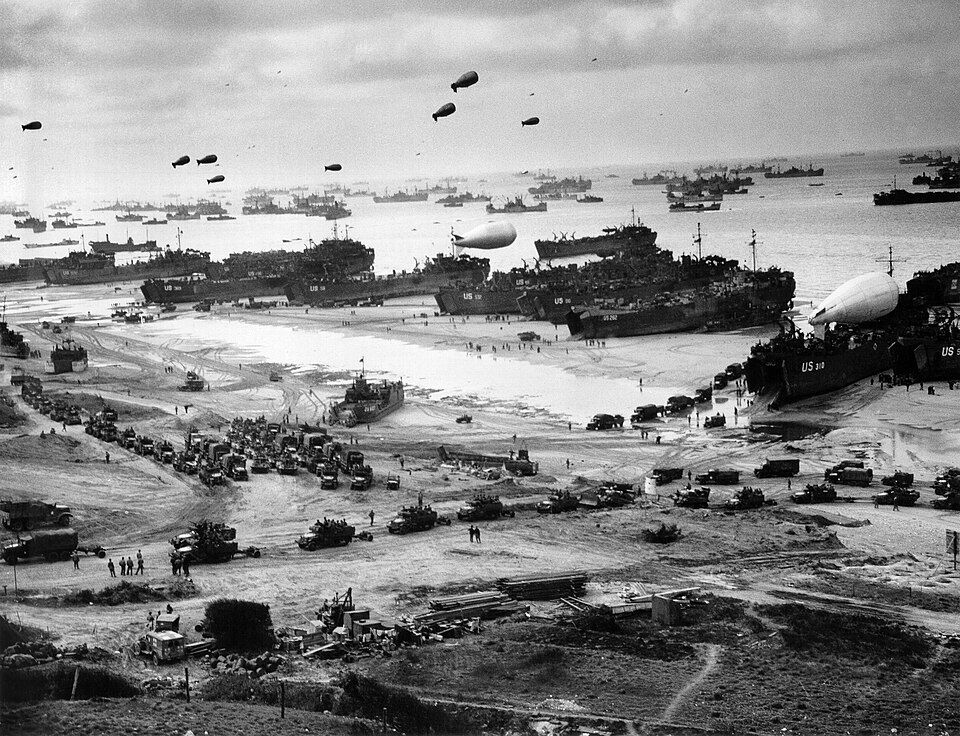
| D-Day (Operation Overlord) | June 6, 1944 | About 156,000 Allied troops landed in Normandy, opening the second front |
| Battle of the Bulge | December 1944 to January 1945 | Germany’s last major offensive in the west, defeated with heavy American losses |
| V-E Day | May 8, 1945 | Germany surrendered after Soviet forces took Berlin |
Allied bombers also carried out massive strategic bombing of German cities and industry, including the firebombing of Dresden in February 1945.
The Holocaust
Nazi Germany murdered about 6 million Jews, along with millions of Roma, disabled people, Poles, Soviet prisoners, and others. The U.S. government had information about mass killings by 1942 but did little to rescue victims. Strict immigration quotas stayed in place, and the U.S. had turned away refugees, including the passengers of the St. Louis in 1939. The War Refugee Board, created in 1944, helped save tens of thousands. American soldiers liberating camps in 1945 saw the horrors firsthand.
The Pacific Theater
| Battle | Date | Significance |
|---|---|---|
| Fall of the Philippines | 1942 | Japanese victory followed by the Bataan Death March of American and Filipino prisoners |
| Coral Sea | May 1942 | Stopped the Japanese advance toward Australia |
| Midway | June 1942 | U.S. sank four Japanese carriers, the turning point of the Pacific war |
| Guadalcanal | 1942 to 1943 | First major U.S. offensive on land in the Pacific |
| Iwo Jima and Okinawa | 1945 | Brutal fighting with very high casualties on both sides, and kamikaze attacks on U.S. ships |
The U.S. used an island-hopping strategy. Instead of attacking every Japanese-held island, American forces captured key islands to build airfields closer to Japan, bypassing heavily defended strongholds. From the Marianas, B-29 bombers firebombed Japanese cities. A single raid on Tokyo in March 1945 killed about 100,000 people.
The Atomic Bomb
Roosevelt died in April 1945, and Harry Truman learned of the Manhattan Project only after taking office. In August 1945, the U.S. dropped atomic bombs on Hiroshima (August 6) and Nagasaki (August 9). Together they killed well over 100,000 people by the end of 1945. Japan surrendered on August 15, and the formal surrender came on September 2.
| Arguments for Using the Bomb | Arguments Against |
|---|---|
| An invasion of Japan could have cost hundreds of thousands of American lives | It killed huge numbers of civilians |
| Iwo Jima and Okinawa suggested Japan would fight to the end | Japan was already weakened, and some leaders were exploring surrender |
| It ended the war quickly | A demonstration or changes to surrender terms might have worked |
| It showed American power to the Soviet Union | It began a nuclear arms race |
Why does this matter? The military side of World War II explains how the U.S. emerged in 1945 as the world’s leading power. On essays, the atomic bomb debate is a strong place to show historical interpretation, since historians still disagree about Truman’s motives. Linking the bomb to the start of the Cold War can also earn complexity credit.
Test-Taking Strategies
Mnemonic Devices and Memory Shortcuts
- “Midway is mid-Pacific turning.” Midway was the Pacific turning point in mid-1942.
- “Torch, Sicily, Normandy.” The order of American landings against Germany.
- “Hop, skip, bomb.” Island-hopping brought bombers within range of Japan.
Cross-Topic Connections
- Topic 7.11: Lend-Lease and the Atlantic Charter set up the wartime alliance.
- Topic 7.12: Industrial mobilization supplied the Allied armies.
- Topic 7.14: Wartime conferences shaped the postwar world.
- Topic 8.2: The atomic bomb and the Soviet advance helped start the Cold War. See our review of the Cold War.
Common Question Formats
- Stimulus MCQ. A map of island-hopping or an excerpt from Truman’s statement on Hiroshima, and you identify its context.
- Interpretation SAQ. Two historians disagree about why the bomb was used, and you explain each view.
- Causation SAQ. You explain one reason the Allies won the war.
- LEQ. You evaluate how World War II changed the U.S. role in the world.
Frequent Student Mistakes
- Making D-Day the start of U.S. fighting in Europe. North Africa and Italy came first.
- Ignoring the Soviet role. Most German forces were destroyed on the Eastern Front.
- Saying Roosevelt dropped the bomb. Truman made the decision.
- Claiming the U.S. didn’t know about the Holocaust. Officials had reports by 1942.
Test-Day Shortcuts
- Link strategy to geography. Island-hopping is about distance and airfields.
- Name the turning points. Midway, Stalingrad, and D-Day anchor most war questions.
- Use the bomb for interpretation. It’s the classic example of a historiographical debate.
Time Management Tips
- Multiple choice: Section IA has 55 questions in 55 minutes, about 1 minute each. Maps reward a quick look at the legend and arrows.
- Short answer: Section IB has 3 required questions in 40 minutes, roughly 13 minutes each. For interpretation questions, summarize each source’s claim in your own words.
- Essays: The DBQ gets 60 minutes, including a 15-minute reading period, and the single required LEQ gets 40 minutes. Military events work best when linked to political consequences.
Check for Understanding
Think you’ve got it? Complete the quiz below to make sure. Download your results at the end.