
Maximize your score with these resources:
- Albert.io AP® Art History question banks
- Free AP® Art History cheat sheets
- Free AP® Art History score calculator
Theories and interpretations of Asian art are not neutral descriptions of what works mean. The frameworks we use to understand these traditions are shaped by history, power, and perspective. This article covers Topic 8.4: Theories and Interpretations of South, East, and Southeast Asian Art (Learning Objective THR-1.A). You’ll encounter questions asking you to evaluate different interpretive approaches, identify problems with Western-centric museum display practices, and recognize the role of indigenous knowledge systems. By mastering this topic, you’ll develop critical thinking about how art is understood, displayed, and valued.
The key insight: art history itself has a history—and a problematic one. Western scholars, museums, and collectors didn’t objectively discover Asian art; they filtered it through their own assumptions, economic interests, and colonial power structures. When you learn the theories themselves, you’re learning to recognize bias in how art is interpreted.
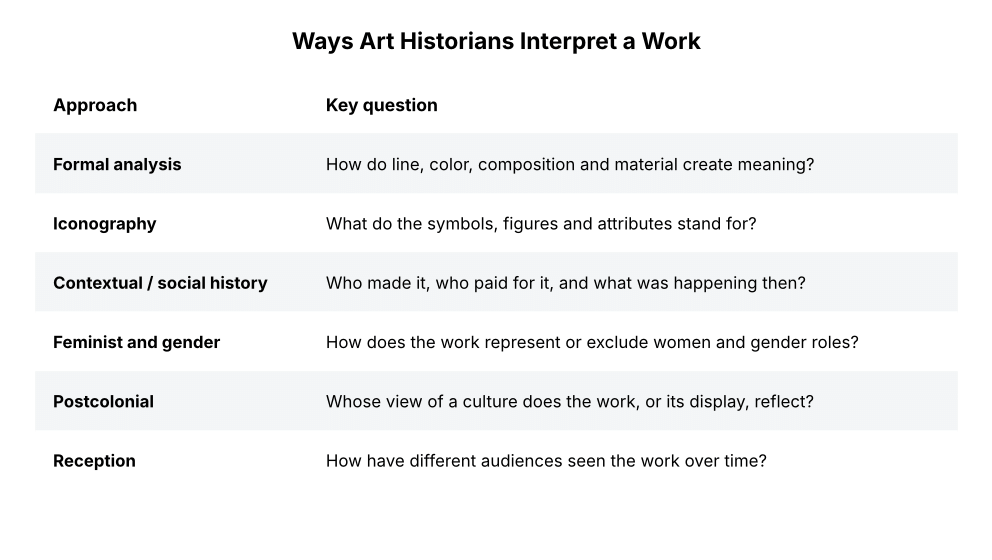
Orientalism and the Western Construction of “Asian Art”
Orientalism—Edward Said’s term—refers to how Western scholars, artists, and institutions created a distorted, romanticized image of the Orient to justify colonial domination and cultural superiority. This wasn’t just aesthetic preference; it was a system of representation with real political consequences.
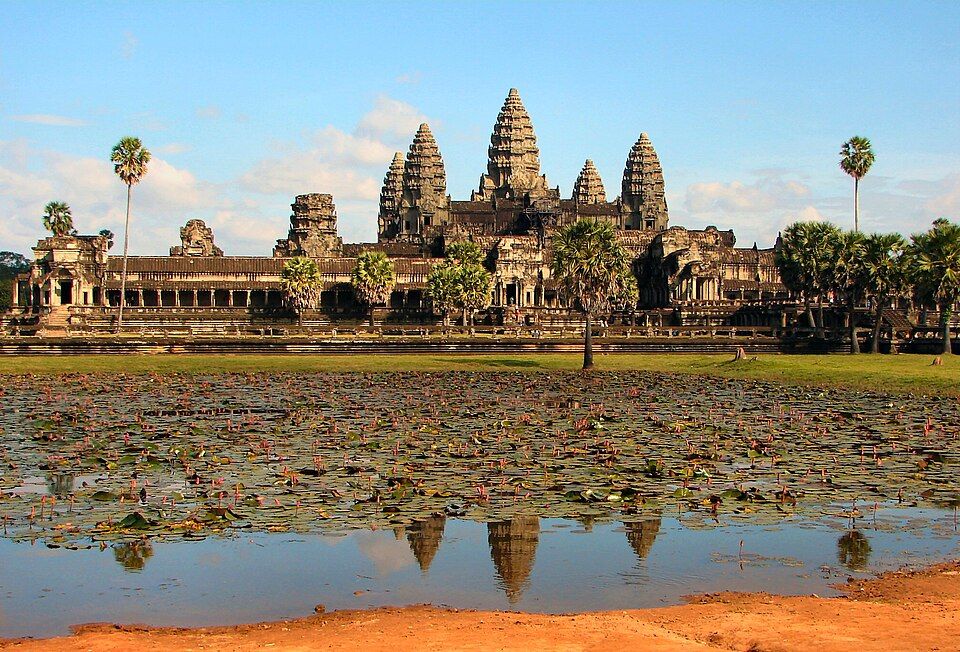
- Orientalism as ideology: Western powers used Orientalism to frame Asian cultures as exotic, irrational, passive, and inferior—essentially justifying colonialism as a civilizing mission. Artworks were collected, studied, and displayed not to understand them on their own terms but to reinforce stereotypes and assert Western intellectual authority.
- Collecting and decontextualization: Colonial-era museums and wealthy collectors removed artworks from their religious, ceremonial, and social contexts. A Buddhist sculpture designed for worship in a temple became a decorative item in a London gallery. A Japanese woodblock print created as a commercial commodity became a precious work of “high art.” This reframing stripped artworks of their original meaning.
- Racial and cultural hierarchies: Orientalist scholarship ranked non-Western cultures on a scale of civilization, with European art at the top. Asian traditions were described as “decorative,” “ornamental,” or “applied arts” rather than “fine art”—a distinction reflecting racist assumptions rather than the cultures’ own values. Japanese prints were dismissed as cheap commercial goods until French Impressionists embraced them. Western taste, not objective merit, determined what got valued.
- Erasure of artists and patronage systems: Orientalist scholarship often treated Asian art as the product of unchanging traditions or anonymous craftspeople rather than individual artists responding to specific patrons, political situations, and aesthetic innovations. Chinese literati painters were sometimes reduced to their subject matter (bamboo, plum blossoms) rather than understood as intellectuals and innovators.
Why this matters for the exam: Questions will ask you to identify how a Western interpretation of an Asian artwork reflects Orientalist assumptions. You might see a painting displayed in a Western museum with a label describing it as “mysterious,” “timeless,” or “primitive”—all red flags for Orientalist framing. Your job is explaining why this label is problematic and what context it erased.
Indigenous Aesthetic Theories: Rasa, Qi, and Wabi-Sabi
Rather than accepting Western categories, understand how Asian cultures theorized and valued their own art. These indigenous frameworks represent fundamentally different questions about what art does and how it should be understood.
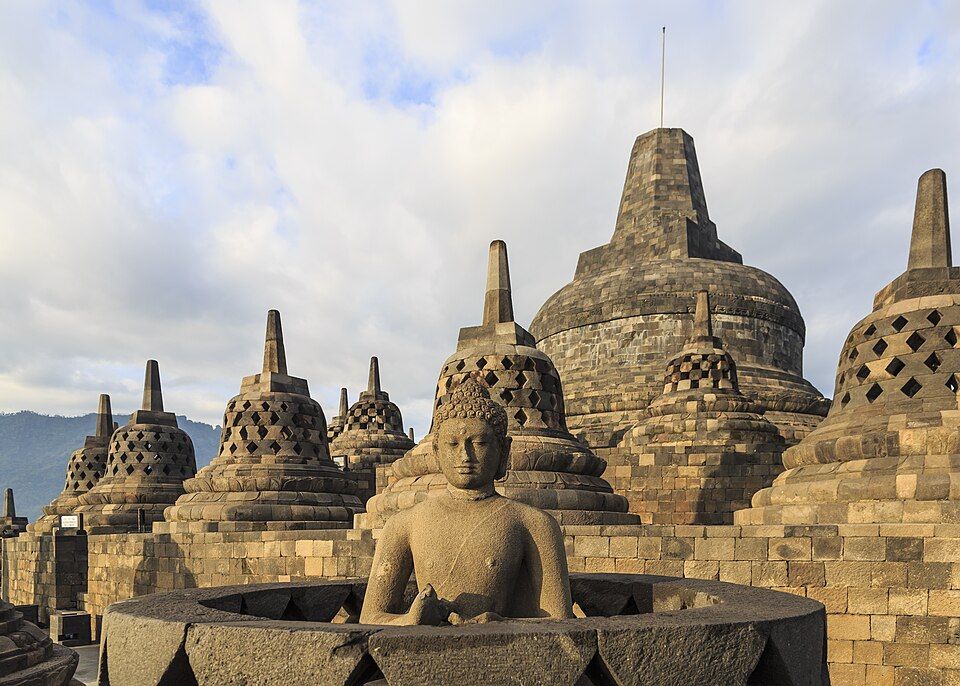
Rasa Theory (Indian Aesthetics)
Rasa (“flavor” or “essence”) is foundational in classical Indian aesthetics. It refers to the emotional or aesthetic essence that a work of art communicates to a sensitive viewer. Unlike Western aesthetics that focus on form, representation, or the artist’s intention, rasa theory centers on the **emotional experience of the audience.**
- The nine rasas: Classical Indian theory identifies nine primary rasas: shringara (romance/attraction), hasya (humor), karuna (compassion), raudra (anger), vira (heroism), bhayanaka (fear), bibhatsa (disgust), adbhuta (wonder), and shanta (peace/tranquility). A work of art succeeds when it evokes one or more of these rasas in the viewer, not through literal depiction but through color, composition, gesture, and symbolic elements.
- Abhinavagupta’s refinement: The 10th-century philosopher Abhinavagupta elevated rasa theory by arguing that the viewer’s experience of rasa is a spiritual experience—a momentary transcendence of the ego where the viewer’s personal emotions merge with the universal emotion represented in the art. This makes rasa not just aesthetic but metaphysical.
- Application to visual art: In temple sculpture, dancer statues, and manuscript illuminations, artists used symbolic gestures (mudras), proportions, colors, and narrative composition to evoke specific rasas. A sculpture might employ specific hand gestures and facial expressions to evoke shringara (romantic love), while another uses dynamic posture and weapon display to evoke vira (heroism). The viewer’s recognition of these codes allows them to access the emotional essence.
Why Western scholars missed this: Early Western observers of Indian sculpture often saw elaborate ornamentation, dynamic poses, and sensual imagery and labeled it as “erotic,” “excessive,” or “primitive”—judgments rooted in their own aesthetic values, not rasa theory. They didn’t recognize that the apparent “excess” was a deliberate vocabulary for evoking emotional and spiritual states.
Chinese Art Theory: Qi and the Literati Ideal
Chinese art theory, developed over millennia and codified in texts like the “Six Principles of Painting,” centers on qi—often translated as “life force,” “vital energy,” or “spirit resonance.” Unlike the Western focus on accurate representation, Chinese aesthetics valued the artist’s ability to capture the essence and energy of a subject.
- Qi-yun or “spirit resonance”: The highest goal in Chinese painting is to capture qi-yun, the spiritual essence or vital energy of a subject. This is achieved not through detailed realism but through suggestive brushwork, empty space, and the artist’s personal understanding of the subject. A landscape painting isn’t meant to be a photographic reproduction; it’s meant to convey the artist’s emotional and spiritual response to nature.
- Literati painting values: From the Song dynasty onward, literati painting became the highest form of Chinese art practice. These were works by scholar-officials and educated amateurs, not professional artists. Literati painting valued intellectual content, moral character, historical knowledge, and personal expression over technical skill or commercial appeal. The subject matter often included bamboo, plum blossoms, orchids, and mountains—subjects with symbolic significance (bamboo = integrity, plum = resilience, orchid = refinement).
- The artist as philosopher: A literati painter was expected to be a cultured person—calligrapher, poet, philosopher—who expressed their moral and intellectual values through painting. The work was not primarily for sale or display; it was a form of personal cultivation and a means of communicating with other educated people. This explains why literati paintings often include poetry, seals, and references to earlier works—they’re part of an ongoing intellectual conversation.
- Rejection of realism: Western viewers sometimes find Chinese landscapes schematic or poorly proportioned by Western perspective standards. But Chinese painters deliberately avoided Western-style perspective and volumetric modeling because these techniques were considered mechanical and superficial. The goal was to suggest space and form through brushwork, atmospheric perspective, and compositional arrangement—techniques that require the viewer’s imagination and cultural knowledge to complete.
Why this matters for the exam: You might be shown a Chinese painting that appears incomplete or abstracted by Western standards and asked to explain why it successfully achieves qi-yun despite lacking photographic detail. Or you might be asked to identify how literati values influenced the subject matter, composition, or medium of a work.
Japanese Aesthetics: Mono no Aware and Wabi-Sabi
Japanese aesthetics emphasize subtlety, incompleteness, and the emotional power of what is suggested rather than stated. Two concepts dominate this tradition:
- Mono no aware (“the pathos of things”): This refers to a poignant emotional response to the transience of things—the bittersweet awareness that all things are temporary. Autumn is the season most associated with mono no aware because falling leaves symbolize decline and impermanence. In art, mono no aware is evoked through subjects like wilting flowers, empty rooms, misty landscapes, or characters separated by distance or death. It’s not sadness exactly; it’s a complex mix of melancholy, acceptance, and spiritual insight. Muromachi period ink paintings, Noh theater, and later ukiyo-e prints all explore this aesthetic.
- Wabi-sabi: Related to mono no aware but distinct, wabi-sabi celebrates the beauty of impermanence, imperfection, and simplicity. A weathered ceramic vessel, a garden with irregular stones, or a room with minimal decoration exemplifies wabi-sabi. The aesthetic values age, wear, incompleteness, and asymmetry—what Western aesthetics might dismiss as flawed becomes beautiful because it reveals the passage of time and the hand of the maker. Tea ceremony and garden design are primary expressions of wabi-sabi aesthetics.
- Empty space as positive element: Japanese artists understood empty space (ma) not as absence but as a vital compositional element. In ink painting, the unpainted paper is not a mistake; it suggests mist, distance, or the unknowable. In garden design, empty space allows the viewer’s mind to complete the composition. This is radically different from Western horror vacui (fear of empty space) that drove decorative abundance.
Why Western scholarship initially missed this: Wabi-sabi aesthetics seemed like poverty or incompleteness to Western observers accustomed to abundance, polish, and ornament. When 19th-century Japanese aesthetes celebrated imperfection and simplicity, Western critics interpreted this as cultural inferiority rather than as a coherent philosophical position. Only when Japanese aesthetics were embraced by modernist artists (influenced by Zen Buddhism and tea ceremony theory) did Western institutions begin to take wabi-sabi seriously.
Postcolonial Critique and Reframing Asian Art
Postcolonial art history asks: Who gets to interpret art? Whose interpretations are treated as authoritative? What power dynamics shape what gets studied, preserved, and valued? This framework reveals how museums and universities continue reflecting colonial-era hierarchies even after political independence.
- The museum as colonial instrument: Museums were not neutral spaces of education. They were repositories of colonial power. By acquiring Asian objects through trade, theft, or military conquest and displaying them in Western institutions, museums made a claim: that Western institutions have the authority to define and interpret world cultures. The museum label, not the Asian community, became the official source of meaning.
- Display strategies that reinforce hierarchy: Postcolonial analysis reveals how seemingly innocent curatorial choices embed colonial ideology. Displaying a carving in a dimly lit room with dramatic lighting, isolated on a pedestal, tells the viewer: “This is an exotic rarity, separated from normal reality.” The choice of label—”Tribal art,” “Primitive art,” “Ethnographic objects”—subtly subordinates Asian traditions to Western art.
- The problem of attribution and authorship: Many Asian artworks were created by named, known artists whose work was part of deliberate innovations within their traditions. Yet Western scholarship often erased individual agency by treating Asian art as “traditional” or “anonymous.” Contemporary scholarship recovers artists’ biographies, their patrons, their rivals, and their contributions to specific schools or movements—restoring the complexity that Orientalism flattened.
- Multiple modernities: Postcolonial scholarship rejects the assumption that modernism is a Western invention that other cultures then adopted. Instead, scholars recognize that Asian artists developed their own modernisms in response to colonialism, globalization, and internal cultural change. An Indian artist who blended European techniques with Indian subject matter was creating something new from a position of cultural hybridity.
Why this matters for the exam: You might be asked to explain how a postcolonial interpretation of an artwork differs from an earlier Western interpretation, or to identify what context was lost when an artwork was removed from its original location. Questions might also ask you to recognize how contemporary Asian artists engage with their traditions.
Decontextualization and the Problem of Museum Display
When artworks are removed from their original contexts, their meanings shift fundamentally. Understanding this problem is central to Topic 8.4.
| Original Context | What the Work Did | Museum Context | What It Became | What’s Lost |
|---|---|---|---|---|
| Hindu temple, inner sanctum | Deity sculpture activated through ritual, physically touched, anointed with oil, seen by worshippers in dim candlelit space | Museum gallery with bright lights, glass case, placard | Aesthetic object for viewing; sacred object converted to historical artifact | Ritual function, sensory experience, spiritual activation, community participation, divine presence |
| Chinese scholar’s studio | Ink painting viewed by a small circle of educated friends, discussed in relation to other paintings and poems, handled, stored | Museum gallery, hung in perpetuity at fixed height, framed behind glass | Public artwork for mass viewing; singular masterpiece in permanent collection | Conversation, comparison, personal discovery, the artist’s intention for a specific audience, the painting’s role in intellectual exchange |
| Japanese Buddhist monastery, part of architectural program | Sculpture integrated with architecture, seen from multiple angles as worshippers move through space, understood as part of a larger cosmic scheme | Isolated in gallery, viewed from front, understood through label text | Freestanding sculptural object; formal and stylistic qualities foregrounded | Architectural integration, spatial experience, theological context, the purpose of the monumental program, how viewers actually moved through and experienced the space |
| Southeast Asian court, royal patron context | Textile or decorative object signifying royal power, worn in ceremonies, displayed in processions, understood as part of a political system | Museum textiles gallery, flat on display, labeled with cultural attribution | Examples of technical skill and design; documentation of ethnic heritage | Political function, the patron’s ambitions, the object’s role in power relationships, the lived experience of wearing or using the object |
The decontextualization problem reveals a fundamental tension: museums preserve artworks and make them accessible, but preservation and display necessarily alter meaning. Some artworks—particularly those designed for ritual function, architectural integration, or intimate viewing—lose something essential when isolated in a gallery. This doesn’t mean museums are inherently bad; rather, you must always ask what context an artwork has lost and how that loss shapes what you can know about it.
Western Methods Applied to Asian Traditions: The Problem of Fit
Western art historical methods—formal analysis, iconography, artist biography, period classification—are tools developed to understand European art. When applied to Asian traditions without modification, these tools can obscure as much as they reveal.
- Formal analysis without cultural codes: Formal analysis (studying composition, color, line, proportion) is useful for any artwork, but if you interpret Chinese landscape painting using only formal analysis, you’ll miss the symbolic meanings embedded in subject matter, the references to literary texts, and the way the work participates in a centuries-long conversation with earlier painters. You might note that a mountain is off-center and conclude it’s compositionally weak, when the placement is intentional and carries specific meanings within Chinese artistic tradition.
- The artist as individual genius: Western art history treats the individual artist as the primary unit of analysis. This framework doesn’t transfer smoothly to traditions where artistic identity was fluid, collaborative, or less important than the patron, the school, or the tradition itself. A masterwork of Japanese textile design might be the product of a workshop system where no single “artist” can be identified. Imposing individual authorship misrepresents how the work was created and valued.
- Progress narratives: Western art history often tells a story of progress—Renaissance realism was an advance over Gothic convention, impressionism progressed beyond academic rules. This narrative doesn’t apply to Asian traditions that valued continuity with the past, skillful variations on classical models, and the integration of innovation within tradition rather than revolutionary breaks. A Song dynasty painter who developed new brushwork techniques wasn’t necessarily “progressing” beyond earlier styles; they were making a different choice within an established tradition.
- The problem of “influence”: When scholars encounter similarities between Asian and Western artworks, they sometimes construct narratives of influence—claiming the West influenced Asia or Asia influenced the West. But parallel developments can occur independently, and even when transmission happened, framing it as one culture “influencing” another often obscures the active adaptation and transformation that occurred.
Why this matters for the exam: Questions often present two interpretations of an artwork—one using Western categories, one using indigenous categories—and ask which better explains the work. Your job is recognizing that the indigenous framework often captures meanings and intentions that Western analysis misses.
Contemporary Asian Artists Engaging with Tradition
Contemporary Asian artists deliberately engage with their cultural traditions while incorporating modern and postmodern strategies. These artists neither reject tradition nor uncritically accept it; they remake it for contemporary purposes.
- Negotiating hybridity: Contemporary Asian artists often deliberately blend Asian and Western techniques, materials, and conceptual frameworks. They might use oil painting (a Western medium) to depict Buddhist subjects, or use traditional Chinese painting materials to address contemporary political issues. This hybridity is a creative position that acknowledges they’re working in a globally interconnected world while maintaining connections to their heritage. These artists resist both Orientalist exoticization (being expected to make “traditional” art) and complete Westernization (being expected to abandon heritage traditions).
- Critiquing tradition from within: Some contemporary Asian artists use their traditions as a platform for critique—they might subvert gender norms embedded in classical literati painting, or use ceremonial objects in provocative ways that question their original meanings. These projects use the visual language of Asian tradition to address contemporary issues.
- Reclaiming erased histories: Contemporary artists recover histories suppressed by colonialism, nationalism, or cultural forgetting. These projects restore agency to historical actors and challenge the narratives imposed by colonial powers or postcolonial nationalist regimes.
- Installation and intervention: Contemporary Asian artists often move beyond the gallery into public space, creating installations that activate community spaces and challenge how art is displayed and accessed. These interventions reject the museum model of decontextualized display and insist on art’s role in lived experience.
Why this matters for the exam: Questions may ask you to explain how a contemporary Asian artist’s work engages with or critiques tradition. Your answer should demonstrate that tradition is not static; it’s constantly reinterpreted by artists responding to new situations.
Test-Taking Strategies
Mnemonic Devices and Memory Shortcuts
“RASA Emotions”: Remember the nine rasas by grouping them: Positive emotions (shringara—romance, hasya—humor, vira—heroism, adbhuta—wonder, shanta—peace), Negative emotions (karuna—compassion, raudra—anger, bhayanaka—fear, bibhatsa—disgust). When you see a question about rasa theory, first identify which emotion is being evoked, then explain how color, gesture, or symbolic elements achieve that effect.
“COQLIS” for Chinese aesthetic concepts: Chi-yun (spirit resonance), Old masters (literati valued historical knowledge), Qi (vital energy), Literati (scholar-officials as ideal artists), Intellectual content, Self-expression. This helps you remember that Chinese aesthetics value personal expression and cultural learning, not technical skill alone.
“WaMa” for Japanese aesthetics: Wabi-sabi emphasizes imperfection, impermanence, and simplicity. Mono no aware emphasizes transience and poignancy. Both reject Western abundance and polish.
“OC” for the Orientalism problem: Orientalism distorts Asian cultures by exoticizing, essentializing, and justifying colonial power. Contextualization is the solution—understanding artworks within their original religious, political, and social frameworks.
Cross-Topic Connections
Unit 7 (Islamic Art and Architecture): Islamic art developed its own sophisticated theory and aesthetics (emphasis on geometric harmony, calligraphy as divine expression) that Western scholars initially dismissed. Apply Orientalism critique: how did Western collectors and museums categorize Islamic art as “decorative” rather than understanding it through Islamic aesthetic frameworks?
Methods and Interpretations in Art History: This foundational topic is directly connected to 8.4. You learned various interpretive methods earlier; now you’re learning that some of those methods (formal analysis, individual genius model) are culturally specific and can distort non-Western traditions.
Unit 8 (South, East, and Southeast Asia, 300 BCE-1980 CE): You studied specific South Asian artworks in Unit 8; now you’re learning the theoretical frameworks. When a question references a temple sculpture you studied in Unit 8, apply rasa theory to explain how it evokes emotion and spiritual meaning.
Common Question Formats
Interpretation comparison: “The museum label describes this artwork as ‘exotic and timeless.’ Explain how this label reflects Orientalist assumptions and what context it erases.” Your answer should identify specific Orientalist tropes (timelessness, exoticism, passive reception) and explain what the label obscures (artist identity, historical change, original function, cultural specificity).
Theory application: “How does rasa theory explain the composition and subject matter of this Indian sculpture?” Your answer should identify which rasa is being evoked, then explain the specific visual and symbolic elements that create that emotional response.
Methodology critique: “A Western art historian analyzes this Chinese landscape using formal analysis and concludes it’s compositionally unbalanced. Why is this analysis incomplete?” Your answer should explain that formal analysis alone misses symbolic meanings, literary references, and the work’s participation in a centuries-long artistic conversation.
Museum context question: “This sculpture originally functioned within an architectural program in a Buddhist monastery. How does museum display alter its meaning?” Your answer should identify what’s lost (architectural integration, spatial experience, ritual function) and what changes (from religious object to aesthetic artifact, from communal experience to individual viewing).
Frequent Student Mistakes
Mistake 1: Treating indigenous theories as alternatives to Western theory rather than as coherent systems with their own logic. Students sometimes summarize rasa theory as “it’s about emotions” as if that’s less sophisticated than formal analysis. Rasa theory is a complex epistemology that asks different questions about how art works. It’s as systematic as color theory, just operating in a different register.
Mistake 2: Assuming Orientalism is a problem only in old texts. Students sometimes think Orientalism is a historical problem solved by contemporary scholarship. Many museums, textbooks, and contemporary popular culture continue presenting Asian cultures through Orientalist frameworks. Learning to identify Orientalism in modern sources is as important as recognizing it in 19th-century texts.
Mistake 3: Treating colonialism as irrelevant to art historical interpretation. Some students view art history as separate from political history, assuming that an artwork’s meaning is independent of the colonial context in which it was collected, studied, and displayed. Understand that how an artwork came to a Western museum, who decided what it means, and how it’s displayed are all historical questions that directly affect what you can know about the work.
Test-Day Shortcuts
When you see an artwork with a museum label: Automatically ask yourself: What was this object’s original function? Who commissioned or created it? Where did it sit in the original context? If the label doesn’t answer these questions, you know context has been lost. Use this to construct an answer about decontextualization.
When asked to compare Western and indigenous interpretations: Indigenous frameworks usually focus on what the artwork does (evokes emotion, conveys spiritual truth, serves a patron’s political interests) rather than what it looks like. Ask yourself: What visible element (gesture, color, composition, subject matter) carries symbolic meaning in the indigenous framework? This is often what Western analysis misses.
When you encounter language suggesting a culture is “timeless” or “unchanging”: This is a red flag for Orientalism. Use your answer to explain historical change and cultural specificity: “This label erases the historical development of the tradition and treats Asian cultures as static, which reflects the Orientalist assumption that non-Western cultures don’t progress or innovate.”
When analyzing a contemporary Asian artist’s work: Look for hybrid approaches (blending traditions) or critical engagement (using tradition as a platform for critique). Your answer should explain that the artist is not simply reviving tradition or adopting Western modernism but creating something new from both.
Time Management Tips
For short-answer questions on this topic: Topic 8.4 questions often require you to explain both what something means and how Western interpretation distorted or missed that meaning. A strong answer has two parts: (1) the correct interpretation using indigenous frameworks or historical context, (2) explanation of what Western/Orientalist interpretation assumed instead. Budget time to do both parts clearly.
For comparison questions: When asked to compare two interpretations, create a quick two-column mental note: Western interpretation in one column, indigenous/postcolonial interpretation in the other. Identify the specific assumptions that differ. This structure helps you articulate the difference clearly under time pressure.
For artwork identification with interpretation: If a question shows an artwork and asks you to apply a theory, spend 10 seconds identifying the visual elements (color, composition, subject matter, materials), then 20 seconds mapping those elements to the theory (which rasa does this color palette evoke? which aesthetic principle explains this composition?). This prevents you from overthinking.
Check for Understanding
Think you’ve got it? Complete the quiz below to make sure. Download your results at the end.