

Maximize your score with these resources:
- Albert.io AP® US Government question banks
- Free AP® US Government cheat sheets
- Free AP® US Government score calculator
Ideology and social policy form the backbone of modern American politics, shaping debates over healthcare, education, taxation, social welfare, and environmental protection. If you’ve noticed yourself asking “Why do Democrats and Republicans seem to disagree on everything?” — this topic is the answer. Topic 4.10: Ideology and Social Policy appears on nearly every AP® US Government exam, typically in the form of multiple-choice questions asking you to identify ideological positions, compare policy approaches across the political spectrum, or analyze how ideology drives legislative priorities. You’ll also encounter this content in FRQ prompts asking you to explain policy disagreements or trace how ideology influences specific government decisions.
This article covers Topic 4.10: Ideology and Social Policy (Unit 4: American Political Ideologies and Beliefs, Exam Weight: 10-15%) with learning objectives PMC-3.A (describe political ideologies), PMC-3.B (explain how ideology affects policy preferences), and PMC-3.C (analyze ideological divides over social policy). By the end, you’ll understand the core ideological foundations of American politics, how they shape real policy debates, and how to recognize ideological positions on the exam.
Understanding Political Ideology: The Left-Right Spectrum and Beyond
Political ideology is a coherent set of beliefs about the role of government, economic systems, individual freedoms, and social structures. On the AP exam, ideology is typically measured on a left-right spectrum, but this framework can oversimplify — so let’s unpack what each position actually prioritizes.
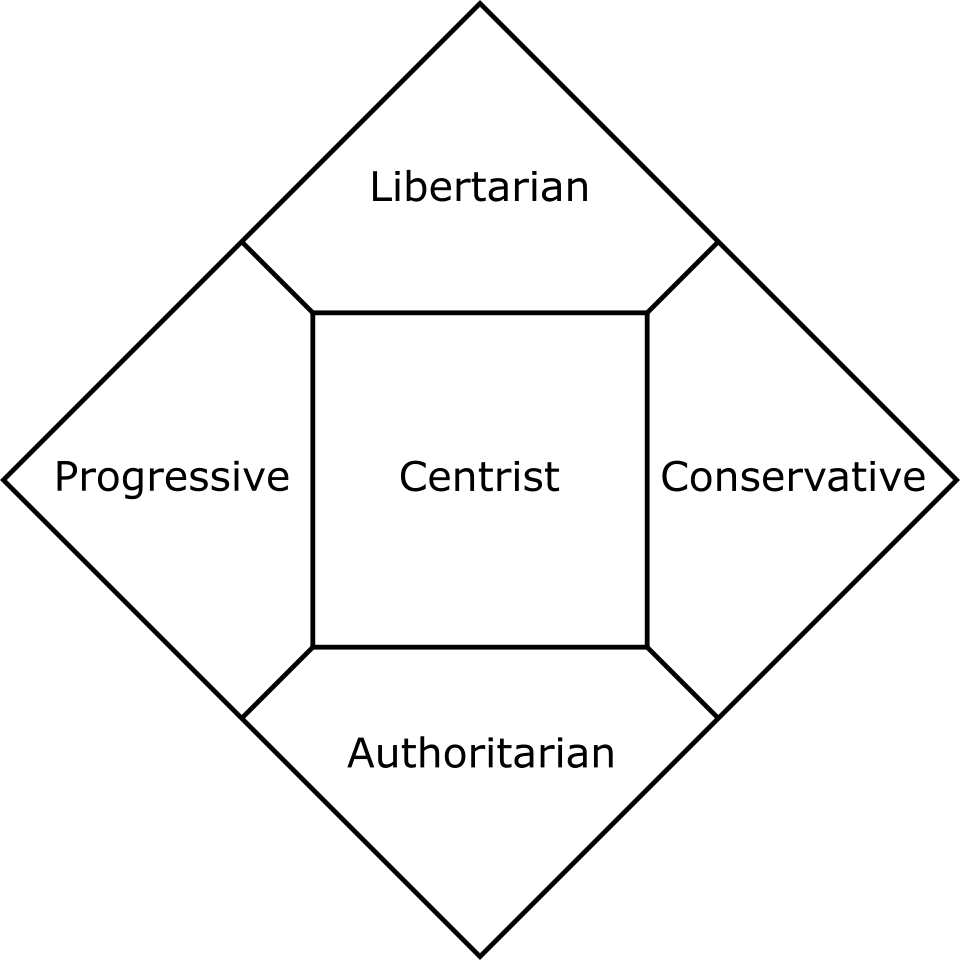
- Liberalism (left) emphasizes equality of outcome, active government intervention to address market failures and injustice, and expansion of individual rights (particularly for marginalized groups). Liberals believe government should regulate business, provide social safety nets, and protect rights through legislation. On social issues, liberals generally favor abortion rights, LGBTQ+ equality, and racial justice initiatives. On economic issues, they support progressive taxation (where wealthy pay higher rates) and robust public spending.
- Conservatism (right) emphasizes individual responsibility, limited government, free markets, and traditional institutions. Conservatives believe excessive government intervention creates inefficiency, dependence, and loss of personal freedom. Social conservatives prioritize traditional values, religious liberty, and family-centered policies. Fiscal conservatives prioritize tax cuts and reduced spending. The two wings don’t always align — a fiscal conservative might oppose government spending on any program, while a social conservative might support government restrictions on abortion.
- Libertarianism occupies a unique space: economically conservative (free markets, low taxes, minimal regulation) but socially liberal (oppose government restrictions on personal behavior, drug legalization, skeptical of military intervention). Libertarians consistently argue for the smallest possible government footprint across all issues.
- Populism is not a position on the left-right spectrum but rather a style of politics that claims to represent “the people” against corrupt elites. Modern populism appears on both left (Bernie Sanders criticizing Wall Street) and right (Trump’s anti-establishment message). Populists often combine economic skepticism of big business with skepticism of traditional political institutions.
Why does this matter for the exam? The AP test assumes you can recognize when a policy position reflects a specific ideological perspective and explain the underlying values driving that position. You might see a question asking: “Which of the following policy positions reflects liberal ideology?” and need to identify which option emphasizes government intervention and equality. Or you might analyze why conservatives and liberals disagree on a specific issue — the answer lies in their fundamentally different views about government’s role.
The Four Pillars of Ideological Disagreement: Economic, Social, Foreign Policy, and Environmental
Political ideology manifests across four major domains where American voters and politicians genuinely disagree. Understanding each pillar helps you predict where candidates and parties will stand on unfamiliar issues.
| Policy Domain | Liberal Position | Conservative Position | Exam Relevance |
|---|---|---|---|
| Economic Policy | Progressive taxation (higher rates for wealthy); robust social safety net (unemployment, SNAP, housing assistance); government regulation of business to prevent exploitation and environmental harm; higher minimum wage; union support | Lower taxes across the board; reduced government spending; deregulation to encourage business growth and innovation; lower minimum wage or elimination of wage floors; skepticism of unions | Appears in nearly every exam cycle. Watch for questions on tax policy, social welfare programs, or labor regulation. Common FRQ prompt: “Explain how ideological differences lead to disagreement over [economic policy].” |
| Social/Cultural Policy | Abortion access; LGBTQ+ equality and marriage rights; affirmative action and race-conscious policies; comprehensive sex education; gun control; criminal justice reform; immigration pathways | Abortion restrictions or bans; traditional family values; race-neutral/colorblind policies; abstinence-focused education; gun rights; tough-on-crime policies; stricter immigration enforcement | Extremely high-frequency topic. Questions often ask about cultural divides (abortion, gun control) or how ideology shapes views on specific groups’ rights. Expect FRQ on social policy disagreements. |
| Foreign Policy | Multilateralism and diplomacy; international cooperation (UN, NATO, climate agreements); caution on military intervention; foreign aid; human rights focus | National interest prioritization; skepticism of international agreements that constrain US autonomy; strong military preparedness; willingness to use force unilaterally if necessary; realpolitik approach | Medium frequency. Less common than domestic social/economic policy but appears regularly. Watch for questions on presidential foreign policy decisions or international agreements. |
| Environmental Policy | Climate change is real and requires urgent government action; strict environmental regulations; clean energy investment; international climate cooperation | Skepticism of climate science or extent of human impact; preference for market-based solutions over regulation; concern that environmental rules hurt business and jobs; caution on international climate commitments | Growing frequency on recent exams. Questions focus on climate policy, energy regulation, or cost-benefit analyses of environmental rules. Common: “Which ideological perspective best supports [environmental policy]?” |
The key insight: these disagreements aren’t random. They flow from fundamental ideological premises. A liberal supports strict environmental regulations because they believe government should intervene to protect public welfare and prevent market externalities. A conservative opposes those same regulations because they prioritize economic freedom and trust market incentives over mandates. Once you understand the underlying ideology, you can predict positions on novel issues you’ve never explicitly studied.
Core Ideological Values and How They Drive Policy
Below are the foundational values that underpin left-right disagreement. Mastering these gives you the conceptual toolkit to analyze any policy dispute on the exam.
- Role of Government — Liberals see government as a tool for collective problem-solving and justice. Conservatives see government as inherently limited in what it can effectively do and worry about overreach. This divide explains every major economic policy disagreement: should government mandate health insurance (liberal: yes, it ensures universal coverage; conservative: no, markets are more efficient) or set a minimum wage (liberal: yes, it protects workers; conservative: no, it causes job loss)?
- Equality vs. Liberty — Liberals prioritize reducing inequalities (through progressive taxation, affirmative action, anti-discrimination laws). Conservatives prioritize individual liberty and worry that equality-focused policies restrict freedom and incentives. A conservative views strict environmental regulations as restricting their liberty to use their property as they wish. A liberal views those same regulations as protecting the equality of all citizens’ right to clean air and water.
- Individual vs. Collective Responsibility — Conservatives emphasize individual responsibility: if you’re poor, you should work harder or seek help from family/community/charity, not government. Liberals emphasize that circumstances (racism, poverty, health, education access) constrain individual choice, so government must level the playing field. This explains disagreement over welfare: conservatives worry it discourages work; liberals argue it recognizes systemic barriers.
- Traditional Values vs. Progress — Conservatives often prioritize maintaining traditional institutions, family structures, and social norms. Progressives prioritize expanding rights and challenging hierarchies (racial, gender, sexual orientation). This drives cultural debates on school curriculum, religious liberty, and LGBTQ+ policy. A conservative supports religious exemptions from anti-discrimination law; a liberal sees that as enabling discrimination.
- National Interest vs. International Cooperation — Conservatives are more skeptical of international agreements and institutions that might constrain US autonomy. Liberals favor multilateral approaches and see international cooperation as essential for solving global problems. This explains different views on trade agreements, climate treaties, and military alliances.
Why Ideology Matters in Electoral Politics and Policy Outcomes
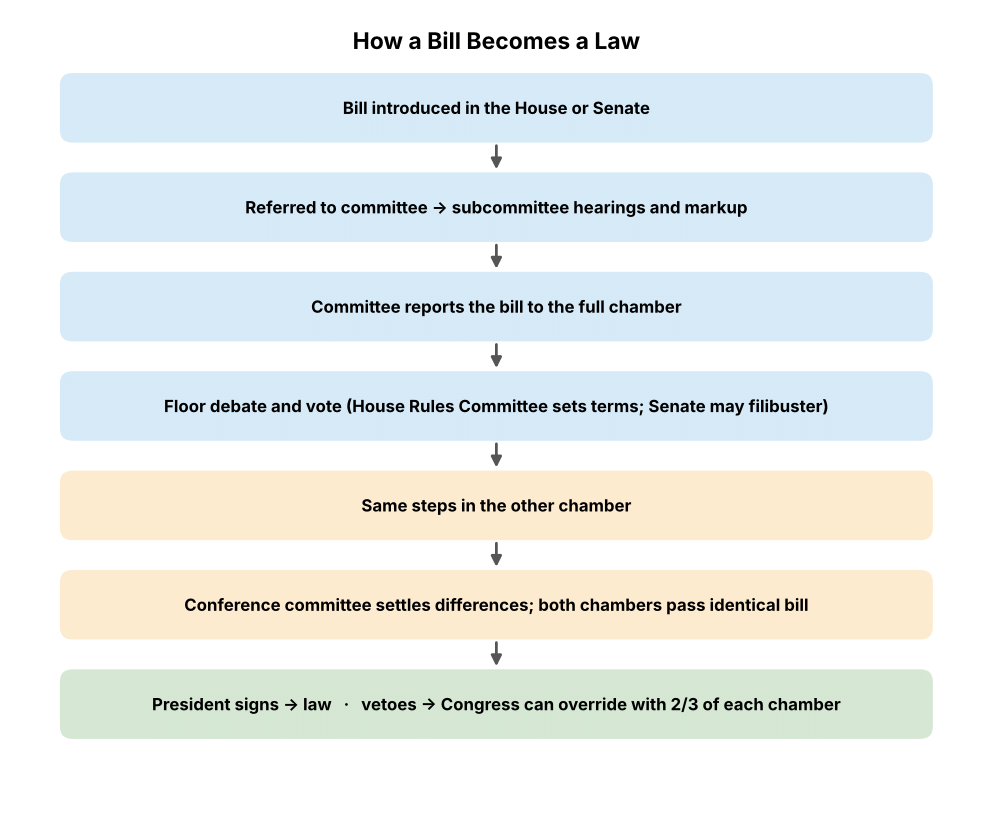
Ideology isn’t just abstract philosophy — it directly shapes electoral coalitions, legislative outcomes, and government priorities. Understanding this connection is essential for the AP exam.
Electoral Coalitions — The Democratic Party in 2024 draws heavily from college-educated voters, minorities, young people, and urban residents — groups more likely to hold liberal views. Republicans draw from white non-college voters, rural and suburban residents, evangelical Christians, and business owners — groups more aligned with conservative ideology. Politicians craft platforms to appeal to their ideological base while trying to win over swing voters in the middle. On the exam, you might analyze how a candidate’s ideological appeal to the base affects their general election viability, or how demographic changes shift the ideological center of a party.
Legislative Gridlock — When Congress is ideologically divided (one party conservative, one liberal), passing legislation becomes harder. A conservative Republican House and liberal Democratic Senate will struggle to compromise because their core values genuinely conflict. You should be able to explain why certain policies stall in Congress: not just “partisan polarization” but specifically “because the ideological gap between the two parties on this issue is wide, compromise is difficult.”
Ideological Realignment — American politics has experienced major realignments where party coalitions shifted. The New Deal realignment (1930s-1960s) created a Democratic majority by adding working-class voters and minorities. The Southern Strategy and conservative realignment (1960s-1980s) moved white Southerners and social conservatives into the Republican Party. Understanding these requires analyzing how ideology mapped onto parties differently across eras. On the exam, you might explain why parties’ positions on race, economics, or culture have shifted over time — the answer involves ideological realignment.
Navigating Nuance: When Ideology Doesn’t Fit the Stereotype
The left-right spectrum is useful but imperfect. Real voters and politicians often hold contradictory positions, and you need to be able to recognize complexity on the exam.
- Economic populism + social conservatism — Many working-class conservatives support unions, infrastructure spending, and social security while opposing abortion and LGBTQ+ rights. This combination doesn’t fit neatly on a left-right line. The exam might ask: “Which statement best reflects this voter’s ideology?” and expect you to recognize the mixed position.
- Fiscal conservatism + social liberalism — Some wealthy, urban professionals oppose government spending but support LGBTQ+ rights and abortion access. The exam could test whether you recognize that someone can be fiscally conservative and socially progressive simultaneously.
- Ideological intensity — Not all liberals or conservatives are equally ideological. Some are “moderate liberals” or “moderate conservatives” who hold positions closer to the center and are more willing to compromise. The exam might feature a scenario where a moderate politician from one party negotiates with a moderate from the other — recognizing that both are ideologically flexible is important.
- Regional and historical variation — A “conservative” in California might hold different positions than a “conservative” in Texas. The exam expects you to understand how local context, demographics, and history shape ideological expression within the left-right framework.
Test-Taking Strategies
Mnemonic Devices and Memory Shortcuts
Create this acronym to remember the four pillars of ideological disagreement: EASE (Economic, Abroad/foreign policy, Social/cultural issues, Environment). When you see a policy question, quickly ask yourself: “Is this about economic policy, foreign policy, social/cultural issues, or environmental protection?” Then recall the typical liberal and conservative positions in that domain.
For the core values driving ideology, use GIR-T: Government role, Inequality/Equality, Responsibility (individual vs. collective), Tradition vs. Progress. Add the fifth value, National interest vs. international cooperation, for foreign policy questions. Together these explain virtually every ideological disagreement on the AP exam.
Cross-Topic Connections
Ideology connects directly to three other high-frequency topics:
- Topic 4.7: Ideologies of Political Parties — Ideological sorting has increased polarization. The exam might ask how party coalitions became more ideologically consistent over time, or why contemporary parties have stronger ideological boundaries than in the past.
- Topic 5.6: Interest Groups Influencing Policy Making — Interest groups are organized around ideological worldviews. Liberals support environmental groups; conservatives support business groups. Understanding ideology helps you analyze which groups lobby for which policies and why.
- Topics 2.1-2.15 (Legislative, Executive, Judicial topics) — Ideology shapes how branches of government approach power. A conservative Supreme Court interprets the Constitution more narrowly; a liberal Court expands rights. The exam frequently asks how ideology influences a specific branch’s decisions.
Common Question Formats
Watch for these exact question structures:
- “Which of the following best reflects a liberal/conservative ideology?” — Tests whether you can recognize a position that flows from ideological values. The answer should align with the ideology’s core beliefs about government, equality, liberty, or tradition.
- “A policymaker holds positions X, Y, and Z. Which ideology best describes their views?” — Tests whether you can synthesize multiple positions into a coherent ideological framework. You need to identify which values unify the positions.
- “Liberals and conservatives would most likely disagree on which of the following?” — Tests whether you understand the genuine ideological divides. The correct answer will be an issue where the two sides have fundamentally opposed values, not just different opinions on facts.
- FRQ on policy disagreement: “Explain how ideological differences between [Party A] and [Party B] lead to disagreement over [policy area]. In your response, describe both perspectives and explain how their underlying values produce different policy preferences.” — Requires you to move from surface-level position to deep ideological explanation.
Frequent Student Mistakes
- Confusing ideology with partisanship — Ideology is a set of values; partisanship is loyalty to a party. A Republican might hold some Democratic positions on specific issues (ideological inconsistency), and the exam expects you to recognize this. Don’t assume every Democrat holds every liberal position or vice versa.
- Treating the left-right spectrum as exhaustive — Some voters are “populist” (angry at elites) or “libertarian” (conservative on economics, liberal on social issues) and don’t fit neatly left or right. When a question asks about ideology, consider whether the person’s positions span the traditional spectrum.
- Missing the “why” behind disagreement — The exam rewards deep understanding. “Conservatives oppose environmental regulations” is surface-level. “Conservatives oppose environmental regulations because they prioritize individual liberty and economic growth over government mandates” demonstrates ideological understanding. Always explain the values driving the disagreement, not just the disagreement itself.
- Assuming intensity of belief — A “moderate liberal” and a “progressive liberal” both hold liberal positions, but with different intensity and willingness to compromise. The exam might ask how ideological intensity affects legislative outcomes. Don’t overlook the moderate middle.
Test-Day Shortcuts
- When in doubt, start with “role of government” — If you can’t immediately identify an answer as liberal or conservative, ask: “Does this position expand government, or limit it?” Liberals expand; conservatives limit. This single question resolves approximately 70% of ideology-based multiple choice questions.
- Use policy positions to infer underlying values — Don’t memorize every policy. Instead, if you see an unfamiliar position, ask which core value it reflects. “Should government mandate health insurance?” → This is about government’s role and collective responsibility. Liberals say yes (active government, shared responsibility); conservatives say no (limited government, individual responsibility). You can reason your way to the answer even if you haven’t seen that exact question.
- Recognize coded language — Certain phrases signal ideological positions. “Personal responsibility” and “individual freedom” signal conservatism. “Social justice,” “systemic inequality,” and “government intervention” signal liberalism. On the exam, these phrases are clues to the underlying ideology.
Time Management Tips
- Ideology questions are usually quick — Unlike questions requiring deep historical knowledge, ideology questions test pattern recognition. If you understand the four pillars (Economic, Social, Foreign Policy, Environment) and the five core values, you can answer most ideology-based questions in under two minutes. Don’t overthink these; they’re designed to reward conceptual clarity.
- Use ideology as a check on other topics — If you’re uncertain about a question on environmental policy, interest groups, or judicial decisions, sometimes you can work backward using ideology. “Would a conservative or liberal approach support this?” can confirm or challenge your initial answer.
- Save FRQ explanation space for values, not positions — On FRQ prompts asking you to explain ideological disagreement, allocate your writing space to explaining the underlying values driving each side’s position. Graders reward “because liberals value equality” over “because liberals want government involvement.” Values are the foundation; positions are the consequence.
Check for Understanding
Think you’ve got it? Complete the quiz below to make sure. Download your results at the end.