
Maximize your score with these resources:
- Albert.io AP® US Government question banks
- Free AP® US Government cheat sheets
- Free AP® US Government score calculator
Political ideology shapes how policymakers approach government. On the AP® US Government exam, understanding ideology and policymaking accounts for 10-15% of the exam weight, and it shows up across multiple question formats: MCQs that test your understanding of different ideological perspectives, FRQs that ask you to analyze policymaking within an ideological framework, and stimulus-based questions that present conflicting policy proposals and ask you to explain the ideological assumptions behind them. This article covers Topic 4.8: Ideology and Policymaking (Learning Objectives PMC-4.A, PMC-4.B, PMC-4.C), giving you the knowledge and strategies to ace these questions.
You’ll learn what political ideology is and how it drives policy decisions, examine the major ideological perspectives in American politics, see how ideology shapes specific policy areas, and master the test-taking strategies that help you recognize ideological patterns under exam pressure.
What Is Political Ideology and Why It Matters for Policy
Political ideology is a coherent set of beliefs about the role of government, the proper relationship between the individual and the state, and the best approach to social and economic problems. It’s not just abstract theory — it directly shapes which policies politicians support, how they justify those policies to voters, and which coalition partners they choose. On the exam, you’ll see ideology tested as a lens through which to understand why politicians and interest groups take the positions they do.
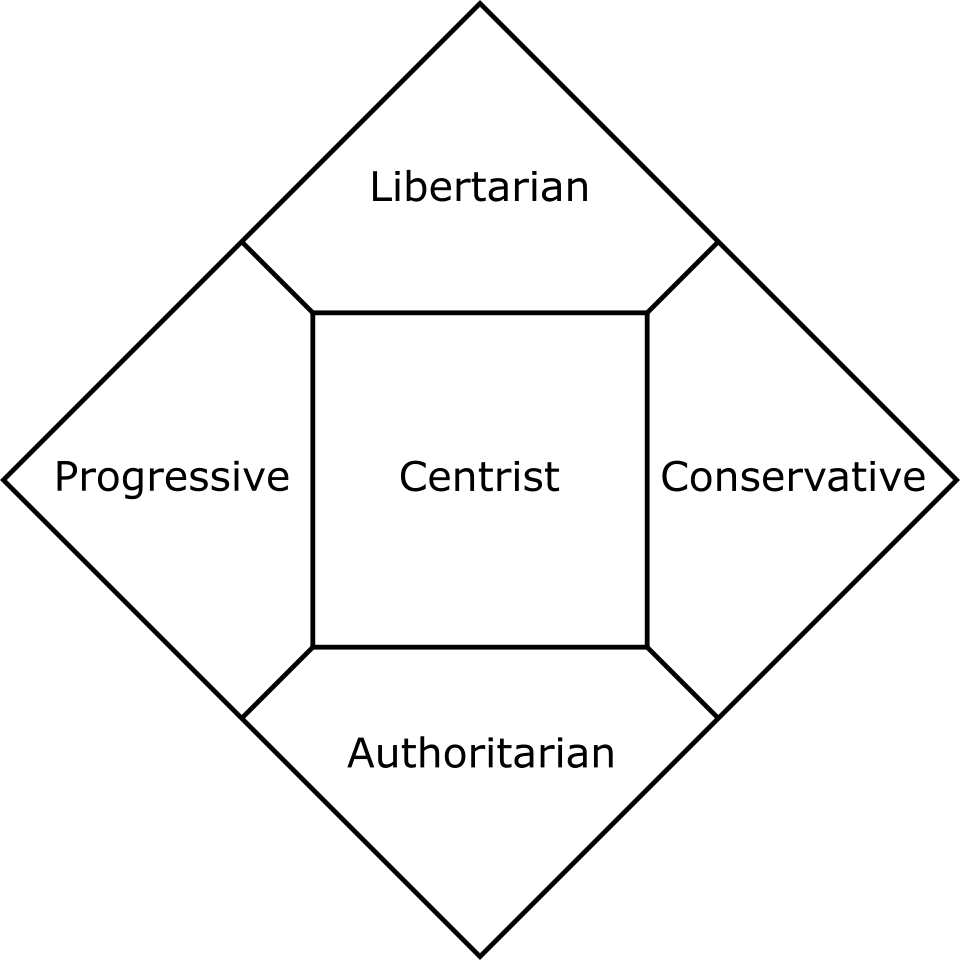
Here’s why this matters: When you see a policy proposal on the exam, you need to understand the ideological assumptions beneath it. A proposal to expand the Earned Income Tax Credit (EITC) comes from an ideological belief that the government should help low-income workers participate in the market economy. A proposal to cut corporate taxes comes from an ideological belief that lower taxes stimulate economic growth. Neither position is “correct” in an absolute sense — both rest on different ideological premises about how the economy works and what government should do.
Key point: The exam doesn’t ask you to agree with any ideology. It asks you to recognize ideological patterns, explain why someone holding a particular ideology would support a particular policy, and understand the trade-offs between different ideological approaches. This requires you to think like a political analyst, not a partisan.
The Conservative Ideology and Its Policy Preferences
Conservatism in American politics emphasizes limited government, individual responsibility, free markets, and traditional values. The core conservative argument is that individuals and families (not government) should be the primary units solving social problems, and that markets generally allocate resources more efficiently than government bureaucracies.
Here’s what defines conservative ideology and where you’ll see it in policy debates:
- Limited government and lower taxes. Conservatives argue that excessive government spending crowds out private investment, raises taxes to unsustainable levels, and reduces individual freedom. You’ll see this ideology in conservative opposition to expansions of social programs, support for tax cuts (especially for businesses and high earners), and skepticism about new government initiatives. The belief is that when government takes less money through taxes, people keep more of their earnings and can address their own needs — a philosophy often summarized as “the government that governs least governs best.”
- Free market solutions. Rather than government regulation, conservatives prefer market-based approaches. In healthcare policy, this translates to support for Health Savings Accounts and market competition rather than government-run insurance. In environmental policy, it might mean support for cap-and-trade systems (which use markets to reduce pollution) rather than command-and-control regulations. The assumption is that businesses and individuals, responding to price signals and competition, will make better decisions than government planners.
- Individual responsibility and skepticism of welfare. Conservatives worry that extensive social safety nets create dependency and reduce incentives to work. This shapes conservative positions on welfare policy, unemployment benefits, and poverty programs. It doesn’t mean conservatives oppose all assistance to the poor — but they tend to prefer time-limited benefits with work requirements, private charity, and community-based solutions to long-term government entitlements.
- Traditional values and a strong national defense. Economic conservatism often pairs with social conservatism (emphasis on traditional family structures, religious liberty, and moral principles) and nationalist positions on foreign policy (strong military spending, skepticism of international agreements that constrain American sovereignty). These aren’t automatically connected — someone could be economically conservative but socially liberal — but in American politics they often align.
Why this matters for the exam: When you encounter a policy proposal to cut federal spending on education, expand work requirements in welfare programs, or reduce environmental regulations, you need to recognize the conservative ideology underlying it. The conservative doesn’t oppose education or environmental protection — they believe these things are better handled by states, private institutions, families, or markets than by the federal government.
The Liberal Ideology and Its Policy Preferences
Liberalism in American politics (often called “progressivism” or “left-wing” ideology) emphasizes an active government role in addressing market failures and social problems, reducing economic inequality, and protecting vulnerable groups. The core liberal argument is that unregulated markets create injustice, that government has a responsibility to correct these failures, and that collective action through government is necessary for progress.
Here’s what defines liberal ideology and where you’ll see it in policy:
- Active government to solve social problems. Liberals see government as the institution best positioned to address large-scale problems like poverty, pollution, discrimination, and health crises. This shapes support for programs like Social Security, Medicare, Medicaid, and the Affordable Care Act. The logic is straightforward: individual action and charity have not eliminated poverty or ensured healthcare access, so government action is necessary. Liberals see the expansion of the social safety net throughout the 20th century as a moral achievement, not a mistake.
- Reducing inequality and protecting the vulnerable. Liberal ideology prioritizes equity — the fair distribution of resources and opportunities. This drives support for progressive taxation (higher earners pay higher tax rates), labor protections (minimum wage, workplace safety), civil rights enforcement, and programs targeted at disadvantaged groups. A liberal looks at income inequality and sees a moral problem that government should address. A conservative looks at the same data and worries that government intervention will reduce economic growth.
- Regulation of markets and business. Liberals see markets as prone to failure: monopolies that exploit consumers, pollution that harms everyone, unsafe working conditions, predatory lending. This ideology supports environmental regulation, consumer protection agencies, financial regulation, and antitrust enforcement. The belief is that government oversight ensures that markets work in the public interest.
- Expansive civil rights and individual liberty in personal matters. While conservatives emphasize traditional values, liberals emphasize individual autonomy in personal choices — reproductive rights, marriage rights for LGBTQ individuals, freedom of conscience. Combined with the emphasis on equal protection, this shapes liberal positions on discrimination law, voting rights, and immigration policy.
Why this matters for the exam: When you see a policy proposal to expand the minimum wage, strengthen environmental regulations, or increase healthcare access through government programs, you’re seeing liberal ideology at work. The liberal doesn’t believe in government for its own sake — they believe government action is necessary to create fairer, more just outcomes than unregulated markets produce.
Ideology and Policy Trade-offs Across Key Issue Areas
The exam tests ideology most effectively when you understand how the same underlying ideology produces consistent positions across different policy areas. Here’s a table showing how conservative and liberal ideologies shape policy in major areas:
| Policy Area | Conservative Approach | Liberal Approach | The Ideological Divide |
|---|---|---|---|
| Healthcare | Market-based: individual choice, competition, lower government spending. Support for HSAs, private insurance, reduced Medicaid. Skeptical of government ability to manage large systems efficiently. | Government responsibility: universal or near-universal coverage through government programs or heavy regulation. Medicare for All or ACA expansion. View healthcare as a right, not a consumer good. | Does government or markets best allocate healthcare? Is healthcare a right or a service? Should the focus be on choice/cost or universal access? |
| Taxation and Spending | Lower tax rates across the board, especially on high earners and corporations. Lower government spending. Tax cuts more important than deficit reduction. Belief that lower taxes stimulate growth (“supply-side” economics). | Progressive taxation (higher rates for higher incomes). Willingness to accept higher government spending on social programs. Belief that government investment in infrastructure, education, research drives growth. | Who should bear the tax burden? Does government spending help or harm the economy? How much inequality is acceptable? |
| Environmental Policy | Skeptical of heavy regulation. Support for market-based approaches (cap-and-trade, tradeable permits). Concern that regulations harm business competitiveness and economic growth. Emphasis on property rights and liability law. | Government regulation is necessary. Support for Clean Air Act, Clean Water Act, climate regulations. Belief that markets alone won’t adequately protect the environment. Willing to accept higher costs if necessary for environmental protection. | Can markets solve environmental problems or does government regulation require stepping in? How much economic cost is acceptable to protect the environment? |
| Education Policy | School choice, vouchers, charter schools, homeschooling. Reduce federal spending and involvement. Local control through school boards. Skepticism about teacher unions. | Robust government funding for public schools. Opposed to vouchers (seen as draining resources from public schools). Federal involvement to ensure equal opportunity and reduce achievement gaps. Support teacher unions and worker protections. | Should education be a public good funded by government or a service responsive to individual choice? Who should control schools? |
| Criminal Justice | Emphasis on law and order, tough sentencing, police authority. Skeptical of restrictions on law enforcement. “Get tough on crime” mentality. Capital punishment generally supported. | Emphasis on rehabilitation, root causes (poverty, lack of opportunity), criminal justice reform. Skeptical of mass incarceration. Support for sentencing reform and alternatives to incarceration. | Is crime best addressed through punishment and deterrence or rehabilitation and addressing root causes? How much should we prioritize criminal defendants’ rights vs. public safety? |
| Immigration Policy | Emphasis on border security and enforcement. Skeptical of expansive immigration levels. Concern about illegal immigration and jobs for citizens. Support for deportation of unauthorized immigrants. | More open immigration policy. Concern about humanitarian impact of enforcement. Support for pathways to citizenship. View immigration as economically beneficial and culturally valuable. | What level of immigration serves the national interest? How should government balance border security with humanitarian concerns? |
Why this table matters: This isn’t a list of random disagreements. Each pair of positions flows from a consistent ideological starting point. Once you understand that conservatives prioritize limited government and markets while liberals prioritize active government and equity, you can predict where someone with a particular ideology will stand on an unfamiliar policy question. That predictive power is exactly what the exam tests.
Moderates, Libertarians, and Populists: Beyond the Spectrum
While the conservative-liberal divide dominates American politics, the exam also expects you to understand other ideological positions that don’t fit neatly on that spectrum.
- Moderates and centrists fall between the conservative and liberal poles. They might support some government intervention in the economy but worry about high taxes and inefficiency. They might emphasize individual rights but also support targeted social programs. Many moderate positions emerge from pragmatism (what actually works) rather than ideological purity. On the exam, moderates are important because they represent the “median voter” — the person politicians in both parties must appeal to in order to win elections.
- Libertarians go further than traditional conservatives in opposing government intervention. They oppose government regulation of business, restrictions on personal behavior (drug use, sexual orientation), and most government spending. They’re consistent on the principle of individual liberty: government should protect your right to do what you want as long as you don’t harm others, but shouldn’t regulate personal choices or redistribute wealth. You’ll see libertarian ideas in debates over drug legalization, privacy rights, and deregulation — areas where libertarians sometimes ally with liberals (on personal freedom) and sometimes with conservatives (on limiting government).
- Populists combine anti-establishment rhetoric with policy positions that don’t fit traditional left-right categories. A populist might combine opposition to big corporations with opposition to big government, or combine concern for working-class welfare with restrictive immigration policy. Populism emphasizes that ordinary people (the “people”) are being cheated by elites (corporate interests, political establishment). The Tea Party movement (a conservative-populist hybrid) and Trump’s appeal to working-class voters (a populist approach) show how populism reshapes traditional coalitions.
On the AP exam, you don’t need to master these ideologies in depth — but you should recognize when a position doesn’t fit neatly into the conservative-liberal framework. That recognition shows sophisticated political analysis.
Test-Taking Strategies
Mnemonic devices and memory shortcuts
To remember the core conservative and liberal positions across policy areas, use this framework:
- CONSERVATIVE = LMI: Limited government, Markets (preferred over regulation), Individual responsibility (over government help). When you see a conservative policy, ask: “Does it limit government, rely on markets, or emphasize personal choice?”
- LIBERAL = GAE: Government action (to solve problems), Active regulation (of business and markets), Equity (reduce inequality, protect vulnerable groups). When you see a liberal policy, ask: “Does it expand government, regulate, or address inequality?”
This framework works across healthcare, taxation, environment, education, criminal justice, and immigration. If you can recall these three letters and what they stand for, you can reason through unfamiliar policy questions.
Cross-topic connections
Ideology connects directly to these other AP® US Government topics:
- Topic 2.1-2.7 (Congress and the President): Political parties are organized around ideological coalitions. Understanding why someone votes a certain way requires understanding their ideology. Conservative and liberal legislators support different legislation based on these core beliefs.
- Topic 5.6-5.7 and 2.12-2.14 (Interest Groups and the Bureaucracy): Interest groups are often organized around ideological lines (conservative think tanks, environmental organizations). Bureaucratic agencies implement policy driven by the ideology of the administration in power.
- Unit 3 (Civil Rights and Civil Liberties): Ideology shapes positions on rights and liberties. Conservatives emphasize religious liberty and property rights; liberals emphasize equal protection and expansive personal freedoms.
- Topic 4.5-4.6 (Public Opinion): Political polarization is fundamentally about ideology. Understanding why the country is divided requires understanding the conservative-liberal divide.
Common question formats
Ideology questions appear in these formats on the AP exam:
- MCQ format 1: Policy position identification. “Which of the following policy positions is most consistent with a conservative ideology?” You’ll see four policy statements and need to pick the one that aligns with conservative principles of limited government and markets.
- MCQ format 2: Stimulus-based ideology. You’re given a quote from a politician or document expressing a policy position, and you must identify the ideology. The stimulus might be a recent speech or a historical document arguing for a particular policy approach.
- FRQ format 1: Explain ideological reasoning. “Explain why a conservative and a liberal would take different positions on X policy. Why do they disagree?” You must show that you understand the core values driving each ideology, not just memorize different positions.
- FRQ format 2: Policy analysis across areas. “Show how a person with a consistent conservative ideology would likely respond to three different policy proposals.” This tests whether you see ideology as coherent across issues, not a random collection of positions.
- Data-based questions: You might see polling data showing that support for a policy breaks down along ideological lines. You need to explain why — what’s driving the difference in opinion?
Frequent student mistakes
- Mistake 1: Treating ideology as random preference. Students sometimes think “Well, some people are conservative and some are liberal” without understanding why. Wrong. Ideology is coherent. Once you know someone opposes government welfare, you can predict they’ll likely support lower taxes and be skeptical of environmental regulation — because all three flow from the same belief about limited government. Avoid this by always asking: “What core belief drives this position?”
- Mistake 2: Confusing liberal (political ideology) with liberal (open-minded). In everyday language, “liberal” means open-minded. In politics, “liberal” is a specific ideology emphasizing active government and equity. They’re not the same thing. A conservative can be open-minded and a liberal can be dogmatic. Keep the terms distinct on the exam.
- Mistake 3: Assuming ideology determines all political behavior. Ideology is important, but it’s not the only thing shaping policy. Regional interests, party pressure, lobbying, public opinion, and personal values all matter. A conservative from a coal-producing state might oppose climate regulation partly from ideology but also because it protects their constituents’ jobs. Avoid assuming someone’s ideology explains 100% of their position.
- Mistake 4: Thinking “moderate” means not ideological. Some students treat moderates as having no ideology, just “meeting in the middle.” Wrong. Moderates have coherent ideological positions — they just aren’t at the extremes. A moderate might believe in market solutions for most things but also support government safety nets, or support strong environmental regulation but believe it should be market-based rather than command-and-control.
Test-day shortcuts
- On MCQs about positions: Immediately identify whether the position involves government action or limiting government. If it expands government’s role, conservative is wrong. If it emphasizes individual choice and markets, liberal is likely wrong. This eliminates at least one option instantly.
- On stimulus-based ideology questions: Look for the operative language in the quote. Words like “government must,” “regulation,” “fairness,” and “equal” point to liberal ideology. Words like “government should not,” “free market,” “individual,” and “responsibility” point to conservative ideology. Don’t read the whole stimulus — locate the ideological keyword.
- On FRQs asking you to explain disagreement: Use this template: “A [conservative/liberal] believes [core ideological principle]. This leads them to support [policy] because [explain the connection]. A [liberal/conservative] believes [opposite principle], so they oppose [policy].” This structure guarantees you’re explaining ideology, not just listing different positions.
- When you encounter an unfamiliar policy: Apply the LMI and GAE frameworks. If the policy limits government and relies on markets, it’s conservative. If it expands government to address inequality, it’s liberal. You don’t need to memorize every policy position if you understand the principles.
Time management tips
- On MCQs: If you understand the ideological frameworks, ideology questions are often the fastest to answer. Don’t overthink them — identify whether it’s about government action or limiting government, and choose your answer. Spend 45 seconds maximum on these.
- On FRQs: Spend 30 seconds outlining your response before writing. “Explain ideological disagreement on healthcare: Conservative = markets/choice, Liberal = government/access. Then flesh out each position.” This outline prevents rambling and keeps you on topic.
- Prioritizing: If a question asks you to analyze ideology without specifying conservative OR liberal, don’t try to discuss both positions. Pick one and explain it deeply. Showing you understand one ideology completely is better than showing you half-understand both.
Check for Understanding
Think you’ve got it? Complete the quiz below to make sure. Download your results at the end.