

Maximize your score with these resources:
Chapter 4 of Don Quijote Parte I delivers Cervantes’s sharpest early demonstration of the gap between idealism (idealismo) and reality — and its real human cost. In two rapid episodes, Don Quixote “rescues” a boy being beaten by his employer, then attacks merchants who refuse to swear an oath about Dulcinea’s beauty. Both interventions backfire catastrophically: Andrés is beaten again the moment Don Quixote leaves, and one of the merchants’ mule boys thrashes Don Quixote thoroughly. For the AP® Spanish Literature exam, this chapter is essential for understanding dramatic irony (ironía dramática), the episodic structure of the novel, and the tragic dimension of quixotic idealism.
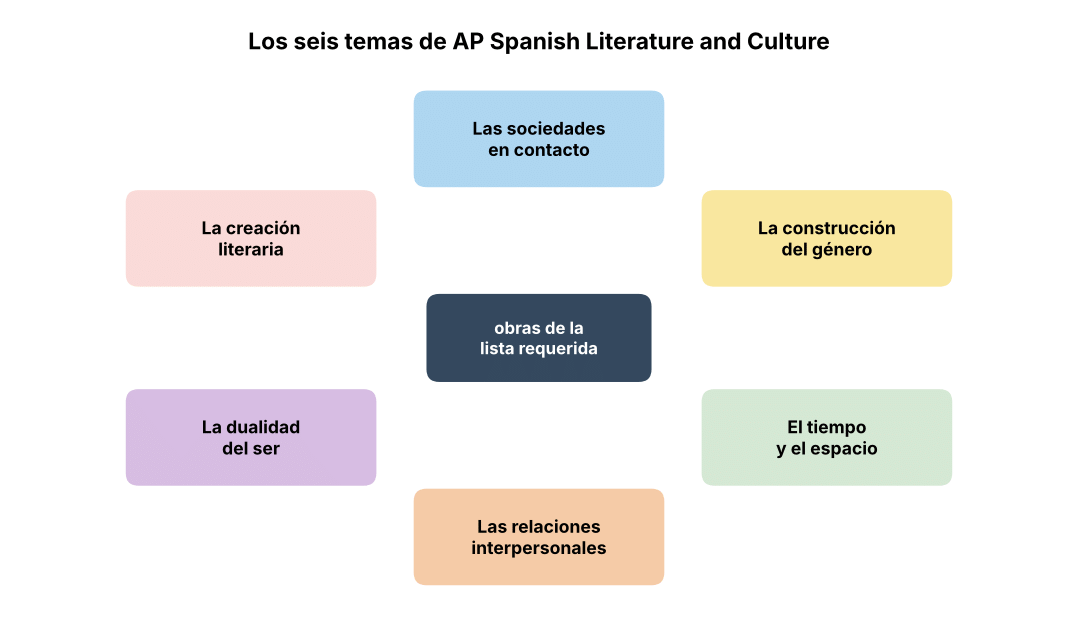
This chapter connects directly to the tension between self and community: Don Quixote’s interventions reveal the consequences of acting on private convictions in a community that doesn’t share your framework. It also illuminates Las relaciones interpersonales: the Andrés episode exposes how power operates between employer and employee, and how a well-intentioned outsider can worsen power imbalances rather than correct them.
The Encounter with Andrés and the First Intervention
Don Quixote encounters a young boy, Andrés, being beaten by his employer Juan Haldudo over a wage dispute. Don Quixote reads this as a classic chivalric scenario: an innocent oppressed by a tyrant, awaiting a knight’s intervention.
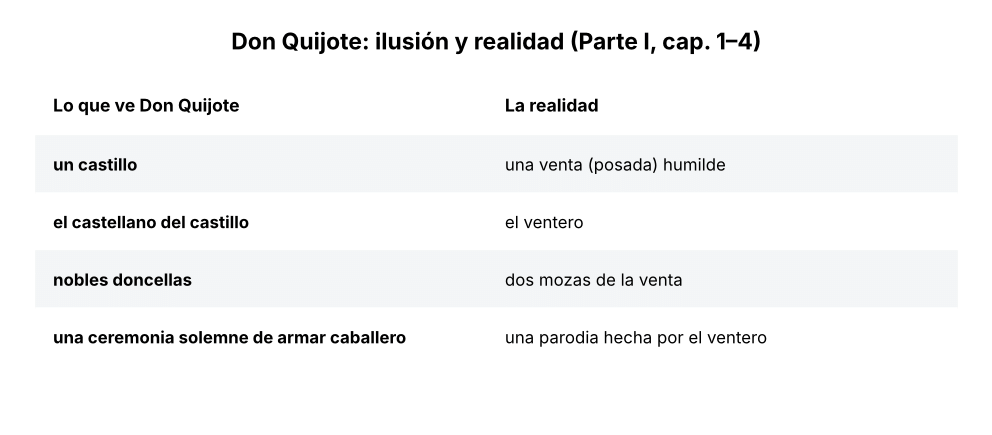
He intervenes theatrically, forces Haldudo to acknowledge Andrés’s innocence, and demands the boy be paid. Haldudo agrees and swears by the orders of chivalry to pay — but says he has no money with him and Andrés must come home with him. Don Quixote rides away convinced he has achieved justice. The moment he leaves, Haldudo beats Andrés worse than before and abandons him without payment.
Why this matters for AP: Don Quixote sees what he expects to see (a chivalric scenario) rather than what is actually happening (a complex labor dispute). His well-intentioned action harms the very person he means to help. This pattern — idealistic intervention producing worse outcomes — is the engine of Cervantes’s critique throughout the novel.
The Merchants Episode
| Key Element | What Happens | What It Reveals |
|---|---|---|
| Don Quixote’s demand | He insists strangers swear about Dulcinea’s supreme beauty — a woman they have never met | His idealism has become disconnected from shared reality; he expects his invented mythology to be accepted as fact |
| The merchants’ hesitation | They refuse to make an oath they cannot verify — a rational response | This contrast sharpens the novel’s central conflict: pragmatic reason versus quixotic delusion |
| Escalation to violence | Don Quixote attacks over an oath no reasonable person would demand | Idealism divorced from reason produces aggression; his madness has real, harmful consequences |
Themes
| Theme | How It Appears in Chapter 4 | Significance for AP |
|---|---|---|
| Idealism versus pragmatism (idealismo vs. pragmatismo) | Don Quixote acts from pure idealism without verifying facts, confirming promises, or considering consequences | Cervantes shows that pure idealism without follow-through produces harm |
| Justice versus injustice (justicia vs. injusticia) | Don Quixote pursues justice but fails to achieve it: Andrés suffers more, innocent merchants are attacked | Cervantes asks: what does justice mean when the person seeking it is deluded? |
| Perception versus reality (percepción vs. realidad) | Andrés is a worker in a wage dispute, not a chivalric innocent. Dulcinea is an imagined peasant, not a noble lady. | Every chapter turns on the gap between Don Quixote’s interpretation and the actual situation |
Literary Devices
| Device | Example from Chapter 4 | Effect |
|---|---|---|
| Dramatic irony (ironía dramática) | Don Quixote believes he freed Andrés; the reader knows Haldudo immediately resumes the beating the moment Don Quixote leaves | Creates dark comedy and raises philosophical questions — Don Quixote’s confidence is constantly undermined by actual results |
| Contrast (contraste) | Don Quixote sees a tyrannical oppressor; the reader sees a wage dispute. He sees enemies of honor; readers see a reasonable request. | Comedy and pathos arise from watching idealized interpretations imposed on mundane, morally ambiguous situations |
| Physical comedy with dark undertone | Rocinante stumbles, Don Quixote falls, and one of the merchants’ mule boys breaks his lance and beats him with the pieces | The violence is comic on the surface but reveals that idealism meeting resistance produces real harm |
| Episodic structure (estructura episódica) | Two distinct episodes following the same pattern: encounter → idealized interpretation → intervention → backfire | This repeating pattern structures the entire novel — mastering it in Chapter 4 gives you the analytical template for every episode that follows |
Test-Taking Strategies
Use the mnemonic IDEA — the core pattern of every Chapter 4 episode:
- I = Idealized interpretation: Don Quixote filters reality through chivalric romance
- D = Delusional intervention: he acts based on his misreading
- E = Expecting agreement: he assumes reality will align with his worldview
- A = Aggressive resistance: when reality refuses to cooperate, he escalates to violence or wounded pride
Every episode in Chapter 4 follows IDEA. Every episode in the novel follows IDEA.
AP Theme connections:
- Self and community: Don Quixote’s conviction that he serves justice is the “yo”; the community’s actual experience — Andrés beaten worse, merchants attacked — is the “comunidad.” The chapter exposes the cost when individual conviction overrides social reality.
- Contrast with Calderón’s Segismundo (La vida es sueño): Segismundo also struggles with the gap between expectation and reality — but ultimately learns restraint. Don Quixote cannot. This contrast is a classic AP® Comparative pair.
- The Andrés episode and power dynamics: The wage dispute is a genuine power imbalance. Don Quixote’s “rescue” worsens it. AP questions about power, justice, and unintended consequences can use this episode directly.
Common question formats:
- Extract-based MC: Look for the gap between Don Quixote’s confident narration and the actual result. His inflated, theatrical language signals self-delusion — locate the gap between tone and outcome and you’ve found the answer.
- FRQ thematic: Use the Andrés episode to show idealism without pragmatism fails; use the merchants episode to show idealism without grounding in reality becomes aggressive. One claim, two pieces of evidence.
- Comparative FRQ: “Compare the Andrés and merchants episodes.” Both follow the IDEA pattern; in both, good intentions produce harm; they escalate in violence and absurdity, showing that Don Quixote’s problem is structural, not situational.
Frequent student mistakes:
- “Don Quixote is just crazy”: His delusion is internally consistent. Cervantes presents him with sympathy and complexity — his tragedy is that genuine good intentions are systematically undermined by madness.
- Thinking Don Quixote helped Andrés: He did not. Haldudo’s oath is a hollow promise. Haldudo beats Andrés worse the moment Don Quixote leaves. The dramatic irony is the entire point of the scene.
- Missing the Dulcinea oath scene’s significance: Don Quixote demands strangers swear about something that doesn’t exist. The merchants’ refusal is rational. His violence in response reveals how dangerous pure idealism becomes when it encounters resistance.
Test-day shortcuts:
- Three-question method: For any Chapter 4 passage, ask: (1) What does Don Quixote think is happening? (2) What is actually happening? (3) What is the gap between them? These three questions orient you to Cervantes’s thematic point.
- Haldudo’s oath is your anchor moment in the Andrés episode. If the exam quotes or references this exchange, you already know the analysis: it exposes that Don Quixote accepts hollow assurances and rides away believing he achieved justice he did not.
- MCQ inflation detector: Don Quixote’s language is always inflated and theatrical compared to the mundane situation. Elevated chivalric register describing an ordinary scene → the correct answer will involve contrast, irony, or parody.
- Two episodes, one argument: Don’t write two separate mini-essays. Pick the episode the prompt most clearly gestures toward, develop it fully (device + effect + theme), then briefly reference the second as confirmation of the pattern.
- FRQ structure: technique → effect → theme in each body paragraph.
Check for Understanding
Think you’ve got it? Complete the quiz below to make sure. Download your results at the end.