
Maximize your score with these resources:
Francisco de Quevedo’s “Salmo XVII” (also known as “Miré los muros de la patria mía”) is one of the most haunting poems in Spanish Baroque literature and a cornerstone AP® Spanish Literature text. This sonnet exemplifies the desengaño (disillusionment) theme central to 17th-century Spanish culture. Understanding it requires grasping both Quevedo’s technical mastery and the historical context that shaped his worldview.
Historical and Literary Context: Quevedo and the Spanish Baroque
Francisco de Quevedo (1580–1645) was one of Spain’s greatest literary figures — a courtier, diplomat, and writer who witnessed Spain’s decline from European superpower to weakening nation. His life spanned the reigns of Philip III and Philip IV, a period marked by political corruption, economic decay, and military defeats. Personal experiences of imprisonment and exile deepened his pessimistic philosophy.
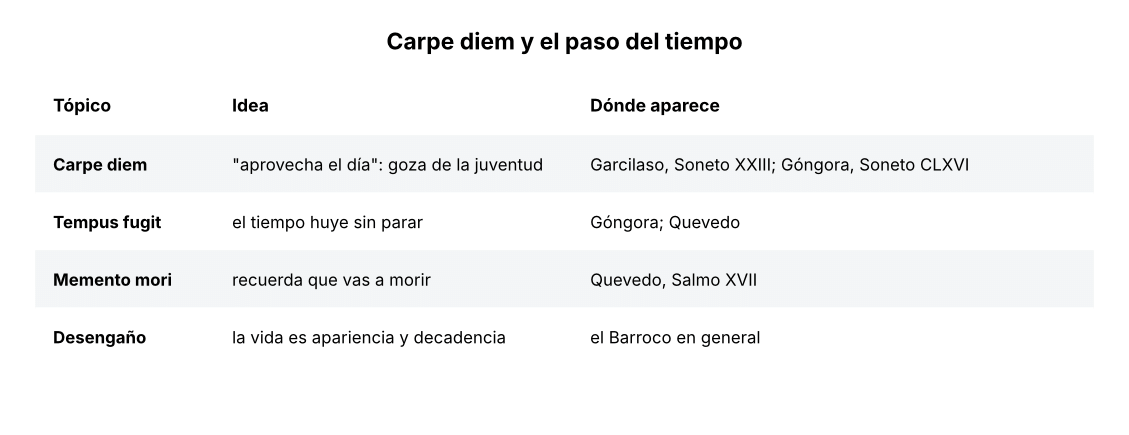
The Spanish Baroque (siglo XVII) was characterized by obsession with mortality, the vanity of worldly things, and the fleeting nature of human achievement. Unlike the Renaissance celebration of human potential, the Baroque saw the world as a place of illusion and decay. Desengaño (disillusionment) is the master theme: the “loss of engaño” (deception) — the moment when illusions shatter and harsh reality appears. “Salmo XVII” is a desengaño poem in its purest form.
The Poem: Form and Structure
“Salmo XVII” is a sonnet — fourteen lines of hendecasyllabic verse (eleven syllables per line). The rigid form is deliberate: the constraint of the sonnet mirrors the speaker’s sense of being trapped by time and decay.
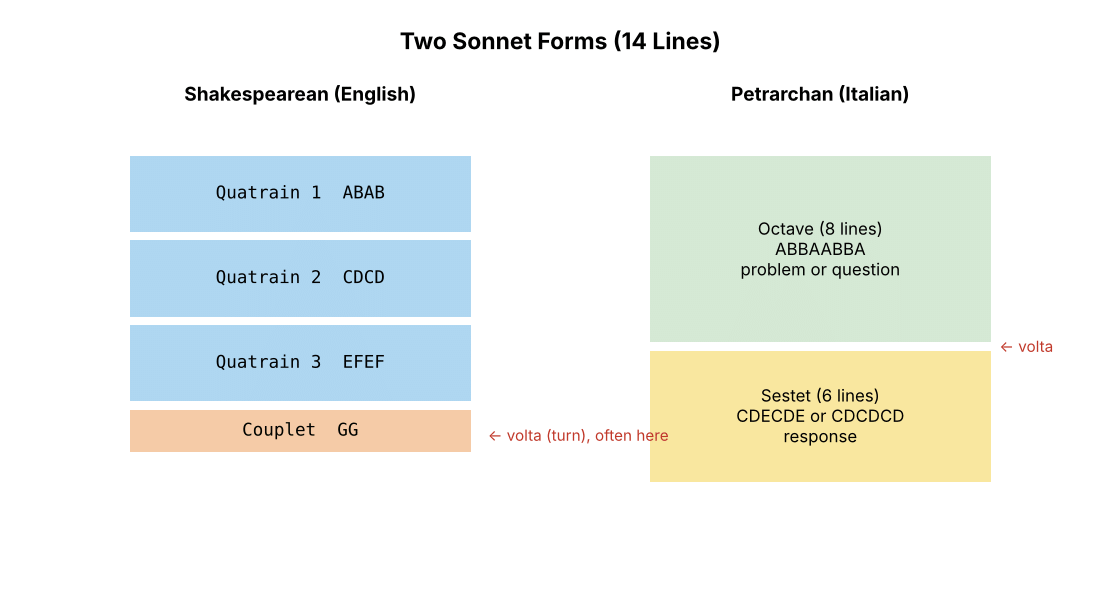
The poem divides into two quatrains (8 lines) and two tercets (6 lines). The quatrains set the scene: the speaker views the crumbling walls of his homeland. The tercets shift to direct address and philosophical reflection: the speaker turns to the walls themselves and meditates on the futility of human grandeur. The poem’s movement from observation (quatrains) to apostrophe and lament (tercets) enacts the desengaño moment itself.
Core Themes
| Theme | How It Appears | AP Significance |
|---|---|---|
| National decline | Walls once strong are now crumbling; the speaker encounters bones — literal remnants of death and ruin | Grounds universal mortality themes in Spain’s real 17th-century collapse; walls symbolize the entire imperial project |
| Time as active destroyer | Time and death are paired agents with intention; towers crowned in honor become dust and mud | Time is not background — it is personified as an enemy with intention; the AP exam tests questions about the Baroque’s obsession with transience |
| Desengaño | The speaker moves from detached observation to anguished recognition of futility; towers that seemed strong are ultimately dust and mud | The poem’s philosophical core: trace the movement from observation to recognition of futility if asked about the emotional arc |
Literary Devices
| Device | Example | Effect |
|---|---|---|
| Metaphor | Crumbling walls represent Spain’s collapsing power and identity | Transforms a physical image into a political and existential statement; the poem is not about architecture but about the fall of empire and the futility of human ambition |
| Personification | Time actively “looks upon” the towers; death is time’s companion with shared agency | Makes time and death intentional agents rather than abstract forces; their gaze implies judgment — and the towers cannot withstand scrutiny from eternity |
| Anaphora | “Patria mía” appears in lines 1 and 4, framing the first quatrain | Creates obsessive emotional intensity; the speaker cannot stop circling back to the homeland; repetition mirrors the walls themselves, once built for permanence |
| Apostrophe | Direct address to the ruins: exclamatory address to the walls and towers crowned in honor | Converts philosophical meditation into personal lament; the speaker is fully consumed by the realization of futility, not analyzing from a distance |
| Sonnet form as constraint | Rigid 14-line hendecasyllabic structure with demanding ABBA ABBA rhyme scheme | The poem’s inescapable formal rules mirror the inescapability of time and death; form becomes argument |
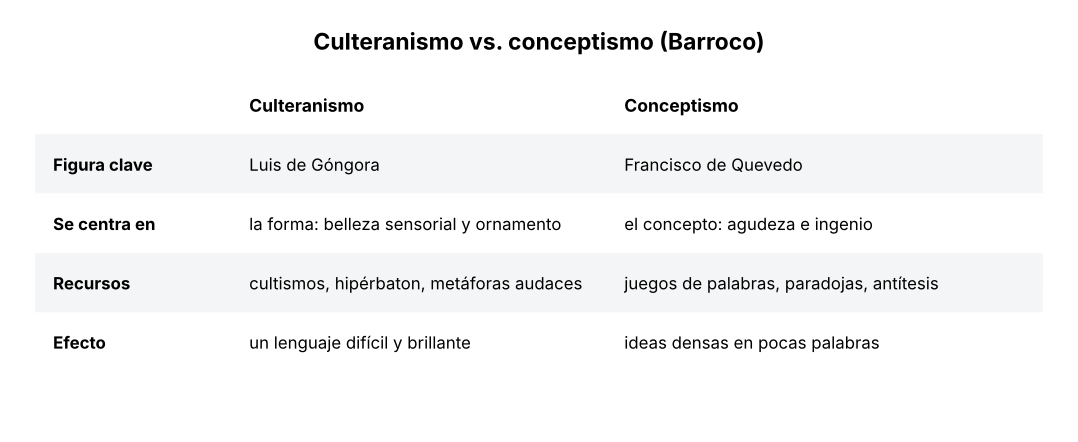
Quevedo’s Conceptismo: Contrast with Góngora
Where Góngora’s culteranismo ornaments the surface with elaborate, beautiful difficulty, Quevedo’s conceptismo cuts to meaning through wit, compression, and intellectual paradox. In “Salmo XVII,” Quevedo does not decorate the scene with elaborate metaphors — he strips it bare and drives the moral home directly. The crumbling walls are not compared to ten different precious things; they are simply ruins, and the point is that they were once mighty. Quevedo’s directness is itself a stylistic argument: the Baroque truth of vanitas needs no ornament because reality is ornament enough.
Test-Taking Strategies
Use the mnemonic “RDA”: Ruin → Desengaño → Apotheosis (of understanding). The speaker moves from observing Ruin (crumbling walls, bones), to experiencing Desengaño (confronting futility), to a philosophical Apotheosis where he grasps the vanity of all things. This three-part arc applies to most Baroque desengaño texts on the AP exam.
For key themes, use “TAD”: Time is the active destroyer; Ars (cultural and military achievement) is what’s destroyed; Decay is the end result.
Cross-topic connections:
- The Baroque obsession with memento mori and Spain’s historical decline connects across texts in the AP curriculum. Desengaño as a recurring 17th-century theme: compare to any text that moves from illusion to harsh reality.
- Compare Góngora’s culteranismo (elaborate surface beauty concealing vanitas) with Quevedo’s conceptismo (direct, harsh expression of the same insight). Both reach the same destination via opposite routes — a classic AP exam question.
- Sonnet form as argument: the rigidity reinforces the inescapability of fate and mortality. This formal argument appears across multiple AP texts.
Common question formats:
- “Identify theme or tone” — emotional state is disillusionment, lamentation, philosophical despair; primary theme is transience of human achievement. Not “sad” — say “desengañado” or “philosophically grave.”
- “Analyze literary devices” — “The repetition of ‘patria mía’ serves to…” (emphasize emotional attachment; frame the meditation around national identity) or “The personification of time and death suggests…” (these forces are active, intentional agents)
- “Interpret specific word choices” — “The description of the walls as ‘sordos’ (deaf) suggests…” (they are unresponsive to human appeals, indifferent to suffering)
Frequent mistakes to avoid:
- Don’t treat the poem as literal autobiography — it’s a philosophical meditation, not a travel report about actual walls
- Don’t confuse desengaño with despair — it’s clear-eyed recognition of reality, not hopelessness. Use words like “disillusionment” and “philosophical gravity” rather than “hopeless” or “bitter”
- Don’t miss the historical context — Spain’s real decline is not background but the foundation for Quevedo’s universal claims about mortality
Test-day shortcuts:
- Map quatrains vs. tercets in 90 seconds: Label Q (scene/observation) for lines 1–8 and T (meaning/direct address) for lines 9–14. Every MCQ about structure or tone shift becomes answerable from this map.
- MCQ instant ID: “patria mía” + ruin = desengaño poem. You know the movement (illusion → harsh reality), period (Spanish Baroque), and dominant tone (disillusionment, not despair). Eliminate any answer suggesting hope or nostalgia — they are wrong.
- FRQ anchor: Open your essay by anchoring on the volta from quatrains to tercets: “Quevedo structures ‘Salmo XVII’ so that the shift from observation to apostrophe enacts the desengaño moment itself — the speaker does not merely describe disillusionment but performs it.” This argument (form IS the meaning) outscores device lists every time.
- For essay comparisons: “Both texts move from [initial state] to [realization], using [literary device] to dramatize the speaker’s shift from [illusion] to [truth].” Adapt this template to any Baroque comparison question.
Check for Understanding
Think you’ve got it? Complete the quiz below to make sure. Download your results at the end.