
Maximize your score with these resources:
Conde Lucanor, Exemplo XXXV is a masterclass in medieval didactic literature and a cornerstone AP® Spanish Literature text. It appears in the Medieval unit and tests your understanding of how Don Juan Manuel uses the exemplum form, frame narrative structure, and ironic reversal to convey moral instruction about gender roles and power dynamics in marriage. You need to understand the text’s historical context, major themes, literary devices, and — especially — how it constructs gender ideology in ways the AP exam directly tests.
Exemplo XXXV tells the story of a young man from a noble family who marries a fierce, wild woman. On their wedding night, through calculated violence, he conditions her into complete submission. On the surface, it’s a story about marriage. In reality, it’s a complex exploration of power, social expectation, and how narratives about women are constructed to justify male control.
Context: Don Juan Manuel and Medieval Didactic Literature
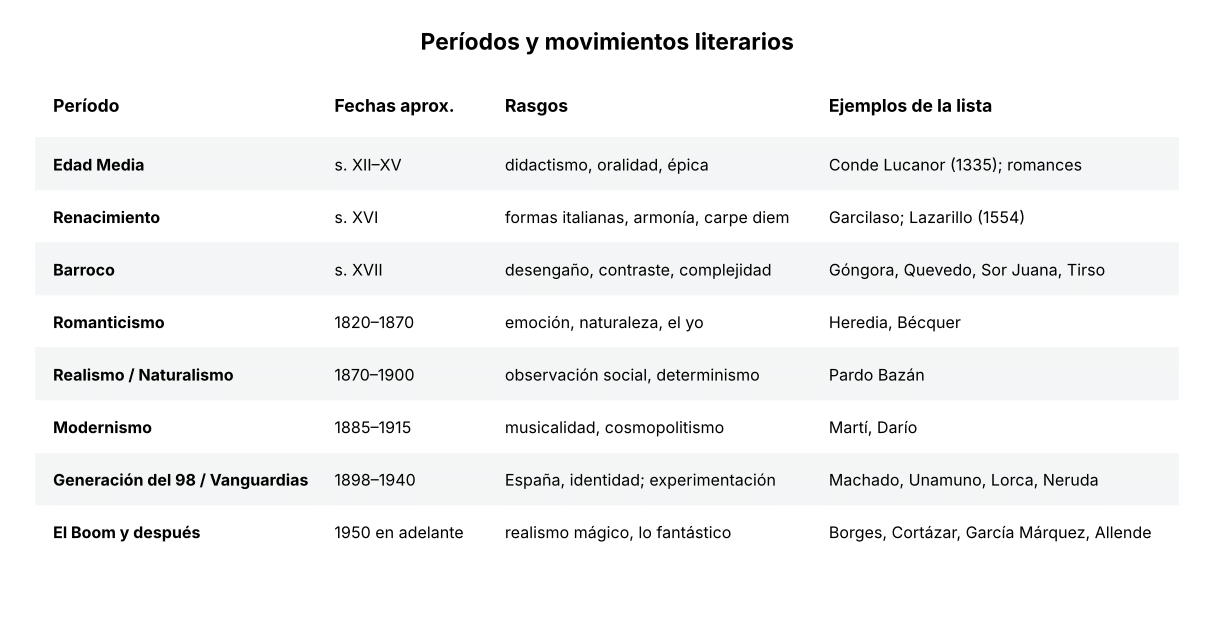
Don Juan Manuel (1282–1348) was a Castilian nobleman and political figure who composed El Conde Lucanor (also known as Libro de los ejemplos del Conde Lucanor y de Patronio) during the 14th century. This collection of 51 exempla represents the peak of medieval didactic literature in Spain.
- What is an exemplum? A short narrative that illustrates a moral or practical lesson. Unlike a fable (animals) or a parable (religious), an exemplum uses realistic human characters. The reader extracts the lesson themselves — indirect didacticism maximizes persuasive impact.
- The frame narrative structure: Count Lucanor brings a problem to his advisor Patronio, who responds with an exemplum. After the story, a brief moral couplet is appended. This creates authorial distance and models wisdom transmission between generations.
- Didactic intent: Don Juan Manuel wrote to teach practical wisdom and moral conduct for the Castilian aristocracy: maintaining honor, managing relationships, and subordinating impulse to reason.
- Historical moment: The 14th-century Castile was marked by political instability. Don Juan Manuel’s collection can be read as an attempt to codify aristocratic values — including gender roles — as part of social stability.
Plot Summary and the Construction of Gender
Exemplo XXXV is titled “De lo que aconteció a un mancebo que casó con una mujer muy fuerte y brava” (What happened to a young man who married a very strong and wild woman).
The setup: A young nobleman marries a woman known for her fierce, uncontrollable temperament. On their wedding night, he devises a strategy: he kills his hunting dog to demonstrate absolute authority, then a cat, then his horse. His wife — terrified and conditioned — accepts his control. Over time, she becomes “la mejor mujer del mundo” (the best woman in the world).
The gender construction at work:
- Woman as wild animal (“fuerte y brava” — a deviation from the proper, submissive norm)
- Male authority as natural and necessary (violence framed as intelligent household management)
- Obedience as the defining feminine virtue (transformation into “best woman in the world”)
- Submission through fear, not consent (the wife never agrees — she is conditioned)
Literary Devices and How the Moral Is Created
| Device | How It Appears | Effect and Significance |
|---|---|---|
| Exemplum form | Short, realistic narrative with moral couplet appended at the end | The reader feels they’ve discovered the moral independently. Indirect didacticism maximizes persuasive impact — the lesson feels like wisdom, not ideology. |
| Frame narrative | Count Lucanor presents a problem → Patronio tells the exemplum → moral couplet confirms the lesson | Creates authorial distance; models how wisdom passes between generations; presents controversial gender ideology within a respectable advisory frame. |
| Irony and reversal | The fiercely “wild” wife submits instantly and completely once faced with systematic terror | Surprises the reader and lodges the lesson in memory. Reveals the text’s ideological assumption: wildness is never real autonomy, only insufficient authority waiting to be corrected. |
| Silencing of the wife (absent dialogue) | The wife has no lines, no interior monologue, and no perspective throughout the entire narrative | Strips her of agency and rationality, making her submission appear inevitable rather than coerced. Granting her a voice would require acknowledging her as a reasoning being — which the text cannot do. |
| Escalation and demonstration | Husband kills dog → cat → horse in deliberate progression, each act more extreme | Builds dramatic tension and conditions the wife through progressive terror. The escalation signals that no act of authority is too extreme when “proper” household order is at stake. |
Themes: Power, Gender Roles, and Social Order
| Theme | How It Appears in Exemplo XXXV | Why It Matters for the AP Exam |
|---|---|---|
| Power and control | The entire exemplum is structured around the husband establishing dominance. His acts of violence are not crimes; they are assertions of authority. The wife becomes “la mejor mujer del mundo” once she accepts his supremacy. | The AP exam frequently asks how power is constructed in medieval texts. This exemplum presents household power as patriarchal and absolute. Analyze how the text normalizes male dominance and frames it as wisdom rather than tyranny. |
| Gender roles and “female wildness” | The wife’s “strength and wildness” are presented as flaws that must be corrected. “Brava” and “fuerte” mark deviation from the proper submissive norm. | Primary text for la construcción del género. The exam tests whether you understand that gender roles are constructed through narrative, not natural. When you see “brava” and “fuerte,” recognize them as ideological terms justifying her need for control. |
| Marriage as hierarchy, not partnership | Marriage is a relationship of command and obedience. The husband’s job is to establish authority; the wife’s job is to obey. The marriage succeeds precisely to the extent that the wife has surrendered her will. | Recognize that this text constructs marriage as fundamentally hierarchical. Be prepared to discuss how the text normalizes this hierarchy and frames it as natural or desirable. |
| Obedience and social order | Obedience transforms a “wild” woman into the “best woman in the world.” The moral couplet confirms this lesson as universal. | Medieval didactic literature was a tool of social control dressed up as wisdom. Analyze whose interests this exemplum serves and what kind of society it was designed to maintain. |
AP Exam Connections and la Construcción del Género
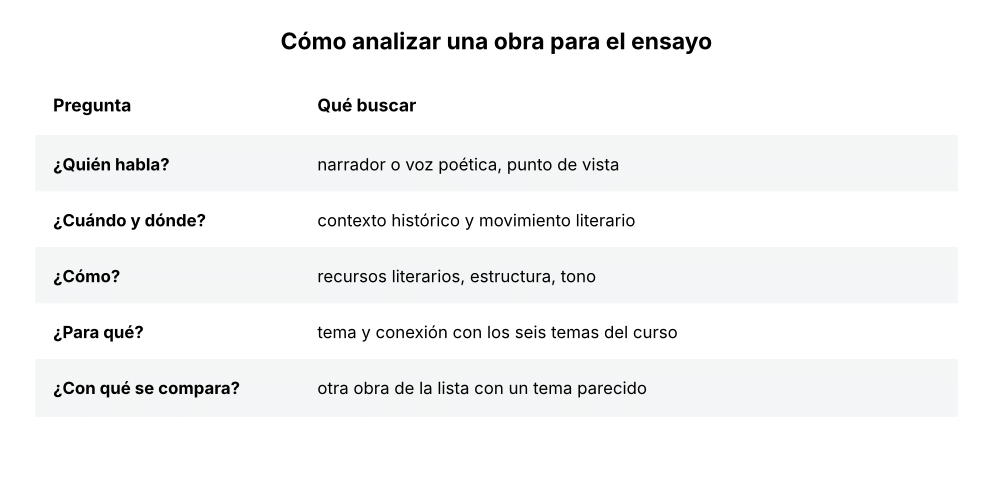
Exemplo XXXV appears regularly in free-response and passage-analysis questions focused on la construcción del género. The exam rarely asks you to summarize the plot. Instead, questions look like: “How does Don Juan Manuel construct gender roles in Ejemplo XXXV? What literary devices contribute to this construction?” or “What is ironic about the representation of the wife?”
Every analysis of Ejemplo XXXV should address three things: (1) how the text characterizes women as requiring control, (2) how the exemplum form naturalizes this as wisdom, and (3) whose interests the moral lesson serves.
Test-Taking Strategies
Mnemonic — FRAME: F = Frame narrative (Conde Lucanor asks Patronio); R = Reversal (the wife unexpectedly submits); A = Authority (the husband establishes absolute control); M = Medieval didactic (the exemplum teaches obedience as virtue); E = Exemplum (short narrative with appended moral). Run through FRAME whenever you encounter this text on the exam.
Cross-topic AP exam connections:
- Compare with Hombres necios que acusáis (Sor Juana Inés de la Cruz) — both texts construct gender roles, but Sor Juana subverts the tradition that Manuel reinforces; together they illustrate how literature both creates and challenges gender hierarchies across centuries
- Connect to A Julia de Burgos (de Burgos) for a modern example of women still negotiating the inherited expectations that texts like Manuel’s helped create; 600 years of literary history is the bridge between these two texts
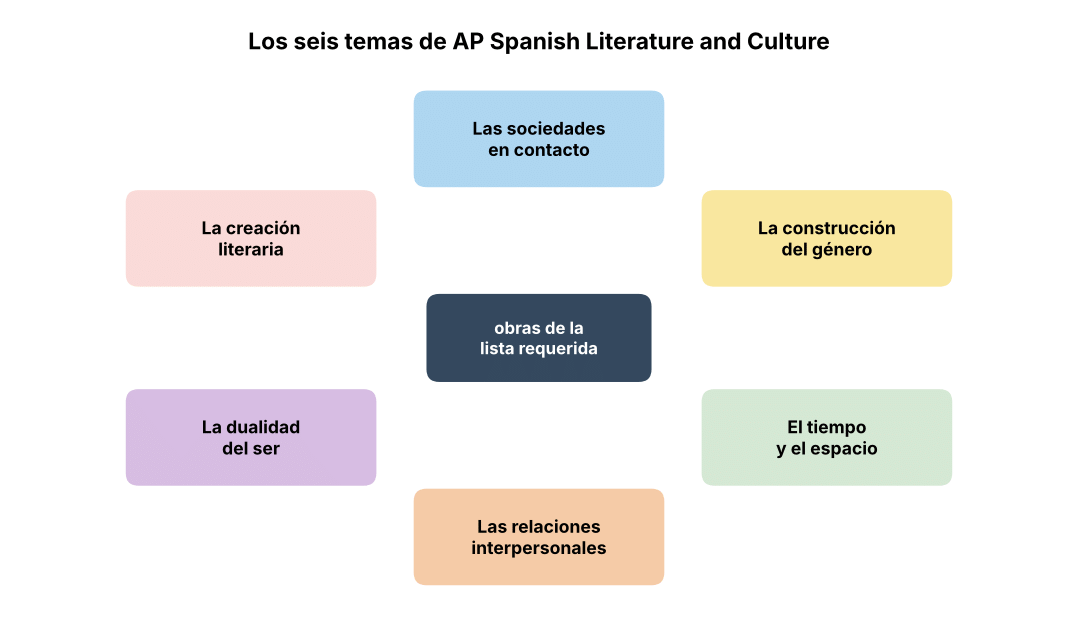
- For Las sociedades en contacto, use Exemplo XXXV to show that 14th-century Castile was itself a society managing internal cultural and political hierarchy — the same impulse to control “disorderly” elements applies to women and to conquered peoples
Common question formats and how to approach them:
- Passage analysis — identify literary devices and connect each to la construcción del género; never name a device without explaining how it specifically constructs gender
- Thematic essay — “Discuss how Don Juan Manuel uses the exemplum form to construct gender roles” — open with the frame narrative (creates authority), move to the wife’s absent dialogue (strips her of agency), end with the moral couplet (confirms the lesson as universally applicable)
- Historical context — “What does Ejemplo XXXV reveal about medieval attitudes toward marriage, gender, and social order?” — anchor in 14th-century Castilian instability; didactic literature’s function was to stabilize hierarchies, including gender hierarchies
Frequent student mistakes:
- Treating the exemplum as literal history — it’s a stylized didactic narrative, not a report of actual events
- Describing the husband’s strategy as “persuasion” — it is systematic terror-based conditioning; accurate vocabulary elevates your analysis
- Missing the gender construction entirely — every analysis of Ejemplo XXXV must address how the text represents women as wild/needing control and men as rational/naturally authoritative
- Treating the moral couplet as incidental — the moral couplet confirms the lesson as universally applicable; it’s the didactic mechanism that closes the exemplum and prevents critical distance
Test-day shortcuts and time management:
- Identify the exemplum’s three-part structure immediately (what problem does Lucanor present? what story does Patronio tell? what moral is appended?) — 30 seconds and you have the frame narrative analysis
- Focus on the wife’s characterization — the adjectives “fuerte” and “brava” are where la construcción del género happens; every AP question about this text ultimately leads back to what those adjectives reveal about who must be controlled and why
- Use “exemplum” correctly as a literary term — precise terminology elevates your response and signals mastery of the medieval literary context
- For FRQ essays, use this four-paragraph structure: (1) the exemplum’s didactic function; (2) specific gender construction techniques (absent dialogue, escalating violence, moral couplet); (3) comparison to secondary text; (4) conclusion connecting to la construcción del género as a historical and literary pattern
- Time budget: 2 minutes outlining FRAME, 18–20 minutes writing, 2 minutes checking for textual evidence. Total: 22 minutes maximum for FRQ.
Check for Understanding
Think you’ve got it? Complete the quiz below to make sure. Download your results at the end.