

Maximize your score with these resources:
- Albert.io AP® US Government question banks
- Free AP® US Government cheat sheets
- Free AP® US Government score calculator
American political attitudes are shaped by a core set of cultural values that have evolved since the nation’s founding. These values — individualism, equality of opportunity, free enterprise, rule of law, and limited government — form the foundation for how citizens think about the proper role and scope of government. Understanding these attitudes and how they’ve changed over time is essential for the AP exam, which expects you to analyze why different groups hold different views about government’s responsibilities.
This article covers Topic 4.1: American Attitudes About Government and Politics (Learning Objective MPA-1.A), part of Unit 4 — American Political Ideologies and Beliefs, which accounts for 10-15% of exam weight. You’ll learn the core values that define American political culture, how liberal, conservative, and libertarian perspectives differ on government’s role, and how trust in government has shifted over time. This knowledge directly applies to multiple-choice questions about ideological positions, free-response prompts analyzing public opinion data, and comparative government scenarios.
The Five Core American Values
American political culture rests on five foundational values that shape how citizens evaluate government action. These aren’t just historical abstractions — they influence real policy debates about taxation, regulation, social programs, and individual freedoms.
- Individualism — The belief that personal freedom, self-reliance, and individual choice are fundamental. Americans emphasize the right to pursue goals without excessive government interference. This value underlies opposition to paternalistic policies, excessive taxation, and centralized control. It also explains why Americans often distrust government bureaucracies and prefer market-based solutions. The tension here: individualism can conflict with collective action on problems like environmental regulation or public health, where individual choices have spillover effects.
- Equality of opportunity — The American ideal that everyone should have a fair chance to succeed based on talent and effort, not inherited privilege or discrimination. This differs from equality of outcomes (guaranteeing everyone the same result). Americans broadly support removing barriers to opportunity — anti-discrimination laws, public education, access to voting — but often disagree about whether government should actively redistribute wealth to level the playing field. Debates over affirmative action, student loan forgiveness, and wealth taxes all reflect disagreement about what “equal opportunity” requires.
- Free enterprise — The conviction that private markets, competition, and profit incentives drive innovation and prosperity better than government planning. Americans generally favor capitalism and view business success as legitimate. However, this value coexists with recognition that markets can fail (monopolies, environmental degradation, information asymmetries). The result: Americans support some regulation but often worry government overregulates and stifles business.
- Rule of law — The principle that everyone, including government officials, must follow established legal rules. No person or institution is above the law. This value explains American commitment to constitutional checks on executive power, due process protections, and judicial independence. It’s why violations of this principle (executive overreach, political prosecution, judicial bias) provoke strong reactions across the ideological spectrum.
- Limited government — The belief that government power should be constrained by constitutional limits and that government’s primary role is to protect individual rights and maintain order, not to reshape society or guarantee outcomes. This value, rooted in Enlightenment liberalism and American colonial experience with distant British rule, remains powerful today — even most Americans who want more government programs still say government is “too big.” Limited government creates tension with demands for government action on inequality, healthcare, and climate change.
Why these values matter: They define the “space” within which American political debate happens. Proposals that violate one or more of these core values — whether from the left or right — face an uphill battle. When politicians successfully frame their position as defending one of these values, they gain legitimacy.
Liberal, Conservative, and Libertarian Perspectives on Government’s Role
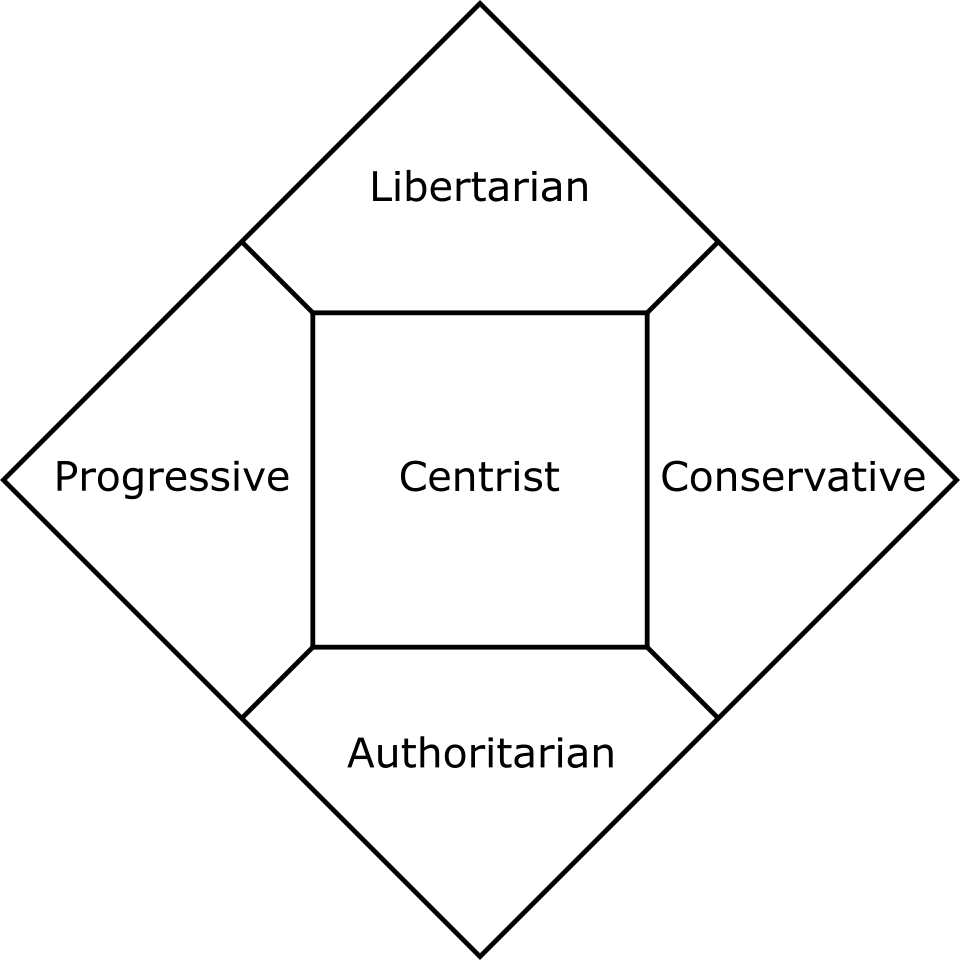
All major American ideologies claim to defend American values, but they prioritize them differently and disagree about how to balance them. This produces three fundamentally different answers to the question: “What should government do?”
| Perspective | Core Priority | View of Government | Key Policy Areas | Justification |
|---|---|---|---|---|
| Liberal (Progressive) | Equality of opportunity and outcomes; addressing market failures and systemic injustice | Active government intervention is necessary to correct market failures, address inequality, and protect vulnerable groups. Government is a legitimate tool for social progress. | Progressive taxation, social safety net expansion, environmental regulation, labor protections, anti-discrimination enforcement, healthcare access, education funding | True equality of opportunity requires removing systemic barriers. Markets alone won’t solve inequality or environmental problems. Government should use its power to create a more level playing field. |
| Conservative (Traditional) | Limited government and free enterprise; individual responsibility and traditional institutions | Government should be limited to essential functions (defense, law enforcement, courts). Most problems are better solved by private markets, families, churches, and voluntary organizations. Government overreach threatens freedom and economic growth. | Lower taxes and reduced spending, deregulation, school choice, law and order, religious freedom, traditional social values, limited social programs | Free markets are more efficient than government bureaucracies. Limited government protects freedom. Individual responsibility and traditional institutions are healthier than government dependency. Excessive government creates inefficiency and threatens liberty. |
| Libertarian | Individual liberty and minimal government; maximum personal and economic freedom | Government should be radically limited — only providing national defense and basic law enforcement. Most government action violates individual freedom without justification. Both economic AND social regulation are problematic. | No income tax or minimal tax, legalization of drugs, opposition to military intervention, abolish many agencies, individual choice on healthcare and education, maximum free speech protections | Individuals should be free to make their own choices as long as they don’t harm others. Government’s unique power to force compliance makes it inherently dangerous. Voluntary exchange and association are superior to government mandates. |
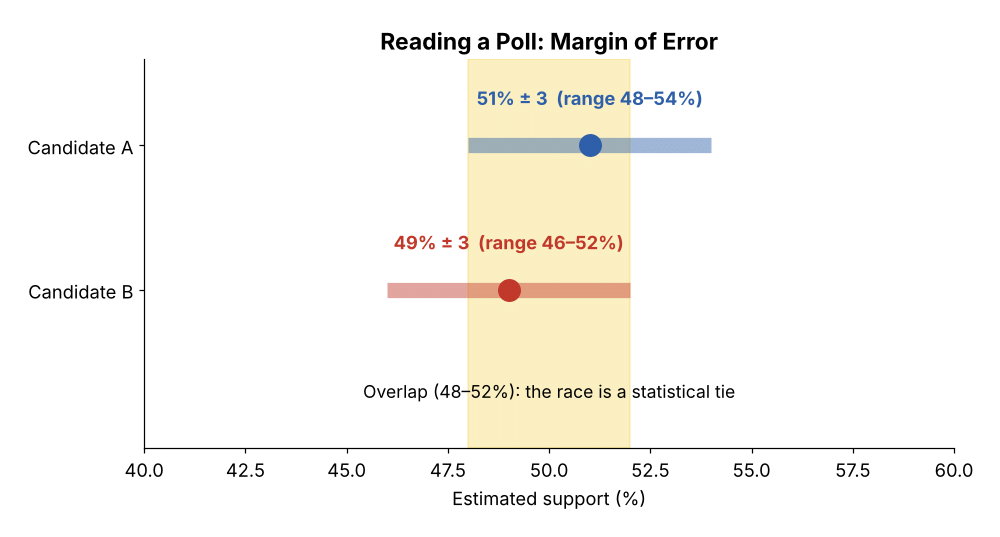
Why this matters for the exam: The AP exam tests your ability to identify ideological positions and predict where different groups stand on new issues. A libertarian will oppose both progressive taxation AND drug prohibition because both restrict individual freedom. A conservative will support lower taxes but also law-and-order policies, even if they restrict privacy. A liberal will accept trade-offs between individual liberty and collective welfare if it reduces inequality or protects vulnerable groups.
A key insight: These aren’t just left-right positions. Libertarians are economically “right” but socially “left” (opposing government regulation in both domains). The real divide is about the scope and justification of government power.
Demographic and Geographic Patterns in Political Attitudes
American political attitudes aren’t randomly distributed. Specific demographic groups, shaped by experience and interest, tend to hold consistent patterns of beliefs about government’s role.
- Education level — College-educated Americans, especially those with advanced degrees, have shifted significantly toward progressive positions on social issues and environmental regulation over the past two decades. Less-educated Americans skew more conservative on social issues but have diverse views on economic policy. This reflects different exposure to certain institutions and values.
- Age — Younger Americans express less confidence in established institutions and are more likely to support major government intervention on inequality and climate change. They’re also more socially liberal. Older Americans, especially those 65+, express higher confidence in government institutions (though this varies by context) and more conservative views on social change.
- Race and ethnicity — Black and Latino Americans are more likely to support government intervention to address inequality and discrimination, reflecting experience with systemic barriers. White Americans, on average, are slightly more likely to emphasize individual responsibility over structural barriers, though this varies significantly by class and education. Asian Americans hold diverse views, reflecting diverse immigration backgrounds and economic positions.
- Income and class — Higher-income Americans tend to favor lower taxes and less regulation. Lower-income Americans are more likely to support social safety net expansion and government job programs. However, working-class white Americans have increasingly supported Republican candidates who emphasize social conservatism and national sovereignty, even while supporting some social programs.
- Geography — Urban Americans are significantly more progressive; rural Americans are significantly more conservative. This reflects economic differences (agriculture vs. services), cultural differences (diversity, tradition), and differing relationships to government (rural areas depend on government for infrastructure; urban areas depend on regulation and redistribution).
Trust in Government: Historical Trends and Current Reality
One of the most important indicators of political attitudes is the level of trust citizens express in government institutions. Trust in government is not just an attitude — it predicts whether citizens will cooperate with laws, pay taxes willingly, and accept electoral outcomes.
The historical arc tells a striking story. In 1964, 77% of Americans said they trust government to do what’s right “most of the time” or “just about always.” By the early 1990s, that number had fallen to around 30%, and apart from a brief rise after 9/11 it has stayed low since. Today, trust hovers around 15-25%, near historic lows.
What caused this decline? Multiple factors contributed:
- Vietnam War and Watergate (1960s-1970s) — The government’s dishonesty about the war and Nixon’s constitutional violations shattered public confidence. These events taught a generation that government leaders cannot be trusted.
- Partisan polarization (1980s-present) — As Republicans and Democrats diverged on fundamental values, each side began viewing the other’s government as a threat rather than a legitimate expression of the people’s will. Trust in government became inseparable from trust in the party in power.
- Political gridlock (1990s-present) — As Congress became less able to pass major legislation, citizens became frustrated with government’s inability to solve problems. Perceived incompetence reduces trust.
- Economic inequality and globalization (1980s-present) — Citizens increasingly felt government served corporate interests over their own. Trade deals, banking deregulation, and tax policy that favored the wealthy fed perception that government was rigged.
- Media fragmentation (1990s-present) — Cable news and social media allow citizens to inhabit completely different informational universes. When people don’t share basic facts, trust becomes impossible.
Why does this matter? Low trust in government has concrete consequences. Citizens are less likely to voluntarily comply with regulations. Public health campaigns face skepticism. Electoral legitimacy is questioned. Government programs face opposition not on their merits but on the assumption that government will waste money or discriminate. Paradoxically, low trust in government makes government less effective, which further reduces trust.
One important distinction: Trust in government varies by institution. Americans express more trust in the military and courts than in Congress or the federal government as a whole. This reflects different experiences — courts are seen as more neutral; Congress is seen as partisan and gridlocked.
Reconciling Competing Values and the Future of Government Attitudes
American political attitudes are fundamentally rooted in tension. Citizens want limited government but expect government to solve problems. They value individual freedom but also demand that government prevent harm. They believe in free enterprise but expect regulation of the worst abuses. They value equal opportunity but disagree about what equal opportunity requires.
These tensions are not bugs — they’re features. They prevent any one ideology from becoming too dominant and force compromise. However, as polarization has increased, Americans have become less willing to tolerate the competing value that the other side prioritizes. Conservatives increasingly frame government intervention as illegitimate tyranny. Progressives increasingly frame market outcomes as unjust. This makes compromise harder.
The COVID-19 pandemic and debates over government’s appropriate response revealed this starkly. Should government mandate vaccination and lockdowns to protect public health (collective welfare, rule of law)? Or do these measures violate individual liberty and limited government? Citizens answered differently depending on which values they prioritized.
Understanding American political attitudes means recognizing that most Americans are not ideologically pure — they hold genuinely conflicting values and shift their emphasis depending on context. A person can believe in free enterprise AND believe that government should ensure a safety net. This internal tension is the normal state of democratic politics, not a sign of confusion.
Test-Taking Strategies
Mnemonic Devices and Memory Shortcuts
Core values: “IEFRL” — Individualism, Equality of opportunity, Free enterprise, Rule of law, Limited government: these are the five core values.
Ideological positions on government’s role: Think of a spectrum: Libertarian (minimum) → Conservative (limited, essential functions) → Liberal (active intervention). On social issues: Liberal (permissive) → Moderate → Conservative (restrictive). Libertarians are “right” on economics, “left” on social issues — that’s why they don’t fit neatly left-right.
Cross-Topic Connections
Topic 4.7 (Ideologies of Political Parties) — Expect FRQ connections asking you to explain why specific demographic groups align with specific parties. This requires understanding both core values and demographic attitudes.
Topic 5.1 (Voting Behavior) — Attitudes about government predict voting choices. Citizens who distrust government are more likely to vote for “outsider” candidates. Citizens who value government activism vote for expansion; those who value limited government vote for retrenchment.
Topic 1.1 (Ideals of Democracy) — American values are rooted in the Constitution and Federalist Papers. Limited government, individual rights, rule of law — these are constitutional principles that shape modern attitudes.
Common Question Formats
Multiple-choice: Questions often show a policy proposal and ask which ideological group would support it. Example: “A proposal to eliminate the Department of Education and allow states to set education policy independently would most appeal to which of the following?” (Answer: Conservatives and libertarians, who emphasize limited government and federalism.)
Free-response: A typical FRQ provides public opinion data showing trust in government declining over time and asks you to explain why trust declined and analyze the consequences. Another common format shows polling data on support for specific government programs and asks you to explain why different demographic groups support or oppose them using ideological differences.
Stimulus materials: You’ll encounter survey data, quotes from political figures, policy proposals, and historical documents. Always identify which core value or ideological perspective is being invoked.
Frequent Student Mistakes
Mistake 1: Treating ideologies as pure and internally consistent. Real people, even self-identified conservatives and liberals, hold mixed positions. Many conservatives support Social Security while opposing new social programs; many liberals support free speech while opposing hate speech. The exam rewards nuance — don’t assume all conservatives want no government or all liberals want total government control.
Mistake 2: Confusing individualism with selfishness or equality of opportunity with equality of outcomes. Individualism is the value of personal liberty and self-reliance, but it doesn’t preclude community action or helping others voluntarily. Equality of opportunity means removing barriers and discrimination, not guaranteeing equal results. Know the precise definitions.
Mistake 3: Ignoring the role of trust in government as a separate variable. A conservative and a liberal might both want government action on a problem, but if trust is low, both will be skeptical it will work. Low trust is a filter that affects all ideologies.
Test-Day Shortcuts
When you encounter a policy question, ask yourself: “Which core American value is this policy defending or violating?” If a policy promises to reduce government size, it’s appealing to limited government. If it promises to help disadvantaged groups, it’s appealing to equality of opportunity. Identify the value, and you’ll predict the ideological response.
If you see demographic data (polling, voting patterns), remember the patterns: College-educated, urban, younger, racial minorities lean progressive. Less-educated, rural, older, white Americans lean conservative. Income is a weaker predictor than education in recent decades.
Time Management Tips
This topic appears most often in FRQs. When you encounter a data-based question about political attitudes, spend 30-45 seconds understanding the data (What trend does it show? Which groups respond differently?) before writing. This investment prevents wasted time in your explanation. If the question asks you to explain ideological differences, use the table structure: Position on government’s role, Key values, and Examples of supported policies. This structure keeps your response organized.
Check for Understanding
Think you’ve got it? Complete the quiz below to make sure. Download your results at the end.