

Maximize your score with these resources:
Sor Juana Inés de la Cruz’s “Hombres necios que acusáis” is one of the most frequently tested poems on the AP® Spanish Literature exam. This 68-line poem of 17 redondillas cuts to the heart of gender dynamics in 17th-century colonial Mexico while maintaining astonishing formal control and intellectual sharpness. For the AP exam, this poem teaches you about the construction of gender (la construcción del género), the weaponization of poetic form, and how a woman in a colonial convent constructed a logically airtight public argument against patriarchal hypocrisy (hipocresía patriarcal).
This poem is the AP® Spanish Literature curriculum’s essential text for the theme La construcción del género. Sor Juana does not simply complain about gender inequality — she dismantles the logical structure of male authority over women’s behavior, showing that the very standards by which women are judged are logically incoherent.
Who Was Sor Juana Inés de la Cruz?
Born around 1651 in colonial Mexico as Juana Ramírez de Asbaje, Sor Juana grew up with fierce intellectual ambition but limited formal options. She entered the Convent of Santa Paula in Mexico City in 1668, taking religious vows. This choice was strategic: in 17th-century Spanish America, a convent was one of the few spaces where an intelligent woman could pursue intellectual work without a husband’s authority.
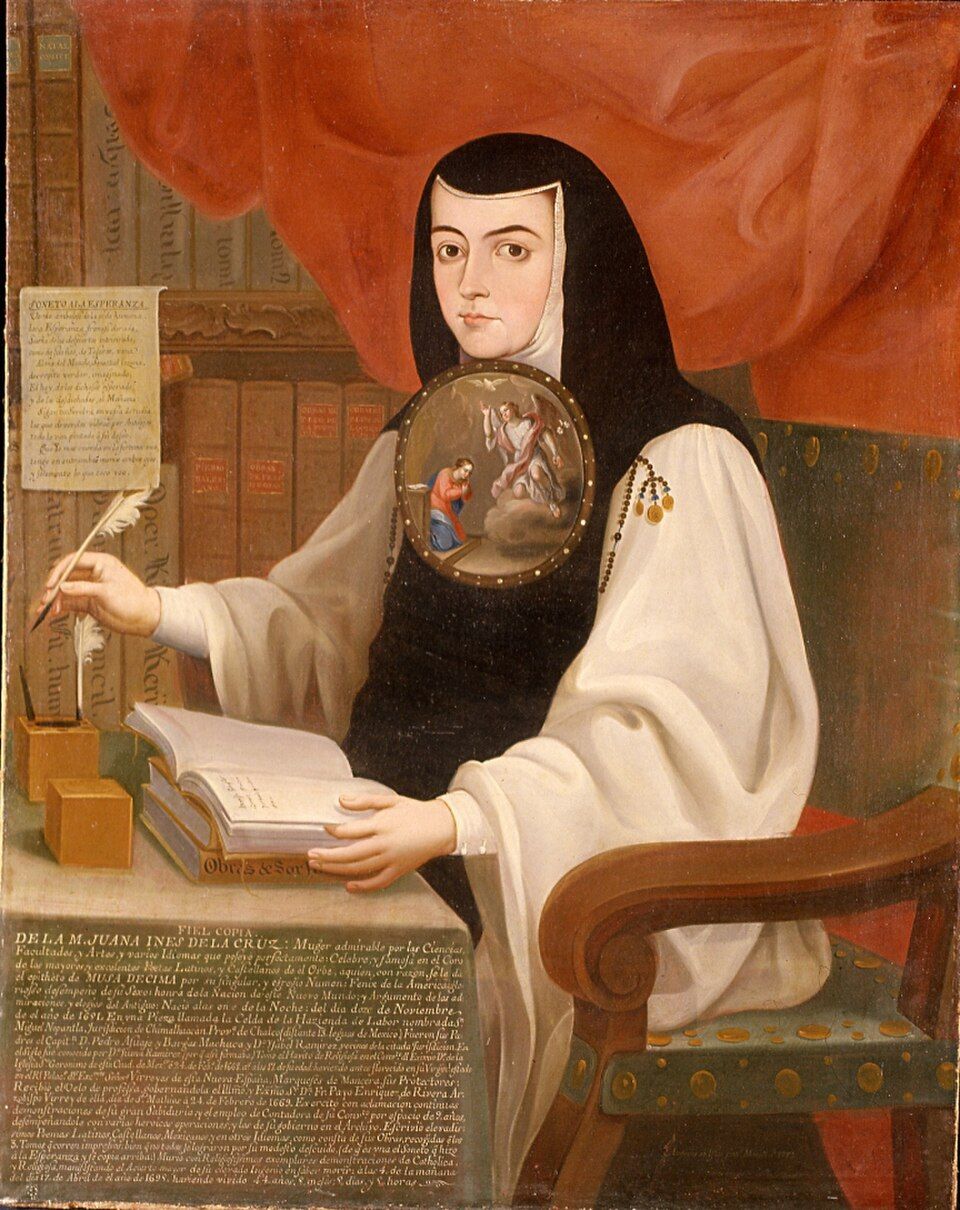
Sor Juana spent the next decades writing plays, philosophical essays, poetry, and religious devotions. In 1694, under mounting pressure from Church authorities uneasy with her secular learning, she sold her library and renounced her scholarly work. She died the following year, in 1695, during a plague. “Hombres necios que acusáis” belongs to her mature period (probably the 1680s) — a public statement, written in a popular form, directed at a male audience, and impossible to mistake for anything other than intellectual combat dressed as verse.
Context: Colonial Mexico and the Construction of Gender
Seventeenth-century Spanish America was governed by rigid hierarchies of race, wealth, and gender. Women were expected to be obedient, chaste, and silent. An educated woman was a contradiction in terms; an intellectual woman was a threat.
Sor Juana’s position was peculiar and precarious. She was a criolla — American-born and thus excluded from the highest Spanish offices — yet gifted, famous, and connected to the viceregal court. The convent protected her from marriage and domestic servitude but made her answerable to bishops who viewed her learning with suspicion. Into this context, she wrote a poem that exposes the trap set for women: men pursue women sexually, then condemn them for being unchaste. The system is rigged — and the poem demonstrates it.
The Poem’s Structure and the Power of the Redondilla
| Formal Element | Definition | Why It Matters Here |
|---|---|---|
| Redondilla | Four-line stanza (octosyllabic), rhyme scheme ABBA, popular in Spanish comic and satirical verse | The bouncy, insistent rhythm matches the poem’s aggressive tone. The tight rhyme scheme makes the logic feel inescapable. |
| Octosyllabic meter (octósílabo) | 8 syllables per line, conversational pace | Creates a rapid-fire, speech-like rhythm. The meter sounds like direct address, making Sor Juana’s accusations feel immediate and urgent. |
| ABBA rhyme (abrazador scheme) | Lines 1 and 4 rhyme; lines 2 and 3 rhyme | The embracing rhyme creates a sense of formal inevitability and logical completeness — arguments wrap themselves up, leaving no escape. |
Analyzing the Argument: Logical Structure
The poem is structured as a single, unbroken argument. Stanzas 1–2: Sor Juana addresses “foolish men” directly and accuses them of hypocrisy. Stanzas 3–6: She traces the logic — men pursue women and call them unchaste if they succeed. Whatever women do, they lose. Stanzas 7–14: She identifies the root cause: men want women to be simultaneously available and chaste, simple and sophisticated — contradictory demands by definition. Stanzas 15–17: Conclusion — if men truly opposed sin in women, they would stop seducing them. By the final stanza, she hasn’t just accused men — she’s trapped them logically.
Major Themes
| Theme | How It Appears in the Poem | Significance for AP |
|---|---|---|
| The construction of gender roles (la construcción de roles de género) | Every quality men criticize in women is either created by men or twisted into further blame. Women aren’t unchaste by nature — they’re seduced and then condemned. | AP key answer: Sor Juana shows gender is constructed, not natural — a power system, not a fact of nature. |
| Hypocrisy and double standards (hipocresía y doble moral) | Men accuse women of flaws that men themselves have created or demanded. The moral code functions as a tool of control, not a genuine ethical system. | AP tone questions: the answer is not “angry” — it’s “scornful,” “sardónico,” or “righteously indignant.” |
| Women’s intellectual rights and the power of language (los derechos intelectuales de la mujer) | The poem doesn’t just claim women are intellectually capable — it demonstrates it. Every perfect rhyme, logical transition, and clever rhetorical turn is proof. | The form and language of the poem are political acts. By writing brilliantly, Sor Juana claims intellectual authority without asking male permission. |
Literary Devices
| Device | Examples from the Poem | Effect |
|---|---|---|
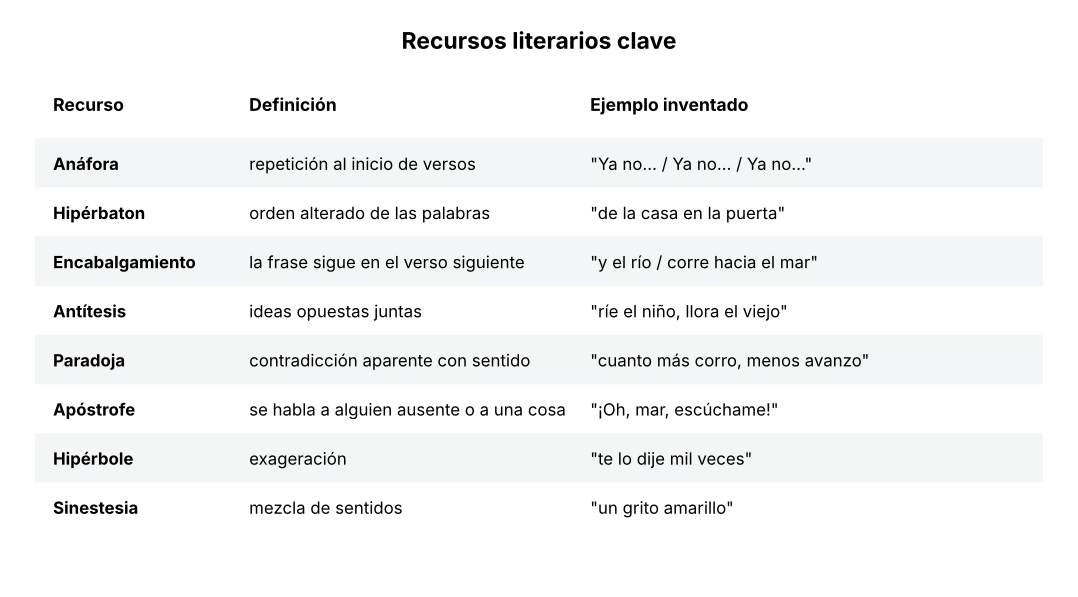
| Apostrophe (apóstrofe) | “Hombres necios que acusáis” — she addresses men directly throughout | Puts readers on the defensive immediately; makes the poem feel like a personal confrontation, not abstract philosophy |
| Rhetorical questions (preguntas retóricas) | “¿Pues cómo ha de estar templada / la que vuestro amor pretende…?” — questions with only one logical answer | Forces readers to think through the logic themselves; more persuasive than direct statement because once you see the obvious answer, you can’t unsee it |
| Antithesis (antítesis) | Men want women available and chaste, accessible and distant — each expectation contradicts the other | Makes hypocrisy visible through structure; by placing contradictions side by side, Sor Juana forces readers to see that men’s demands are logically impossible |
| Satire and irony (sátira e ironía) | She treats men’s contradictions as if they were logical facts; pretends to accept their reasoning, then shows where it leads | More cutting than direct anger; by playing the reasonable woman trying to understand male logic, she reveals how unreasonable male logic is |
| Classical and religious allusion (alusión clásica y religiosa) | References to Thaïs and Lucrecia show the problem of blaming women for men’s desires reaches back to antiquity | Universalizes the problem; positions Sor Juana as an intellectual peer to male scholars who claim authority through classical learning |
Test-Taking Strategies
Use the mnemonic “TAHR”: T = Trap (trampa) (she traps men in logical contradictions; they demand the impossible from women); A = Apostrophe (apóstrofe) (“Hombres necios que acusáis” — direct, personal confrontation); H = Hypocrisy (hipocresía) (the entire poem exposes male hypocrisy; men blame women for men’s own behavior); R = Redondilla (the tight rhyme and bouncy meter make the logic feel inescapable).
AP Theme connections:
- La construcción del género: Gender roles — specifically women’s expected chastity — are not natural states but socially constructed demands that serve male interests. This is the answer to any AP question about gender in this poem.
- Colonial identity and marginalization: Sor Juana’s position as a criolla intellectual excluded from the highest circles parallels other colonial intellectuals’ experiences.
- Gender construction across the AP curriculum: Pair with texts that show gender constraints in action: women in El burlador de Sevilla who suffer because of male desires; Laurencia in Fuenteovejuna who demands accountability. Sor Juana writes the theory; other texts provide the narrative examples.
Common question formats:
- “How does the speaker use [device] to develop her argument?” — Identify the device, then explain what it accomplishes.
- “What does the poem reveal about gender roles in [period/society]?” — Key: the moral code was a tool of control, not a natural fact.
- “Which best describes the speaker’s tone?” — Almost never “angry” or “sad.” Look for “scornful,” “sardónico,” “accusatory with dark humor,” or “righteously indignant.”
- “How does the author establish her authority?” — Through language mastery, logical rigor, and classical allusions; the poem demonstrates intellectual capability, not just claims it.
Frequent student mistakes:
- Treating the poem as personal expression instead of public argument: This is public poetry in a popular form with a deliberate argumentative structure. Read it as a lawyer’s brief written in verse.
- Missing the logical structure because you focus on emotion: Outline the argument in prose (stanzas 1–2: accusation; 3–6: evidence; 7–14: root cause; 15–17: conclusion) to see the skeleton underneath the language.
- Confusing satire with straightforward complaint: When Sor Juana uses language like “¿Cuál mayor culpa ha tenido / en una pasión errada…?”, she’s being ironic, not sincere — mocking male logic by pretending to reason within it.
Test-day shortcuts:
- Map the argument before you write (2 minutes): Label the poem’s four sections: Accusation (1–2), Evidence (3–6), Root Cause (7–14), Conclusion (15–17). Pick the section most relevant to the prompt and build your essay around it.
- “Hombres necios” is your 3-second orientation: For MCQ, ask: “Is this an accusation, evidence of hypocrisy, or the logical trap?” The opening line tells you where you are in the argument’s architecture.
- Tone questions: eliminate fast: Almost never “angry,” “sad,” “despairing,” or “pleading.” Cross those off in under 5 seconds. Look for “sardónico,” “scornful,” “righteously indignant.”
- FRQ thesis formula: “In ‘Hombres necios que acusáis,’ Sor Juana uses [preguntas retóricas / antítesis / apóstrofe] to expose the logical impossibility of men’s demands on women, revealing that the moral code enforced against women functions as a tool of patriarchal control (control patriarcal) rather than a genuine ethical system.”
Check for Understanding
Think you’ve got it? Complete the quiz below to make sure. Download your results at the end.