
Maximize your score with these resources:
- Albert.io AP® Human Geography question banks
- Free AP® Human Geography cheat sheets
- Free AP® Human Geography score calculator
In 2021, a Korean-language drama called Squid Game became one of the most-watched shows in Netflix history within weeks of its release, with fans on every continent. Centuries ago, a cultural trait took generations to cross an ocean. Today it can cross the planet overnight. The AP® Human Geography exam asks you to explain what’s driving that speed, how it changes cultural practices, and why it makes some cultures more alike while pushing others to defend what makes them different.
This article covers Topic 3.6: Contemporary Causes of Diffusion in Unit 3, Cultural Patterns and Processes. The topic asks you to explain how communication technology, globalization, and urbanization are reshaping cultural interactions and creating both cultural convergence and divergence.
By the end, you should be able to:
- Explain how communication technologies and time-space compression speed up cultural diffusion.
- Describe the spread of English and the loss of Indigenous and minority languages.
- Define cultural convergence and cultural divergence and give examples of each.
- Explain glocalization and why global companies adapt to local cultures.
Technology and Time-Space Compression
Time-space compression is the idea that places feel closer together as transportation and communication improve. It’s the main engine of contemporary diffusion. When a video can reach millions of viewers in hours, culture spreads faster and farther than at any point in history.


Several technologies drive this change:
- The internet and social media. Platforms like YouTube, TikTok, and Instagram let anyone share music, fashion, slang, and food trends with a global audience. A dance created in one country can be copied worldwide within days.
- Streaming services. Netflix and Spotify distribute films, series, and music across borders instantly. Korean dramas, Nigerian films, and Latin American music now reach audiences that once only saw Hollywood productions.
- Air travel and global migration. More people travel and live abroad than ever before, carrying culture with them and bringing new ideas home.
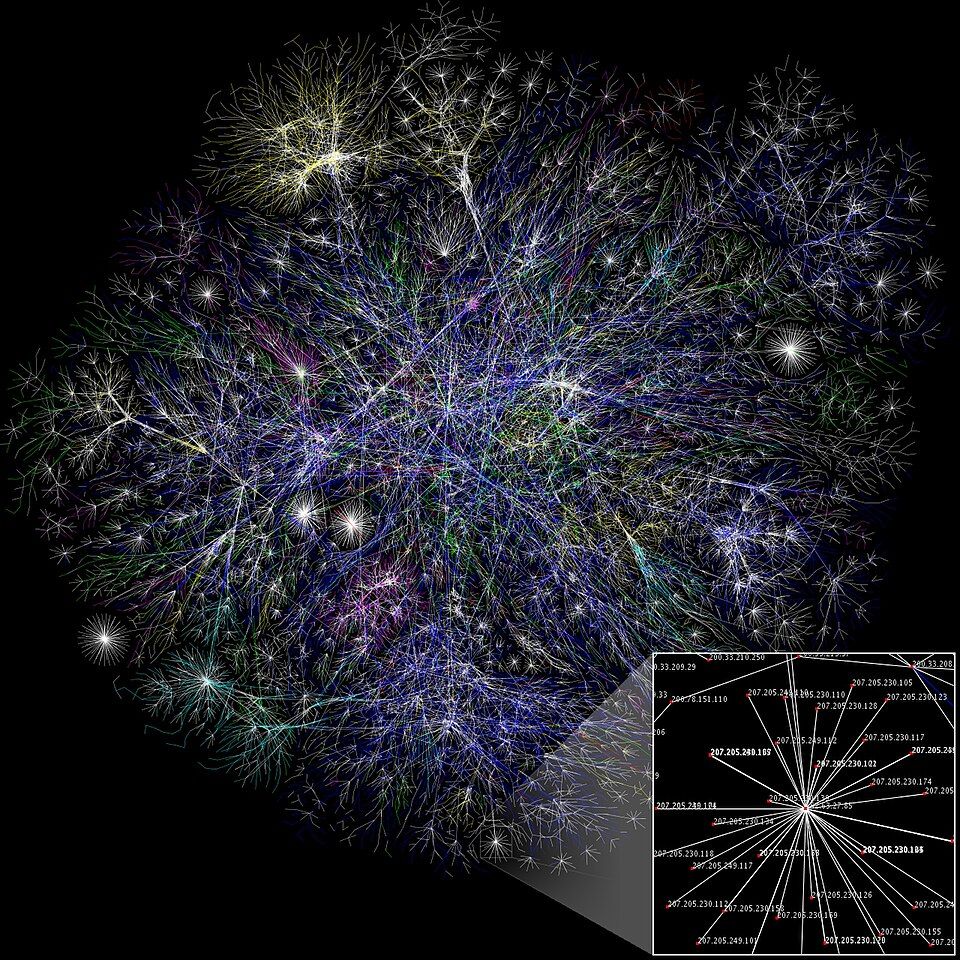
- Global infrastructure. Undersea cables carry most of the data that moves between continents. They’re the physical network behind the “virtual” spread of culture.
This is mostly expansion diffusion, especially contagious diffusion, because ideas spread from person to person through networks without anyone moving. Much of it is also hierarchical, since trends often start with celebrities or influencers and spread to their followers.
Language: The Spread of English and the Loss of Others
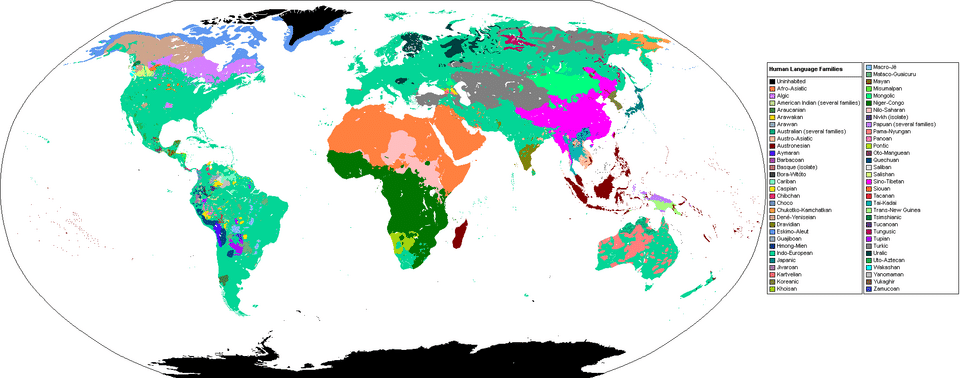
Contemporary diffusion is changing the world’s language map.
English as a global lingua franca. English is the most widely used language for international business, science, aviation, diplomacy, and the internet. A large share of all websites are written in English. Students around the world study it as a second language because it opens doors to jobs and higher education. That spread is partly a legacy of the British Empire and partly the result of American economic and cultural influence after World War II.
Language loss. As English and other major languages spread, smaller languages lose speakers. Linguists estimate that about 40 percent of the world’s roughly 7,000 languages are endangered. When children grow up using a dominant language at school, online, and at work, they may stop learning the language of their grandparents. When the last fluent speakers die, a language becomes extinct, and with it goes knowledge about local history, plants, and ways of seeing the world.
Some communities fight back. Revitalization programs have increased the number of speakers of Welsh in Wales, Māori in New Zealand, and Hawaiian in Hawaiʻi through immersion schools and media in those languages.
Cultural Convergence and Cultural Divergence
Contemporary diffusion pushes cultures in two opposite directions at once.
| Concept | Definition | Examples |
|---|---|---|
| Cultural convergence | Cultures become more similar as they share traits through contact. | Jeans, smartphones, and fast food chains in nearly every country; English used in global business. |
| Cultural divergence | Cultures become more different, often by resisting outside influence or protecting traditions. | Laws protecting a national language; bans on foreign media; revival of traditional dress or religion. |
Examples of Convergence
Global brands are the most visible sign. McDonald’s operates in more than 100 countries, Coca-Cola is sold almost everywhere, and the same Hollywood films open worldwide on the same weekend. Critics call this cultural imperialism or “Americanization” when the dominant traits come mostly from the United States. Convergence isn’t only American, though. Japanese anime, Korean pop music, and Indian yoga have all become global.
Examples of Divergence
- France passed the Toubon Law in 1994 requiring French in advertising, workplace documents, and many public settings, and it sets quotas for French-language music on the radio.
- Quebec adopted the Charter of the French Language in 1977, making French the official language of the province’s government, business, and schools.
- Iceland creates new Icelandic words for modern technology instead of borrowing English ones. The Icelandic word for “computer,” tölva, combines words for “number” and “prophetess.”
- Bhutan didn’t allow television or the internet until 1999, partly to protect its traditional culture.
Why does this matter? The exam wants you to see that globalization rarely erases local culture. More often it provokes a response. When a stimulus describes a government protecting its language or a community reviving a tradition, the concept is cultural divergence, and the cause is often the pressure of global convergence.
Glocalization: Global Meets Local
Glocalization is the adaptation of a global product or idea to fit local culture. Companies do it because a product designed for one culture may fail in another.
- McDonald’s in India serves no beef, out of respect for Hindu beliefs about cows. It offers the McAloo Tikki, a spiced potato burger, and many vegetarian options.
- Music and film blend global genres with local sounds. K-pop combines American hip-hop and pop styles with Korean language and choreography.
- Streaming platforms invest in local-language shows for specific markets, and some of those shows then become global hits.
Glocalization shows that diffusion isn’t a one-way flow. Global traits change as they enter a new place, and local traits sometimes go global in return.
Test-Taking Strategies
Mnemonic Devices and Memory Shortcuts
- “Converge = come together, diverge = drift apart.” Convergence makes cultures more alike. Divergence makes them more distinct.
- “Glocal = global product, local flavor.” A global company adapting to a local culture.
- “Faster, farther, fewer.” Contemporary diffusion spreads culture faster and farther, and it can leave fewer languages and traditions behind.
Cross-Topic Connections
- Topic 1.4: Time-space compression is a core spatial concept. See our review of spatial concepts.
- Topic 3.5: Contemporary diffusion builds on historical patterns. English spread first through colonialism and now through technology. See our review of historical causes of diffusion.
- Topic 3.8: Acculturation, assimilation, syncretism, and multiculturalism are the effects of the processes described here.
- Topic 7.6: Global trade and the world economy spread brands and consumer culture.
Common Question Formats
- Definition MCQ. A scenario describes a country passing a law to protect its language, and you identify cultural divergence.
- Example MCQ. A description of a fast food chain changing its menu for local tastes asks you to identify glocalization.
- FRQ with a stimulus. A chart shows the growth of internet access or the decline of an Indigenous language. You explain a cause and an effect.
- No-stimulus FRQ. You explain how a communication technology contributes to cultural convergence, then describe a response that shows divergence.
Frequent Student Mistakes
- Treating globalization as purely one-way. Cultural traits flow in many directions. K-pop, anime, and Bollywood are global exports too.
- Confusing convergence with assimilation. Convergence describes whole cultures becoming more similar. Assimilation describes individuals or groups adopting a dominant culture.
- Calling every adaptation divergence. A global brand changing its menu is glocalization, not divergence. Divergence involves cultures becoming more distinct.
- Ignoring the physical infrastructure. Digital diffusion depends on cables, satellites, and data centers, which aren’t evenly distributed.
Test-Day Shortcuts
- Look for technology words. Internet, streaming, social media, and satellites point to time-space compression and contemporary diffusion.
- Look for protection words. Laws, quotas, bans, and revivals point to cultural divergence.
- Look for adaptation words. “Modified,” “localized,” or “adapted for” point to glocalization.
Time Management Tips
- Multiple choice: Convergence and divergence questions should take about 45 seconds. Use the saved time on data-heavy questions.
- Free response: Budget about 25 minutes per FRQ. When explaining a cause, name the technology and describe how it moves culture from one place to another.
- Keep two examples ready. The Toubon Law for divergence and McDonald’s in India for glocalization work for most prompts and take seconds to write.
Check for Understanding
Think you’ve got it? Complete the quiz below to make sure. Download your results at the end.