

Maximize your score with these resources:
- Albert.io AP® Human Geography question banks
- Free AP® Human Geography cheat sheets
- Free AP® Human Geography score calculator
Cultural patterns are recurring characteristics of how a group of people behaves, thinks, and organizes itself — reflected in language, religion, ethnicity, and daily practices. On the AP® Human Geography exam, Topic 3.3 expects you to recognize how these patterns cluster geographically, diffuse across regions, and create cultural landscapes. Understanding cultural patterns is essential because they show up in nearly every unit of the exam, from political geography (ethnic conflict) to economic systems (folk vs. popular culture) to urban development (ethnic neighborhoods).
This article covers Topic 3.3: Cultural Patterns (Learning Objective PSO-3.C). By the end, you’ll be able to analyze the spatial distribution of cultural traits, explain how cultures spread and mix, and recognize the forces that homogenize or preserve cultural distinctiveness.
What Are Cultural Patterns?
A cultural pattern is a shared, repeated way of behaving, believing, or organizing that characterizes a group. Unlike a single cultural trait (like one language), patterns reveal structure: they show clustering, boundaries, and layers. When you map cultural patterns geographically, you see clusters of similar practices in some regions and sharp boundaries in others — and those boundaries tell a story about history, conquest, migration, and trade.
The key insight for the AP exam is that cultural patterns aren’t random — they reflect underlying forces like:
- Historical conquest and colonization — Colonial powers imposed languages and religions that still dominate their former territories.
- Migration and settlement — Groups who moved to new regions brought cultural practices that created ethnic enclaves or replaced indigenous cultures entirely.
- Trade and economic systems — Merchant networks spread religions (Islam along Indian Ocean trade routes), languages (English through commerce), and goods.
- Globalization and technology — Modern communication spreads popular culture (American music, fast food) faster than at any point in history.
- Local resistance and adaptation — Communities modify imported ideas to fit local contexts, creating hybrids rather than pure replacements.
Understanding these forces means you can explain not just *where* a pattern exists, but *why* it exists and how it’s changing.
Language Patterns
Language is one of the most visible cultural patterns on any map. The AP exam tests language geography through the distribution of language families, the role of official vs. spoken languages, and how languages spread or disappear.
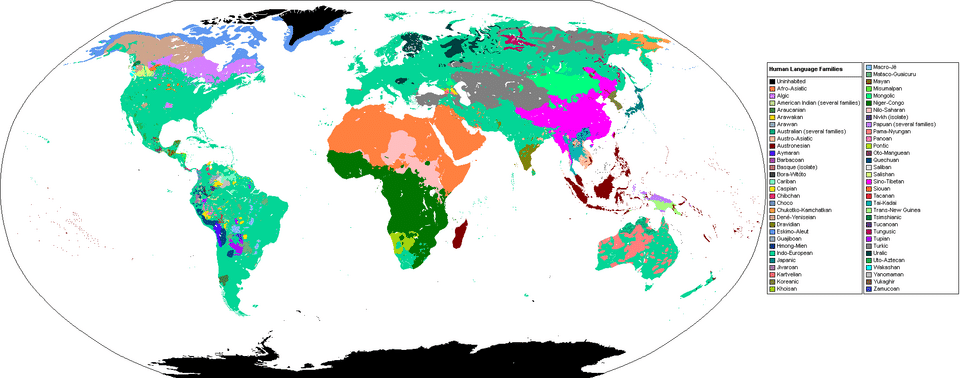
Language families and distribution:
- Indo-European languages (English, Spanish, Russian, Hindi) dominate Europe, the Americas, and South Asia. This distribution is the legacy of Indo-European migrations starting around 4000 BCE and reinforced by European colonialism.
- Sino-Tibetan languages (Mandarin, Cantonese) are concentrated in East Asia, with Mandarin being the world’s most spoken native language.
- Niger-Congo languages (Swahili, Yoruba, Zulu) dominate sub-Saharan Africa and reflect ancient population movements and trade networks.
- Austro-Asiatic and Austronesian languages spread across Southeast Asia and the Pacific, showing the reach of ancient maritime migrations.
- Afro-Asiatic languages (Arabic, Hebrew, Amharic) span North Africa and the Middle East, with Arabic being the dominant language of Islam and Islamic scholarship.
Dialects and mutual intelligibility: A dialect is a regional variation of a language that’s mutually intelligible with other dialects (speakers can understand each other). The boundary between a dialect and a separate language is partly political: Norwegian and Swedish are mutually intelligible but are called separate languages for political reasons. Meanwhile, Mandarin and Cantonese are quite different but are often called “dialects of Chinese” for political unity. The AP exam tests whether you understand that these distinctions are about power and politics, not purely linguistics.
Official vs. spoken languages: Many countries have an official language (used in government and education) that differs from the languages people speak at home. Singapore has four official languages, with English as the main working language and Mandarin, Tamil, and Malay as mother tongues. India has Hindi as an official language, but 22 languages are recognized as scheduled languages in its constitution, and English remains widely used. This gap between official and spoken language creates tension, especially when a minority group’s language is suppressed in schools or government.
Lingua franca and language shift: A lingua franca is a language used between speakers of different native languages — English serves this role globally, Swahili does so in East Africa, and French did in many African colonies. Lingua francas enable trade and communication but also accelerate language loss: when younger generations adopt the lingua franca to get ahead economically or socially, indigenous languages decline. This process is called language shift, and it’s happening worldwide as indigenous and minority languages disappear.
Why this matters for the exam: AP questions often ask why a particular language dominates a region or why a minority language is endangered. The answer always connects to power — which groups controlled colonization, trade, or modern economies. English dominates not because it’s inherently better, but because Britain and the USA held geopolitical power.
Religion Patterns
Religion is a powerful cultural pattern because it shapes how people organize communities, structure time (holidays, prayer schedules), interact with land (sacred sites, burial practices), and relate to law and government. The AP exam tests the geographic distribution of major religions, their hearths (origins), and how they’ve diffused across space.
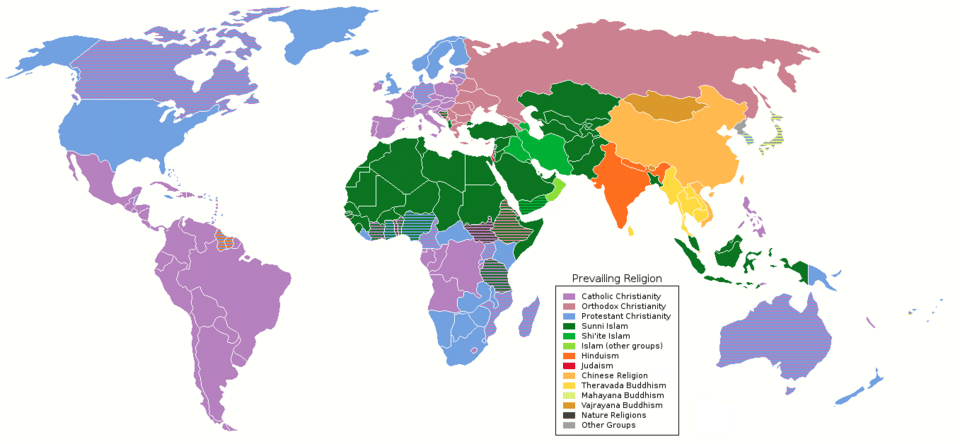
Major world religions and their distributions:
| Religion | Hearth | Primary Distribution | Key Characteristic |
|---|---|---|---|
| Christianity | Eastern Mediterranean (1st century CE) | Europe, the Americas, sub-Saharan Africa, Philippines | Historically spread through colonial conquest and missionary work; now most diverse geographically |
| Islam | Arabian Peninsula (7th century CE) | North Africa, Middle East, South Asia, Indonesia (world’s largest Muslim population) | Spread rapidly through conquest and trade networks; emphasizes the umma (global community of believers) |
| Hinduism | Indian subcontinent (1500 BCE) | India, Nepal, Fiji, Trinidad; historically tied to the Indian caste system | Ethnic religion — conversion is rare; distribution closely follows historical Indian migration and diaspora |
| Buddhism | Northern India (6th century BCE) | Southeast Asia, East Asia (China, Japan, Korea); nearly absent from its hearth today | Spread along trade routes; emphasizes personal spiritual practice over institutional authority |
| Judaism | Levant (2000 BCE) | Scattered globally; concentrated in Israel, USA, Russia, France | Ethnic religion with diaspora (dispersion); modern political movement (Zionism) re-concentrated population in Israel |
Ethnic vs. universalizing religions: This distinction shapes how religions spread geographically. An ethnic religion ties membership to a specific ethnicity or nationality — Hinduism, Judaism, and Shintoism are ethnic religions because they’re strongly tied to ethnic identity and rarely proselytize. A universalizing religion actively seeks converts and welcomes anyone regardless of ethnicity — Christianity, Islam, and Buddhism are universalizing. This difference explains why Christianity and Islam are globally dispersed while Hinduism remains concentrated in South Asia.
Diffusion patterns and hearths: Major religions spread through different mechanisms. Christianity spread through hierarchical diffusion — Roman emperors and colonial powers adopted it, and it cascaded down to lower levels of society. Islam spread through contagious diffusion — merchants and armies brought it to adjacent regions through contact and conquest. Buddhism traveled along trade routes (like the Silk Road), creating a pattern of relocation diffusion where the religion leapfrogged to distant trading partners while abandoning its hearth. These diffusion patterns are testable: the AP exam asks why Buddhism is rare in India but dominant in East Asia, and the answer is the diffusion mechanism and the presence of competing religions (Hinduism and Islam) in South Asia.
Sacred sites and cultural landscapes: Religions create visible cultural landscapes through architecture and land use. Minarets dominate Islamic cities, churches define European villages, temples cluster in Hindu cities, and pilgrimage sites become economic hubs. Jerusalem is sacred to Christianity, Judaism, and Islam simultaneously — a physical space where multiple ethnic and religious identities overlap and compete. Understanding these landscapes helps you interpret maps and explain regional conflict.
Ethnicity Patterns
An ethnic group is a group that shares a common ancestry, language, or cultural heritage and identifies itself as distinct. Ethnicity is constructed and can change over time — Irish immigrants to the USA were not considered “white” in 1900 but were by 1960. The key concept for the AP exam is that ethnicity creates spatial patterns through clustering, segregation, and conflict.
Ethnic enclaves and ethnic homelands: An ethnic enclave is a neighborhood where a minority ethnic group clusters within a larger city — Little Italy, Chinatown, Little Havana. These form because of discrimination (people are pushed into certain neighborhoods), economics (recent immigrants need affordable housing), and social preference (living near co-ethnics provides cultural continuity and economic networks). An ethnic homeland is a region where an ethnic group has historical roots and claims ownership — the Jewish homeland (Israel), the Kurdish homeland (divided among Turkey, Iraq, Syria, and Iran), or the Navajo reservation in the southwestern USA. Homelands are politically significant because they can become flashpoints for conflict when multiple groups claim the same land.
Forced assimilation and ethnic preservation: Dominant groups often pressure minorities to assimilate — to adopt the dominant language, religion, and practices. The USA government forced Native American children into boarding schools to abandon tribal languages and identities. France bans conspicuous religious symbols (headscarves, Jewish skullcaps) in public schools in the name of secularism, effectively pressuring Muslim and Jewish immigrants to hide their identities. Conversely, minorities actively preserve ethnicity through ethnic media (newspapers and radio in heritage languages), ethnic organizations, and ethnic economies. Understanding this tension between assimilation and preservation is crucial for explaining patterns of segregation and integration in cities and nations.
Ethnic conflict and geography: Ethnicity becomes politically dangerous when groups compete for land, resources, or political power. Rwanda’s 1994 genocide was rooted in colonial-era ethnic categorization of Hutu and Tutsi — categories that didn’t exist with such rigid boundaries before European colonial rule imposed a census and made ethnicity administratively fixed. The partition of India and Pakistan in 1947 was based on religion (Islam vs. Hindu-majority), leading to communal violence and creating refugees. Modern ethnic conflicts in Syria (Arabs vs. Kurds vs. Turkmen), Bosnia (Serbs vs. Croats vs. Bosniaks), and Myanmar (Burman vs. Rohingya) are rooted in territorial claims, historical grievances, and competition for power. The geographic pattern of ethnic conflict reveals how colonialism carved arbitrary borders across ethnic homelands, leaving minorities scattered across borders (the Kurdish question) or trapped with hostile majorities.
Folk vs. Popular Culture
Folk culture and popular culture are defined by their origin and diffusion patterns, and they create very different cultural landscapes.
Folk culture originates in small, homogeneous communities (villages, ethnic groups, regions) and spreads through contagious diffusion — slowly, from place to place, via personal contact. Folk music, traditional clothing, regional cuisine, and folk beliefs are folk culture. They’re tied to specific places and often reflect adaptation to local environment: Scandinavian folk clothing reflects cold climates, Mediterranean folk diet emphasizes olive oil and fish, Alpine folk architecture uses steeply pitched roofs for snow. Folk culture changes slowly and is sustained by tradition and local pride. A key feature is that folk culture is produced locally for local consumption — a village weaves cloth for itself, not for export.
Popular culture originates in urban, wealthy, technologically advanced societies and spreads through hierarchical diffusion — rapidly, jumping over space, via mass media and global supply chains. Popular music, fashion brands, fast food, and entertainment franchises are popular culture. Popular culture is produced for mass consumption by large corporations: McDonald’s, Nike, Netflix. It’s standardized globally — a Starbucks in Tokyo looks like one in New York. Popular culture spreads fastest through television, film, social media, and the internet, so it diffuses nearly instantaneously from urban centers outward. Most importantly, popular culture tends toward cultural homogenization — it erases local distinctiveness and replaces it with global sameness.
The tension between folk and popular culture is visible on maps. Traditional folk dress has nearly disappeared except in tourist performances and heritage contexts. Local cuisines are being replaced by fast food. Local music is losing ground to global pop, though there’s also hybrid music (reggaeton in Latin America, K-pop globally) that blends folk and popular forms.
Why it matters: AP questions often ask about this clash. Why is folk culture declining? Because popular culture, backed by corporate capital and mass media, out-competes it. Why do some communities resist popular culture? Because they value cultural identity and see popular culture as cultural imperialism — the imposition of dominant (usually Western, especially American) culture that erases local traditions.
Cultural Convergence and Divergence
Cultural convergence is the process by which cultures become more similar — people adopt similar clothing, foods, languages, and values. Cultural divergence is the opposite: cultures become more distinct from one another, usually through deliberate efforts to preserve or revive local identity.
Globalization and cultural homogenization: Globalization — the integration of economies, cultures, and communication networks worldwide — is the primary driver of cultural convergence. Multinational corporations, the internet, international migration, and English-language media spread a relatively uniform global culture, especially among young, urban, educated people. A teenager in Cairo watches the same Netflix shows, listens to the same pop music, and wears the same fashion brands as one in São Paulo. This convergence is unevenly distributed: wealthy, globally connected elites converge rapidly, while rural and economically marginal groups may retain local practices longer.
Resistance and cultural preservation: Not all communities accept cultural convergence passively. Indigenous groups globally are working to revitalize endangered languages through immersion schools. Religious communities maintain distinct dress, dietary practices, and family structures despite pressure to assimilate. Nations sometimes institute cultural policies to preserve local identity: France restricts English-language media and requires French in school, protecting French culture from American cultural dominance. However, preservation efforts can be problematic when they’re used to exclude minorities or deny individual choice — Afghan communities in some Western cities have used cultural preservation as justification for honor killings and forced marriage, which conflict with broader human rights norms.
Glocalization: A more nuanced pattern is glocalization — the adaptation of global forms to local contexts. McDonald’s serves rice bowls in Asia and vegetarian options in India. Hip-hop, born in African American communities in the Bronx, has been adopted and transformed globally: there’s Korean hip-hop, Ghanaian hip-hop, and Brazilian hip-hop, each with local themes and styles. This is not pure convergence or divergence, but a blend where global structures (corporations, media platforms, entertainment forms) are filled with local content. Glocalization suggests cultural change is more complex than simple homogenization — communities can adopt new forms while infusing them with local meaning.
Sequent Occupance and Cultural Layers
Sequent occupance is the idea that cultural landscapes accumulate layers of influence from different groups occupying the same space across time. A city might be built by indigenous peoples, conquered and reorganized by colonizers, later industrialized by immigrants, and now undergoing gentrification by wealthy outsiders — and all these layers are visible in the landscape simultaneously.
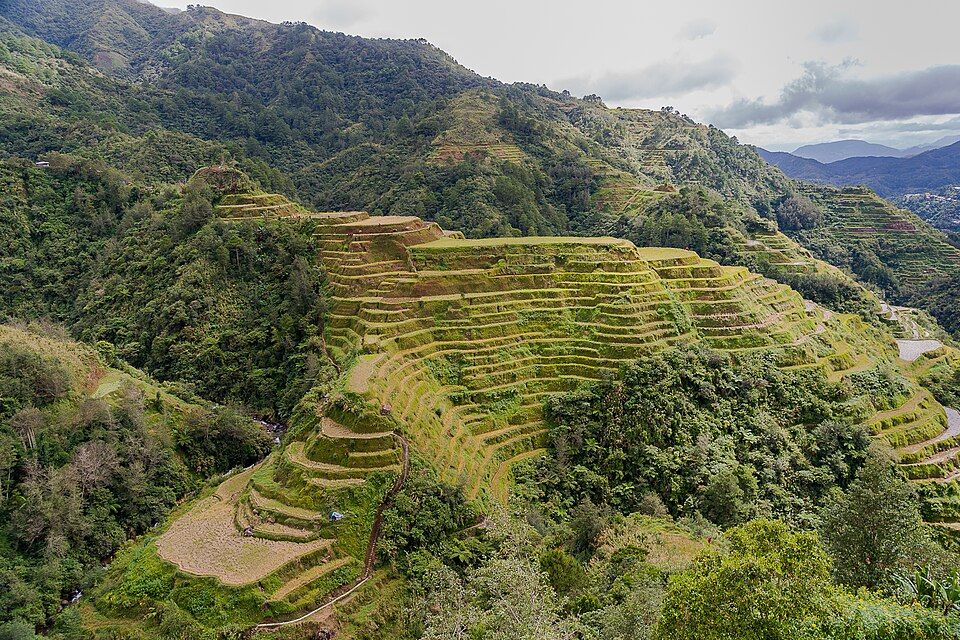
Examples make this concrete:
- Jerusalem: Sacred to Judaism (religious center), Christianity (site of Jesus’s life), and Islam (holy city for Muslims). The Old City contains Jewish, Christian, Muslim, and Armenian quarters. Archaeological layers show Roman, Islamic, and Crusader-era structures. The city is a palimpsest — a landscape with multiple texts written over one another — and each group’s occupation is inscribed in the landscape.
- Mexico City: Built by the Aztecs as Tenochtitlan on an island. Spanish conquistadors destroyed the Aztec city and built a colonial capital on the same site. Indigenous neighborhoods (barrios) persist within the modern city. The Templo Mayor (Aztec temple) was buried for centuries and rediscovered in the 1970s, now co-existing with the Spanish colonial cathedral. Modern skyscrapers tower over pre-Hispanic and colonial architecture.
- New York City: Indigenous lands occupied by the Lenape, colonized by the Dutch (New Amsterdam), taken by the English, then waves of Irish, Italian, Chinese, Puerto Rican, and Dominican immigrants created distinct neighborhoods. Each wave left cultural imprints: Irish pubs, Italian restaurants, Chinese laundries (now mostly gone), Harlem’s African American cultural legacy. Modern gentrification is erasing some of these layers while some persist as heritage sites.
Sequent occupance reveals several important principles: (1) Landscapes are never erased completely — older layers persist beneath newer ones. (2) Different groups have different relationships to land — settlers may destroy indigenous structures, but religions sacred sites often persist across conquests. (3) Conflict over landscape use reflects deeper conflicts over land ownership and cultural dominance. (4) Reading a landscape requires historical knowledge — you must understand what group created each layer and why.
Test-Taking Strategies
Mnemonic Devices and Memory Shortcuts
Remember the key frameworks for cultural patterns:
- HELM for religion diffusion: Hierarchical (Christianity via emperors and colonizers), Ethnic religions (Judaism, Hinduism), which spread mainly by relocation as adherents migrate, Local/contagious (Islam via trade and conquest), Movement/relocation (Buddhism along Silk Road). This helps you predict how a religion spread from its hearth.
- FP contrast: Folk culture = small-scale, local production, contagious diffusion, tied to place. Popular culture = mass production, hierarchical diffusion, standardized globally. When you see a question about why a tradition is disappearing, the answer usually involves popular culture replacing folk culture.
- EEE for ethnicity: Enclave (minority neighborhood in a city), Ethnic (group identity based on shared culture), Exclave (part of a state’s territory separated from the rest of the state by another state’s territory). This helps you distinguish types of ethnic geography.
Cross-Topic Connections
Cultural Patterns connects directly to other AP® Human Geography topics:
- Topic 3.4 (Types of Diffusion): The mechanisms of diffusion (hierarchical, contagious, relocation) that spread religions, languages, and popular culture all apply to culture in general. A question about why Spanish dominates Latin America is a question about hierarchical diffusion of colonial cultural patterns.
- Topic 3.2 (Cultural Landscape): Sequent occupance and the visible markers of culture (religious architecture, ethnic neighborhoods, folk traditions) directly apply. You’ll need to read landscapes and explain why they look the way they do.
- Topic 4.2 (Political Boundaries and Conflict): Ethnic geography creates political boundaries and conflict. Ethnic groups claiming homelands, minorities seeking autonomy, and border disputes rooted in ethnic distribution (Kurds, Kashmiris, Rohingya) are all examples of how cultural patterns create political problems.
- Topic 3.7 (Diffusion of Religion and Language): Language is a subset of cultural patterns. Language families, dialect geography, and lingua francas tested here apply directly to cultural analysis.
- Topic 3.7 (Diffusion of Religion and Language): Religious distribution, hearths, diffusion, and sacred sites directly parallel cultural pattern analysis.
Common Question Formats
Format 1: Map reading and analysis — You’re given a map showing the distribution of a language, religion, or ethnic group, and asked to explain the pattern. The answer should reference: hearth/origin, diffusion mechanisms (hierarchical, contagious, relocation), historical events (colonialism, conquest, migration), and barriers (physical geography, hostile neighbors, language boundaries). Example: “Why is Spanish the dominant language in Latin America?” Answer: Spanish conquistadors colonized the region and imposed Spanish as the language of government and trade (hierarchical diffusion). Indigenous languages persist in highland regions geographically isolated from colonial centers.
Format 2: Compare and contrast — You’re asked to compare two cultural patterns (e.g., folk vs. popular culture, two religions’ distributions, two language families). Your answer should identify key differences in origin, diffusion, geographic clustering, and how each is changing. Example: “Compare the geographic distribution of Christianity and Buddhism.” Christianity dominates Europe and the Americas (colonial legacy and hierarchical diffusion), while Buddhism dominates East and Southeast Asia (relocation diffusion along trade routes). Christianity spread faster and more broadly, while Buddhism later retreated to East Asia.
Format 3: Explain cultural change — Questions ask why a cultural trait is spreading (popular culture replacing folk) or declining (language shift, religious conversion). Your answer should identify the force driving change: economic incentives (languages offering better jobs), media and technology (popular culture spreads via social media), or institutional pressure (assimilation policies). Example: “Why are indigenous languages disappearing in Latin America?” Spanish and Portuguese (languages of economic power) are becoming lingua francas. School systems teach only in colonial languages, not indigenous languages. Urban migration brings speakers of minority languages into areas where Spanish dominates.
Frequent Student Mistakes
Mistake 1: Confusing ethnic with religious patterns. A common error is treating ethnicity and religion as the same thing. Mistake: “Palestinians are an ethnic group” (true, but incomplete). Better: “Palestinians are an ethnic group (shared ancestry, cultural identity) and most are Muslim, but Palestinian Christians exist too. Their identity is primarily ethnic-national, not religious.” Test note: Questions sometimes ask about the geographic overlap between ethnic and religious patterns (e.g., why do Kurds, who are Muslim, differ from Arab Muslims?). The answer is ethnicity and religion are independent — shared religion does not eliminate ethnic distinctiveness.
Mistake 2: Assuming folk culture is “better” or has intrinsic value. Students often romanticize folk culture and criticize popular culture as shallow. But the exam wants you to analyze, not judge. Correct answer: “Popular culture spreads faster than folk culture because it’s mass-produced and distributed via media, making it cheaper and more accessible. Folk culture persists in communities where local identity is valued and access to popular culture is limited.” Don’t argue that folk traditions are morally superior — explain the mechanisms driving cultural change.
Mistake 3: Oversimplifying cultural homogenization. Students often claim that globalization is erasing all local culture, which is too absolute. Correction: Globalization creates convergence in some domains (fast food, fashion brands, English language in business) and divergence in others (religious fundamentalism, indigenous language revival movements). Glocalization — adaptation of global forms to local contexts — is common. A more sophisticated answer recognizes this complexity rather than claiming total homogenization or total preservation.
Test-Day Shortcuts
- When reading a map of cultural distribution, ask three questions immediately: (1) Where is the hearth (origin)? (2) What are the barriers to diffusion (mountains, religious boundaries, language differences)? (3) What historical event explains the current pattern (colonialism, conquest, trade routes)? These three questions answer 90% of distribution questions on the exam.
- For questions about a specific culture’s landscape, remember: “Who was there first, and who’s there now?” Sequent occupance means you’re looking for layers. Indigenous people first, then colonizers, then immigrants. Each layer left architectural and linguistic marks. Identify each layer and explain the transition to answer the question quickly.
- When asked about a cultural practice (food, dress, language, religion), immediately ask: “Is this spreading or declining?” If spreading, identify whether it’s due to popular culture dynamics (mass media, corporations, youth adoption) or religious/ethnic networks. If declining, it’s usually because a lingua franca, dominant religion, or popular culture is out-competing it. This framework answers most cultural change questions in 30 seconds of thinking.
Time Management Tips
- Map-based questions: Spend 30 seconds orienting yourself to the map (identifying regions, reading the legend, noting the pattern). Then match the pattern to a diffusion mechanism or historical event. Don’t spend more than 2-3 minutes on any single map question — if you’re stuck after 2 minutes, move on and return if time allows.
- Definition questions (“Define folk culture” or “What is an ethnic enclave?”): Give a one-sentence definition, then immediately provide an example. Example + definition takes about 90 seconds and answers the question completely. Don’t write a paragraph-long essay on the concept.
- Synthesis questions that mix culture with other topics (ethnicity + politics, religion + landscape, language + economics): These questions test whether you can connect cultural patterns to broader geographic processes. Spend 45 seconds identifying the cultural pattern, then 45 seconds connecting it to the other topic (political conflict, economic inequality, urban structure). This 90-second approach prevents overthinking.
- For the free-response questions, allocate time by number of parts: A three-part question (“Define, explain distribution, and analyze change”) is one of three FRQs in a 75-minute section, so budget roughly 25 minutes per FRQ. Don’t spend most of that time on the definition and leave no time for analysis — the analysis is usually worth more points.
Check for Understanding
Think you’ve got it? Complete the quiz below to make sure. Download your results at the end.