

Maximize your score with these resources:
- Albert.io AP® US History question banks
- Free AP® US History cheat sheets
- Free AP® US History score calculator
If you’ve ever wondered how the Founders planned to prevent mob rule, special interests, and political factions from destroying the new republic, Federalist No. 10 is your answer. Written by James Madison in 1787, it’s one of the most important political documents in American history — and one of the most commonly cited primary sources on the APUSH exam.
What Is Federalist Number 10?
Federalist No. 10 is an essay by James Madison, published as part of The Federalist Papers — a collection of 85 essays written by Madison, Alexander Hamilton, and John Jay under the pseudonym Publius. Published between 1787 and 1788, the Papers argued for ratification of the new Constitution.
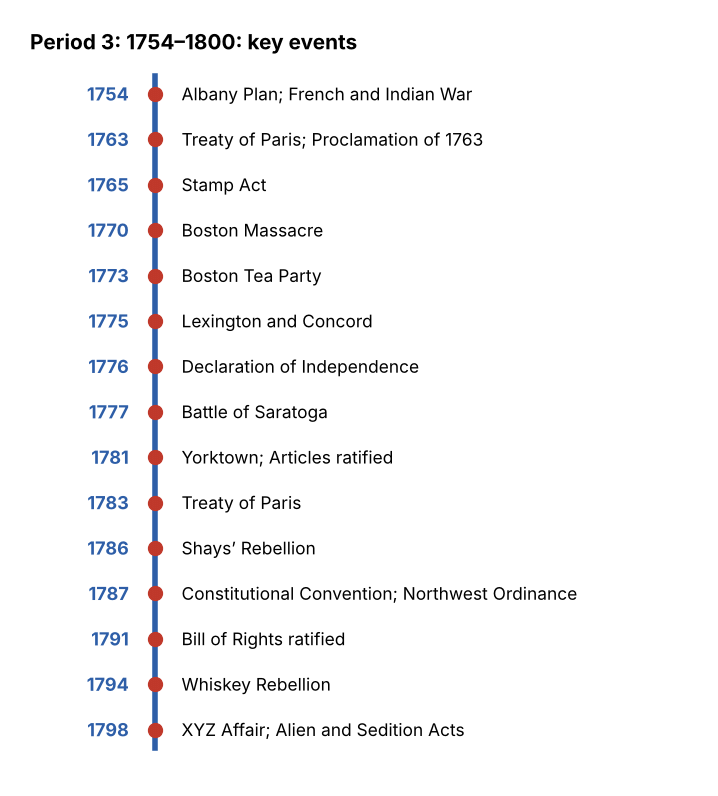
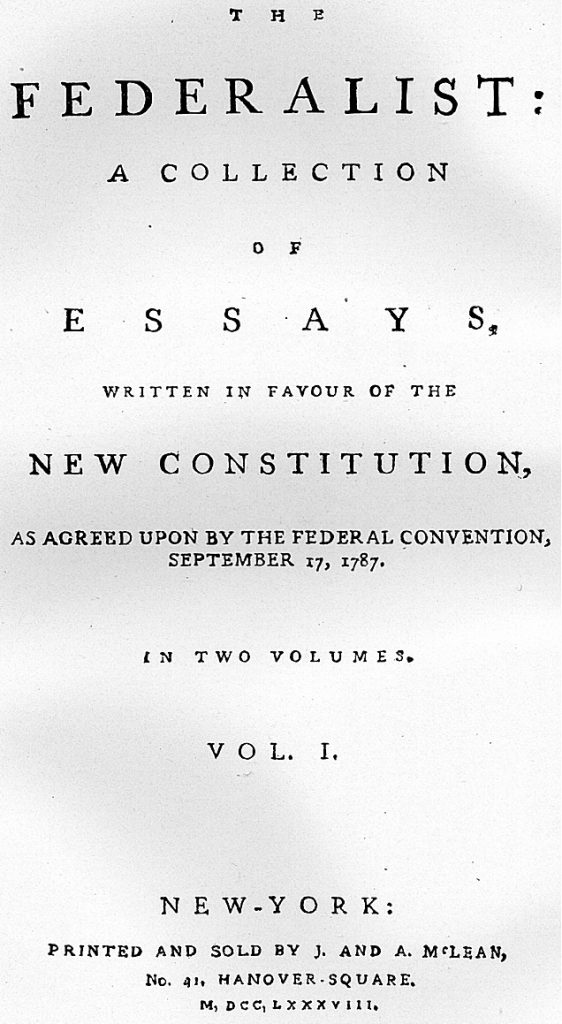
As shown in this original 1788 title page, The Federalist was published as a series of newspaper essays in New York — a state where ratification was hotly contested. Madison’s No. 10 addressed what he considered the greatest threat to republican government: factions.
A faction, in Madison’s definition, is a group of citizens “united and actuated by some common impulse of passion, or of interest, adverse to the rights of other citizens, or to the permanent and aggregate interests of the community.” In plain terms: any group that pursues its own interests at the expense of the common good.
Why Is Federalist Number 10 Important?
Madison laid out two ways to deal with factions: remove their causes, or control their effects.
Removing the causes is impossible, Madison argued:
- You could destroy factions by eliminating liberty — but “liberty is to faction what air is to fire.” Destroying one destroys the other
- You could make everyone think the same — but as long as humans can reason, they’ll form different opinions. Uniformity of thought is unachievable
Controlling the effects is the answer, and here’s the key insight: a large republic controls factions better than a small direct democracy.
| Pure Democracy | Large Republic (Madison’s proposal) | |
|---|---|---|
| Decision-making | Citizens vote directly on laws | Citizens elect representatives who vote on laws |
| Scale | Works only in small communities where citizens can assemble | Works across a large, geographically diverse nation |
| Faction control | A majority faction can easily dominate and oppress minorities | Larger territory = more diverse factions; harder for any one to form a tyrannical majority |
| Representative quality | N/A | Elected representatives filter public passion; more likely to act for the common good |
Madison’s most counterintuitive insight: size is an advantage. A bigger republic has more factions competing with each other, making it harder for any single faction to dominate. This is why he argued in favor of ratifying the Constitution — a strong national government over a large territory would be more stable than separate state governments.
Federalist No. 10 is regarded as one of the greatest political essays ever written. Its importance for APUSH:
- Influenced constitutional ratification: The Federalist Papers helped persuade skeptical delegates, particularly in New York. Madison’s arguments directly shaped how Americans understood the Constitution’s purpose
- Defined the republican/democratic debate: Madison’s distinction between a “republic” (representative government) and a “pure democracy” (direct popular rule) became foundational to American political thought
- Countered Anti-Federalist fears: Anti-Federalists argued a large republic would be too powerful and distant. No. 10 directly answered: size was the republic’s strength, not its weakness
- Predicted American political pluralism: Madison’s insight that multiple competing factions check each other’s power describes exactly how American interest-group politics works today
What You Need to Know for the APUSH Exam – Essays and Document-Based Questions
The Free-Response Questions and DBQs on the APUSH exam connect founding documents like Federalist No. 10 with broader patterns in American history. One past APUSH FRQ asked: “Analyze the ways in which the political, economic, and diplomatic crises of the 1780s shaped the provisions of the United States Constitution.”
For this type of question, Federalist No. 10 gives you the intellectual framework — Madison was explicitly responding to the political crises of the 1780s (Shays’ Rebellion, factionalism, weak central government). Connect the essay’s arguments to specific constitutional provisions: the representative structure of Congress, the large geographic scope of the republic, and the system of checks and balances all reflect Madison’s faction-control logic.
Test-Taking Strategies
Federalist No. 10 appears on APUSH both as a standalone document analysis and as context for Constitutional ratification debates.
Mnemonic: “FLARE” — Madison’s argument in No. 10: Factions are inevitable (can’t remove causes); Liberty produces them (“liberty is to faction what air is to fire”); A large republic dilutes their power; Representatives filter public passion; Elected government over wide territory is the solution. FLARE gives you the entire logical chain in five steps.
Cross-topic connections:
- Federalist No. 10 → Anti-Federalists: Anti-Federalists like “Brutus” argued the opposite — that a large republic would be unresponsive and oppressive. Knowing both sides lets you write a strong comparative argument in any founding-era essay
- Federalist No. 10 → Shays’ Rebellion: The political urgency behind No. 10 was events like Shays’ Rebellion (1786–87). Madison wrote with the fear of faction-driven mob rule fresh in his mind
- Federalist No. 10 → modern pluralism: Madison’s theory of competing factions predicts the modern U.S. political system. If an APUSH essay asks about continuity in American political thought, No. 10 is a founding-era anchor
Common question formats: Federalist No. 10 most commonly appears as a stimulus document — you’ll see an excerpt and be asked to identify Madison’s argument, explain his reasoning, or connect it to Constitutional ratification debates. The 1787–1788 ratification period is also a common long essay topic.
Frequent student mistakes:
- Confusing Federalist No. 10 (Madison, about factions and republics) with Federalist No. 51 (also Madison, about checks and balances). Both are frequently tested — know which argument goes with which number
- Thinking Madison opposed factions — he didn’t. He accepted that factions are inevitable and instead argued for a system that controls their effects through representative government and scale
- Saying Federalist No. 10 argued for democracy — it specifically argued against “pure democracy” in favor of a republic. Madison drew a sharp distinction between the two
Test-day shortcut: When you see an APUSH document excerpt with phrases like “liberty is to faction what air is to fire” or arguments about “the extent and proper structure of the Union,” you’re reading Federalist No. 10. Frame your analysis around Madison’s core argument: large republic = faction control through diversity and representation.