
Maximize your score with these resources:
- Albert.io AP® US Government question banks
- Free AP® US Government cheat sheets
- Free AP® US Government score calculator
It’s 1961. Sit-in activists are integrating lunch counters in the South. White mobs attack them. Police arrest them. Yet within three years, Congress passes the Civil Rights Act, one of the most far-reaching statutes in American history. What changed? The government didn’t suddenly develop a conscience. The social movement made change necessary by disrupting the status quo and forcing political leaders to choose: accommodate the movement or watch the nation convulse. This is Topic 3.11: Government Responses to Social Movements (Learning Objective PRD-2.B). The AP exam tests whether you understand not just what government did, but why movements were necessary and how they strategically used the three branches to advance rights.
You’ll learn how Congress legislated civil rights, how presidents enforced (or ignored) those rights, and how courts interpreted them—and how movements put pressure on all three.
Legislative Responses: From Civil Rights Act to Title IX
The legislative branch formalizes social movement demands into law. When movements achieve critical mass and parties compete for their support, Congress responds with statutes. But legislative victories require years of pressure, coalition-building, and sometimes crisis.
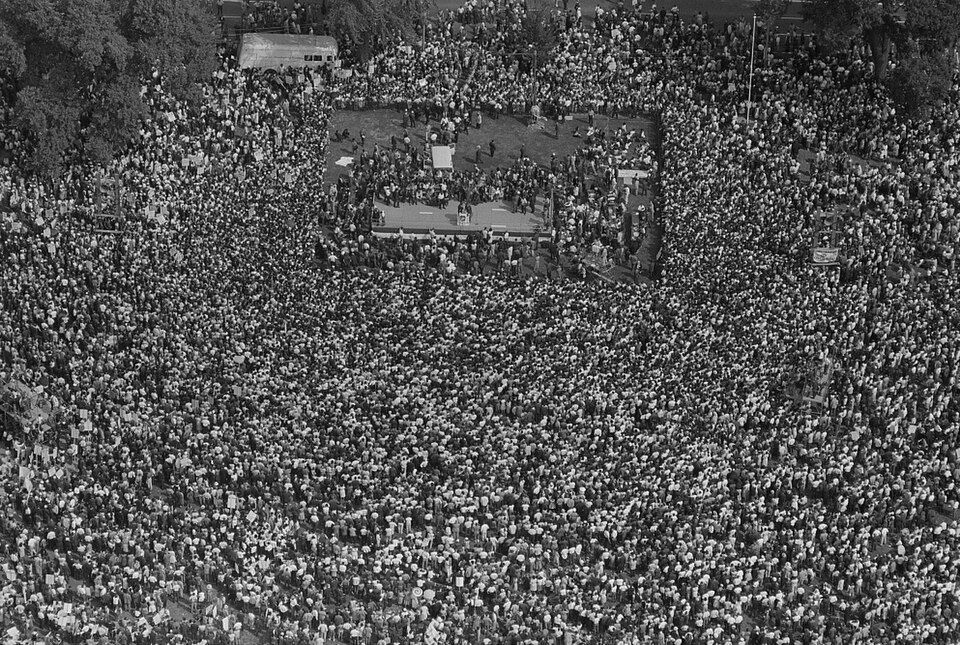
The Civil Rights Act of 1964 is the landmark. After decades of NAACP organizing, student sit-ins beginning in 1960, and Freedom Rides in 1961, the movement needed federal response. President Johnson’s political capital after Kennedy’s assassination, combined with intense movement lobbying and media pressure, made passage possible. The Act outlawed discrimination in public accommodations, employment, and federally funded programs:
- Title II (Public Accommodations): Prohibited discrimination in hotels, restaurants, and movie theaters based on race, color, religion, or national origin. This directly challenged Jim Crow’s “separate but equal” system.
- Title VII (Employment): Barred discrimination in hiring and promotion, and created the Equal Employment Opportunity Commission (EEOC) to investigate complaints. Employers could no longer legally discriminate based on race, color, religion, sex, or national origin.
- Title VI (Federal Funding): Allowed the federal government to withhold education funding from districts refusing desegregation—a powerful enforcement tool since school districts depended on federal dollars.
The Voting Rights Act of 1965 followed the Selma to Montgomery marches, where state troopers attacked peaceful protesters. This addressed how Southern states blocked Black voting despite the 15th Amendment:
- Suspended literacy tests and voting qualification tests in jurisdictions with documented voter suppression patterns.
- Required federal approval (“preclearance”) for voting procedure changes in those jurisdictions—states could not unilaterally change voting rules without federal permission.
- Authorized federal examiners to register voters, bypassing local registrars blocking Black applicants.
Literacy tests were facially neutral but administered discriminatorily—used to reject qualified Black applicants while passing functionally illiterate white voters. The Act forced federal government to actively enforce voting rights, not merely promise them.
Title IX (1972) shows legislative responses extend beyond racial justice. After feminist movements demanded equal educational opportunity, Congress inserted a single sentence into the Education Amendments: “No person in the United States shall, on the basis of sex, be excluded from participation in, be denied the benefits of, or be subjected to discrimination under any education program or activity receiving federal financial assistance.” This brief language triggered decades of implementation battles over athletics, sexual harassment, and admissions.
The Americans with Disabilities Act (1990) shows movements build on earlier successes. Disability rights activists modeled the ADA on the Civil Rights Act framework: prohibiting discrimination across employment, public accommodations, and services, with broader reach than any previous rights legislation.
Legislative responses are powerful but have limits. Congress moves slowly, requires supermajority support in the Senate (making obstruction easier), and can be repealed or weakened. Movements combine legislative strategy with executive and judicial pressure.
Executive Responses: Orders, Agencies, and Enforcement Discretion
Presidents have three executive tools for responding to social movements: issuing executive orders, creating agencies, and choosing enforcement vigor. These tools allow presidents to act without Congress—but their durability is weak because future presidents can rescind them.
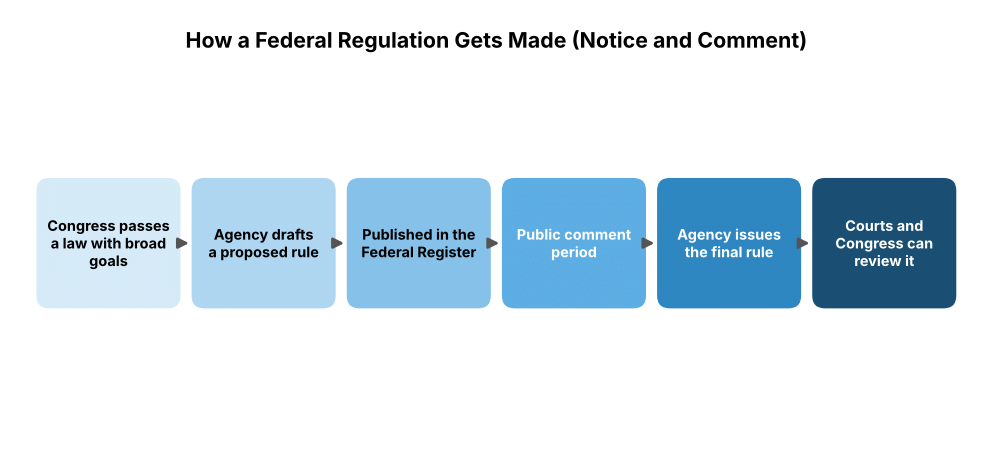
Executive orders are the most visible tool. President Truman issued Executive Order 9981 (1948) desegregating the military—responding to NAACP pressure and African American veterans’ demands. President Kennedy issued Executive Order 10925 (1961) requiring federal contractors to take “affirmative action” to ensure equal employment opportunity. President Johnson issued Executive Order 11246 (1965) strengthening affirmative action and extending it to federal contractors. Each order expanded executive civil rights power without Congress.
Creating agencies is a second strategy. The Civil Rights Act created the EEOC, but the president appoints commissioners and controls budget. Aggressive presidents expanded EEOC scope; less committed presidents defunded it or appointed commissioners skeptical of affirmative action. Similarly, the Department of Education’s Office for Civil Rights enforces Title VI and Title IX—its vigor depends on presidential priorities.
The most sophisticated response is enforcement discretion—choosing which laws to prioritize and how aggressively to pursue violations. During Nixon’s presidency, federal agencies enforced civil rights laws with narrower interpretation. The same statute could be enforced expansively under one administration and narrowly under another. Movements don’t rest after legislative victories; they must defend those victories against neglectful enforcement.
| Administration | Key Executive Actions | EEOC Approach | Educational Desegregation |
|---|---|---|---|
| Johnson (1963-1969) | EO 11246 (affirmative action); Voting Rights Act enforcement | Aggressive enforcement; class-action lawsuits against discriminatory employers | Federal courts backed by federal funds cutoffs; HEW enforced Title VI vigorously |
| Nixon/Ford (1969-1977) | Shifted rhetoric to “law and order”; opposed busing mandates | Narrower interpretation of discrimination; declined some cases | Halted new desegregation orders; opposed court-ordered busing |
| Reagan (1981-1989) | Attempted to narrow affirmative action; opposed voting rights expansion | Appointees skeptical of affirmative action; enforcement declined | Stopped supporting desegregation cases; reversed positions in litigation |
This illustrates why movements cannot rely solely on laws. Movements must remain vigilant during hostile administrations, because executive discretion creates a moving target. A law that seems settled can be gutted through non-enforcement.
Judicial Responses: Landmark Cases and Litigation Strategy
Courts respond to social movements through landmark decisions interpreting constitutional rights. Critically, these don’t create rights ex nihilo—they interpret existing constitutional language in response to movement litigation and public pressure. Sophisticated movements have used courts strategically, filing carefully selected cases designed to expand rights incrementally.
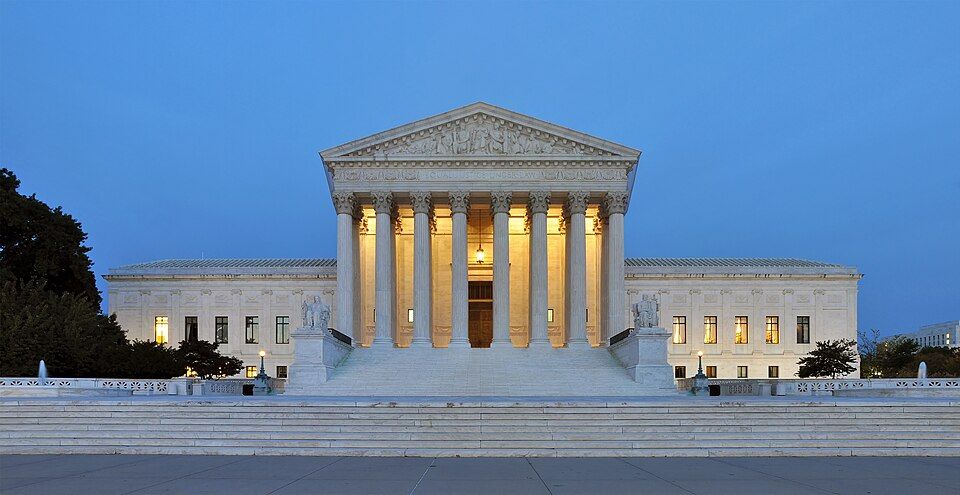
The NAACP’s litigation strategy is the prototype. Beginning in the 1930s, the NAACP Legal Defense Fund (led by Thurgood Marshall) pursued a decades-long campaign to dismantle “separate but equal.” Rather than challenging segregation directly, they forced Southern states to genuinely equalize Black schools, showing true separation could never be equal. This incremental approach built legal precedent. By Brown v. Board of Education (1954), decades of prior cases had prepared the judicial landscape.
Key Supreme Court decisions include:
- Brown v. Board of Education (1954): Overturned “separate but equal” in education, holding that segregation itself harms Black children and violates the 14th Amendment. Decades of NAACP litigation and changing national sentiment made this outcome possible.
- Heart of Atlanta Motel v. United States (1964): Upheld the Civil Rights Act’s public accommodations provisions under the Commerce Clause, rejecting claims Congress overreached. This decision enabled federal enforcement.
- Loving v. Virginia (1967): Struck down anti-miscegenation laws, holding the 14th Amendment protects the right to marry regardless of race. This addressed intimate privacy rights.
- Furman v. Georgia (1972): Struck down capital punishment as administered, finding it cruel and unusual under the 8th Amendment. This case emerged from death penalty abolition advocacy and temporarily halted executions nationwide.
Courts don’t simply “read the Constitution.” They interpret it in light of social context. The 14th Amendment text didn’t change between the 1890s (when “separate but equal” was established) and 1954 (when it was overturned). What changed was political pressure, movement organizing, and judges’ willingness to see segregation differently. Conservative judges pointed to original intent; progressive judges pointed to the amendment’s purpose. Movement pressure created space for new interpretations.
Courts cannot unilaterally advance rights. They respond to movements by providing a forum for legal challenge and, when movements achieve sufficient political support, by interpreting law expansively. But courts can also narrow rights—as post-civil rights era decisions limiting affirmative action show. Movements must defend judicial victories.
The Feedback Loop: How Social Movements Shape and Use Government Institutions
Government responses do not flow downward from institutions to citizens. Movements shape institutions, which institutionalize change, which then create new movement opportunities. This is a feedback loop.
Consider the voting rights feedback loop:
- Social movement phase (1950s-1960s): Voting rights activists register Black voters, face violence and legal obstruction, publicize the problem through marches and media coverage.
- Judicial response (1950s-1960s): Courts strike down some discriminatory practices but uphold literacy tests themselves (Lassiter v. Northampton County Board of Elections, 1959).
- Legislative response (1965): The Voting Rights Act suspends literacy tests in covered jurisdictions and adds federal preclearance and voting examiners.
- Executive enforcement (1965-1980s): Federal examiners register voters; DOJ attorneys challenge discriminatory practices.
- New movement phase (1980s-present): Having won voting rights, movements shift to challenging dilution of minority voting power through gerrymandering and redistricting—leading to Voting Rights Act preclearance battles, Shelby County v. Holder (2013), and ongoing gerrymandering litigation.
Each phase creates new institutions, new constituencies, and new contestation points. The statute doesn’t end conflict; it shifts where conflict occurs. The exam tests: “How did social movements influence government response?” The relationship is dynamic, not static.
Test-Taking Strategies
Mnemonic devices and memory shortcuts: Use “LEJ” to remember the three branches: Legislative (laws like Civil Rights Act, Voting Rights Act, Title IX, ADA), Executive (executive orders and agency enforcement), Judicial (court cases and constitutional interpretation). When a question asks “how did government respond,” mentally tick through LEJ to ensure you’re covering all branches.
For major legislation, remember “CRA-VRA-TIX-ADA”: Civil Rights Act (1964), Voting Rights Act (1965), Title IX (1972), Americans with Disabilities Act (1990). These are the Big Four legislative responses.
Cross-topic connections: This topic directly connects to:
- Topics 3.1-3.10 (Civil Liberties and Civil Rights): That unit examines content movements demand—free speech, voting rights, equal protection. This topic explains how those rights were secured.
- Topic 1.6 (Principles of American Government: Checks and Balances): Government responses require coordination across branches. “If Congress won’t act, movements turn to courts.”
- Topics 1.7-1.9 (Federalism): Civil rights battles pit state authority against federal authority. The Civil Rights Act used federal funding to override state segregation laws.
- Topic 5.1-5.4 (Elections and Voting): The Voting Rights Act blends civil rights and elections. Questions often combine these topics.
Common question formats: Multiple-choice presents scenarios (“A state enacts a new voter ID law. Which branch would MOST likely respond?”) asking which mechanism responds. Free-response asks you to explain how movements pressured different branches with specific examples. Source-based questions include movement manifestos, legislative text, Supreme Court excerpts, and executive orders, asking you to synthesize institutional responses and whether they matched movement demands.
Frequent student mistakes: First, treating legislation as an endpoint. Students write “Congress passed the Civil Rights Act, solving discrimination.” In fact, the Act created new institutions (EEOC) still contested. Presidents and courts implement it; subsequent movements challenge its adequacy. An A-level answer explains legislation opened a new conflict phase, not closed one.
Second, ignoring movements themselves. Questions ask “What did government do?” but the answer depends on “What did movements demand?” Students who forget movements made government act appear to think rights expanded through benevolence, not pressure. Mention the movement explicitly.
Third mistake: confusing branches. Students write “The Supreme Court passed the Civil Rights Act” or “Congress issued an executive order.” Each branch has distinct tools. Clarify which branch took which action.
Test-day shortcuts: When you see a question about government response, ask: (1) What did the movement demand? (2) Which branch had power to respond? (3) What tool did that branch use? Example: Movement demanded voting rights → Legislative power → Tool: Voting Rights Act. This prevents rambling and focuses your answer.
Time management tips: On timed free-response about social movements, allocate this way: (1) Identify the movement (2-3 seconds). (2) State their demand explicitly (5 seconds). (3) Explain legislative response with one example (20 seconds). (4) Executive response with one example (20 seconds). (5) Judicial response with one case (20 seconds). (6) Explain feedback loop and ongoing contestation (15 seconds). This ensures depth without excess length.
Check for Understanding
Think you’ve got it? Complete the quiz below to make sure. Download your results at the end.