
Maximize your score with these resources:
- Albert.io AP® US Government question banks
- Free AP® US Government cheat sheets
- Free AP® US Government score calculator
The Supreme Court has no army, no budget of its own, and no way to force anyone to obey it. Its power rests on something less concrete: the belief, shared by other officials and by the public, that its rulings deserve to be followed. That belief is called legitimacy. The AP® U.S. Government and Politics exam asks why a branch made up of nine unelected judges with lifetime jobs can overrule elected officials, and why that arrangement keeps causing controversy.
This article covers Topic 2.9: Legitimacy of the Judicial Branch in Unit 2, Interactions Among Branches of Government. The topic asks you to explain how judicial review, combined with life tenure, raises questions about the Court’s power, and how precedent, changing membership, and controversial rulings affect its standing.
By the end, you should be able to:
- Explain why the Court’s authority depends on legitimacy rather than force.
- Describe how precedent and stare decisis support stability, and when the Court breaks from them.
- Compare judicial activism and judicial restraint, and explain why neither belongs to one party.
- Use historical examples to show how controversial decisions can strengthen or weaken the Court’s standing.
Why the Court Needs Legitimacy
Alexander Hamilton wrote in Federalist No. 78 that the judiciary has “neither force nor will, but merely judgment.” When the Court rules, it depends on the president to enforce the decision, Congress to fund the courts, and states and citizens to comply. If those groups stop accepting its rulings, the Court’s power shrinks to words on paper.
History shows both outcomes.
- When compliance failed. In Worcester v. Georgia (1832), the Court ruled that Georgia had no authority over Cherokee lands. President Andrew Jackson did nothing to enforce the decision, and Georgia ignored it. Within a few years, the Cherokee were forced west on the Trail of Tears.
- When the president enforced a ruling. After Brown v. Board of Education (1954), Arkansas Governor Orval Faubus used the National Guard to block Black students from entering Central High School in Little Rock. In 1957, President Eisenhower sent the 101st Airborne Division to enforce the Court’s decision. The next year, in Cooper v. Aaron (1958), the Court declared that states are bound by its interpretations of the Constitution.
- When a president complied against his own interest. In United States v. Nixon (1974), the Court unanimously ordered Richard Nixon to turn over the Watergate tapes. He complied, and he resigned about two weeks later.


Why does this matter? The Little Rock and Nixon examples show legitimacy doing its job. Officials who disagreed with the Court still followed it, because defying the Court carried a higher political cost. On the exam, when a question asks how the Court’s rulings get enforced, the answer involves the other branches and public acceptance, not the Court itself.
The Core Tension: Unelected Judges and Elected Majorities
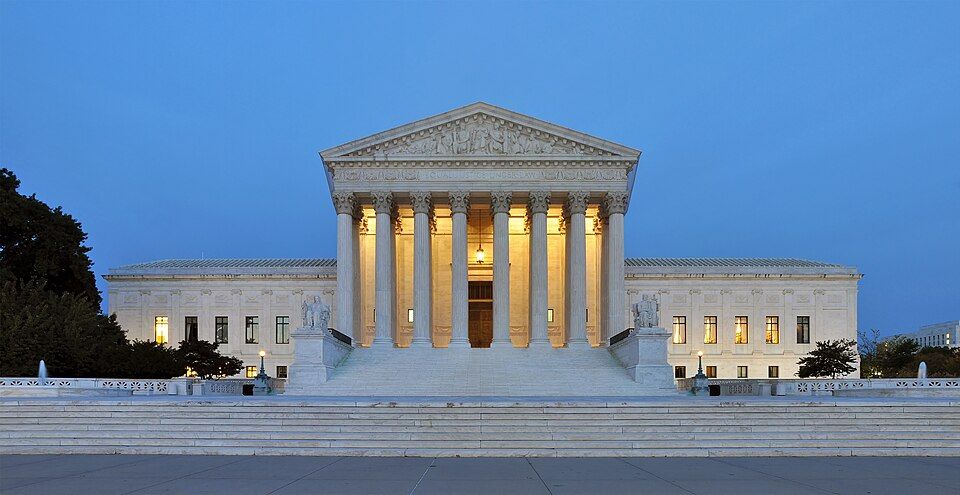
Judicial review lets the Court strike down laws passed by elected representatives. Life tenure means voters can’t remove the justices who do it. Put those two features together and you get what legal scholar Alexander Bickel called the countermajoritarian difficulty: in a democracy, why should nine unelected judges have the final word?
There are strong answers on both sides.
| Arguments That the Court’s Power Is Legitimate | Arguments That It Raises Problems |
|---|---|
| The Constitution is the people’s highest law, and someone independent must enforce it against temporary majorities. | Justices aren’t accountable to voters and can serve for decades after the president who appointed them leaves office. |
| Life tenure protects minority rights from popular pressure, as in Brown. | Major policy questions can be decided by a single vote on a 5–4 Court. |
| Other branches can check the Court through appointments, legislation, and amendments. | Those checks are slow and rarely used, so the Court’s rulings usually stand. |
This debate is a natural fit for the argument essay. Federalist No. 78 supports the case for independence. The Anti-Federalist writer Brutus took the other side. In Brutus No. 1, a required document, he warned that the national courts would help expand federal power at the expense of the states. In a later essay he called federal judges “independent of the people, of the legislature, and of every power under heaven.”
Precedent and Stare Decisis
Courts generally follow their earlier decisions, a principle called stare decisis (“let the decision stand”). Following precedent makes the law predictable and signals that rulings come from legal principle, not the personal views of whichever justices happen to be sitting. That consistency is itself a source of legitimacy.
Still, the Court does overturn precedent, and those moments are some of the most important in its history.
| Precedent Overturned | Overturned By | What Changed |
|---|---|---|
| Plessy v. Ferguson (1896) | Brown v. Board of Education (1954) | “Separate but equal” in public schools became unconstitutional. |
| Adkins v. Children’s Hospital (1923) | West Coast Hotel v. Parrish (1937) | States could set minimum wages, opening the door to New Deal economic regulation. |
| Roe v. Wade (1973) | Dobbs v. Jackson Women’s Health Organization (2022) | The Court ended the federal constitutional right to abortion and returned the issue to the states. |
| Chevron v. NRDC (1984) | Loper Bright Enterprises v. Raimondo (2024) | Courts no longer defer to agencies’ reasonable readings of unclear statutes. |
Why does this matter? Overturning precedent cuts both ways for legitimacy. Brown is now seen as one of the Court’s finest moments, even though it reversed nearly 60 years of law. Other reversals are criticized as proof that the Court’s rulings depend on who sits on it. Either way, the exam wants you to recognize that stare decisis is a strong tradition, not an absolute rule.
Judicial Activism, Judicial Restraint, and a Changing Court
Two labels describe how willing judges are to use judicial review.
- Judicial activism is a willingness to strike down laws and overturn precedent to protect rights or correct what judges see as constitutional violations. The Warren Court (1953–1969) was known for it in cases like Brown, Gideon v. Wainwright, and Miranda v. Arizona.
- Judicial restraint is a preference for deferring to elected officials, upholding laws unless they clearly violate the Constitution, and following precedent. Justices who practice restraint argue that major policy choices belong to voters and legislatures.
Activism doesn’t belong to liberals, and restraint doesn’t belong to conservatives. Citizens United v. FEC (2010), a required case, struck down limits on independent political spending by corporations and unions, and critics called it conservative activism. What counts as “activist” often depends on whether you agree with the outcome.
A related debate is about how to read the Constitution. Originalists interpret it according to its meaning when it was written. Supporters of a living Constitution read it as adapting to modern conditions. These approaches can lead to very different results in the same case.
Membership matters too. Because justices serve for life, a president who fills several seats can shape the Court for a generation. When the Court’s majority shifts, long-settled precedents can come under review. Public approval of the Court has swung with its decisions, and Gallup polling recorded some of its lowest approval ratings in the early 2020s.
Some rulings damaged the Court for years. Dred Scott v. Sandford (1857) held that Black Americans could not be citizens and that Congress couldn’t ban slavery in the territories. Instead of settling the slavery question, it inflamed it and helped push the nation toward civil war. It took the Fourteenth Amendment to reverse it. You can see how other branches respond to rulings like this in our review of checks on the judicial branch.
Test-Taking Strategies
Mnemonic Devices and Memory Shortcuts
- “No sword, so trust.” Without force, the Court runs on trust. Every legitimacy question comes back to that idea.
- “Activism acts, restraint waits.” Activist judges act to strike down laws. Restrained judges wait for the elected branches.
- “Stare decisis means stay decided.” A rough translation that tells you what the principle does.
- “Life plus review equals debate.” Life tenure combined with judicial review is the formula behind every argument about the Court’s legitimacy.
Cross-Topic Connections
- Topic 2.8: Judicial review and Federalist No. 78 are the starting point for this topic. Review them in our article on the judicial branch.
- Topic 2.11: Appointments, legislation, and amendments are how the other branches respond when they think the Court has overstepped.
- Topic 3.10 and 3.12: Civil rights cases like Brown show the Court protecting minority rights against majorities, the strongest argument for its independence.
- Topic 4.1: Public trust in institutions, including the Court, is measured and discussed in Unit 4.
Common Question Formats
- Activism vs. restraint MCQ. A stimulus describes a justice’s approach, and you identify it as activism or restraint.
- Quote-based MCQ. A passage from Federalist No. 78 or Brutus No. 1 asks which view of the judiciary the author holds.
- Quantitative analysis FRQ. A chart shows public approval of the Court over time. You describe the trend and explain how rulings or appointments might have caused it.
- Argument essay. Prompts about whether the Court should have the final word on the Constitution, or whether justices should serve for life, draw directly on this topic.
Frequent Student Mistakes
- Treating activism as a partisan label. Both liberal and conservative Courts have struck down laws and overturned precedent. Define activism by what the Court does, not by which side wins.
- Saying precedent can never be overturned. Stare decisis is a strong tradition, but Brown, Dobbs, and Loper Bright all overturned major precedents.
- Confusing legitimacy with popularity. An unpopular ruling can still be accepted as legitimate if people believe the Court followed the law. Legitimacy is about acceptance of the Court’s authority, not agreement with every decision.
- Forgetting that enforcement depends on others. The Court can’t carry out its own rulings. Questions about compliance point to the executive branch and the states.
Test-Day Shortcuts
- Spot the tension. If a question mentions life tenure, unelected judges, or majority rule, it’s testing the countermajoritarian debate.
- Check for overturned precedent. When a stimulus describes the Court reversing an earlier case, expect a question about stare decisis or activism.
- Use a pair of documents. In the argument essay, Federalist No. 78 and Brutus No. 1 give you evidence for both sides of judicial power, which makes the rebuttal paragraph easy to plan.
Time Management Tips
- Multiple choice: Activism and restraint questions take about 45 seconds. Quote passages from founding documents take longer, so read the question first, then the passage.
- Quantitative analysis FRQ: Spend about 20 minutes. Describe the data first in one precise sentence, then connect it to a specific ruling or appointment.
- Argument essay: Budget about 40 minutes. Choose one historical example (Brown, Dred Scott, or United States v. Nixon) and one founding document, and spend the first five minutes outlining your claim and rebuttal.
Check for Understanding
Think you’ve got it? Complete the quiz below to make sure. Download your results at the end.