
Maximize your score with these resources:
- Albert.io AP® Art History question banks
- Free AP® Art History cheat sheets
- Free AP® Art History score calculator
This article covers Topic 8.1: Materials, Processes, and Techniques in South, East, and Southeast Asian Art (Learning Objective MPT-1.A) from the AP® Art History curriculum. This topic appears on nearly every AP® Art History exam and typically accounts for 8% of exam weight. Understanding the materials, processes, and techniques that artisans used across South, East, and Southeast Asia from 300 BCE to 1980 CE is essential because the AP exam frequently tests your ability to identify artworks, explain construction methods, and connect technique to cultural or religious meaning. You’ll encounter questions about how materials shape artistic expression, why certain techniques persisted across centuries, and how technological innovation influenced artistic production.
The materials and methods used in Asian art are deeply connected to geography, available resources, religious beliefs, and trade networks. A bronze casting in India served different religious purposes than a Chinese bronze vessel, even though both required similar technical expertise. Silk painting in China required understanding the material properties of silk and ink in ways that marble sculpture did not. By learning the key materials and processes covered in this article, you’ll be able to recognize artwork, understand how it was made, and explain why artists chose particular techniques.
Stone Construction and Temple Architecture
Stone construction shaped the monumental architecture of South and Southeast Asia. Two of the most significant examples are Angkor Wat in Cambodia and Borobudur in Indonesia, both built using ashlar masonry (precisely cut and fitted stone blocks) without mortar. This technique required:
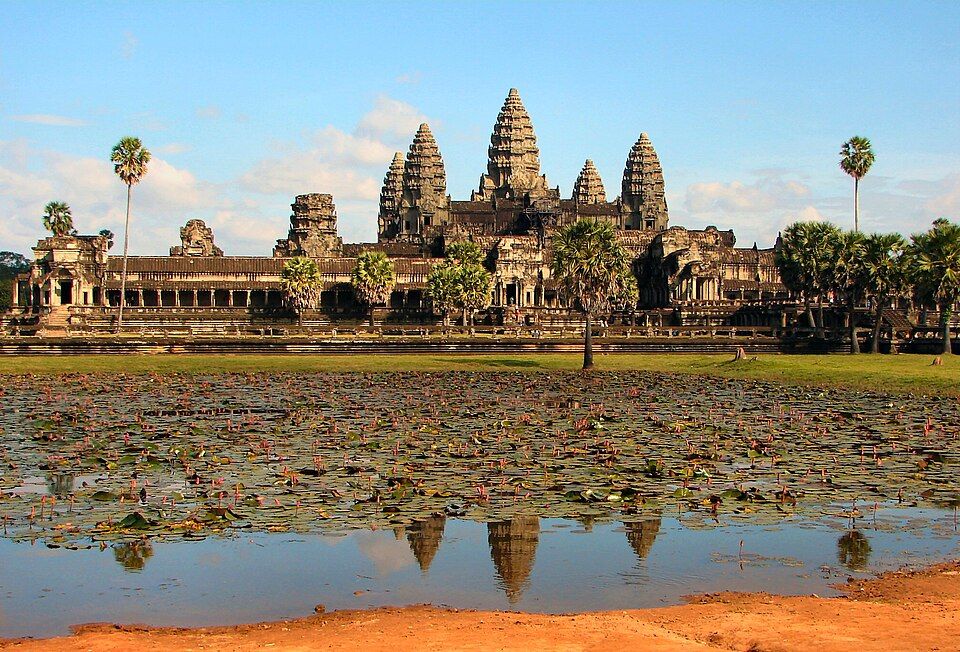
- Quarrying and shaping — Artisans used tools to extract and shape massive blocks of sandstone, carefully sizing them to fit together snugly. The precision of the cuts meant the structure could stand for over a thousand years without adhesive.
- Weight and gravity — The temples relied on the sheer weight of the stone and the friction between blocks to maintain structural integrity. This allowed for intricate carved reliefs covering thousands of square meters.
- Labor organization — Moving and placing multi-ton stone blocks required coordinated labor forces, engineering knowledge, and understanding of leverage and transport methods.
Why this matters: Angkor Wat’s construction using ashlar masonry without mortar demonstrates both technical mastery and cultural priority — the Khmer invested enormous resources in a durable Hindu-Buddhist temple complex. The technique allowed for the elaborate stone carving that covers the walls, telling stories of battles, gods, and daily life. On the exam, you might be asked to identify the construction method from an image, or to explain why the durability of ashlar masonry made it ideal for temple construction in the tropics.
Borobudur (Java, 8th century) similarly used stone, but its structure is a mandala-like pile of stacked stone blocks forming a mountain-shaped shrine. Unlike Angkor Wat’s walls, Borobudur is built over a natural hill, with open terraced galleries rather than interior chambers. The stonework had to support the weight of the upper levels while allowing pilgrims to walk along its galleries. This required precise understanding of load-bearing and alignment.
Bronze Casting and Metalwork
Bronze casting was a highly refined process across Asia, producing ritual vessels, religious sculptures, and weapons. The process required understanding metallurgy, geometry, and thermal control.
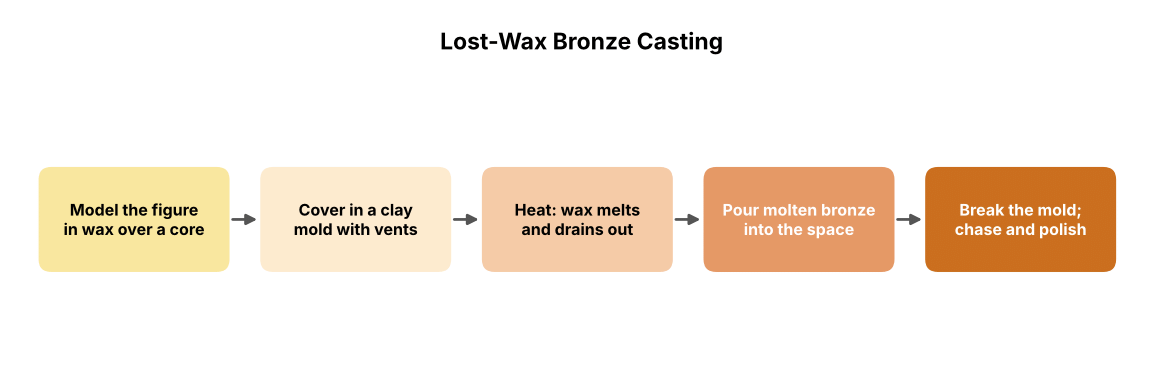
- Lost-wax casting — The most refined technique for complex forms. A wax model was created, covered in clay, heated so the wax melted and ran out, then molten bronze was poured into the cavity. This allowed for intricate detail and hollow forms. After cooling, the outer clay shell was broken away to reveal the bronze sculpture.
- Multi-part casting and assembly — Some large sculptures were cast in separate sections (head, torso, limbs, halo) and then joined using metal pins and solder. This allowed artisans to refine each part separately before assembly.
- Surface finishing — After casting, bronze was often polished, inlaid with copper or silver for detail, and sometimes patinated (chemically treated) to achieve a desired color and texture.
The Shiva Nataraja (Lord of Dance) sculptures from the Chola Empire (9th-13th centuries, India) exemplify bronze mastery. The dynamic pose of the dancing Shiva — one leg lifted, arms in complex mudras, encircled by flame — would be impossible to carve in stone. Only bronze casting allowed the artist to capture the fluidity and movement central to the sculpture’s religious meaning. Chola bronzes like this were typically cast solid, in one piece, by the lost-wax method, and were carried in religious processions.
Chinese bronze ritual vessels (ding tripods, zun containers) demonstrate a different tradition. These vessels often featured:
- Complex geometric patterns — Raised bands, spirals, and animal motifs required precise mold-making and casting control.
- Symbolic animal forms — Handles shaped as dragon heads or beast masks reflected cosmological beliefs and marked the vessel as an object of ritual importance.
- Patina development — Over centuries, bronze develops a greenish patina (copper carbonate). Chinese bronzes were sometimes deliberately patinated to give them an ancient, authoritative appearance.
Ink Painting on Silk and Paper
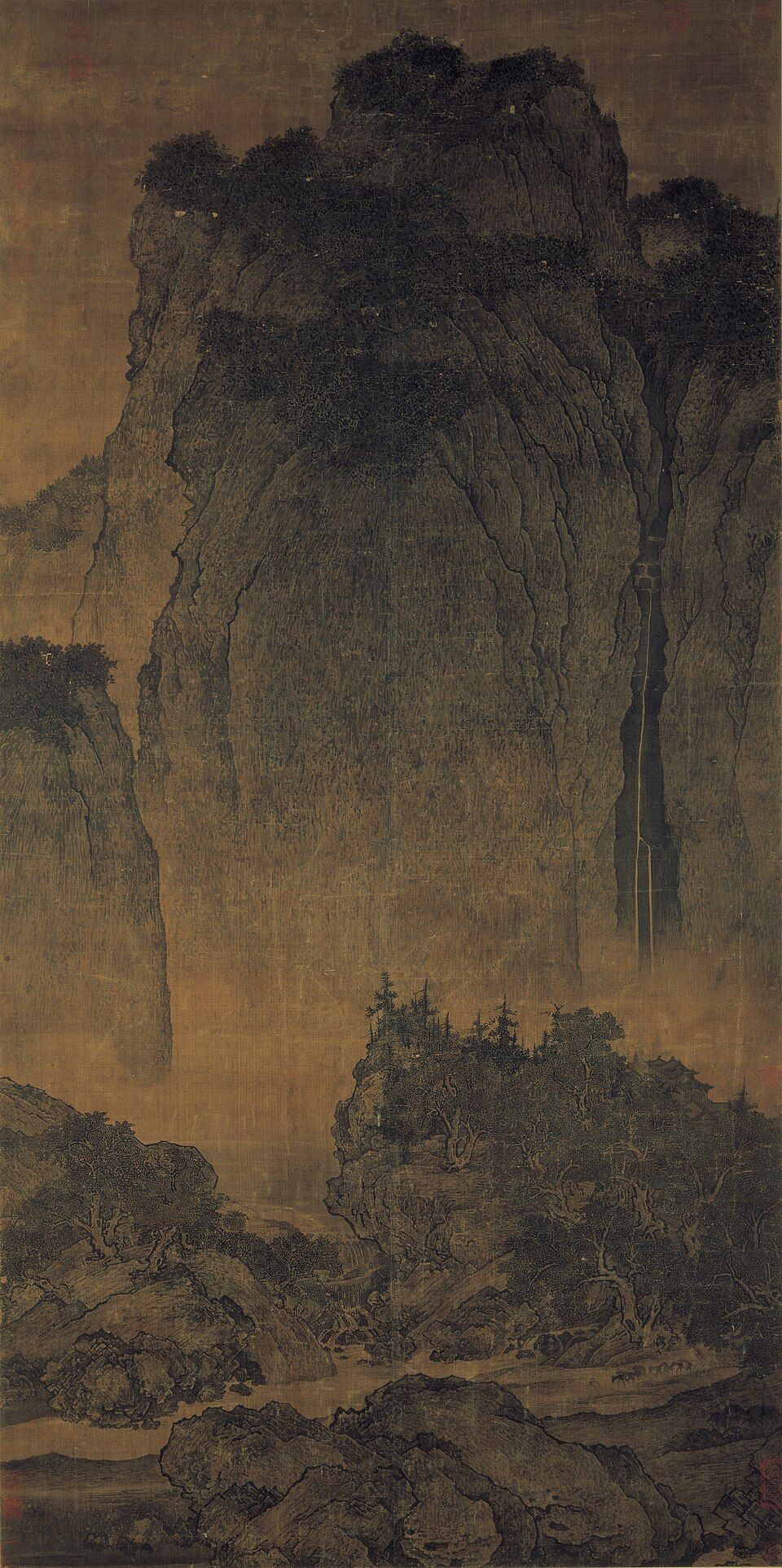
Chinese and Japanese ink painting required understanding how ink behaves on porous surfaces and how to create detail and depth with minimal brush strokes. This technique became one of the most valued art forms in East Asia.
Materials and process:
- Ink composition — Ink was made from soot (carbon) mixed with animal glue (traditionally from donkey or rabbit skin) and water. The ratio affected darkness and flow. Higher-quality inks were made from pine soot or lamp soot, ground with glue on an inkstone just before use.
- Silk vs. paper — Silk is less absorbent and holds ink pigment on the surface, allowing for sharp, controlled lines. Paper (often xuan paper made from plant fibers) is more delicate and absorbs ink more deeply, creating soft, flowing brushwork that spreads slightly. Artists chose their substrate based on the effect desired.
- Brush control and gesture — The artist’s hand speed, pressure, and angle of the brush created variation in line weight and tone. A slow, pressed stroke created a dark, heavy line; a quick, light stroke created a delicate gray line. Mastery took years of practice.
- Negative space — Mountains, trees, and water were suggested rather than outlined. Empty space on the page represented mist, distance, or emptiness (a key concept in Daoist and Zen aesthetics).
Why this matters: Chinese landscape painting (especially from the Song Dynasty, 960-1279) used ink painting to explore philosophical ideas about humanity’s relationship to nature. The technique’s spontaneity and responsiveness to the artist’s intention made it ideal for expressing emotion and spiritual insight. On the exam, you should be able to identify the materials (ink on silk/paper) and explain how the technique created effects that couldn’t be achieved in oil or fresco.
Woodblock Printing and Ceramic Traditions
Woodblock printing, perfected in China and later refined in Japan, was a revolutionary technology that allowed mass production of images and text. The process involved:
- Carving the block — An image was drawn on a woodblock (usually cherry or pear wood). Areas that should NOT print were carved away, leaving raised surfaces that would receive ink. This required precision and understanding of how the final image would appear in reverse.
- Inking and pressing — The block was inked with water-based pigments and paper was pressed against it (using a tool called a baren), transferring the image. Multiple blocks could be used for color printing.
- Mass production — A single carved block could produce hundreds of high-quality prints. This made images affordable and accessible, contributing to the spread of religious imagery, literature, and popular art.
Ceramic traditions across Asia produced some of the world’s finest pottery and porcelain:
| Tradition | Region & Period | Key Characteristics | Why It Matters |
|---|---|---|---|
| Chinese porcelain (celadon & blue-and-white) | China, Song Dynasty onward (10th-15th centuries+) | Celadon: jade-green glaze created by reducing oxygen during firing, producing a subtle, sophisticated finish. Blue-and-white: cobalt oxide painted under the glaze created bright blue designs on white backgrounds. | Porcelain required understanding of clay composition, kiln temperatures (over 1,200°C), and glaze chemistry. Blue-and-white porcelain became the most copied style in world history and symbolized Chinese sophistication. Trade in porcelain shaped global commerce for centuries. |
| Japanese stoneware (raku & Imari) | Japan, 16th-18th centuries | Raku: hand-modeled, low-fired stoneware for tea ceremony, valued for asymmetry and irregular surfaces. Imari: decorated porcelain from Arita, Japan, influenced by Chinese blue-and-white but with additional enameled colors applied on top of the glaze. | Raku pottery exemplified Zen aesthetics — imperfection and spontaneity were virtues. Imari became a major export good and influenced European porcelain makers who tried to copy the technique. |
| Southeast Asian stoneware | Thailand, Vietnam, Cambodia (11th-16th centuries) | Brown and gray stoneware with simple forms, often unglazed or with ash glaze. Used for storage, water vessels, and ritual purposes. | Production was high-volume and distributed widely through regional trade networks. The straightforward functional forms and minimal decoration reflected both practical use and aesthetic restraint. |
Ceramic production required control of multiple variables: clay composition, wheel-throwing or hand-modeling technique, surface treatment (unglazed, painted, glazed), and crucially, kiln firing. Different firing atmospheres (oxidizing vs. reducing) produced different colors — a green celadon glaze required reduction firing (limiting oxygen), and blue-and-white porcelain was also reduction-fired. Artisans developed this knowledge through generations of experimentation.
Lacquerwork, Jade Carving, and Textile Traditions
Lacquerwork was a labor-intensive decorative process developed in China and later spread to Japan and other Asian regions. The process involved:
- Base preparation — A wooden form (box, bowl, tray) was prepared and sanded smooth.
- Multiple coatings — Natural lacquer (sap from the lacquer tree) was applied in many thin layers, each dried before the next application. This could take months or years for a single object.
- Carving and inlay — Once the lacquer layers reached sufficient depth, the surface was carved with designs (cinnabar lacquer was particularly valued for its deep red color and carving precision). Gold leaf, mother-of-pearl, and jade could be inlaid into the surface.
Jade carving was highly valued in China. Jade is an extremely hard stone (harder than steel) that requires special carving techniques:
- Drilling and abrasion — Jade couldn’t be simply carved like softer stone. Instead, artisans used abrasive pastes (emery, jade dust, or diamond) with rotating tools to slowly wear away the stone. Openwork (pierced designs) and detailed surface carving required patience and precision.
- Color and translucency — Different jade sources produced different colors (white, pale green, deep green, black). Skilled carvers chose jade colors that complemented the design and sometimes enhanced the carved form (carving a bird from jade that had streaks of darker color).
- Form and meaning — Jade objects often depicted auspicious symbols: dragons for power, birds for harmony, botanical forms for renewal. The choice of symbol and the refinement of carving reflected the owner’s status.
Textile traditions across South and Southeast Asia included:
- Indian cotton weaving and dyeing — Cotton was grown and woven in India and dyed using natural dyes (indigo for blue, madder root for red, plant sources for yellow). Complex weaving patterns created striped, checkered, and ornamental designs. Indian textiles were among the most valuable traded goods in the Indian Ocean world.
- Indonesian batik — This resist-dye technique involved applying hot wax to cloth, then dyeing it (traditionally in indigo). The waxed areas resisted the dye and remained the original color. Multiple dippings created complex patterns of dots, lines, and designs. Batik production was (and is) primarily women’s work and reflected individual and regional identity.
- Silk production and weaving — Silk was produced from silkworm cocoons in China and other East Asian regions. Raw silk fiber was dyed and woven into textiles of varying weights and weaves. Silk’s lustrous surface and smooth texture made it ideal for displaying painted or embroidered designs.
Stupa Construction and Rock-Cut Architecture
Stupa construction reflected Buddhist beliefs and required careful geometric planning. A stupa is a mound-shaped or tower-shaped structure containing relics of the Buddha or other sacred objects. The architectural elements included:
- The mound (anda) — A solid, dome-shaped stone or brick form built over a stone base containing relic chambers.
- The spire (harmika and chattras) — Rings and umbrellas stacked on top of the dome, symbolizing the heavens and the Buddha’s spiritual ascent.
- The railing (vedika) — Decorative stone railings surrounding the base, often with gateways (toranas) at cardinal directions. The railings prevented casual approach and directed pilgrims’ circumambulation (ritual walking around the sacred center).
- Carved narrative reliefs — Stone panels depicted scenes from the Buddha’s life and Buddhist teachings, providing religious education to pilgrims.
The Great Stupa at Sanchi (India, begun 3rd century BCE under Ashoka; gateways 1st century BCE) exemplifies this construction. Pilgrims walked around the stupa in a clockwise direction, viewing the narrative reliefs and meditating on Buddhist concepts. The structure required understanding masonry, geometry, and sculptural narrative.
Rock-cut architecture in South Asia, particularly the Ajanta Caves (India, 2nd-5th centuries), involved a different technique entirely. Instead of building upward, artisans carved downward and inward into cliff faces. The Ajanta Caves include:
- Excavation method — Workers chiseled away tons of rock, creating interior chambers for Buddhist worship and habitation. This required understanding structural engineering (avoiding collapse of the ceiling) and working with the natural cliff composition.
- Interior chambers and columns — Monolithic columns were left partially in the rock and carved to support the ceiling. Shrines within the caves held Buddha images carved from the living rock.
- Painted wall surfaces — Interior walls were plastered and painted with scenes of Buddhist narrative, using natural pigments applied to dry plaster (not true fresco). The paintings survive because of the sheltered interior environment.
Why this matters: Rock-cut architecture demonstrates that artists could monumentalize space through subtraction (removing rock) rather than addition (building up). The technique required different problem-solving than stupa construction and depended on the geological features of a location. On the exam, you should be able to distinguish between constructed and rock-cut structures and understand the technical and cultural reasons for each choice.
Test-Taking Strategies
Mnemonic devices and memory shortcuts: To remember the major material and process categories, use PLASTIC-JRT: Painted (ink on silk/paper), Lacquerwork, Ashlar (stone masonry), Stone sculpture (rock-cut), Textiles (batik, cotton, silk), Ink printing (woodblock), Ceramics, Jade carving, Ritual vessels (bronze), Temples (stupas). This covers the major techniques tested.
Cross-topic connections: Topic 8.1 (Materials and Processes) connects directly to:
- Topic 8.2 (Functions and Contexts of Art in South, East, and Southeast Asia) — The materials chosen often reflect the function. A jade carving served a different ritual purpose than a stupa. Understanding process informs understanding function.
- Gender and Power in the Art — Certain processes were associated with gender (batik production was women’s work in Indonesia; bronze casting was male-dominated in many East Asian societies). Process and gender often intersected.
- Prehistory and Early History — Bronze casting techniques in the Shang Dynasty connect to prehistoric Bronze Age metalwork globally.
Common question formats: The AP exam typically asks about this topic in these ways:
- Image identification with process explanation — You’re shown a ceramic vessel, bronze sculpture, or textile and asked, “Which of the following best describes the process used to create this artwork?” The correct answer identifies the specific technique (e.g., “lost-wax casting” or “reduction firing”).
- Material impact on form — “How did the properties of [material] influence the form and design of this artwork?” For example, bronze allowed dynamic poses; stone required different structural support; ink painting required negative space composition.
- Technical timeline — “Which of the following techniques developed earliest in South Asia?” You need to know the chronology of ceramics, bronze casting, and stone construction.
- Comparison across regions — “Both Chinese blue-and-white porcelain and Indian textiles were important trade goods. What do their manufacturing processes reveal about the resources and knowledge available in each region?”
Frequent student mistakes:
- Confusing “lost-wax casting” with open mold casting. Many students think bronze sculptures were simply carved or pressed into molds. Lost-wax casting is a specific technique that requires a wax model, clay encasement, heating, and pouring. Only the lost-wax method allows for hollow, complex forms like Shiva Nataraja. When you see a bronze sculpture with intricate detail and thin-walled forms, think lost-wax.
- Treating all stone construction the same. Ashlar masonry (fitted blocks without mortar) is different from rock-cut architecture (carving into cliffs). Stupa construction uses cut stone assembled into specific geometric forms. Confusing these methods loses points. Read carefully and look for clues: Are the stone blocks fitted together? Is it carved from living rock? Is it a mound shape?
- Underestimating the complexity of ceramic production. Students often say “the artist made a pot” as if it were simple. In reality, ceramic production required knowledge of clay composition, wheel-throwing (or hand-modeling), surface treatment, glazing chemistry, and crucially, kiln management. The same clay fired in a reducing atmosphere produces celadon; in an oxidizing atmosphere, it produces white or stoneware. This knowledge accumulated over generations.
- Not connecting material to meaning. Jade in China was chosen not just for aesthetics but because of its symbolic associations with purity, permanence, and virtue. Stone for temples was chosen for durability (temples were meant to last centuries). Bronze for ritual vessels reflected their sacred use. On the exam, if asked “Why did the artist choose [material]?” connect the material properties to the artwork’s function or cultural significance.
Test-day shortcuts:
- When identifying a material from an image, look for visual clues: Is it shiny and reflective (bronze, jade, lacquer)? Does it show brushstrokes (ink on paper/silk)? Can you see individual brushwork or wax-resist patterns (batik)? Does it have a glaze (ceramic)? These visual markers are reliable shortcuts.
- For process questions, eliminate answers that reference techniques from other cultures or time periods. If a question asks about a 10th-century Chinese ceramic and one answer choice says “wheel-thrown in Europe,” eliminate it immediately.
- Remember that durability and permanence are key reasons for material choice in religious or monumental art. If asked why stone was chosen for temples over less durable materials, the answer always connects to longevity and the sacred nature of the structure.
- Complexity of production = cultural value. The more labor-intensive the process (multiple lacquer coatings over months, jade carving that took years, multi-block color woodblock printing), the more culturally valued the object. Simple objects could be mass-produced or were functional; complex objects signaled wealth and status.
Time management tips: If you encounter a long image-based question about materials and processes, budget 2-3 minutes: 30 seconds to identify the artwork and material, 1-2 minutes to recall the process steps, 30 seconds to eliminate wrong answers. Don’t spend more than 3 minutes on any single MCQ. If you’re stuck, identify at least the material (stone, ceramic, bronze, silk, etc.) and that may give you enough information to eliminate obvious wrong answers.
Check for Understanding
Think you’ve got it? Complete the quiz below to make sure. Download your results at the end.